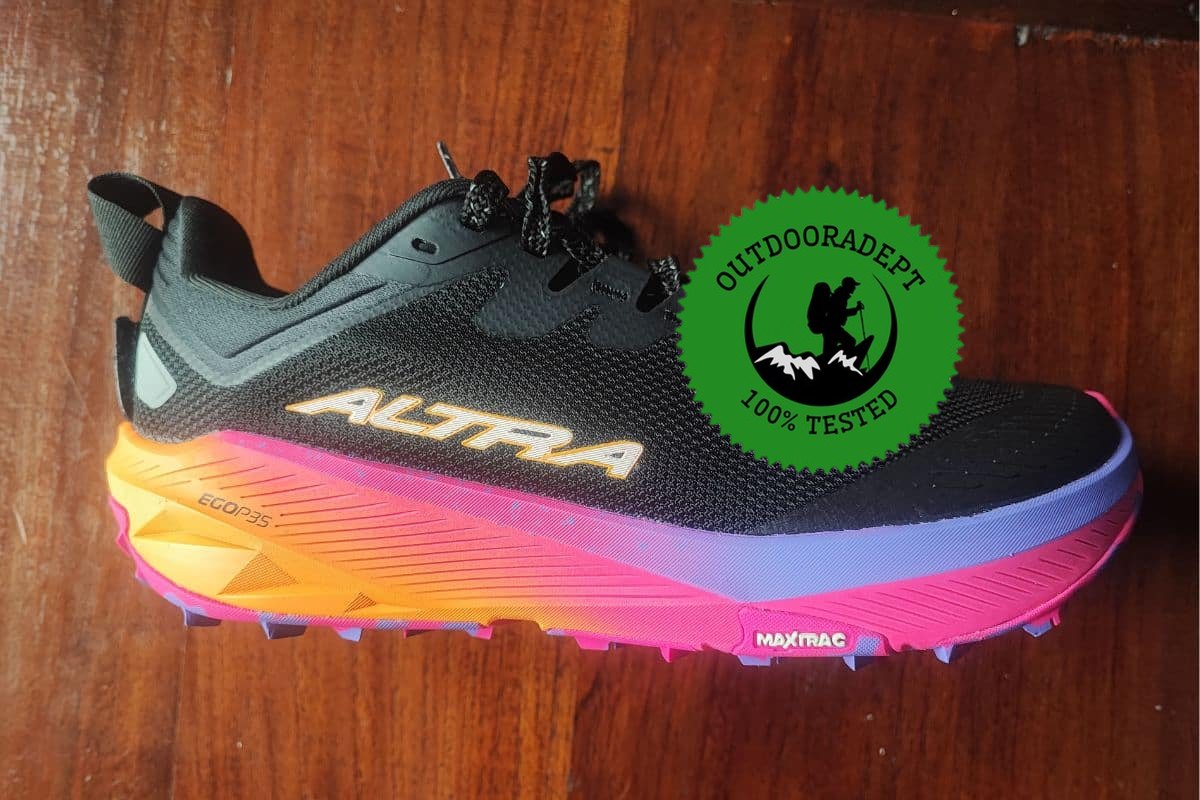
Most trail running shoe roundups are tested on men’s feet and the women’s sizes are filled in afterwards. We tested these nine in women’s sizes, almost always a women’s US 8.5, on feet that are wide without being high volume, and we didn’t only run in them: trail runners are just as good for a day hike or a fast, light hiking trip, so most of them went on hikes too.
Because the women’s pairs were tested on the same feet, their weights, sizing advice and fit notes are directly comparable. The highest score went to the Altra Experience Wild 3+, a light, low-drop shoe for days that mix pavement and dirt. Tied on score, the Altra Lone Peak 9+ has the roomiest toe box here, and for mountain trails, running or hiking, the Brooks Cascadia 20 is the better all-rounder.
In this guide
The Verdict: Our #1 Pick

Altra Experience Wild 3+
Light, low to the ground at a 4 mm drop, and the Vibram Megagrip outsole on the 3+ fixes the two weak spots of the standard Wild 3: grip on wet rock and outsole wear.
We tested both versions over the same routes, the second time walked in reverse, and the 3+ was noticeably better on wet rock both times. It ran true to size in a women’s US 8.5. The one catch is width: the Standard FootShape last is narrower than Altra’s Lone Peak, and there is no wide version.
Why Trust Us?
We’ve tested more than 20 trail running shoes in total. The nine on this page were run and hiked in over more than 450 miles720 km, on trips in Romania, Croatia, Slovenia, Spain (Mallorca), Hungary, Bulgaria, Italy, Thailand and the US. The scores are the overall scores from each full review. Learn more about our testing process.


Our Top Recommended Trail Running Shoes for Women
The score next to each shoe is its overall score from our full review.
1) Altra Experience Wild 3+ – Rating 4.7/5
Light, low-drop and grippy, for runs and hikes that mix pavement and dirt. It ran true to size in a women’s US 8.5, but the last is on the narrow side for an Altra.
Key specs
- Weight (measured)
- 8.57 oz243 g, women’s US 8.5
- Drop
- 4 mm
- Lugs
- 4 mm, Vibram Megagrip
- Widths
- One width (Standard FootShape)
- Waterproof version
- None
We ran a loop from downtown Boulder that starts with 2 miles3.2 km of pavement, then took the shoe on a 15-mile24-km fast-pack day in Washington’s Cascades. Both versions went over the same routes, and the Vibram outsole on the 3+ held noticeably better on wet rock.
In a women’s US 8.5 our pair weighed 8.57 oz243 g, one of the lighter shoes on this page, and the toes never touched the front. The Standard FootShape last lets the toes splay but is narrower than the Lone Peak, and there is no wide version, so genuinely wide feet should start with the Lone Peak 9+.
The heel felt a little loose at first; a runner’s loop through the top eyelet locked it in straight away.
Read our full Altra Experience Wild 3 and 3+ review.
PROS
- True to size in a women’s US 8.5
- One of the lighter shoes on this page
- Grips wet rock better than the standard Wild 3
CONS
- No wide version
- Narrower than the Lone Peak
2) Altra Lone Peak 9+ – Rating 4.7/5
The roomiest toe box on this list, on Altra’s zero-drop platform. The 9+ is the Lone Peak 9 we tested, with a Vibram Megagrip outsole.
Key specs
- Weight
- about 10.7 oz303 g, men’s US 9
- Drop
- 0 mm
- Lugs
- Vibram Megagrip (9+)
- Widths
- Original FootShape (Altra’s widest)
- Waterproof version
- Lone Peak 9 Waterproof Mid
We put more than 80 miles130 km on the Lone Peak 9 on the trails of Doi Inthanon in Thailand: rough trail, muddy paths and steep climbs. On wet limestone and mud the lugs rarely slipped, and the quick-drying ripstop mesh handled the humidity well.
It ran true to size, with room for the toes to spread on steep descents; between half sizes, sizing up gave more clearance. The heel lock felt less secure on steep descents, and zero drop takes some getting used to if you come from higher-drop shoes.
The 9+ keeps everything above the outsole and swaps Altra’s MaxTrac rubber for Vibram Megagrip, mainly for a longer-lasting outsole. Altra’s widest last, Original FootShape, makes it the first shoe to try if your forefoot is wide and high volume.
Read our full Altra Lone Peak 9 review.
PROS
- Roomiest toe box on this list
- Grippy on wet limestone and mud
- Light for long days
CONS
- Heel less secure on steep descents
- Zero drop takes getting used to
3) Brooks Cascadia 20 – Rating 4.6/5

The all-rounder for mountain days, and one of the few shoes here with a true women’s Wide. Our US 8.5 Wide was true to size.
Key specs
- Weight (measured)
- 9.8 oz279 g, women’s US 8.5 Wide
- Drop
- 6 mm
- Lugs
- 4 mm, Vibram Megagrip
- Widths
- Medium and Wide
- Waterproof version
- GTX
A month in Romania’s Carpathians, mostly hiking with an 11 lb5 kg pack, about 80 miles130 km in all. In the Wide, the forefoot had room for feet that swelled after several hours, without the shoe ever feeling loose.
On very steep descents the foot slid forward until we laced through the heel-lock eyelet, which settled the heel without cranking the whole shoe down. The upper shaped itself to the foot within three or four outings.
Brooks sells the women’s Cascadia 20 in Medium and Wide at the same price, but the GTX version in Medium only. There is no rock plate, so sharp points come through underfoot.
Read our full Brooks Cascadia 20 review.
PROS
- Women’s Medium and Wide at the same price
- Heel-lock eyelet stops slipping on descents
- Vibram grip on wet rock slabs
CONS
- GTX version in Medium only
- Heaviest of the women’s pairs we weighed
4) HOKA Speedgoat 7 – Rating 4.5/5
Order half a size up. The most cushioned mountain shoe here, with a roomy forefoot in the Wide.
Key specs
- Weight (measured)
- 8.5 oz241 g, women’s US 9 Wide
- Drop
- 5 mm
- Lugs
- 5 mm, Vibram Megagrip
- Widths
- Regular and Wide
- Waterproof version
- GTX
HOKA asks you to go up half a size, even though our usual 8.5 had been true to size in the Challenger 8. A women’s US 9 Wide gave the right length on every climb and descent, with room ahead of the toes and none to spare.
The stretchy forefoot gives a little as the foot spreads, and in the Wide the toes could splay without the fit going sloppy. The heel stayed put with standard lacing. That 9 Wide weighed 8.5 oz241 g, lighter than several lower shoes on this page.
Over about 62 miles100 km in Croatia it was sure-footed on loose rock, but less secure on steep side slopes.
Read our full HOKA Speedgoat 7 review.
PROS
- Roomy forefoot in the Wide
- Heel stays put with standard lacing
- Light for so much cushioning
CONS
- Runs short: go half a size up
- Less secure on steep side slopes
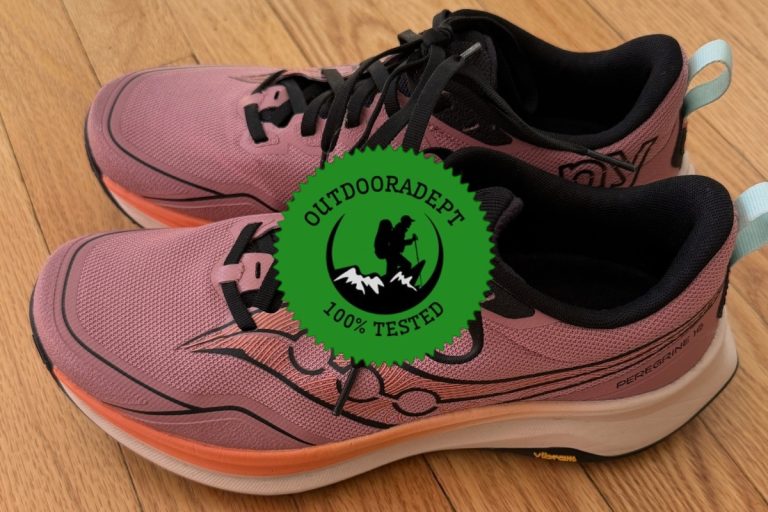
5) Saucony Peregrine 16 – Rating 4.4/5
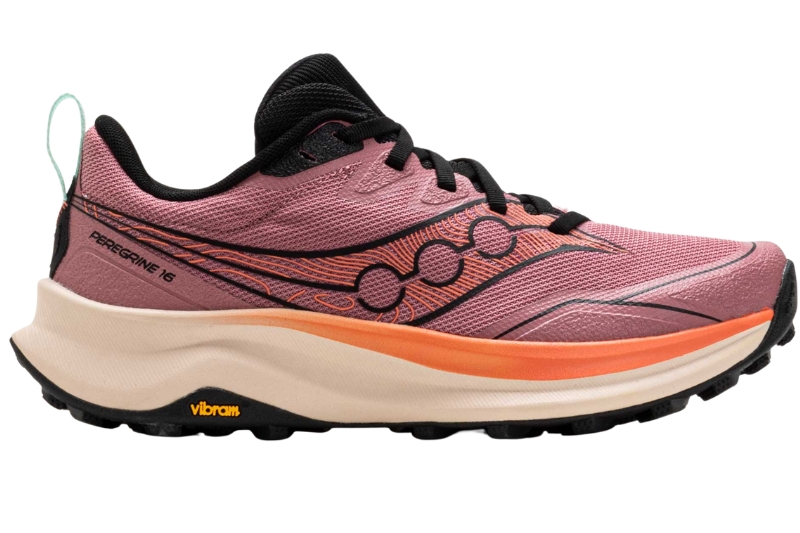
For technical, wet trails. True to size in the Wide, though the extra room goes across the foot more than over the toes.
Key specs
- Weight (measured)
- 8.6 oz245 g, women’s US 8.5 Wide
- Drop
- 4 mm
- Lugs
- 4 mm, Vibram Megagrip
- Widths
- Regular and Wide
- Waterproof version
- GTX
Our women’s US 8.5 Wide, worn for roughly 50 miles80 km in Slovenia and Mallorca, fit true to size: no toe pressure, no squeezing at the sides, and a midfoot and heel that needed no lock lacing.
The catch is volume. The Wide adds room across the forefoot with little height over the toes, so a wide, flat foot fits well and a high-volume foot may meet the upper. Regular and Wide cost the same.
Read our full Saucony Peregrine 16 review.
PROS
- True to size in the Wide
- Secure heel without lock lacing
- Strong grip on wet roots and rock
CONS
- Little volume over the toes
- Lugs run out of depth in deep mud
6) HOKA Challenger 8 (Best for Easy Trails) – Rating 4.2/5
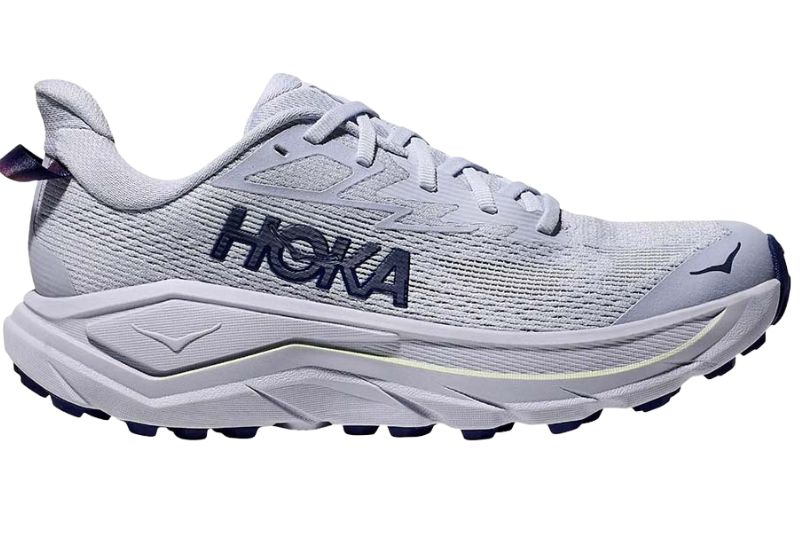
The softest shoe here, with a roomier forefoot than the Challenger 7. Keep it for gravel, dirt roads and easy trail.
Key specs
- Weight (measured)
- about 8.1 oz230 g, women’s US 8.5
- Drop
- 8 mm (listed)
- Lugs
- 4 mm
- Widths
- Standard and Wide
- Waterproof version
- GTX
Our usual women’s US 8.5 fit true with wide feet, and the forefoot gave room to splay, although it is still narrower than an Altra. Narrow feet may find it runs a little large. Over about 126 miles202 km in Hungary and Romania, the cushioning kept tired legs comfortable.
Grip is where it stops: the shallow tread slipped on wet limestone, and on technical ground the tall stack wobbled. A Wide is available.
Read our full HOKA Challenger 8 review.
PROS
- Softest cushioning on this page
- Roomier than the Challenger 7
- Comes in a Wide
CONS
- Slips on wet rock and mud
- Wobbles on technical ground
7) Nike ACG Pegasus Trail – Rating 4.2/5

The easiest shoe here to order online if your feet are wide: it fits a wide foot at its normal size.
Key specs
- Weight (measured)
- 8.9 oz253 g, women’s US 8.5
- Drop
- 8 mm
- Lugs
- All Terrain Compound 2.0
- Widths
- One width (roomy forefoot)
- Waterproof version
- GORE-TEX
Our women’s US 8.5 fit without sizing up, and even after four hours on swollen feet the toes didn’t hit the front on descents. That was over six long days in Romania’s Southern Carpathians, including one at 91 °F33 °C with no dampness inside.
The extra room goes across the forefoot rather than through its depth, so deep feet may still find it snug, and Nike doesn’t make a wide version. On rocky ground it felt too high and soft.
Read our full Nike ACG Pegasus Trail review.
PROS
- Fits wide feet at the normal size
- Toes clear of the front on descents
- Stays dry inside in heat
CONS
- Snug for high-volume feet
- Too soft on rocky ground
8) Nike Wildhorse 10 – Rating 4.1/5

A soft, forgiving cruiser for easy and moderate miles, with a forefoot rock shield.
Key specs
- Weight (measured)
- 8.6 oz244 g, women’s, half a size up
- Protection
- Forefoot rock shield
- Lugs
- 3.4 mm (measured)
- Widths
- One width (roomy toe box)
- Waterproof version
- None
We took it on a two-day hut-to-hut hike in Bulgaria’s Stara Planina, with a good share of rocky trail. Ordering half a size up for wide feet gave a roomy toe box, though the ball of the foot sits a little snugger than on the Wildhorse 8.
It is heavy for a trail runner, and on steep, rocky, off-camber or wet ground the soft midsole felt unstable.
Read our full Nike Wildhorse 10 review.
PROS
- Soft ride over long hours
- Roomy toe box when sized up
- Good underfoot protection
CONS
- Heavy, and it shows on climbs
- Unstable on rocky, wet ground
9) Brooks Caldera 8 – Rating 4.0/5
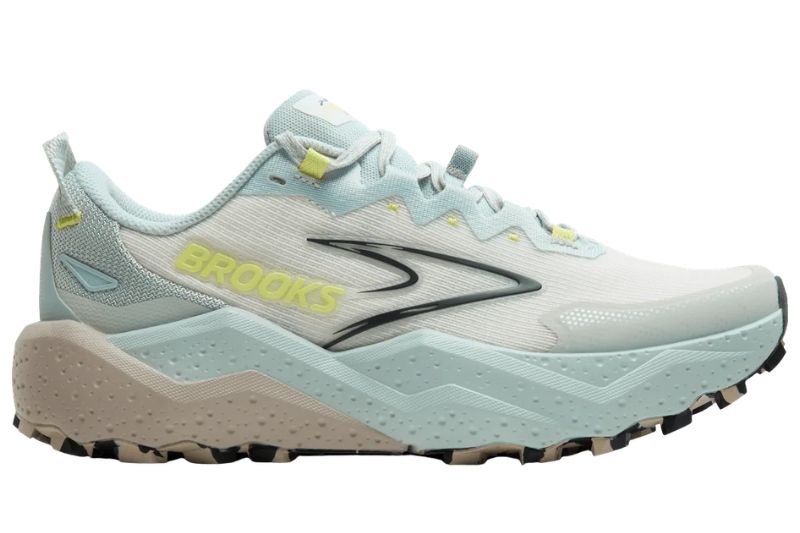
Deep, steady cushioning for long days on dirt and packed gravel, more hiking shoe than racer.
Key specs
- Weight (measured)
- 9.6 oz271 g, women’s US 8.5
- Cushioning
- 38.5 mm heel stack
- Lugs
- 4 mm, TrailTack Green
- Widths
- One width (Medium)
- Waterproof version
- None
It comes in one width only, but the women’s Medium still gave a wide forefoot enough room; narrow feet should try it on first. Over four hikes around Finale Ligure, about 27 miles43 km with a day pack, there wasn’t a single blister.
Before steep descents we tightened the laces so the foot wouldn’t slide forward. It is a little heavy for fast hiking, and on steep, wet limestone it asked for shorter strides.
Read our full Brooks Caldera 8 review.
PROS
- Roomy forefoot in the only width
- No blisters over four hikes
- Deep, steady cushioning
CONS
- Narrow feet should try it first
- Heavy on steep climbs
Trail tips, news and giveaways
One email a month: hiking tips, gear news, giveaways, fresh footwear verdicts and more. No spam, unsubscribe anytime.
Comparison Table
| Shoe | Rating | Weight (per shoe) | Best for | Women’s price |
|---|---|---|---|---|
| Altra Experience Wild 3+ | 4.7/5 | 8.57 oz243 g (W 8.5) | Mixed road and trail | |
| Altra Lone Peak 9+ | 4.7/5 | about 10.7 oz303 g (M 9) | Wide feet, zero drop | |
| Brooks Cascadia 20 | 4.6/5 | 9.8 oz279 g (W 8.5 Wide) | Mountain trails | |
| HOKA Speedgoat 7 | 4.5/5 | 8.5 oz241 g (W 9 Wide) | Long rocky descents | |
| Saucony Peregrine 16 | 4.4/5 | 8.6 oz245 g (W 8.5 Wide) | Technical, wet trails | |
| HOKA Challenger 8 | 4.2/5 | about 8.1 oz230 g (W 8.5) | Easy trails, gravel | |
| Nike ACG Pegasus Trail | 4.2/5 | 8.9 oz253 g (W 8.5) | Wide feet, heat | |
| Nike Wildhorse 10 | 4.1/5 | 8.6 oz244 g (women’s) | Easy miles, comfort | |
| Brooks Caldera 8 | 4.0/5 | 9.6 oz271 g (W 8.5) | Long hiking days |
Prices are approximate and updated annually. Check the retailer for current rates.
How Women’s Feet Are Different
A women’s shoe is not just a smaller men’s shoe. On average, women’s feet have a narrower heel in proportion to the forefoot and less volume overall, and there is less body weight on top of them. That is why a good women’s trail shoe is built on its own last, with a snugger heel cup and often a slightly softer midsole that flexes properly under a lighter runner or hiker. A men’s shoe in a smaller size tends to slip at the heel while still pinching at the toes, as we also found when testing hiking boots for women.
Hormones change the foot as well. Estrogen helps keep the collagen in the ligaments that hold the arch up strong. During pregnancy, relaxin loosens ligaments throughout the body, the feet included, and in one study the longer, flatter foot stayed that way for 60 to 70 percent of women. As estrogen drops around menopause, the arch can slowly flatten again. A physical therapist walks through this in our guide to hiking with flat feet.
It shows up in injury numbers too. Women get posterior tibial tendon dysfunction about three times as often as men (that is the tendon that holds the arch up). A meta-analysis of runners found a 71 percent higher risk of shin splints for women, with a dropping arch as a separate risk factor. Our guide to hiking with shin splints explains how flat feet and overpronation load the shin.
What that means when you choose a shoe: check heel hold first, and if the heel lifts on a climb, try a heel-lock lace before going down a size. If your feet have changed after pregnancy or with age, measure them again instead of ordering your old size. And if your arch has dropped, start with a shoe that stayed stable in our tests, like the Brooks Cascadia 20, rather than the tallest, softest foam on the list.
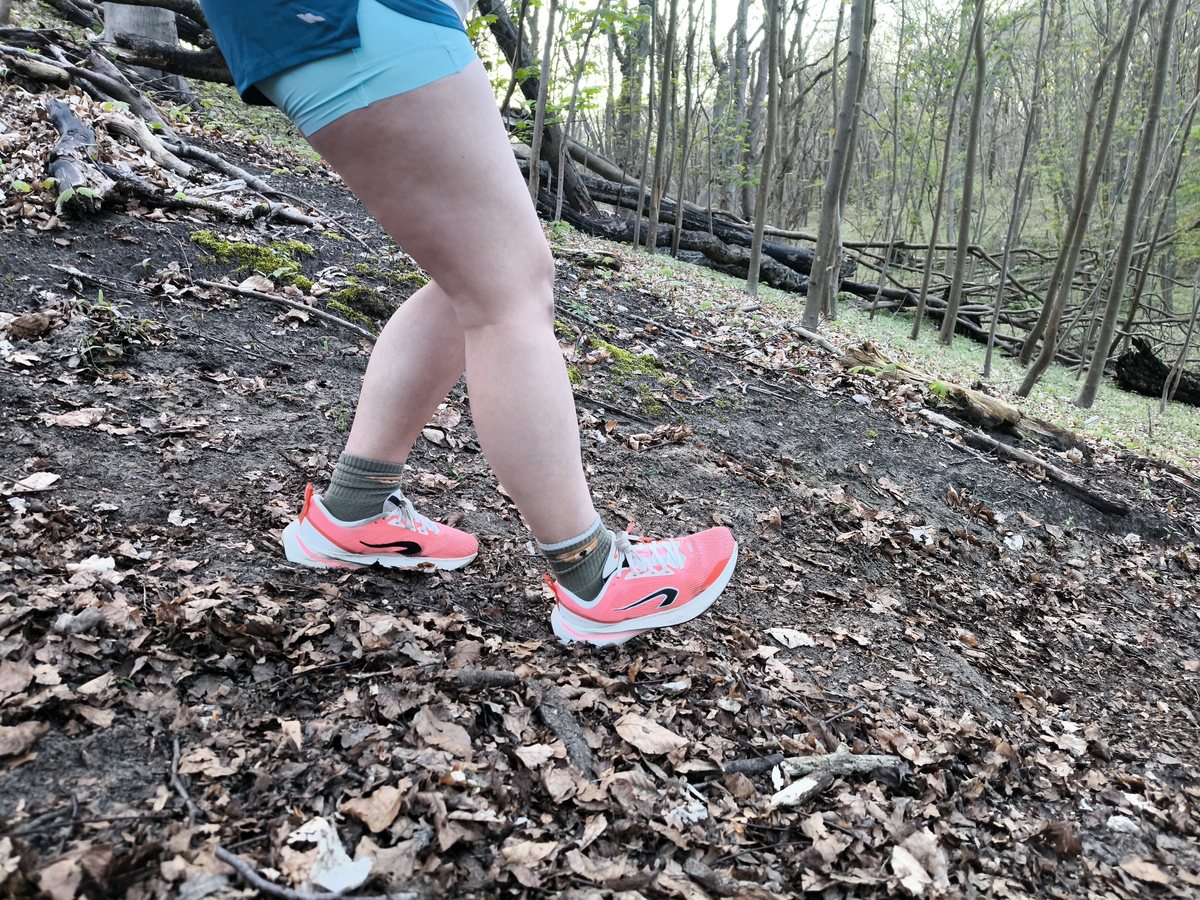
Women’s Trail Running Shoe Buyer’s Guide
Because we tested the women’s pairs on the same feet, we can compare them on the things that decide whether a trail shoe works for you, whether you run or hike in it: width, length, cushioning, drop, grip and weight. Here is what the tests showed.
Width and Volume Are Not the Same Thing
Our test feet are wide without being high volume, and that combination exposed a difference most size charts ignore. A Wide adds room across the forefoot, but not always height over the toes.
The Saucony Peregrine 16 Wide and the Nike ACG Pegasus Trail both add width with little extra depth: great for a wide, flat foot, snug for a high-volume one. The Altra Lone Peak 9+ sits on Altra’s widest last and is the first shoe to try if your forefoot is both wide and deep. The HOKA Speedgoat 7 Wide, Brooks Cascadia 20 Wide and Brooks Caldera 8 also gave plenty of room. The Altra Experience Wild 3+ is the one to skip with genuinely wide feet: its Standard FootShape last is narrower, and there is no wide version.
Sizing: When to Go Up Half a Size
Most of these shoes ran true to size in a women’s US 8.5. Two did not: HOKA asks you to go half a size up in the Speedgoat 7, which worked, and the Nike Wildhorse 10 was sized up for wide feet. Check length on a descent rather than standing still, because that is when your toes slide forward.
If your heel lifts or your foot slides on steep downhills, try lacing before sizing down. A heel lock through the top eyelet fixed it on the Cascadia 20 and the Experience Wild 3+.
| Shoe | Size worn | How it fit |
|---|---|---|
| Altra Experience Wild 3+ | US 8.5 | True to size; no wide version |
| Altra Lone Peak 9 (9+) | Usual size | True to size; size up between half sizes |
| Brooks Cascadia 20 | US 8.5 Wide | True to size |
| HOKA Speedgoat 7 | US 9 Wide | Half a size up, as HOKA advises |
| Saucony Peregrine 16 | US 8.5 Wide | True to size; little volume over the toes |
| HOKA Challenger 8 | US 8.5 | True to size, roomier than the 7 |
| Nike ACG Pegasus Trail | US 8.5 | True to size, roomy forefoot |
| Nike Wildhorse 10 | Half a size up | Sized up for wide feet |
| Brooks Caldera 8 | US 8.5 (Medium) | One width, roomy forefoot |
Cushioning: Soft, Springy or Close to the Ground
The HOKA Challenger 8 is the softest shoe here, but its foam feels flat. The Speedgoat 7 pairs a lot of foam with real spring, and the Brooks Caldera 8 gives deep, steady cushioning for long hiking days. The Cascadia 20 rides firmer with some spring and still felt supportive after four or five hours.
For more ground feel, the Saucony Peregrine 16 sits lowest of the cushioned shoes, at 32 mm under the heel, with a forefoot rock guard. More foam protects tired legs on long days; less lets you place your feet precisely on rocky, technical trail.
Drop: From 0 to 8 mm
Drop is the height difference between heel and forefoot. Here it runs from 0 mm on the Lone Peak 9+, through 4 mm (Experience Wild 3+, Peregrine 16), 5 mm (Speedgoat 7) and 6 mm (Cascadia 20), to 8 mm on the Challenger 8 and ACG Pegasus Trail. A higher drop suits heel strikers and anyone coming from road shoes or hiking boots.
If you have never worn zero drop, build up slowly: our Lone Peak 9 test noted calf strain while adjusting from higher-drop shoes.
Grip: Match the Outsole to Your Trails
Five of the nine run on Vibram Megagrip: the Experience Wild 3+, Lone Peak 9+, Cascadia 20, Speedgoat 7 and Peregrine 16. They held best on wet rock and roots in our tests. The Challenger 8, ACG Pegasus Trail and Wildhorse 10 are happiest on gravel, packed dirt and grass, and slipped on wet limestone or damp rock.
None of the nine is built for deep, sticky mud: with lugs of 3.4 to 5 mm, they run out of depth once the mud gets deep. For a muddy season, see our Salomon Speedcross 6 review.
Weight
Measured on our scale in women’s sizes, the women’s pairs we weighed come in between about 8.1 oz230 g (Challenger 8, US 8.5, close to HOKA’s listed weight) and 9.8 oz279 g (Cascadia 20, US 8.5 Wide) per shoe. The Experience Wild 3+ felt the most nimble at 8.57 oz243 g. Weight matters most on long climbs: the Caldera 8 and Wildhorse 10 both felt heavier there than their numbers suggest.
Waterproof or Mesh?
We tested the mesh versions, which soak through in steady rain but were dry again by the next morning. Six of the nine also come in a waterproof version: the Cascadia 20, Speedgoat 7, Peregrine 16, Challenger 8 and ACG Pegasus Trail as GORE-TEX models, and the Lone Peak 9 as a waterproof mid. The membrane keeps water out at the cost of some airflow, so it pays off most in cold, steady rain and snow. We compare the GTX versions in our best waterproof trail running shoes.
When to Replace Them
Expect roughly 300 to 500 miles480 to 800 km from a pair, depending on terrain and how you use them; our Challenger 8 and Lone Peak 9 reviews both land in that range. Replace them when the lugs are worn smooth under the forefoot or the foam no longer bounces back. On the Challenger 8, also watch the outsole edges: some owners report the glue lifting early.
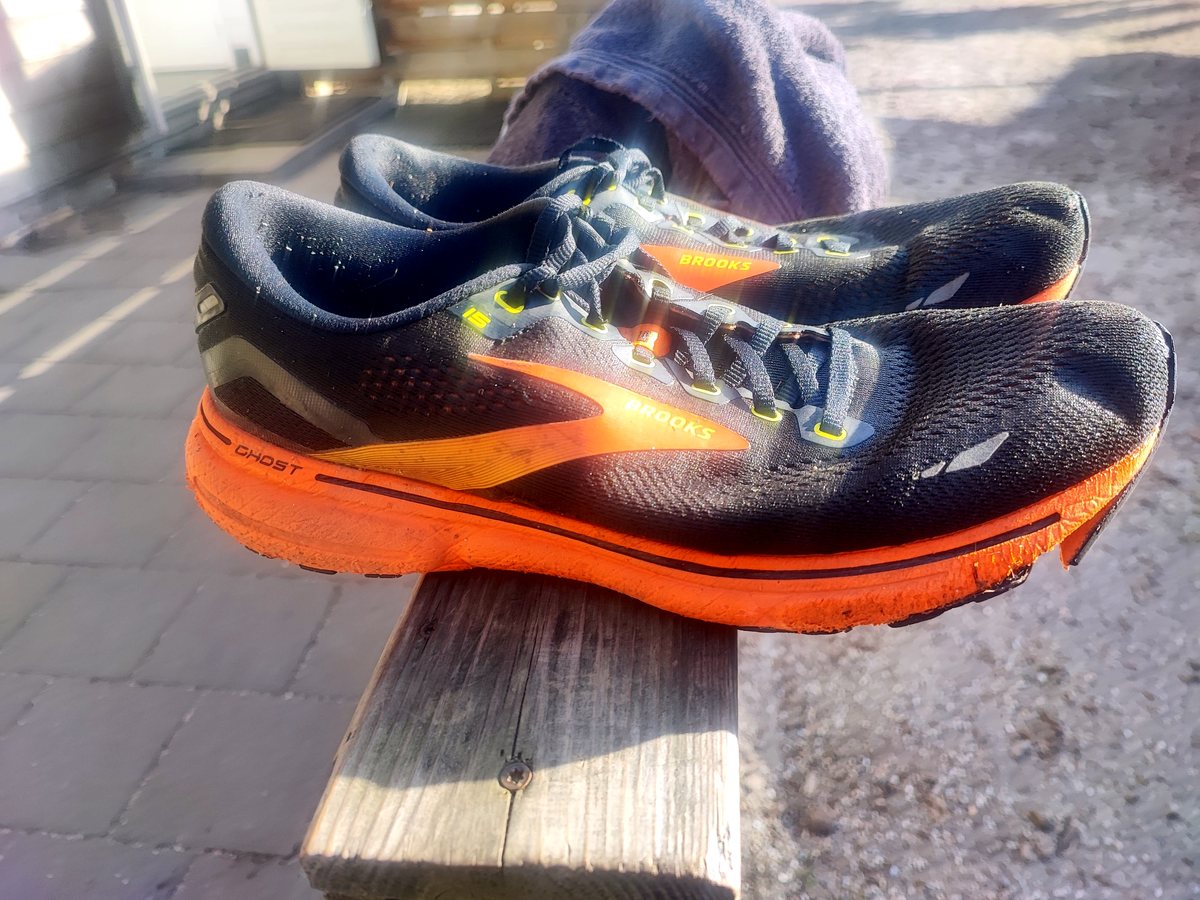
Running mostly on roads with some trail? Read can you wear trail running shoes on the road. Swapping hiking boots for trail runners? Read whether trail running shoes are good for hiking.
FAQs
Are Women’s Trail Running Shoes Different from Men’s?
Usually the women’s version is built on a different last, sized in women’s lengths and often a little lighter. That is why we test in women’s sizes: the fit notes on this page come from women’s pairs.
Should I Size Up in Trail Running Shoes?
Only in some. In our tests, the HOKA Speedgoat 7 needed half a size up, as HOKA advises, and the Nike Wildhorse 10 was sized up for wide feet. The others ran true to size.
Which Women’s Trail Running Shoe Is Best for Wide Feet?
The Altra Lone Peak 9+ has the roomiest toe box on this list, and the Nike ACG Pegasus Trail fit wide feet at its normal size. The Brooks Cascadia 20, HOKA Speedgoat 7 and Saucony Peregrine 16 come in Wide versions; the Altra Experience Wild 3+ does not.
Do These Shoes Come in Waterproof Versions?
Six of the nine do. The Brooks Cascadia 20, HOKA Speedgoat 7, Saucony Peregrine 16 and HOKA Challenger 8 come in GTX versions, the Nike ACG Pegasus Trail in a GORE-TEX version, and the Altra Lone Peak 9 as a waterproof mid. The Altra Experience Wild 3+, Nike Wildhorse 10 and Brooks Caldera 8 are mesh only. Each spec panel above shows which version exists.
Which Is the Most Cushioned?
The HOKA Challenger 8 is the softest, and the HOKA Speedgoat 7 and Brooks Caldera 8 add deep cushioning with more stability on rough ground.
Can You Hike in Women’s Trail Running Shoes?
Yes. Most of these nine went on hikes as well as runs, from day hikes to a two-day hut-to-hut trip. For hiking with a day pack, the Brooks Cascadia 20, HOKA Speedgoat 7 and Brooks Caldera 8 felt the most stable; for heavy loads or rough off-trail ground, boots still make sense.
How Long Do Trail Running Shoes Last?
Roughly 300 to 500 miles480 to 800 km, depending on terrain, body weight and how you use them. Worn-smooth lugs and foam that no longer springs back are the signs to replace them.
Prices in this article are approximate and updated annually. Check the retailer for current rates.