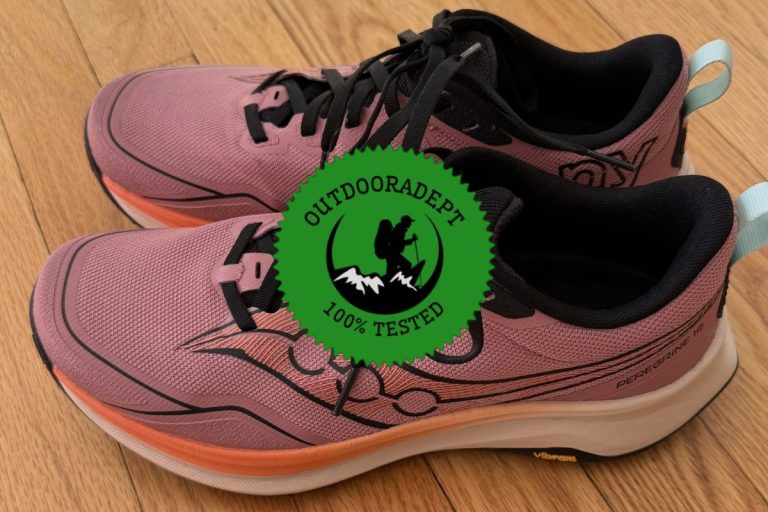
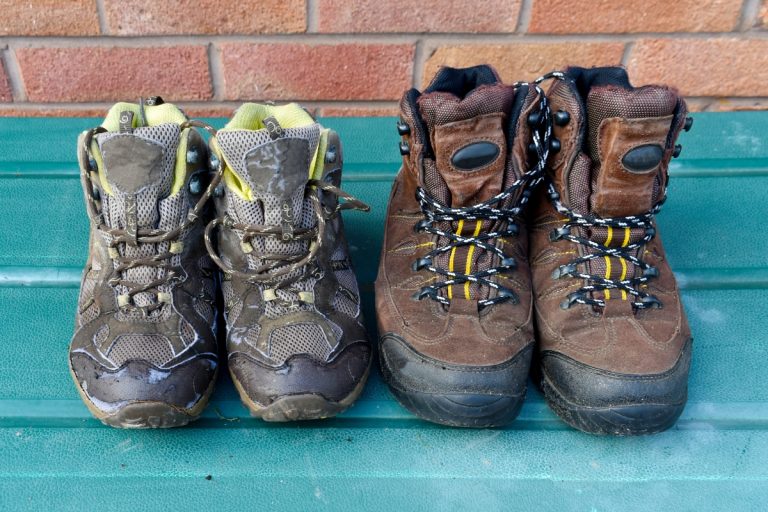
Nike relaunched the Pegasus Trail under its ACG banner in spring 2026, another turn of a series that has long been one of its most popular road-to-trail shoes.
This version brought more ReactX foam, a new All Terrain Compound 2.0 outsole, a wider forefoot, and a lower drop than the 5, under a new name that rules out a Pegasus Trail 6.
Early reaction ran warmer than usual, with most reviewers welcoming the roomier toe box and the grip upgrade, though nearly all of them ran it, on single outings, and few took it hiking.
I tested the shoe on one long trip this summer, and six days on the same legs gave me a clearer picture for my Nike ACG Pegasus Trail review than single outings would.
It was a week at Rânca in the Southern Carpathians, 31 miles50 km of running and hiking four to five hours a day out of a cabin, over grassy ridges, open subalpine ground, and gravel where the track widened.
Day four was the outlier, a rocky line across loose stone in 91 °F33 °C heat, and that is where the shoes found their limits.
Quick Verdict: 4.2/5
Nike ACG Pegasus Trail
A road-to-trail shoe that fits a wide foot at its normal size and stays comfortable through long days in heat.

Six days at four to five hours put these on gravel, hardpack, grass and rock, and only the rock gave me trouble, where the platform sits taller and softer than I wanted underfoot.
Wide, low-volume feet on mixed ground get the most out of them, and I would order my normal size again without thinking about it.
Deep feet are the ones I would steer away, along with anyone whose weeks are mostly stone or who needs to stay dry in sustained wet.
Highlights
| Feature | As tested |
|---|---|
| Weight | Stated: 8.7 oz247 g per shoe at a women's US 8; Measured: 8.9 oz253 g women’s US 8.5 |
| Water resistance | Not waterproof; morning dew wetted the surface without getting through to my socks, dry again in about 30 minutes |
| Traction | Nike All-Terrain Compound outsole; no issues on gravel, hardpack, grass or rock, some slipping on dew-wet grass |
| Comfort | No wearing in needed, and no hot spots over six consecutive days |
| Adjustability | Standard lacing; held from morning to cabin without me touching them |
| Breathability | Moderately breathable, and enough for four hours at 91 °F33 °C with no dampness inside |
| Durability | At 31 miles50 km no scuffs or tears in the upper and no wear on the outsole; the mesh at the front feels a bit rough |
| Arch support | Neutral, and good enough to keep fatigue in check across long days |
| Toe protection | Rubber bumper took a full day of catching rocks and marked without failing; Nike lists no rock plate |
| Release | 2026 |
| Current price | $155 |
Tap a star to vote. Tap the left half of a star for a half star.
Thanks, your rating counts
It is now part of this shoe’s community score. Changed your mind? Tap a different star.
See how it ranks on the full leaderboard →PROS
CONS
Trail tips, news and giveaways
One email a month: hiking tips, gear news, giveaways, fresh footwear verdicts and more. No spam, unsubscribe anytime.
Things We Tested When We Reviewed the Nike ACG Pegasus Trail

Traction

Nike’s new All Terrain Compound 2.0 (ATC 2.0) outsole gave me no issues on gravel and hardpack. Grass and the rocky sections went fine too.
We spent most of the week on broad grassy ridges and open subalpine ground with gravel where the track widened out (the road-to-trail ground this outsole is built around) and the grip held at hiking pace and at running pace both.
Nike says ATC 2.0 grips better than the rubber it replaces and puts wet terrain at the front of its pitch for the shoe. On dry ground I had no reason to argue with that. Maybe a Vibram outsole would have done better on the loose ground higher up, though for a trail runner put through a week of this I found the grip quite stable.
Early mornings with dew on the grass brought some slipping, nothing that would have endangered me, and it stopped as the day dried out. If you set off at first light on steep grass, expect it.
Beside a stream we found one patch of sticky clay and the lugs packed up with it. Ordinary mud they shed well, but that clay I had to clean off by hand at the next stop.
A deeper, wider-spaced lug would have cleared it on its own, and you would give up some of the easy rolling on gravel and road to get there.
On descents, the Nike ACG Pegasus Trail held better than the previous version, though deeper lugs might still have been preferable on the steeper grassy pitches.
Durability
Nike builds the upper from a lightweight engineered mesh while wrapping the toe in rubber to protect against trail debris. I was happy to see that the Nike ACG Pegasus Trail came through the week without scuffs or tears.
The outsole did not wear down either. On day four we hit a rockier path over loose, uneven stone and I kept catching the front of the shoe against it, which marked up the bumper by the evening. A bumper is there to take that sort of contact, so I would not call it wear so much as the bumper doing its job.
The mesh around the front feels a bit rough now where it was smooth, though holding it to the light shows nothing coming through. It is the only part of the shoe that has changed at all, and it is the patch I will be looking at again as the mileage builds.
I have 31 miles50 km on them, so take this as an early look rather than a verdict. For most of the week we were on easy to moderate trails, which it is built for, and that rocky path was above what it was built for.
Comfort
They needed no wearing in, and no break-in period at all. I knew straight away these would not want a 10-mile16 km walk before I took them up the mountain, and it was the same with the previous version. Over six days I had no hot spots and nothing rubbed.
These are well padded shoes, through the collar and the tongue in particular, and that kept the pressure off the top of my foot through the long hours. My feet stayed comfortable through the four and five hour days as well, including later on when they had swollen a little.
The stock insoles are good and I left them in for all 31 miles50 km.
By day four I was feeling it, but that was three days of hiking catching up with me rather than anything to do with the shoes. Six days on the same legs is the only way I know to separate those two.

Weight
I measured 8.9 oz253 g per shoe in my women’s US 8.5. Nike lists 8.7 oz247 g at a women’s US 8, so the half size accounts for the difference.
Nike put more ReactX foam underfoot on this version than the last one carried and raised the stack with it, on an 8 mm heel-to-toe drop.
Looking at a shoe with this much cushioning, I would call them lightweight, and I did not think about the weight while I was wearing them.
Since the Nike ACG Pegasus Trail is built for moderate terrain, maybe a few ounces down would have been better, and the weight might have influenced my fatigue a bit, though I cannot separate that from the climbing.
Waterproofing
These are not waterproof, and Nike sells the waterproofing as a separate GORE-TEX model rather than building it into this one, describing the mesh here as breathable and quick-draining instead.
We had no rainy days, only morning dew, and the shoes got wet on the surface without the wetness getting through to my socks. They were dry again in about 30 minutes after the sun came up, and I never had to start a day in damp shoes.
A week without rain does not tell you much about heavy weather, so I cannot say how they would handle a downpour or a stream crossing. Nike sells a GORE-TEX version at $175 if you expect that, and our picks for waterproof trail running shoes are a better place to start.
Support

My foot stayed put with zero slipping, even on fast descents. The laces held from the moment I set them in the morning and I did not need to touch them during the day, though those with narrow feet may need to.
The arch support is good and it kept fatigue in check across the long days, so my arches were not aching by the return leg on any of them.
On the rocky terrain I had a couple of rolls. The shoes felt a bit too high and soft there and I felt a bit insecure, nothing life threatening, and I slowed down and picked my feet up more.
Nike says the wider design of this version brings more stability on technical trails, and on the ground where I would have wanted that most it was not what I found. Again, this is not what the shoe is designed for, and there is no rock plate listed for it either.
Those two things are worth keeping apart. The wobble came from the platform moving under me, not from my foot shifting around inside the shoe, and the lockdown itself never gave me any trouble.
Breathability
Temperatures ran 82 to 91 °F28 to 33 °C all week and I would call these moderately breathable.
Most of our days were on open ground with very little shade, four to five hours at a time, and I sweated the normal amount with no dampness inside and no problems with sweat at any point.
The upper is a thin engineered mesh, so there is airflow through it without much between your foot and the outside.
I wore thin merino hiking socks, the same brand every day, so anyone in a thicker sock should factor that in. At the cabin in the evening there was no disastrous smell anywhere.
Fit and Sizing

Nike redesigned the toe box on this version and added room across the front of the shoe, and that is the change I noticed first. The toe box is wide, and even with wide feet I did not need to size up.
My feet sat comfortably from the start and although they swelled a bit after four hours the shoes were still comfortable, and coming downhill on tired legs my toes did not hit the front.
They run true to size, and I take a women’s US 8.5. In our Nike Pegasus Trail 5 review, we told wide-footed readers to try half a size up, and on this version that advice no longer applies, which puts these among the easier trail running shoes for wide feet to order online.
For more wide-foot options, check out our roundup on the best hiking boots for wide feet.
Nike does not currently list a dedicated wide version of this shoe, so the standard fit is the route in, and that is the reason the wider forefoot counts for more here than it would on a shoe with a wide SKU behind it.
Across the middle, the fit is snug with no pressure points for me. My feet are wide without being high volume, though, and the extra room is most noticeable across the forefoot while the midfoot stays secure, so those with high volume feet may still find it snug.
That distinction is the one to go on here rather than the usual wide-or-narrow question.
The heel stayed put through the whole week with no rubbing and no lifting, on the climbs and on the fast descents both.
How the Nike ACG Pegasus Trail Compares
Nike ACG Pegasus Trail vs. Nike Pegasus Trail 5
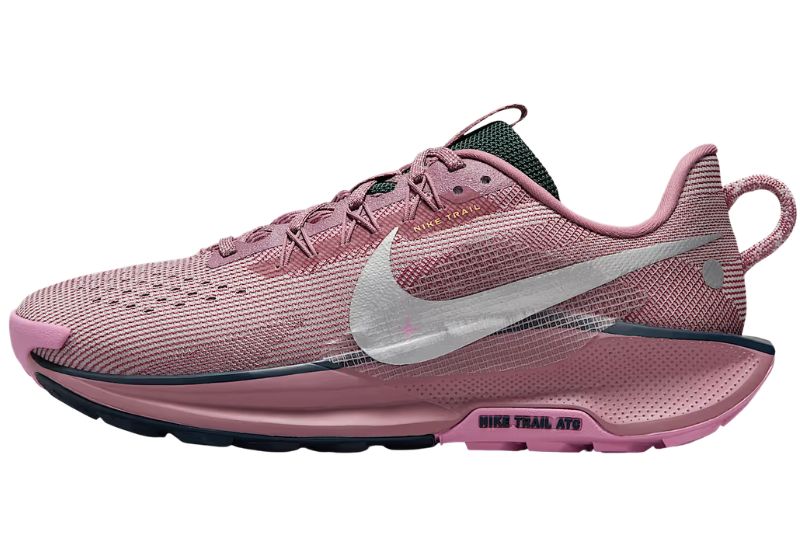
I have tested both. Nike brought the drop down from the 9.5 mm of the Pegasus Trail 5 to 8 mm here, and the extra foam puts you taller and softer underfoot than the 5 did.
On descents and grassy slopes the wider platform held better for me than the 5 did.
The 5 is the flatter, firmer ride of the two and I would still take it over this one for a day with rock in it.
Nike ACG Pegasus Trail vs. Nike Wildhorse 10
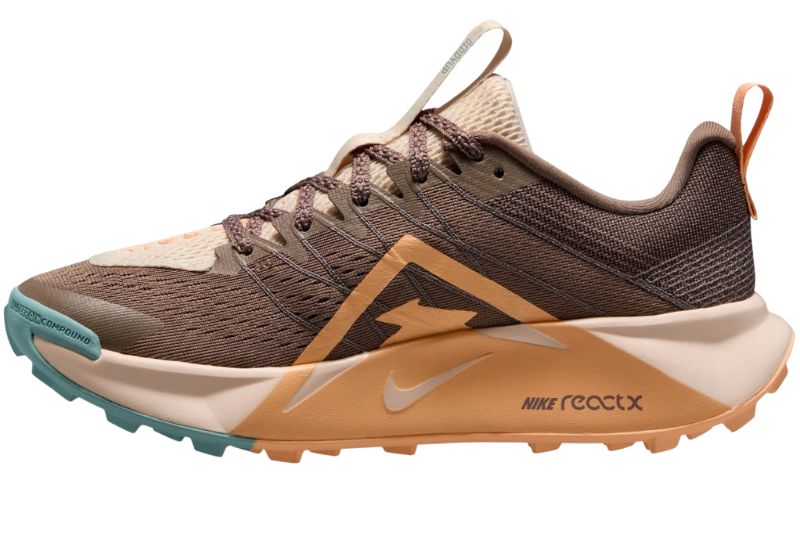
I tested the Wildhorse 10 myself over two days in Stara Planina, and the pair of them make a useful comparison for wide feet. I sized up half a size for the Wildhorse and stayed at my normal size here, which says something about how much room this last has added.
The Wildhorse carries a forefoot rock shield that the ACG does not, so it is the better shoe when sharp stone is underfoot.
It went tippy on off-camber rocky ground much as this one did, though, so it is no technical fix. It sits on a 9.5 mm drop against 8 mm here, costs $165, and it runs warm as the temperature climbs.
Nike ACG Pegasus Trail vs. Altra Experience Wild 3

The Altra sits far lower at a 4 mm drop and leaves your foot to do more of the work, where this one holds you higher up on more foam.
Our review of it puts the sweet spot at door-to-trail running and non-technical singletrack, which overlaps almost exactly with the ground the ACG suited me on.
Go Altra if you want the natural, low-drop feel and the room that comes with a foot-shaped last. Stay here if you would rather have the cushioning and a more traditional drop.
Where the Nike ACG Pegasus Trail Performs Best
Mixed ground is where these worked for me, and I never felt I was in the wrong shoe on any of it. They suit the kind of week where you run a few miles of track to reach the dirt and spend the rest of the day on grass and hardpack, at whatever pace suits the gradient.
Heat is the other thing I would put them forward for. Very few cushioned shoes I have taken into heat like that have left my feet as dry over four and five hour days.
And if your feet are wide without being deep, they are worth ordering in your usual size before you try anything else.

Where It Falls Short
Rocky ground is where I would hold back. One day of it was enough to tell me I would not pick these for a route that is mostly stone, and anyone whose weeks look like that should be shopping in a different part of the range.
Wet ground asks for some care rather than a different shoe. Early starts on steep grass and any churned, clay-heavy sections both want you to plan a little, and neither would stop me taking these out.
Deep feet are the last group I would steer away. The room is across the front of the shoe, so a foot that needs depth may not find it here.
Do We Recommend It?
Nike ACG Pegasus Trail
I would take these back to Rânca tomorrow, and that is the shortest answer I can give you. For most of our week we were on easy to moderate trails, which they are built for, and at $155 they did that job well.
They needed no wearing in, the insoles are good enough to leave alone, and they stayed comfortable through six consecutive days in real heat.
The rocky day was above what they are built for and I could feel it, so if that is your usual ground, look elsewhere. Otherwise, for wide and low feet on mixed terrain, I would buy them again.
Where to Buy
| WHERE TO BUY? | MEN | WOMEN |
| Amazon | See Pricing» | See Pricing» |
| Backcountry | See Pricing» | See Pricing» |
| REI | See Pricing» | See Pricing» |
FAQs
I hiked and ran in them four to five hours a day for six days straight and they took it without complaint. The cushioning and the arch support hold up over long days, and there is enough room at the front for toe splay on descents. Rocky ground is the one place I would leave them at home.
Not in the corrective sense. Nike states the shoe has no traditional stability elements such as medial posts or structured guidance systems, and its stability language refers to the wider platform instead. There is no rock plate either. If you need correction for overpronation, plan on an insole or a different model.
Tap a star to vote. Tap the left half of a star for a half star.
Thanks, your rating counts
It is now part of this shoe’s community score. Changed your mind? Tap a different star.
See how it ranks on the full leaderboard →Prices in this article are approximate and updated annually. Check the retailer for current rates.