Throughout the years, I’ve invested a lot of time in finding the ideal hiking boots that match my personal style. I’ve experimented with a range of options—from traditional leather to lighter, modern alternatives—in search of the perfect mix of comfort, support, and traction.
Now, I own several pairs and have learned how to identify truly worthwhile purchases.
Whether you’re buying your first pair of hiking boots or looking to upgrade your current gear, I’ve put together a list of the best women’s hiking boots available right now.
Continue reading to explore your options and learn how to select the perfect pair that meets your needs.
The Verdict – Our Nr. #1 Pick
Out of all the boots we tested, the Salomon Quest 5 GTX stood out to me as the best overall hiking boot for women for its unbeatable combination of structure, support, and stability under a heavy pack.

From my experience testing them on wet dirt and sandstone, the All Terrain Contagrip outsole provided excellent traction and a secure bite. I also noticed that the EnergyCell EVA midsole and structured heel cup kept my rearfoot perfectly secure and absorbed shocks effectively on steep descents.
Initially, the nubuck leather and ripstop fabric construction felt firm and boot-like, but it softened up beautifully after about five miles. This allowed me to walk with a natural, less blocky stride while maintaining complete confidence on uneven terrain.
Moreover, the reliable GORE-TEX membrane and bellows tongue truly make a difference when walking through wet grass, mud, and shallow puddles. It completely outperforms models without a dedicated waterproof liner, though it does run a bit warm in hot weather.
To identify the top 11 hiking boots for women, we tested 19 pairs across the United States and Europe. Each underwent rigorous trials across terrains like flat, rocky, muddy, and gravel, with a special focus on qualities most important to women such as fit, weight, style, durability, and supportive design. We evaluated their waterproofing in rain, breathability in heat, and insulation in snow to ensure they can handle any condition.
Our team’s multi-day tests, supplemented by independent experts, determined key factors like break-in period, cushioning for comfort, feminine design, and arch support. Boots were rated on criteria including fit, cushioning, tread, breathability, and more, all tailored to meet women’s needs. After calculating average scores, we incorporated external feedback and warranties into our final recommendations.
EDITOR’S CHOICE
Salomon Quest 5 GTX
#2ND BEST CHOICE
Lowa Renegade GTX Mid

#3RD BEST CHOICE
Salomon X Ultra 5 Mid GTX

Our Top 13 Recommended Hiking Boots for Women
1) Salomon Quest 5 GORE-TEX
4.9/5
Best Women’s Hiking Boots Overall
So, it was no surprise to discover that the new Salomon Quest 5 GTX brings the same exceptional support and backpacking pedigree that made the Quest line legendary.
I’ve always had a great experience with Salomon products, whether I’m wearing their midweight hiking boots or trail runners.
Compared to the older Quest 4, this new 5th generation features a smoother stride and a slightly roomier forefoot. This enhancement, paired with the 4D Advanced Chassis, allows me to hike longer with a heavy pack before foot fatigue sets in.
Additionally, the Quest 5 GTX utilizes a SensiFIT wrap that secures the midfoot without over-tightening the upper cuff. I found this design incredibly supportive, preventing my foot from drifting during steep backpacking descents.
Like many heavy-duty backpacking boots with nubuck leather uppers, the Quest 5 has a firm initial feel. However, in my experience, just a few miles on the trail were enough to soften the flex point and turn that box-fresh stiffness into rugged comfort.
With the mixed-ground Contagrip tread and full GTX membrane, these boots work incredibly well in wet, muddy, or rocky conditions. You can absolutely rely on them in cooler weather or shoulder seasons, as the sturdy build adds noticeable warmth that protects your feet from dropping temperatures.
For more information, read our full analysis and review of Salomon Quest 5 GTX.
Key Specs:
Weight (pair): 2 lb. 9 oz.1.16 kg.
Waterproof: yes
Upper Material: Nubuck leather and ripstop fabric
Top Features: GORE-TEX membrane, 4D Advanced Chassis, All Terrain Contagrip outsole, EnergyCell EVA midsole
PROS
CONS
2) Lowa Renegade GTX Mid
4.8/5
Most Durable Women’s Hiking Boots
Some of the most durable boots on this list, the Lowa Renegade GTX offers a good balance between comfort, ankle support, and weather protection.

These waterproof boots feature a thick, rigid Vibram outsole that grips slippery surfaces effectively. The supportive midsole ensures you can navigate rocky terrain without feeling every rock underfoot.
The newest Renegade GTX Mid model comes with the MONOWRAP® frame. This addition provides improved stability and enhances the boots’ performance on rugged terrain compared to previous versions.
During my testing, I found the new Renegade more comfortable when climbing uphill. It offered enough ankle support to keep me safe on tricky paths.
The nylon shank between the ball of the foot and the heel was exactly what I needed for my high arches, especially while exploring challenging sections of the Pacific Crest Trail.
Although the Renegade GTX Mid typically has a narrow toe box, there’s also a wide version available. If you need a roomier fit, I’d recommend selecting that option.
For full details about this product, read our Lowa Renegade GTX Mid review.
Key Specs:
Weight (pair): 2 lb. 2 oz.0.96 kg.
Waterproof: yes
Upper Material: Nubuck leather
Top Features: Derby-cut styling, cushioned and gusseted tongue, double-injection DuraPU® midsoles
PROS
CONS
3) Salomon X Ultra 5 Mid GTX
4.7/5
Best Lightweight Hiking Boots
This model feels more like a trail running shoe and has less cushioning in the heel, which can be a downside when hitting rocky trails.
A lighter Salomon hiking boot, the Salomon X Ultra 5 Mid GTX has a more flexible rubber outsole than the Quest 4 GTX, being more suitable for fast and light adventures.
However, the Ultra 5 Mid GTX hiking shoe comes with a newly refined Advanced Chassis, offering even better lateral support than the previous version 4, which makes it more comfortable during long hikes.
Although I typically opt for heavier boots during my hikes as they offer a greater sense of stability, my experience with the X Ultra 5 Mid GTX proved that these sturdy boots can handle nearly any terrain.
For more, read our comparison review of the Salomon X Ultra 5 GTX Mid & Low.
Key Specs:
Weight (pair): 1 lb.0.45 kg.
Waterproof: yes
Upper Material: Matryx kevlar
Top Features: high-performance EnergyCell EVA foam midsole, gusseted tongue, SensiFit™ cradles
PROS
CONS
4) Merrell Moab 3 Waterproof
4.6/5
Most Comfortable Hiking Boots
Despite its traditional design with suede leather and mesh uppers, it proved to be a lightweight hiking boot that kept my feet relaxed even after hiking off-trail with a heavy backpack.

A great combination between a waterproof boot and a high-quality trail running shoe, the Moab 3 Waterproof performed great on the rocky terrain of the Appalachian trail where I tested it.
Compared to the old Moab 2 Waterproof hiking boots, the hiking shoe has an improved Vibram sole, more cushioning in the heels, and better insoles. Moreover, for the Moab 3, Merrell uses more recycled materials, so these boots are greener.
Unfortunately, these hiking shoes don’t offer enough support for users with high arches, who may experience foot fatigue, especially on long distances.
Also, they are waterproof but don’t feature the Gore-Tex membrane, so they may not handle multiple creek crossings.
These lightweight hiking boots do have a wide toe box, though, which comfortably fit almost all foot shapes. More details about this product can be found in our Merrell Moab 3 Waterproof review.
Key Specs:
Weight (pair): 1 lb. 12.8 oz.0.82 kg.
Waterproof: yes
Upper Material: Pig suede leather and breathable mesh
Top Features: Bellows tongue, Kinetic Fit™ ADVANCED removable contoured footbed, Vibram® TC5+ outsole
PROS
CONS
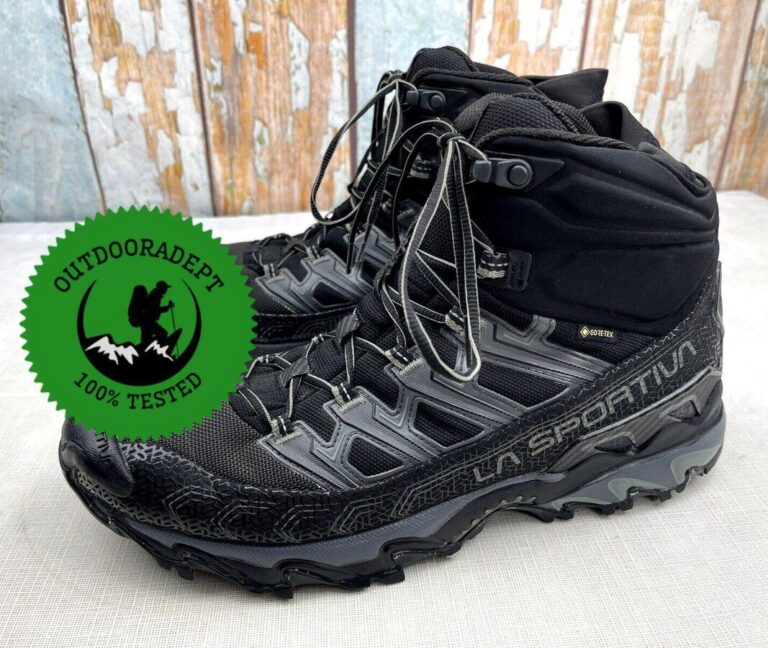
5) La Sportiva Ultra Raptor II Mid GTX
4.5/5
Best Waterproof Hiking Boots
As I wore these trail-runners like shoes during several day hikes, I was able to tell that the mesh panels are also more lightweight and more breathable.

If you want a pair of supportive hiking boots for your high arches, the La Sportiva Ultra Raptor II Mid GTX has one of the best heel designs in the market.
As opposed to the old Ultra Raptor, the new hiking boots from La Sportiva have an improved midsole and a TPU transfer nylon shank that was precision molded to cushion your foot better.
The only downside I could find for these La Sportiva boots was that they are narrow in the toe area. They felt quite tight when I first tried them, so if you are between sizes, I recommend going up a half size.
The good news, though, is that it doesn’t take long to break them in, turning them into some of the most comfortable hiking shoes you’ve ever owned.
Read more about these hiking boots in our La Sportiva Ultra Raptor II Mid GTX Review.
Key Specs:
Weight (pair): 1 lb. 7 oz.0.65 kg.
Waterproof: yes
Upper Material: High-weave AirMesh/microfiber/thermoplastic polyurethane
Top Features: Compression-molded MEMlex midsoles, TPU lacing, nylon molded flex TPU Transfer shanks
PROS
CONS
6) KEEN Targhee IV Mid
4.4/5
Best Hiking Boots for Backpacking
The Targhee IV is a versatile, do-it-all hiking boot designed with a generously wide toe box and a nubuck leather upper. The new delamination-resistant KEEN.FUSION construction makes it an exceptionally durable choice for the trail.

Equipped with a KEEN.RUGGED outsole and 4-mm deep multidirectional lugs, this solid hiking boot provides reliable traction on dry, mixed terrain. It is highly dependable for shoulder-season backpackers carrying moderate loads (up to 35 lbs),16 kg), though it is not intended for highly technical alpine terrain or exceptionally heavy packs.
While the boot offers a famously accommodating fit for medium to wide feet, the stock insoles sit rather flat and lack arch support. Once you remove them and add a higher-quality aftermarket footbed, the underfoot character improves completely, preventing foot fatigue on long descents.
Check our review of Keen Targhee IV Mid Waterproof for full information.
Key Specs:
Weight (pair): 2 lbs 2.5 oz.0.98 kg.
Waterproof: yes
Upper Material: Nubuck leather
Top Features: KEEN.FUSION fused construction, KEEN.RUGGED outsole, KEEN.DRY waterproofing, Luftcell PU midsole
PROS
CONS
7) SCARPA Kailash Plus GTX
4.3/5
This hiking boot model features genuine leather construction and a man-made sole with an aggressive pattern that helps you stay balanced even when you are exploring muddy areas.

The SCARPA Kailash Plus GTX Waterproof is a pair of mountaineering boots made in Italy that is both durable and stylish.
Compared to the previous version, the Plus model features a wider toe box for improved comfort and fit and a new lacing system that allows for a more customized fit and a more secure lockdown of the foot.
For me, these mid-hiking boots are the first choice when hiking in colder temperatures or heading out on technical trails.
They kept me warm many times on my mountaineering adventures, and the padded collar stayed comfortable, although it seemed to provide rather rigid ankle support at first.
Key Specs:
Weight (pair): 2 lb. 4 oz.1.02 kg.
Waterproof: yes
Upper Material: Nubuck leather
Top Features: Molded TPU toe cap, man-made sole
PROS
CONS
8) Vasque Breeze AT Mid Waterproof
4.2/5
This pair of heavyweight boots from Vasque is a good option for advanced hikers who are ready to give their hiking a boost.

The Vasque Breeze AT Mid is a rather stiff boot that needs to be broken in, but once the leather molds to your foot, this hiking boot will be your best friend as you follow a tricky path to the lone peak you’ve been hunting.
In my testing of the latest version of this Vasque hiking boot, I noticed that it has improved cushioning and a thicker leather upper, but it also appears to be narrower than the previous model, particularly in the toe area.
Therefore, if you have wide feet, I would suggest ordering a half-size larger.
On the other hand, this waterproof boot performed great during creek crossings, and the Gore-Tex liner was more breathable than I expected.
Key Specs:
Weight (pair): 2 lb. 4 oz.1.02 kg.
Waterproof: yes
Upper Material: Nubuck leather/air-mesh
Top Features: EVA cushioning pods, Vibram® Contact Grip
PROS
CONS
9) Timberland White Ledge Mid
4.1/5
Most Affordable Hiking Boots
They feature a leather construction that is reinforced by a durable sole, making them ideal for backpacking trips.

The Timberland White Ledge Mid Waterproof is the best budget hiking boot on our list.
The latest version of the Timberland Ledge hiking boot performed well on my tests, providing better traction than the previous model and more support for my arches.
The redesigned heel is indeed more comfortable on long distances, and this hiking shoe also has enough padding to provide a good fit.
I wouldn’t call the Timberland White Ledge Mid Waterproof a lightweight hiking boot. As I advanced on the trail with a heavy pack, I could feel the extra weight of the boots dragging my feet down and causing me foot pain.
However, this model can be a good option if you have a low pack weight and use it for day hiking only. Additionally, this model is a high-performing plantar fasciitis hiking boot.
Key Specs:
Weight (pair): 2 lb. 14.8 oz.1.33 kg.
Waterproof: yes
Upper Material: Premium full-grain waterproof leather
Top Features: Rustproof, speed lace hardware, multi-directional lugs
PROS
CONS
10) Asolo Falcon GV Hiking Boot
4.1/5
These boots are a great choice for light hiking, backpacking trips, and day hikes, and are a step up from trail runners or other running shoes in terms of durability and protection.

Resembling a pair of trail runners, the Asolo Falcon GV hiking boots are a versatile and reliable option for hikers who want a balance of support and flexibility.
While they are not as stiff as some heavier backpacking boots, they provide just enough support to keep your feet stable on rocky terrain and protect you from trail debris.
From my experience with these boots, they are also relatively lightweight, which makes them a great choice for longer hikes where you need to conserve energy.
In our review of the Asolo Falcon GV, we found that it didn’t go through some serious improvements from one version to the other, but the GV model offers better traction and waterproofing thanks to the Vibram outsole and GTX lining.
Key Specs:
Weight (pair): 1 lb. 14.33 oz.0.86 kg.
Waterproof: yes
Upper Material: Water-resistant suede
Top Features: Dual-density EVA, self-cleaning Vibram Megagrip soles
PROS
CONS
11) Oboz Bridger Mid B-Dry
4.0/5
The Oboz Bridger Mid B-Dry Hiking Boot is a sturdy midweight boot built with premium leather and metal hardware that is incorporated into the lacing system.

This model looks and feels nothing like a running shoe, which made it clear to me that it is up for some tough trail testing.
Unfortunately, the new version of Oboz Bridger is somewhat narrower compared to the company’s previous models produced before 2018 when the Kathmandu Group acquired it, so I recommend sizing up. But besides that, everything stayed basically the same.
Compared to other boots that feature a lighter design, these midweight boots offer superior support. Also, while they may not be classified as GTX hiking boots, they do include waterproof technology that kept my feet dry while crossing shallow streams and puddles.
See our review of the Oboz Bridger Mid B-Dry for full product information.
Key Specs:
Weight (pair): 2 lb. 3.4 oz.1.00 kg.
Waterproof: yes
Upper Material: Nubuck leather
Top Features: Molded rubber toe cap, TPU chassis, single-density EVA
PROS
CONS
12) ALTRA Lone Peak Hiker 3
4.0/5
Best Zero-Drop Hiking Boot
For light hikes and walks in the forest, this lightweight boot from ALTRA offers the ideal combination between breathability and support.

It is the hiking boot version of the classical Altra hiking shoes, with one excellent improvement – the mid-cut. While this versatile boot preserves the same zero-drop design, it has taller ankle cuffs, offering increased ankle protection on tricky paths.
It can be a good first hiking boot, as the sole has medium-deep lugs and bites well in almost any type of terrain.
However, while testing these mid-hiking boots on a thru-hiking expedition, they confirmed my hunch that the midsole doesn’t offer enough support to prevent blisters and fatigue while carrying a heavy pack.
For day hiking, though, these climbing shoes work great, especially if you want a more pronounced ground feel.
Also, this pair of boots are not waterproof. That’s great if you only plan on wearing them on warm days, as they are super breathable, but you will probably need to go with another model when hiking in wet conditions.
Key Specs:
Weight (pair): 1 lb. 6.4 oz.0.63 kg.
Waterproof: no
Upper Material: Polyester mesh upper & air-mesh collar with suede overlays
Top Features: MaxTrac rubber outsoles, multi-directional TrailClaw lug pattern
PROS
CONS
13) Teva Grandview GTX Mid
3.9/5
The Grandview GTX Mid waterproof hiking boots are equipped with the already popular Vibram Megagrip outsoles, providing good traction on loose gravel and mud, even when you are carrying a heavy load.

Teva usually produces high-quality hiking footwear for women, and these Gore-Tex hiking boots do not disappoint.
Constructed from a micro waffle knit textile, the inner lining of these boots provides a pleasant sensation against the skin.
This feature combined with a responsive footbed and adjustable ankle shaft that sits low provided excellent comfort while I walked in these boots for hours, with no blistering at the end.
The Teva Grandview Mid Gore-Tex is a quite recent model, but compared to the Ridgeway boots offered by Teva, it has better waterproofing and better performance on rough terrain.
From my experience with Teva boots, this model is also a bit wider and offers better ankle protection.
Key Specs:
Weight (pair): 1 lb. 11 oz.0.77 kg.
Waterproof: yes
Upper Material: Leather/synthetic/textile
Top Features: Micro waffle-knit linings, adjustable universal heel lock system
PROS
CONS
Trail tips, news and giveaways
One email a month: hiking tips, gear news, giveaways, fresh footwear verdicts and more. No spam, unsubscribe anytime.
Hiking Boots Buyer’s Guide
Choosing the right pair of women’s hiking boots can be challenging, particularly if you’re a first-time buyer. As we tested the best hiking boots for women for our top picks, we evaluated a range of features that assisted us in determining their rankings.
You may also use these criteria to choose the boots that are best suited to your requirements.
1. Performance

When it comes to hiking boot performance, the higher, the better.
Choose a high-quality boot with increased traction and good ankle support that can face any obstacle you may come across on a serious hike.
Exploring uneven surfaces requires excellent stability that’s hard to acquire with a pair of cheap boots offering minimal ankle support.
For steep climbs, the Salomon Quest 5 GTX are some of the best women’s hiking boots you could go with.
The Contagrip sole these boots integrate has deep lugs dispersed in an aggressive pattern that clasps perfectly on any surface.
The La Sportiva Ultra Raptor II Mid GTX is also a high-performing model that won’t fail you on long trips.
2. Breathability
If you plan on exploring the great outdoors in the summer, pick a breathable model with a mesh or knit upper that allows the air to flow. Waterproof liners tend to block ventilation and will give you sweaty feet even if you wear them only on a day hike.
You will be better off with a model like the ALTRA Lone Peak Hiker Trail 3, which is lightweight, breathable, and dries off quickly in case you get wet.
However, for more serious hiking trips where you know that you will come across cold and wet conditions, it’s best to pick a more reliable boot like the Moab 3 Waterproof.
It offers medium breathability, but keeping your feet dry is more important in challenging hiking conditions.

3. Waterproofing
When selecting waterproof footwear, the best option is always a set of Gore-Tex hiking boots.
Many well-known brands have already implemented a Gore-Tex membrane into their models, making them more resistant to puddles and river crossings.
Both the Renegade GTX Mid and La Sportiva Ultra Raptor II Mid GTX hiking boots on this top have an excellent waterproofing level and a mid-cut with reliable lacing closure and water-repellent hiking boot uppers that make them a good fit for river crossing.
4. Cost

If you are looking for a hiking boot to take on your occasional walks, a cheaper trail runner pair will do.
However, for long and challenging hikes, you will need a more serious boot, like the Salomon X Ultra 5 Mid GTX.
Despite the steep price tag, this model is worth every cent for the exceptional comfort and stability it provides.
For budget buyers, the Timberland White Ledge Mid Waterproof offers an excellent value for money.
This hiking boot is durable and has great traction but stays below the usual price you would pay for other leather options.
5. Comfort
The ideal combination that makes a hiking boot comfortable includes a supportive heel, soft and breathable uppers, and a grippy sole.
Usually, lightweight footwear is preferable as it also reduces foot fatigue.
However, many hikers still favor more traditional boots like the Merrell Moab 3 Waterproof and SCARPA Kailash Plus GTX Waterproof for the stability their heavyweight construction offers.
These models also have a more flexible fit due to their suede or nubuck leather uppers and accommodate wider feet easier.
Moreover, they tend to be warmer in the winter and have extra room to accommodate a pair of hiking socks.
6. Fit

Always look for a sock-like fit if you want your hikes to be blister-free.
If a boot feels just a bit narrow and you don’t manage to break it in before you head to the mountains, it can ruin your whole experience.
Boots that are too wide can also be uncomfortable, as they make your foot slip inside, leading to soreness.
Choose a model that stays true to size and has a short break-in time, like the ALTRA Lone Peak Hiker Trail 3.
With a mesh upper that is stretchy enough and good underfoot support, this boot is ready for some light hiking out off the box.
7. Weight

Your hiking style determines the weight of the boot. For example, if you are doing speed hiking, you need a lighter boot like the ALTRA Lone Peak Hiker 3, which weighs 1 lb. 5 oz0.60 kg on average.
On the other hand, a heavier model like the KEEN Targhee IV Mid has more cushioning and a better structure, being more stable when you need to cross challenging portions of the trail.
8. Tread
Before choosing your new boots, take a look at their outsoles. Do they have deep lugs? Are they multidirectional? And is the pattern aggressive enough to work in extreme conditions? A good pair of boots should meet all these requirements.
When it comes to tread quality, our favorite boots remain the Salomon Quest 5 GTX. The Contagrip sole is simply unmatchable on uneven terrain, sharp rocks, and mud.
You will find the same sole in the X Ultra 5 Mid GTX, but these boots have a lower cut, so they are less supportive.
9. Material

Your feet tend to work hard on a hike, and you want to make sure you’re providing them with the right support.
Look for boots made with lighter and more sustainable materials that won’t weigh you down.
Additionally, consider the break-in period and choose boots made with thin materials that will mold to your feet over time.
Leather options are also a great choice as they are durable and offer excellent protection.
The leather-mesh upper in Merrell Moab 3, for example, offers great resistance to wear while preserving optimal comfort.
The SCARPA Kailash Plus GTX Waterproof is also worth considering for its Italian leather construction that is both practical and stylish.
10. Insoles

Another important aspect when shopping for hiking shoes is the quality of the insoles.
Insoles provide extra support to your feet, helping to distribute your weight evenly and prevent injury.
This is especially important when carrying heavier loads, such as when backpacking or thru-hiking.
Good quality insoles for hiking can also help reduce fatigue and improve overall comfort during long hikes.
While for most hiking boots, you can replace the insoles with a more comfortable pair, it’s reassuring to know that the model you choose will work out of the box.
For most hikers, the Vasque Breeze boots’ insoles offer just the right level of protection and comfort on all surfaces.
11. Toe Protection
While on the trails, you may encounter slick rock or jagged terrain that can lead to painful toe injuries. Having extra protection in the toe box can help prevent stubbed or even broken toes. A rock plate or reinforced toe box are great options for added protection.
The Merrell Moab 3, for instance, is a solid choice for hikers seeking both comfort and toe protection. This model features a rubber toe cap and a rigid outsole, so your toes won’t feel the sharp stones that may come your way.
Comparison Table
| BOOT | PRICE | WATERPROOF | WEIGHT |
|---|---|---|---|
| Salomon Quest 5 GTX | Check on Amazon» | Yes, Gore-Tex | 2 lb. 9 oz.1.16 kg. |
| Lowa Renegade GTX Mid | Check on Amazon» $265 on Backcountry» $280 on REI» | Yes, Gore-Tex | 2 lb. 2 oz.964 grams. |
| Salomon X Ultra 5 Mid | Check on Amazon» $185 on Backcountry» $175 on REI» | Yes, Gore-Tex | 1 lb.454 grams. |
| Merrell Moab 3 Mid WP | Check on Amazon» $170 on Backcountry» $170 on REI» | Yes | 1 lb. 12.8 oz.816 grams. |
| La Sportiva Ultra Raptor II Mid GTX | Check on Amazon» $219 on REI» | Yes, Gore-Tex | 1 lb. 7 oz.652 grams. |
| KEEN Targhee IV Mid | Check on Amazon» $170 on Backcountry» $170 on REI» | Yes, Keen.Dry | 2 lb. 2.5 oz.978 grams. |
| SCARPA Kailash Plus GTX | Check on Amazon» $350 on Backcountry» | Yes, Gore-Tex | 2 lb. 4 oz.1.02 kg. |
| Vasque Breeze AT Mid GTX | Check on Amazon» $160 on Backcountry» | Yes, Gore-Tex | 2 lb. 4 oz.1.02 kg. |
| Timberland White Ledge Mid | Check on Amazon» $120 on REI» Check on eBay» | Yes | 2 lb. 14.8 oz.1.33 kg. |
| Asolo Falcon GV | Check on Amazon» $260 on Backcountry» $275 on REI» | Yes, Gore-Tex | 1 lb. 14.33 oz.860 grams. |
| Oboz Bridger Mid BDry | Check on Amazon» $200 on Backcountry» $200 on REI» | Yes, BDry | 2 lb. 3.4 oz.1 kg. |
| ALTRA Lone Peak Hiker Trail 3 | Check on Amazon» $160 on REI» | No | 1 lb. 6.4 oz.635 grams. |
| Teva Grandview GTX Mid | Check on Amazon» $175 REI» | Yes, Gore-Tex | 1 lb. 11 oz.765 grams. |
Important Factors to Consider When Selecting Hiking Boots
After deciding on the most important aspects, there are a few extra things you should consider before buying your boots. Although they may seem small, they can make your life easier and give you more confidence, so check them out.
How Simple It Is to Put the Boots On/ Take Them Off

If the boots are difficult to get on or off, it can be frustrating and time-consuming, especially when you’re tired after a long hike.
Look for boots with features like quick-lace systems or pull-on tabs to make the process easier.
The Oboz Bridger Mid B-Dry Hiking Boot on our top is a good option thanks to its metallic hardware that makes lace-tightening easier.
The Number of Eyelets and Lacing System
The number of eyelets and lacing techniques on boots affects their fit and support. More eyelets allow for more customization in lacing, while secure lacing can prevent slipping and injury.
Once again, we recommend the Oboz Bridger as one of the best women’s hiking boots for its excellent lacing system.
What They Are Intended For
When shopping for hiking footwear, consider what you’ll be using them for. Different boots are designed for different activities, like day hikes or thru-hikes.
Look for features that match your needs, such as grippy outsoles for challenging terrain or a durable pair for extended trips. The Renegade GTX, for instance, is a great option for versatile hiking needs.
To fully understand the types of footwear that is available for us outdoor enthusiasts, explore our Outdoor Footwear Guide. It is an in-depth article that explains the differences between footwear types you should know before going out and buying hiking boots, approach shoes, or trail runners.
Time Required to Break In
It’s important to consider the time required to break in a new pair of hiking boots, especially with the leather version. Some boots may require an adjustment period before they become comfortable on long hikes.
However, if you don’t have too much time to break your boots in, opt for KEEN Targhee IV Waterproof Mid, which, for most users, offers a comfortable fit from the start.
Boot Style
A lightweight design may be ideal for day hikes, while a mountaineering boot with optimal traction and deeper lugs may be better for rough terrain.
If you are carrying a more lightweight package, go with a light model like the ALTRA Lone Peak Hiker Trail 3, but choose a rugged boot like the Salomon Quest when your adventure becomes more serious.
Range of Colors Offered

While the color of the boots doesn’t influence their performance, being able to choose from more nuances can give you more confidence.
We loved the color range for Lowa Renegade GTX Mid hiking boot, which includes no less than 15 nuances.
Availability for Individuals with Wide Feet
Lastly, if you have wider feet, it is good to know that some brands like Merrell and Salomon produce two boot versions – one for narrow feet and one for wide feet.
By going with the second option, you will get the same boot length but more room in your toe area.
FAQ
Heel-to-Ball Ratio: Women typically have a narrower heel in proportion to the ball of their foot. Look for boots that lock your heel firmly in place while allowing enough room for your toes to splay.
Ankle and Calf Placement: Women’s calves often sit slightly lower on the leg than men’s. The cuff of a mid or high-cut boot should not dig into the back of your Achilles or your lower calf.
Flexibility and Midsole: Because women generally have a lower overall body mass than men, women’s boots often feature slightly softer, more flexible midsoles that do not require as much force to break in or bend while walking.
Arch Support: Q-angle (the angle between the hip and the knee) is typically wider in women, which can affect pronation and how the foot strikes the ground. Ensure the boot offers adequate arch support to keep your knees and hips aligned.
Yes, that seems to be the case. Unfortunately, certain foot health issues are linked to estrogen. As a result, we see that flat feet, plantar fasciitis and shin splints are all more common among women.
The good news is that this is treatable if you are willing to put in the effort. If you are prone to these conditions please check out our guides for more information on how to combat foot conditions.
Prices in this article are approximate and updated annually. Check the retailer for current rates.