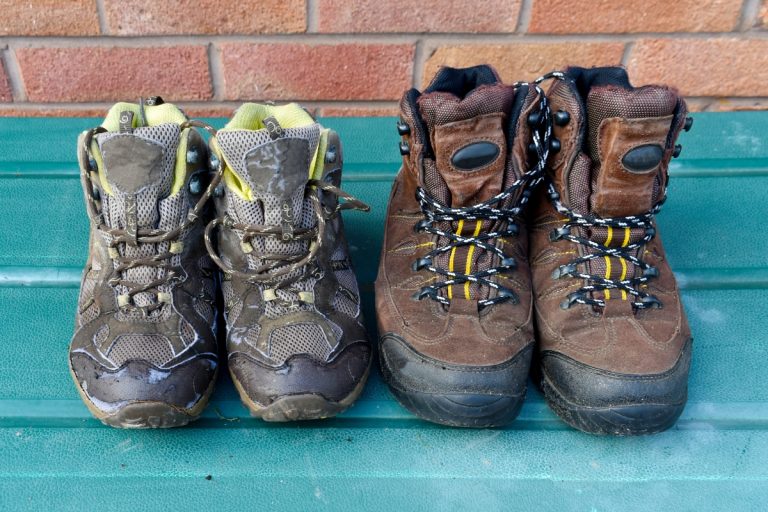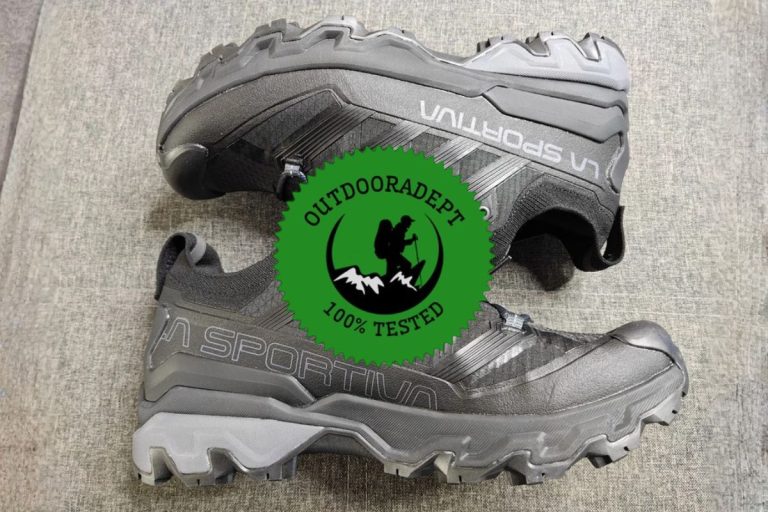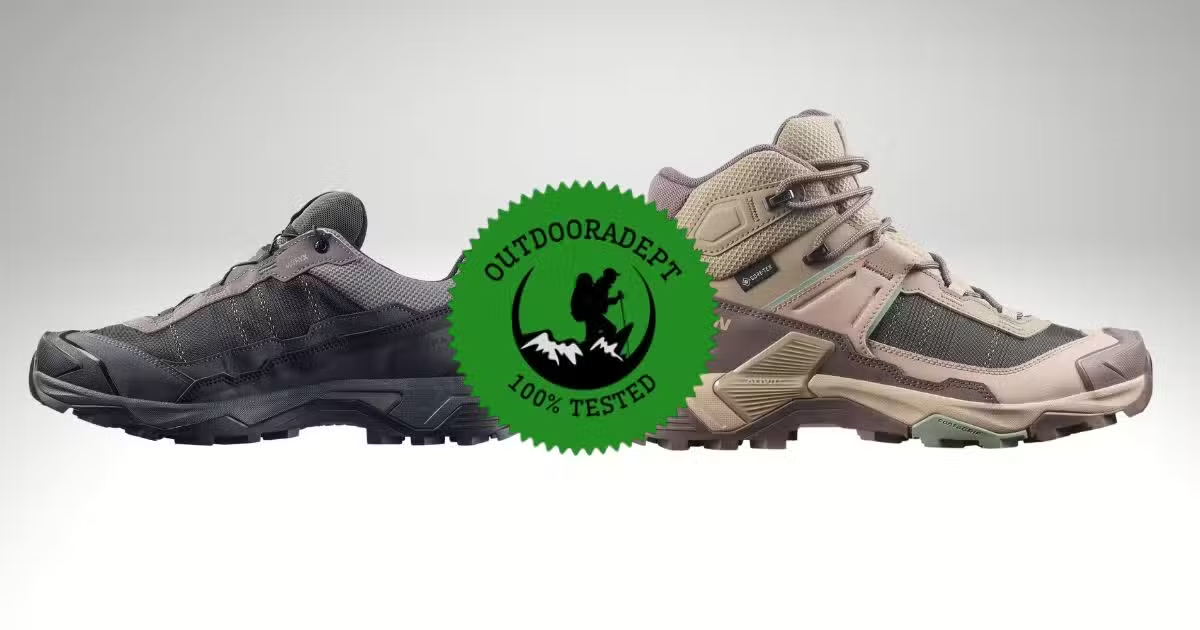
I still remember the first pair of Salomons I hiked in, back when the X Ultra 2 came out. The fit was narrow even then, but the shoe had a grip-and-go feel that made me stay with the line through three more generations.
The X Ultra 4 was not my favorite. Plenty of hikers seemed to feel the same. The upper aged faster than I wanted, and the fit never felt quite as dialed as the older versions. So when Salomon brought out the X Ultra 5 with a Matryx upper and a redesigned outsole, I wanted to see whether this was a proper fix or just the next model in the cycle.
I ran both versions through a full shoulder season. The Low GTX came with me on the Schrammsteine loop in Saxon Switzerland, a 4.5-mile7.2 km route through sandstone towers with iron ladders bolted into the rock and stone staircases. The Mid GTX went on a Malerweg stage with a pack in the low twenties (lbs),9-11 kg range, over longer mileage and wetter ground.
Here is how they performed on trail.
Quick Verdict – 4.9/5

Salomon X Ultra 5 Low GTX
The Salomon X Ultra 5 Low GTX is a clear improvement over the X Ultra 4. The Matryx upper feels tougher, the outsole clears mud more effectively, and the Advanced Chassis gives the shoe good lateral stability on uneven ground.
Salomon X Ultra 5 Mid GTX
The Salomon X Ultra 5 Mid GTX brings the same specs to the table as the Low, but in a much more protective package. Featuring traditional lacing for a dialed-in fit, the higher collar makes it the superior choice for keeping out trail debris and ankle support for carrying moderate pack weights on longer, messier days.

I would choose the Low GTX for day hikes, lighter packs, and routes where I want more ankle freedom. It feels more natural on stone steps, ladders, and technical sections that require frequent foot placement.
The Mid GTX is the better option for wet brush, loose forest trails, and hikes where the pack starts to get heavier. It is not a full backpacking boot, but it does feel more secure than the Low on longer, messier days.
Fit is the main warning. Both versions feel narrow through the forefoot. The Matryx upper softens at the flex point, but it does not stretch much across the foot. The wide version helps, and Salomon says its X Ultra wide models add about 12 mm of forefoot volume, but it still felt modest compared with foot-shaped options from Altra or Topo.
Highlights
| Feature | X Ultra 5 Low GTX | X Ultra 5 Mid GTX |
|---|---|---|
| Weight | 13.4 oz / 380 g per shoe | 15.5 oz / 440 g per boot |
| Stack height | 1.30 / 0.87 in (33 / 22 mm) | 1.30 / 0.87 in (33 / 22 mm) |
| Heel-to-toe drop | 0.43 in (11 mm) | 0.43 in (11 mm) |
| Lug depth | 3.5 mm | 3.5 mm |
| Lacing | quickLACE™ with tongue lace pocket | Regular laces with traditional eyelets |
| Upper | Matryx®; Synthetic/Textile upper | Matryx®; PU coated leather/Textile upper |
| Waterproofing | GORE-TEX PFC-free membrane | GORE-TEX PFC-free membrane |
| Midsole | EnergyCell EVA | EnergyCell EVA |
| Outsole | All Terrain Contagrip® | All Terrain Contagrip® |
| Chassis | advancedCHASSIS™ molded insert | advancedCHASSIS™ molded insert |
| Insole | Molded OrthoLite® sockliner | Molded OrthoLite® sockliner |
| Widths | Regular and Wide | Regular and Wide |
Thanks, one more step
Check your inbox to confirm your rating. Once confirmed, it counts toward this shoe’s community score.
See how it ranks on the full leaderboard →PROS
CONS
Salomon X Ultra 5 Low GTX
Salomon X Ultra 5 Mid GTX
Trail tips, news and giveaways
One email a month: hiking tips, gear news, giveaways, fresh footwear verdicts and more. No spam, unsubscribe anytime.
Things We Tested When We Reviewed the Salomon X Ultra 5

Traction
The X Ultra 5 keeps a sharp, multi-directional lug pattern, but the tread feels more effective in soft trail use than the X Ultra 4 did in my testing. The lugs are 3.5 mm deep and sit farther apart than they did on the 4, so mud clears between steps instead of packing into the tread and killing grip on the next climb.
The shoe did not clog as quickly on soft climbs, which was one of the first things I noticed. The heel lugs also gave enough braking on descents, especially in the Mid, where the extra coverage made the shoe feel a little more settled under a pack.
On damp sandstone and rough stone steps, traction was reliable as long as the surface still had texture. The All Terrain Contagrip outsole bit well enough, and the chassis helped keep the shoe from twisting when the landing was awkward.
I slipped twice on a sandstone descent where runoff had glazed the trail, and after that I started choosing drier placements. The slips were not serious, but they were enough to show the limit of the Contagrip compound.
If your usual trails involve wet granite slabs, polished limestone, or river rock, I would consider a Megagrip shoe like the HOKA Anacapa 2. For typical mixed hiking trails, the X Ultra 5 outsole performs well.
Durability
The Matryx upper is the main reason I trust this shoe more than the X Ultra 4. It uses a Kevlar and technical yarn blend, and it feels more resistant to scraping than the welded synthetic upper on the previous version.
After the test period, I checked the toe crease, side panels, heel area, rand, and forefoot flex zone. Those are usually the first places where a lightweight hiking shoe starts to look tired. Both pairs looked good. The flex point had softened, but it had not started to fray or lift. The side panels also handled sandstone and roots without much visible damage.

The toe cap was another strong point. I hit enough stone steps and embedded rocks to test it properly, and the rubber took those impacts without peeling away from the upper.
The midsole will probably show age before the upper does. EnergyCell EVA gives the shoe a firm and stable feel, but EVA compresses over time. After higher mileage, I would expect the ride to lose some of its snap before the Matryx upper looks worn out.
Comfort
The Salomon X Ultra 5 Mid GTX hiking boot was the easier version from the start. The collar sat comfortably around my ankle, and the traditional laces made it simple to adjust pressure across the top of the foot. I did not need much break-in before taking it on longer hikes.
The Low needed more patience. The stiff point was right over the toe crease, and I noticed it most on climbs where the shoe flexed repeatedly against the same area of my foot. After about 10 miles,16 km, that crease started to settle.

I did not get blisters in either version. I wore midweight hiking socks for most of the testing, and the stock OrthoLite insole was comfortable enough for my foot. It is not a premium-feeling insole, but it is removable and easy to replace if you already use aftermarket footbeds.
Both versions made a clicking sound during break-in, caused by the Matryx upper flexing at the toe crease. The Low was more noticeable than the Mid. At first, I thought something was stuck in the outsole, but the sound faded after the first 30 to 40 miles.48 to 64 km. It did not affect performance, though I can see it annoying some hikers during the first few outings.
Weight
The X Ultra 5 still feels light for the amount of structure it provides. The Low GTX is listed at 1 lb 10.8 oz760 g per pair, and it is the quicker version on trail. I preferred it on day hikes where I was moving over ladders, rock steps, and uneven trail. It gives the ankle more freedom and feels easier to place on technical ground.

At 1 lb 15 oz880 g per pair, the Mid GTX adds weight, but it never felt clumsy. For a waterproof hiking boot, it stays on the lighter side, and that helped on longer days. I noticed the benefit most on descents, where heavier Salomon hiking boots often start to feel more tiring than they did at the trailhead.
Compared with more robust models like the Salomon Quest 5 GTX or Merrell Moab 3 Mid, the X Ultra 5 Mid saves enough weight to make a difference. However, it does not give the same stiffness or load-carrying support. It works well for day hiking, light overnight trips, and moderate pack weight. For heavier backpacking loads, I would still choose a sturdier boot.
Waterproofing
Both versions use a GORE-TEX membrane with PFC-free chemistry, and both kept my feet dry during normal wet-trail use. Puddles, wet grass, muddy sections, and saturated forest floor did not cause leaks during testing.

The Low GTX has the same limitation as any low-cut waterproof shoe. It works well until water comes over the collar. I misjudged two drainage crossings and soaked my socks immediately. That was not a failure of the membrane. It was just the shoe reaching its physical limit.
The Mid gives more protection in wet terrain. The higher cuff helped through wet brush and shallow muddy sections, and it also kept grit and small trail debris out better. On loose forest trails, that made the Mid more pleasant over several hours.
When it comes to drying time, this was average. Once the outside of the shoe wetted out, the Matryx upper held moisture longer than open mesh. The inside stayed dry, but the exterior took time to dry fully. If you hike in wet conditions often, I would refresh the DWR treatment once a season.
Support

As I continued testing both cuts, it became clear that the Mid does not get most of its support from the higher collar. The real stability comes from the Advanced Chassis, a molded TPU insert that both versions share. This gives the shoe its side-to-side control and keeps it from twisting too easily on uneven ground.
I noticed the chassis most on off-camber sandstone, rooty descents, and muddy trails where the foot lands at odd angles. The X Ultra 5 feels more stable than a soft trail runner in those situations. It does not collapse inward as easily, and that gives you more confidence when the trail surface is uneven.
The Mid still has useful advantages. The collar improves heel hold when carrying a pack, and it keeps more debris out of the shoe. With a pack in the low twenties, I preferred the Mid on longer descents because the foot felt more contained.
Breathability
Breathability is not the strongest part of the GTX version. The Matryx upper is tightly woven, and the GORE-TEX membrane does not allow much airflow. In cool and damp weather, I had no problem with that. My feet stayed dry, and the shoe felt suitable for shoulder-season hiking.
In warmer weather, the shoe started to feel hot. I noticed this most on climbs above 70°F,21°C, when heat built up inside the shoe and did not escape quickly. The Low felt slightly more tolerable because the collar sits lower, but the difference was not large.
This is the usual waterproof hiking shoe compromise. The GTX version makes sense for wet grass, muddy trails, cool mornings, and changeable weather. If most of your hiking happens in summer, I would look at the non-GTX Low or a more ventilated shoe like the Merrell Moab Speed 2.
Fit and Sizing
I have a medium-width foot with a normal instep, and the Matryx upper wrapped closely around the forefoot and midfoot. The fit became more comfortable after a few hikes, but it never became roomy.

That is the main point with this shoe. The upper breaks in where it flexes, but it does not stretch much across the forefoot. Hikers with high-volume feet, wide forefeet, or a preference for toe splay should be careful with sizing.
Length felt true for me. I would consider going up half a size if you wear thick socks, have long toes, or hike steep descents often. Both versions come in wide men’s sizing, but Salomon’s wide is still modest. If you genuinely need a wider toe box, the Altra Lone Peak Hiker or Topo Trailventure will probably fit better.
The Low uses Quicklace, which is fast and convenient for day hiking. It cinches quickly and stays tucked in the tongue pocket. The downside is less fine-tuning across different parts of the foot, and field repair is more complicated if the cord breaks.
The Mid uses traditional laces with one metal eyelet at the top. I preferred that setup for longer hikes because I could adjust tension more precisely, especially with a pack. It is also easier to improvise a repair with spare cord.
Salomon X Ultra 5 GTX Low Versus Mid: Which One to Pick?
The chassis and stability hardware are identical in both cuts, so the choice comes down to pack weight, trail conditions, and lacing preference.
The Low is the default for day hiking. If your pack stays under about 15 lb,7 kg, you probably do not need the extra cuff. The lower cut feels quicker, moves more naturally around the ankle, and suited the Schrammsteine loop well, ladders included. I would also use it as a travel shoe or light approach-style shoe for easy scrambling.
The Mid starts to make sense once your pack gets closer to 20 lb9 kg or the trail is wet enough to send grass, grit, and water against your ankles. On the Malerweg, with longer mileage and a pack in the low twenties (lbs),9-11 kg range, the Mid earned its weight. The cuff kept debris out, and the padded collar gave a little more heel control on descents. It does not add rigid boot-level support, but it does feel more secure.
If you are unsure, start with the Low. It covers more hiking situations. The Mid is the better pick when your trips get longer, wetter, or heavier.
How the X Ultra 5 Compares with Other Products
X Ultra 5 vs X Ultra 4

The upper is the biggest change. The X Ultra 4 used a welded synthetic upper with leather panels, and durability was one of the common complaints around that generation. The X Ultra 5 replaces it with Matryx, a Kevlar and technical yarn blend that feels tougher and more resistant to scraping.
The outsole also improves. The X Ultra 4 had smaller, tighter chevrons. The X Ultra 5 uses a more open lug pattern that clears mud better and bites more confidently on soft ground. I noticed this most on wet forest paths and muddy climbs.
Stability feels a little better too. The chassis feels well integrated, and the Mid’s cuff is straighter and more supportive than the X Ultra 4’s scalloped collar. The 5 still has that narrow Salomon fit, and hikers who loved the X Ultra 3 may still miss that shape. But compared with the 4, this is the stronger shoe.
Check out our review of the Salomon X Ultra 4 and the Salomon X Ultra 4 Mid for more.
X Ultra 5 vs Merrell Moab Speed 2 GTX
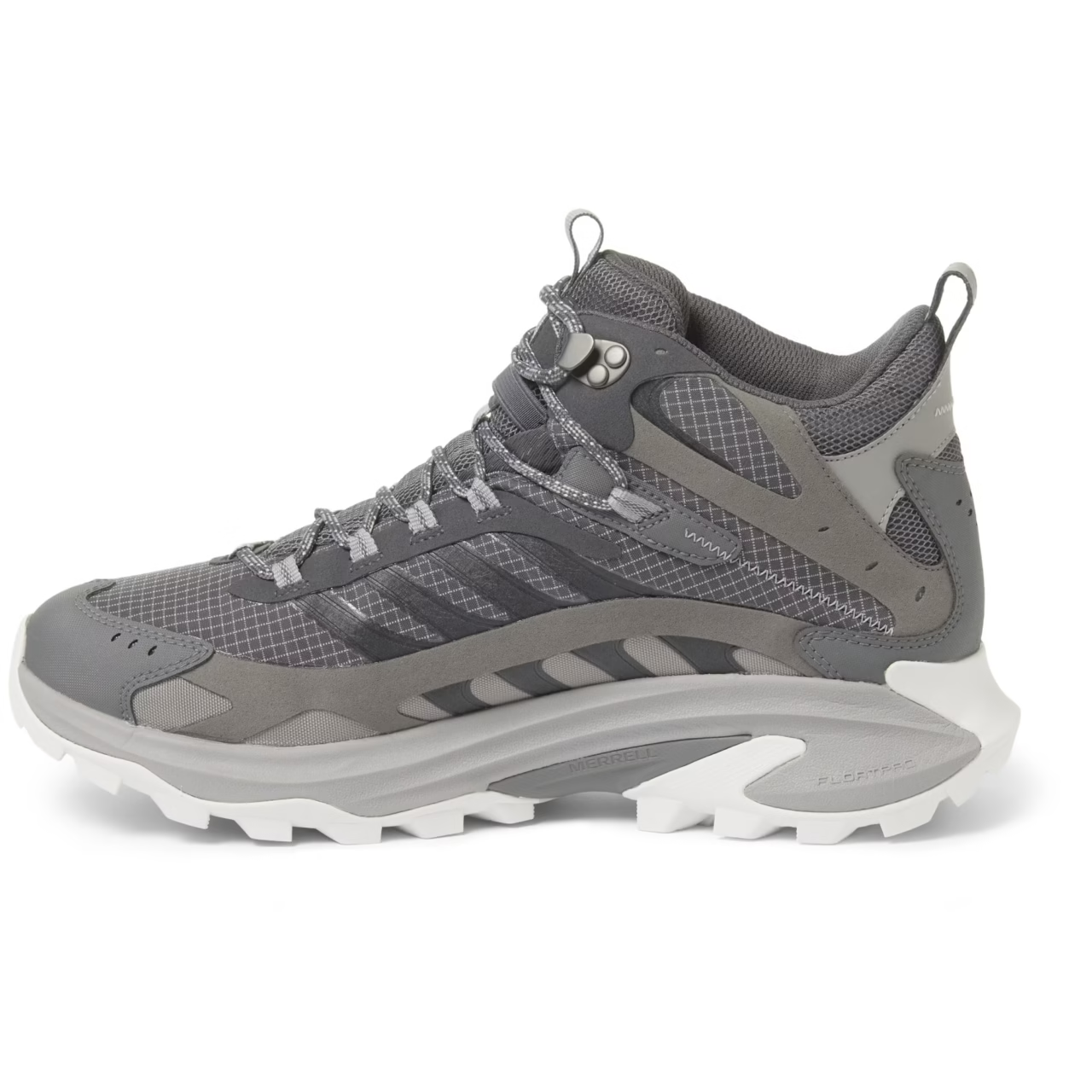
The Merrell Moab Speed 2 GTX feels easier straight out of the box. It is lighter than the X Ultra 5, softer underfoot, and gives the toes a little more room to move.
However, the X Ultra 5 is firmer, more structured, and better protected around rock, roots, and rougher trail. On my pair of Moab Speed 2s, I started seeing visible midsole and outsole wear after roughly 50 miles.80 km. After similar use, the X Ultra 5 upper still looked almost untouched.
I’d take the Moab Speed 2 for easier trails, travel, and hikes where comfort matters more than long-term abuse. I’d take the X Ultra 5 if the route is rougher, wetter, or likely to punish the upper over a full season.
X Ultra 5 vs HOKA Anacapa 2 Low GTX

The Anacapa 2 Low GTX is the more forgiving shoe. It has a bigger, softer midsole, a rockered shape, and that rolling HOKA feel that helps when your feet are tired near the end of a long day. It also gives more space through the forefoot, which makes it friendlier if Salomon’s usual narrow fit bothers you.
The X Ultra 5 is the opposite kind of useful. It feels firmer, lower, and more exact on awkward ground. I preferred it on stone steps, ladders, and uneven rock because it was easier to place cleanly. The Anacapa has the better outsole for smooth wet rock, thanks to Vibram Megagrip, while the Salomon feels more controlled when the trail gets broken and technical.
For long, steady miles on maintained trails, I’d lean Anacapa. For technical day hikes with a light pack, I’d still pick the X Ultra 5.
Where the Salomon X Ultra 5 Performs Best

The X Ultra 5 is at its best in mixed shoulder-season conditions: muddy forest trails, packed dirt, wet grass, sandstone steps, broken rock, and damp roots. The outsole has enough bite for soft ground, and the chassis keeps the shoe steady when the trail tilts or gets uneven.
The Low fits naturally into day hikes, technical walking routes, and lighter trail days up to about 15 miles,24 km, depending on pack weight and foot comfort. It has enough protection without feeling like too much shoe.
The Mid works better for longer hikes with moderate weight, wet brush, hut-to-hut routes, and light overnight trips. It gives some boot-like practicality without the weight of a full backpacking boot.
How Salomon X Ultra 5 GTX Ranks
These boots consistently performed highly across our comparison tests, sometimes even landing the first place. At time of writing it is the best performing boot we ever reviewed.
- Best Hiking Boots for Flat Feet (#4)
- Best Hiking Boots for Wide Feet (#3)
- Best Hiking Boots for Plantar Fasciitis (#1)
- Best Lightweight Hiking Boots (#1)
- Best Hiking Boots for Beginners (#1)
- Best Vegan Hiking Boots (#2)
- Best Hiking Boots for Women (#3)
Where the Salomon X Ultra 5 Falls Short

The GTX versions run hot in warm weather. Above 70°F,21°C, the Matryx upper and GORE-TEX membrane hold heat, especially on sustained climbs.
Fit is the second limitation. The X Ultra 5 still has a narrow Salomon shape through the forefoot and midfoot. The wide version helps, but it will not satisfy hikers who need a truly roomy toe box.
The Mid also has a load limit. It handles moderate packs well, but once loads move past roughly 35 lb,16 kg, I would want a stiffer boot.
Wet rock needs caution too. Contagrip performs well across mixed terrain, but smooth wet slabs and polished stone favor Vibram Megagrip. The final issue is cushioning. The EnergyCell midsole is firm, and hikers who want a plush ride may find it too harsh on long descents.
Want more options? Check our complete footwear guide as a starting point.
Do We Recommend It?
After testing both cuts, I would recommend the Salomon X Ultra 5 GTX hiking shoe to hikers who want a firm, stable shoe for mixed trails and do not need a roomy fit. It feels more durable than the X Ultra 4 and more protective than many lightweight hiking shoes.
I would buy the Low first for regular day hiking. It is the more versatile version and feels better when ankle movement matters. I would choose the Mid for wet routes, moderate pack weight, and trails where debris keeps getting into low-cut shoes.
If you have genuinely wide feet, want soft cushioning, or mostly hike in summer heat, this may not be the right fit. But for medium-width feet and shoulder-season hiking, the X Ultra 5 feels like a useful return to form for the line.
Where to Buy Them?
| Salomon X Ultra 5 Low GTX | MEN | WOMEN |
| Amazon | See Pricing» | N/A |
| Backcountry | See Pricing» | See Pricing» |
| REI | See Pricing» | See Pricing» |
| Salomon | See Pricing» | See Pricing» |
| Salomon X Ultra 5 Mid GTX | MEN | WOMEN |
| Amazon | See Pricing» | See Pricing» |
| Backcountry | See Pricing» | See Pricing» |
| REI | See Pricing» | See Pricing» |
| Salomon | See Pricing» | See Pricing» |
Frequently Asked Questions
Yes, for most hikers. Length runs true in both the Low and Mid. I would size up a half if you wear thick socks, have long toes, or hike steep descents often. The narrow feel comes more from the upper shape than the length.
For light trips under 30 lb,14 kg, yes. The Mid handles multi-day routes with moderate packs well. For heavier loads or long thru-hikes, a stiffer backpacking boot like the Salomon Quest 4 is a better match.
Prices in this article are approximate and updated annually. Check the retailer for current rates.