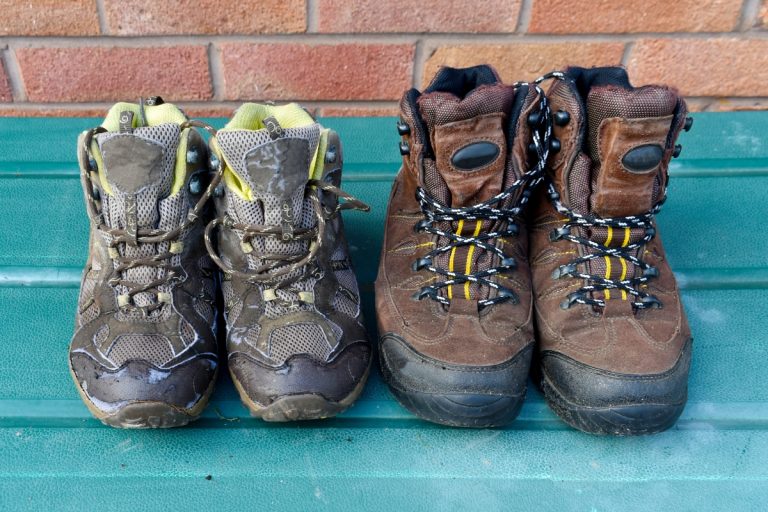
One crucial lesson from my outdoor adventures is that getting the right waterproof hiking boots matters more than I first realized. Wearing the wrong hiking shoes on the trails can ruin a perfect day.
Once, during a hike, I wasn’t adequately prepared and had to trek over a small river in a lighter boot without waterproofing. On the other side, I ended up with wet feet that quickly turned to cold feet as well.
Now, I always purchase waterproof shoes because I never know where my next adventure will take me or when I’ll face an unexpected rainstorm out on the trail.
If you’re considering investing in a new waterproof boot, keep reading. I’ve reviewed many of the options on the market, and here are my recommendations for the 10 best waterproof hiking boots.
We tested 29 waterproof hiking boots across a range of U.S. and European trails to identify the top 10 performers. Our hands-on trials covered rocky, muddy, and wet terrain, evaluating waterproofing, breathability, insulation, and ankle support in varied weather conditions. With input from hiking experts, we assessed break-in time, fit, cushioning, traction, and overall comfort. We also factored in long-term durability, user feedback, and manufacturer warranties to finalize our recommendations.
Learn More»
EDITOR’S CHOICE
Lowa Renegade Evo GTX

#2ND BEST CHOICE
KEEN Targhee IV Mid

#3RD BEST CHOICE
Salomon Quest 5

Our Top Recommended Waterproof Hiking Boots And Shoes
1) Lowa Renegade Evo GTX Mid Hiking Boot
These boots handled a full day of stream crossings and muddy switchbacks without letting moisture through. The Gore-Tex membrane and quality nubuck leather upper work together exactly as you’d expect.
Lowa Renegade Evo GTX Mid boots top our list of best waterproof hiking boots. They keep your feet dry, stay comfortable all day, and the construction quality justifies the higher price tag.
The polyurethane midsole absorbs shock without feeling mushy underfoot. I noticed it most on a long rocky descent where my knees usually start complaining around mile six.10 km. Didn’t happen this time.
The updated outsole gripped wet roots and slick rock faces confidently, and those redesigned lacing hooks actually stay put. I used to retighten my old Renegades three or four times per hike. Not anymore.
Fit runs a touch snugger than older Renegade models. Lowa still makes Narrow, Standard, and Wide widths, so you have options if your first pair feels off. Try them with your usual hiking socks before committing.
Key Specs
4.9/5
Weight: 2 lbs. 7 oz.1.11 kg
Midsole: Polyurethane
Upper Material: Nubuck leather
Outsole: Vibram Rene Trac rubber
PROS
CONS
2) KEEN Targhee IV Mid Hiking Boots
That chunky rubber toe cap has saved me from stubbed toes more times than I can count. Wet rocks, hidden roots, the occasional misjudged step. Doesn’t matter what I kick, my toes stay happy.
KEEN finally fixed the one problem that plagued earlier Targhee models. Soles peeling away from uppers after a season or two of hard use. The new FUSION construction fuses everything together without glue, and KEEN backs it with a lifetime guarantee. That tells you something about their confidence level.
The roomy toe box remains. My feet tend to swell on longer hikes, and these accommodate that without creating slop elsewhere. Heel lockdown stays solid even on steep descents, where cheaper boots let your foot slide forward and jam your toes.
One thing to know. The outsole handles packed dirt and loose gravel beautifully, but gets sketchy on smooth wet surfaces. Slick river rocks and rain-soaked roots demand extra caution. Not a dealbreaker for me, just something I plan around when choosing trails.
Continue reading about this boot in our KEEN Targhee IV Mid Review.
Key Specs
4.8/5
Weight: 2 lbs. 8.6 oz.1.15 kg
Midsole: Luftcell compression-resistant EVA
Upper Material: Nubuck leather with nylon mesh
Outsole: KEEN.RUGGED rubber
PROS
CONS
3) Salomon Quest 5 GTX
Solid ankle support without feeling like you’re hiking in a cast. The lacing system lets you dial in exactly how much hold you want. And it actually stays that way for hours instead of slowly loosening.
Salomon trimmed real weight off this generation. You feel it immediately when switching from older backpacking boots. The Quest 5 moves more like a hiking shoe while still giving you the support you need under a loaded pack.
I tested these on a three-day trip through mixed terrain. Scree fields one hour, muddy forest trails the next, then some exposed ridge walking on day two. The 4D Advanced Chassis kept everything stable without that heavy, clunky sensation some burly boots create. Gore-Tex membrane did its job during an unexpected afternoon storm that soaked everything else I was wearing.
The Contagrip outsole bites into most surfaces without hesitation. Mud, wet rock, loose gravel. I stopped second-guessing my footing after the first few miles.
Breaking these in took almost no time. Maybe one short hike before they felt dialed. Some stiff leather boots need weeks. These needed an afternoon.
For our complete take on this boot, check out our Salomon Quest 5 GTX Review.
Key Specs
4.7/5
Weight: 2 lbs. 5.3 oz.1.06 kg
Midsole: EVA Foam
Upper Material: Leather and Textile
Outsole: All Terrain Contagrip rubber
PROS
CONS
4) Merrell Moab 3 Mid Waterproof
The Merrell Moab 3 Mid Waterproof took me by surprise, not just with its remarkable waterproofing ability but also with how comfortable it was.

Included on our list of top-notch hiking boots for wide feet, we found that Merrell Moab 3 Mid WP integrates M Select DRY technology, effortlessly keeping water out while letting moisture escape, and the air cushion heel absorbs shock while adding stability.
What struck me most, though, was the newly improved, removable footbed, which not only enhanced comfort but also helped control moisture and odor, something the previous version could have done better.
On the downside, the stiffness during the initial wear might turn off some users, but it was a minor quibble for me, given that these leather hiking boots felt more comfortable after a short break-in period.
Key Specs
4.6/5
Weight: 2 lb. 0.9 oz.0.93 kg (women’s 8), 2 lbs. 2 oz.0.96 kg (men’s 9)
Midsole: Super Rebound Compound
Upper Material: Pigskin leather/mesh
Outsole: Vibram TC5+ rubber
PROS
CONS
5) Hoka Kaha 3 GTX
Thirty miles into a backpacking trip is when most boots start feeling like concrete blocks. These still had bounce. That genuinely surprised me.

Hoka built their reputation on maximum cushioning for runners. They brought that same philosophy to hiking boots with the Kaha 3 GTX. Over two inches5 cm of midsole foam absorbs every impact. If you’ve got joint issues, plantar fasciitis, or just hate that end-of-day foot throb, this boot will change your experience on trail.
The Gore-Tex Invisible Fit membrane bonds directly to the upper rather than sitting as a separate layer. Keeps water out without adding bulk inside. I pushed through several creek crossings up to mid-ankle and stayed completely dry. The bonded construction also feels cleaner against your foot than older Gore-Tex implementations.
Fair warning on fit. The toe box runs narrower than previous Kaha versions. Multiple reviewers mention sizing up a half size. I’d recommend trying them on first if you’ve got wider feet.
Key Specs
4.5/5
Weight: 2 lbs. 9.8 oz.1.18 kg
Midsole: Dual-density EVA with 30% sugarcane
Upper Material: Nubuck leather with recycled polyester mesh
Outsole: Vibram Megagrip rubber
PROS
CONS
6) Columbia Newton Ridge Plus II Waterproof
I tested these out standing in shallow water for several minutes, and the waterproofing didn’t let anything in at all. They kept my feet dry and comfortable.

Another option on the list that works well if you want a good hiking boot on a budget is the Columbia Newton Ridge Plus II. These durable boots provide excellent waterproof protection, even at their affordable price.
The lugs on these versatile hiking boots will help you grip surfaces well and provide just the right amount of traction in wet weather. As a bonus, they’re lightweight like a pair of trail runners, and instantly comfortable. You won’t need to break them in before hitting the trails.
Key Specs
4.4/5
Weight: 2 lbs.0.91 kg
Midsole: Techlite
Upper Material: Polyurethane-coated leather/suede leather/mesh with metal hardware
Outsole: Omni-Grip non-marking rubber (20% Regrind rubber flecks)
PROS
CONS
7) Salomon X Ultra 5 Mid GTX
The blend of trail-runner agility and hiking boot stability is what sets these apart. They move fast when you want to cover ground, but don’t leave you wobbling on rough terrain.

Salomon listened to complaints about the X Ultra 4‘s durability issues. The new Matryx upper combines yarn and Kevlar materials. They also switched from welded seams to traditional stitching in spots that see heavy wear. These boots should hold together far longer than their predecessor did for most people.
Lateral stability got a noticeable upgrade, too. The reinforced chassis reduces ankle roll on uneven ground. Something the X Ultra 4 struggled with, according to many users, and something I noticed immediately on off-camber traverses with a day pack. I felt planted instead of sketchy.
Toe box finally has breathing room. The X Ultra 4 ran painfully narrow for a lot of people, myself included. This generation accommodates wider feet without creating heel slip.
The tradeoff lives in breathability. Tougher materials trap more heat. My feet ran warm on sunny afternoon hikes in ways they didn’t with lighter mesh shoes. Worth considering if you hike primarily in summer.
Get the full story in our Salomon X Ultra 5 GTX (Low & Mid) Review.
Key Specs
4.3/5
Weight: 2 lbs.0.91 kg
Midsole: EnergyCell
Upper Material: Matryx with yarn and Kevlar blend, textile
Outsole: All Terrain Contagrip
PROS
CONS
8) Merrell Ontario Mid
If you’re a casual hiker, this strong contender from Merrell will check all of your boxes.

Being made of full-grain leather, these boots need some time to soften up. Once they do, you can expect a lighter and more comfortable fit.
As someone with narrow feet, I found the toe box too spacious. However, those with wider feet would find it perfectly roomy.
Many have noted that these boots offer solid arch support, ideal for those in search of a classic hiking boot.
Key Specs
4.2/5
Weight: 1 lb. 11 oz.0.77 kg
Midsole: EVA Foam
Upper Material: Full-grain leather
Outsole: Vibram Megagrip rubber
PROS
CONS
9) Timberland White Ledge Mid
I tested these out on a multi-day hike and found they did cause me a bit of pressure in certain areas of my foot, which is why I wouldn’t recommend them for backpacking or thru-hiking.

We added these Timberland boots to our list of best hiking boots because they have a classic look and provide another fully waterproof leather upper option.
These are some of the lightest hiking boots out there and another great choice for day hikers or the hiker who hits the trail casually.
They are fully waterproof and look great, so many users rate them high in those areas. Timberland White Ledge is also pretty warm with an excellent lacing system, so a good winter hiking boot.
Key Specs
4.1/5
Weight: 2 lbs. 4 oz.1.02 kg
Midsole: EVA Foam
Upper Material: Leather
Outsole: Rubber lug
PROS
CONS
10) La Sportiva TX4 Evo Mid GTX
Granite slabs that would have me nervous in other boots feel almost casual in these. That Vibram climbing zone earns its name.

La Sportiva built these for people who blur the line between hiking and scrambling. The approach shoe DNA shows in how confidently the outsole sticks to technical rock surfaces. Steep slabs, polished edges, off-trail boulder hopping. All handled with precision that regular hiking boots can’t match.
The headline feature is that resolable platform. When your tread wears down, a cobbler can replace the outsole instead of you tossing the whole boot.
Torsional rigidity keeps your foot stable on technical descents. The nubuck leather and rubber rand shrug off abrasion from rock contact. I’ve scraped these against enough boulders to destroy a softer boot. They just keep going.
Know this before buying. The Evo fits narrower than the original TX4. Long-time fans have been caught off guard by the change. Consider sizing up a half size or trying them on before committing. Also expect a longer break-in period than most modern boots. These take some patience.
For further reading, check our full review of the La Sportiva TX4 Evo.
Key Specs
4.0/5
Weight: 2 lbs. 1.8 oz.0.96 kg
Midsole: Synthetic with resolable platform
Upper Material: Nubuck leather
Outsole: Vibram Megagrip rubber compound
PROS
CONS
Waterproof Hiking Shoe Alternatives
Some hikers find waterproof hiking boots too bulky and might not have enough breathability for certain situations. For example, many of these boots can cause your feet to sweat or feel hot in the summertime.
Two alternatives that will also work well in water include hiking sandals and water shoes.
Hiking Sandals
KEEN Newport H2 Sandals
These sandals strike a perfect balance between cooling and the ability to shred water on one end, while they still offer good (toe) protection on the other end.

To keep your feet cool and dry, try this KEEN footwear. Keen Newport H2 sandals are perfect for your warm weather hikes and even for wearing on the beach or around town. Additionally, we’ve added them to our best hiking sandals guide, where we review and compare the best sandals.
PROS
CONS
Water Shoes
Columbia Drainmaker XTR Water Shoe
If you want a water shoe with a bit more coverage than a sandal, this trail running shoe style provides protection while still letting you walk or run through water. These are so lightweight you’ll hardly notice them on your feet.

I took these on a river hike where I knew I’d be crossing back and forth through shallow water all day. The drainage ports in the midsole work exactly as advertised. Step out of the water, and it just pours out. No sloshing, no soggy heaviness dragging you down for the next mile.
I expected sand and tiny pebbles to work their way inside like they do with most water shoes. Didn’t happen. That integrated tongue design keeps debris out while still letting the shoe breathe and drain.
Grip on wet rocks was solid thanks to those micro-siped lugs. I felt secure on surfaces where sandals would have had me slipping. The Omni-Grip LT outsole is noticeably lighter than traditional rubber but still provides real traction.
One quirk. The tongue is attached to the shoe body, which makes them slightly annoying to put on, especially when damp. Not a dealbreaker, but worth mentioning.
We’ve tested this product extensively and it is featured in our best water shoes for hiking of 2026.
Key Specs
Weight: 1 lb. 4.4 oz.0.58 kg
Upper Material: Synthetic mesh and webbing
Midsole: Vented EVA with drainage ports
Outsole: Omni-Grip LT with micro-siped rubber lugs
PROS
CONS
Trail tips, news and giveaways
One email a month: hiking tips, gear news, giveaways, fresh footwear verdicts and more. No spam, unsubscribe anytime.
Waterproof Hiking Boots Buyer’s Guide

As we put together the full list of the best hiking boots with water protection, we considered certain characteristics that determine whether or not a hiking boot will perform well in wet environments.
Waterproofing Mechanism
Not all waterproofing materials provide the same protection against water seeping inside. Look for good hiking boots that have Gore-Tex or another type of waterproof membrane.
As far as the outside material, nubuck leather can be waterproofed well, but there are also synthetic materials that do a great job. In general, a mesh upper will be the least waterproof.
Outsole
You need an outsole that will keep you secure on technical terrain and a tread pattern that won’t slip when it gets wet. Vibram soles are popular options that provide ultimate traction, even when they get wet [1].
Weight
Always try to look for fast and lightweight hiking boots that feel more like a trail runner, as they’ll prevent muscle fatigue and help you go further. Some can feel bulky, especially full-leather boots.
Make sure you consider what other hikers say about how light they feel on the feet, even when wet.
Traction
Excellent traction means you won’t have to worry about falling on a slippery rock or when ascending or descending in the mud. All the boots that have deep lugs will help your foot hold onto these surfaces better. The best hiking boots will also hold their grip on soft surfaces and loose dirt.
Comparison Table
| BOOT | PRICE | PRICE | WATERPROOF | WEIGHT |
|---|---|---|---|---|
| Lowa Renegade Evo GTX Mid | Check on Amazon» $265 on Backcountry» $280 on REI» | Check on Amazon» $265 on Backcountry» $280 on REI» | Yes, Gore-Tex | 2 lbs. 7 oz.1.11 kg |
| KEEN Targhee IV Mid | Check on Amazon» $180 on Backcountry» $180 on REI» | Check on Amazon» $180 on Backcountry» $180 on REI» | Yes, Keen.Dry | 2 lbs. 8.6 oz.1.15 kg |
| Salomon Quest 5 GORE-TEX | £200 on Salomon | £200 on Salomon | Yes, Gore-Tex | 2 lbs. 5.3 oz.1.06 kg |
| Merrell Moab 3 Mid WP | Check on Amazon» $170 on Backcountry» $170 on REI» | Check on Amazon» $170 on Backcountry» $170 on REI» | Yes | 2 lbs. 2 oz.0.96 kg |
| HOKA Kaha 3 GTX | Check on Amazon» $240 on HOKA» $240 on REI» | Check on Amazon» $240 on HOKA» $240 on REI» | Yes, Gore-Tex | 2 lbs. 9.8 oz.1.18 kg |
| Columbia Newton Ridge Plus II | Check on Amazon» $100 on Backcountry» | Check on Amazon» $100 on Backcountry» | Yes | 2 lbs.0.91 kg |
| Salomon X Ultra 5 Mid GTX | Check on Amazon» $185 on Backcountry» $175 on REI» | Check on Amazon» $185 on Backcountry» $175 on REI» | Yes, Gore-Tex | 2 lbs.0.91 kg |
| Merrell Ontario Mid WP | Check on Amazon» Check on eBay» | Check on Amazon» Check on eBay» | Yes, M Select Dry | 1 lb. 11 oz.0.77 kg |
| Timberland White Ledge Mid | Check on Amazon» Check on eBay» | Check on Amazon» $120 on REI» Check on eBay» | Yes | 2 lbs. 4 oz.1.02 kg |
| La Sportiva TX4 Evo Mid GTX | Check on Amazon» $240 on Backcountry» $240 on REI» | Check on Amazon» $240 on REI» | Yes, Gore-Tex | 2 lbs. 1.8 oz.0.96 kg |
When Should I Wear Waterproof Hiking Shoes?
Wear watertight hiking boots when you encounter conditions that could get your feet wet. For example, you will want to wear a waterproof boot if you know you’ll hike in rainy conditions, through mud, in the snow, or need to cross over streams or rivers.
Waterproof Boots PROS
Waterproof Boots CONS
When Is Better To Avoid Waterproof Hiking Shoes?
You don’t need a waterproof hiking boot if you’re hiking in very arid, dry, or summer conditions. For example, a hike in the desert would not require this type of hiking boots, but rather a good pair of lightweight boots or shoes.
During summer, waterproof sandals or waterproof trail running shoes are recommended if you are not hiking on difficult terrain.
Non-Waterproof Boots PROS
Non-Waterproof Boots CONS
Will My Boots Stay Waterproof Forever?

The waterproofing on most hiking boots will not last forever. In general, you should apply new waterproofing to your boots every few uses, especially if you have gotten them wet. This process is easy to do at home, using specialized waterproofing products.
What Is the Difference Between Waterproof, Water-Repellent, and Water-Resistant Boots?

Waterproof
The best hiking boots with waterproofing have a special membrane that keeps water completely out of the inside of the boot.
These types of boots can handle pressurized water without getting your feet wet.
Most hikers prefer GTX hiking boots for their high-water lining.
Water-Repellent
If a boot has a water-repellent coating, it means that the material will not easily absorb water. Instead, it will bead up on the outside.
It will hold up well to small amounts of water. However, heavily pressurized water (like a rushing stream or torrential rain) will cause the inside to get wet.
Water-Resistant
The lowest level of water protection is water-resistant. It generally means that water takes a bit of time to seep through the material, so your feet won’t get wet immediately.
However, you cannot stand in water, or you will definitely get wet. At most, water-resistant boots will handle a bit of light rain.
The best lightweight hiking boots are usually water-resistant and not waterproof, as they give up extras (like a waterproof lining) to preserve their lightness.
Our Number #1 Pick
Our top pick from the boots on our list is the Lowa Renegade Evo GTX Mid. I found them to outperform other hiking boots in terms of overall comfort, durability, and wet weather performance. That combination is hard to beat.
The original Renegade has been around for years and Lowa didn’t mess with the formula too much here. They tweaked a few things and left the rest alone. Gore-Tex lining, nubuck leather upper. My feet stayed dry through a full day of rain last autumn and again crossing a knee-deep stream in the Brecons.
Traction is where these really shine. The Vibram Rene Trac sole grips wet rock in a way that actually lets you trust it. I stopped thinking about my feet on a particularly greasy descent last month, which says something.
Underfoot, the polyurethane midsole has some give to it without feeling mushy. After eight or nine miles13 to 14 km on rocky terrain, my legs weren’t as beaten up as they’d normally be.
I keep reaching for these when the forecast looks uncertain.
FAQs
Look to see if your hiking boot has a thick, sticky rubber sole and a waterproof membrane. You can also see if they have the Gore-Tex badge, which would indicate that they are waterproof.
Hiking boots that are truly waterproof can be submerged in water without getting your feet wet, as long as the depth of the water doesn’t reach over the top of the shoe and seep in from the calf. Wearing gaiters decreases this possibility.
Gore-Tex products are guaranteed waterproof, windproof, and breathable. However, it does not last forever. The average lifespan of this material is 3 to 5 years.
Gore-Tex lining is the best option for a membrane that’s waterproof and it is also the most well-known waterproofing material. However, some brands are exploring other membrane options for their lightweight boot models, like the eVent option from Altra.
Over the years we found that hiking boots are generally better waterproofed than trail runners due to their design, which includes waterproof materials and higher ankle support. This makes them more suitable for wet and rugged terrain, providing better protection against moisture and enhancing overall comfort during hikes in wet conditions.
Prices in this article are approximate and updated annually. Check the retailer for current rates.