

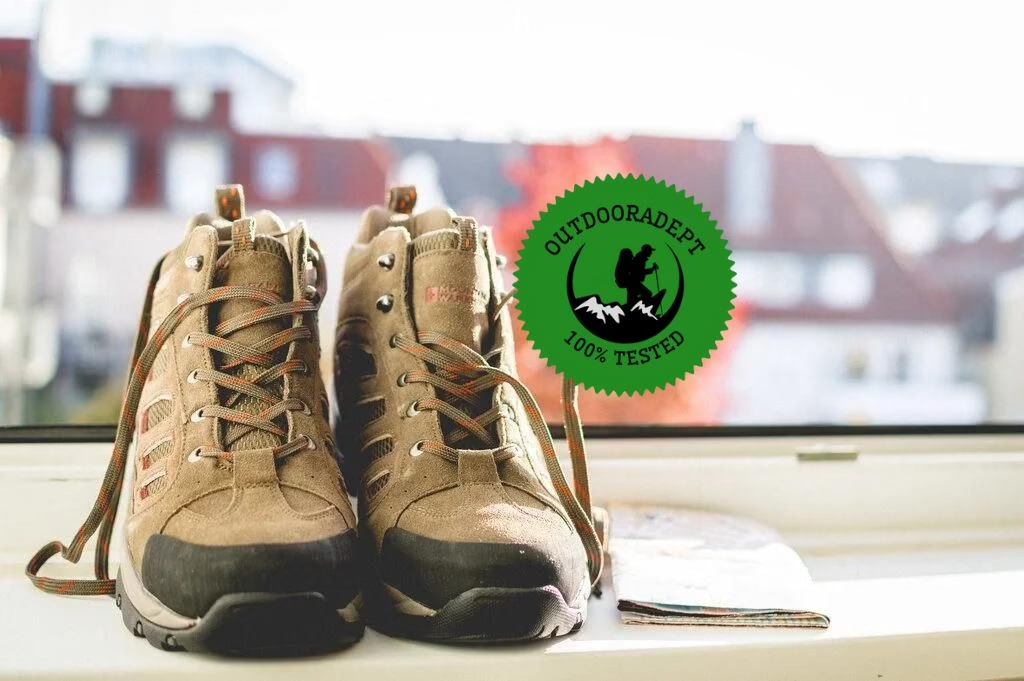
Navigating the trails with plantar fasciitis requires more than just a standard boot; it demands a precise combination of targeted heel cushioning and rigid arch support to prevent strain on the plantar fascia ligament.
In 2026, hiking footwear technology has evolved to offer better shock absorption than ever, but choosing the wrong pair can still lead to a painful recovery after a day in the mountains.
In this guide, I’ve ranked the best hiking boots for plantar fasciitis, focusing on key features like cushioning, arch support, and durability to help you make the right choice for your next adventure.
Read on.
We tested 13 hiking boots for plantar fasciitis across diverse terrains, including flat, rocky, and muddy surfaces. Each pair was evaluated for waterproofing, breathability, insulation, and durability in various conditions. Multi-day trials, expert input, and focus on fit, cushioning, tread, and other key factors helped us finalize our top 7 recommendations, considering both performance and warranty details.
Learn more »
editor’s choice
Salomon X Ultra 5 Mid GTX

#2ND BEST CHOICE
Oboz Sawtooth X Low B-Dry

#3RD BEST CHOICE
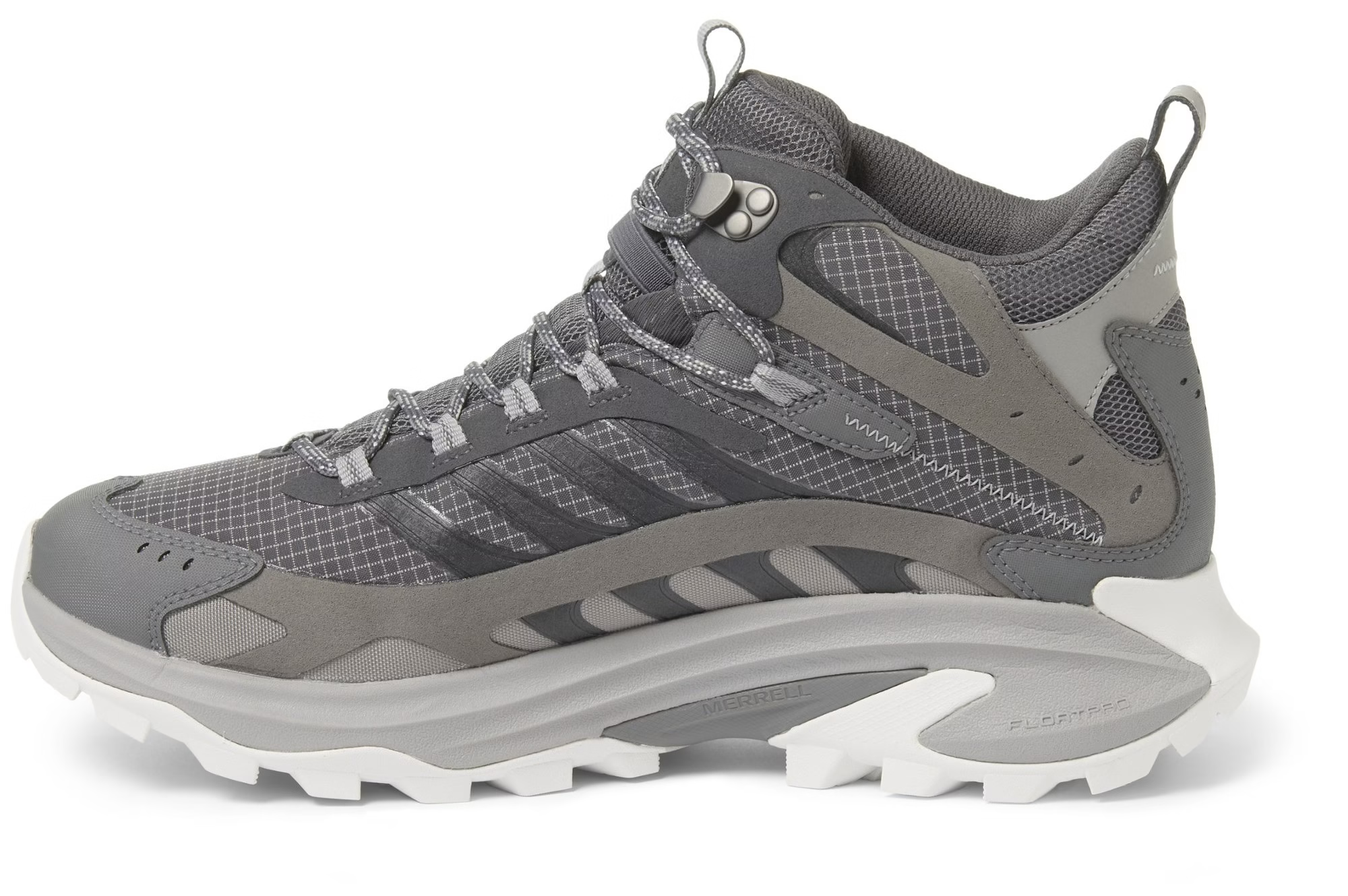
Merrell Moab Speed II
Our Recommended Hiking Boots For Plantar Fasciitis
1) Salomon X Ultra 5 Mid GTX
The Advanced Chassis provides serious lateral stability, while the EnergyCell midsole delivers reliable shock absorption. Both can help support hikers dealing with plantar fasciitis on technical terrain.
Salomon keeps showing up on our lists. The X Ultra 5 builds on what worked in previous versions while addressing some long-standing gripes.
The first thing I noticed was how well the boot locks your heel in place. Extra padding around the collar fixed the heel slip issues that plagued the X Ultra 4. If you’re dealing with plantar fasciitis, that secure fit is a big deal. Unnecessary movement aggravates an already irritated fascia.
Lateral support felt solid during our tests on loose scree. No wobble. Underfoot, expect firm and responsive rather than pillowy soft. Performance-oriented cushioning, which actually works well for maintaining proper foot alignment across varied terrain. Not everyone loves a firmer ride, but my feet stayed happy over 15-mile24-kilometer days.
The Kevlar-reinforced upper held up after I dragged them across some nasty granite. Barely a scuff.
One quirk. The heavily padded collar made it tricky to cinch the laces down tight at the ankle. Took some fiddling to get them dialed. Once adjusted, though, the fit stayed locked all day.
Standard width runs snug, so wider feet should try the wide version. That snugness does contribute to the lateral stability on technical ground, so it’s a tradeoff.
Find all the details of this hiking boot in our Salomon X Ultra 5 GTX (Low & Mid) Review.
PROS
CONS
2) Oboz Sawtooth X Low B-Dry
Oiled nubuck leather and double-stitched construction. This shoe proved durable in testing on rugged trails.
The Sawtooth X suits hikers who prioritize stability over shaving ounces. Functions like a low-cut boot, really. The underfoot support rivals some mid-height options that weigh considerably more.
For plantar fasciitis, the ACT+ midsole combined with substantial arch support keeps your foot neutral throughout your stride. The structured heel cup locks everything in place and helps prevent lateral rolling. That’s the kind of movement that aggravates an inflamed fascia.
A softer heel strike compared to the Sawtooth II stood out during testing. On long descents, my heels weren’t complaining the way they usually do after a few thousand feetseveral hundred meters of elevation loss. New midsole compound. It genuinely helps.
Worth noting for longtime Sawtooth II users: the X version fits differently. Oboz switched to gender-specific lasts that create a more athletic, glove-like fit. The toe box is actually wider, but overall volume is shallower. Can feel tighter even with more room side to side. My hiking partner with high-volume feet was uncomfortable after a few hours.
PROS
CONS
3) Merrell Moab Speed II
Trail runner hybrid that packs surprising stability into a lightweight package. Roughly 12 ounces340 grams per shoe.
The Moab Speed II targets hikers who want to move fast without sacrificing foot support. Full-length FlexPlate addresses the biggest weakness of the original, torsional rigidity. You get good underfoot protection and torsional stability on uneven ground now.
That 30% cushioning bump is immediately noticeable. First time I laced these up, I kept looking down because they felt almost too soft. FloatPro foam delivers genuine shock absorption without feeling mushy, though. My plantar fascia appreciated it after a full day on a rocky trail.
Non-waterproof version performed well during a week of hot weather testing. My feet stayed surprisingly cool. Breathability is solid.
Know what you’re getting here. This shoe excels at fast-paced day hikes on moderate terrain. Not the right choice for hauling a heavy pack through talus. Some scuffing appeared on the synthetic upper after bushwhacking through overgrown sections. Durability on rough off-trail use may be a consideration.
Sizing can run slightly small. Consider trying them on or going a half-size up.
PROS
CONS
4) KEEN Targhee IV Mid
New FUSION construction bonds the sole to the upper without glue, essentially eliminating delamination. KEEN backs this with a lifetime guarantee against sole separation.

The Targhee IV brings back what made the Targhee II a classic while fixing the durability concerns that cropped up in between. Roomy toe box returns. Your toes get space to spread naturally. A good option if modern boots constantly feel too narrow.
For plantar fasciitis, the Luftcell midsole maintains cushioning longer than traditional EVA. You’re not hiking on flattened foam after six months. Stability shank and heel-capture system keep your foot aligned and secure on uneven terrain.
My custom orthotics fit into these without any issues. Plenty of volume inside. Wet weather testing went well. Waterproofing held up, my feet stayed dry even crossing some sketchy stream crossings.
The first few days felt stiff, though. These boots need a break-in period. Maybe 15 or 20 miles24 or 32 kilometers before they really start to feel comfortable. Also noticeably heavier than the trail-runner-inspired competition. That heft does translate to genuine durability. Updated outsole handles most terrain confidently, though edging on exposed scrambling sections could be better.
More information can be found in our KEEN Targhee IV Mid Review.
PROS
CONS
5) Merrell Moab 3 Mid
Upgraded Kinetic Fit Advanced footbed delivers noticeably better arch support straight out of the box. No more swapping insoles on day one.

Merrell took an “if it ain’t broke, make it slightly better” approach here. Moab 3 keeps everything that made the Moab 2 a bestseller while quietly addressing the weak points.
That upgraded footbed makes a real difference for plantar fasciitis. Arch support is substantial enough that I never felt the need to swap in my usual aftermarket insoles. Super Rebound compound absorbs shock without bottoming out on rocky descents.
The wide, stable base gives you a planted feeling on uneven trails. Ankle support performed well on some off-camber traverses where a rolled ankle would have meant a long hobble back to the trailhead.
Traction worked well on dry granite and packed dirt during our testing. Wet, smooth rock was another story. I slipped twice on some mossy limestone that other boots would have handled fine. The lug pattern doesn’t bite as aggressively as boots designed for technical terrain.
Wider feet will do well here. Narrow-footed hikers might experience some heel slippage.
For our full breakdown of this boot, check out our Merrell Moab 3 Mid Review.
PROS
CONS
6) Timberland White Ledge Mid Ankle Boot
The shock-absorbing padding on these mid-height hiking boots works great for preventing plantar fasciitis heel pain.

This boot alleviates pressure in the shock-absorbing region of your foot, ensuring comfort over long walking distances.
The padded collar around the ankle is a feature hikers will value, enhancing the boot’s overall comfort and keeping dirt and debris at bay.
These characteristics collectively make this boot an excellent choice for individuals with plantar fasciitis. However, I do feel a bit more cushioning around the arches would be beneficial, especially for extended walks on hard surfaces.
Based on our evaluations, these boots are a solid choice for plantar fasciitis, and their leather construction proves durable over time.
PROS
CONS
7) Columbia Newton Ridge Plus II Waterproof
This sturdy boot is one of the best hiking boots made from waterproof suede leather. It’s also a great choice for people with plantar fasciitis who want to hike in winter.

Columbia is well-known for its winter gear, and Columbia Newton Ridge Plus II WP is regarded as one of the best hiking boots for winter.
The multi-terrain traction system has a unique tread pattern that will grip snow and ice without a problem. I consider it to be one of the best hiking boots for plantar fasciitis, especially for navigating this type of weather.
Although it’s made of waterproof leather, it still remains breathable due to the mesh tongue. Even though it kept my feet warm, it didn’t make them sweaty.
The superior cushioning in the midsole provides great comfort for hikers recovering from issues with their plantar fascia.
PROS
CONS
Plantar Fasciitis Hiking Boots Buyer’s Guide

For hiking with plantar fasciitis, we recommend boots that provide strong arch support, cushioning, and a firm sole to help reduce foot pain and instability. Merrell, Oboz, Vasque, Keen, and Salomon are great brands known for their supportive and comfortable designs. For the general basics, see our guide on how to choose hiking boots.
Heel
People with plantar fasciitis often have stabbing pain in the heel of their foot [1].
Therefore, good hiking boots will need to have enough padding in this area to keep the hiker pain-free.
Not all hiking shoes will have a well-padded heel, so it is definitely always something to consider.
Outsole
Ensuring your foot stays secure across various terrains is crucial to prevent injury.
If you’re dealing with plantar fasciitis, choosing boots with chunky outsoles and superior treads is vital for stability during your walks. These features provide a sense of safety, even on challenging trails.
Weight
Wearing heavier shoes can lead to heel pain or make it worse. Choose the lightest hiking boots that work for your hiking area.
Lighter boots help stop your feet from getting tired and sore, especially if you’re also carrying a backpack or equipment.
Cushion
Given that plantar fasciitis can cause sharp pain, adequate cushioning is essential, particularly on hard surfaces.
Select shoes that offer substantial cushioning around the arches, ankles, and a well-padded heel cup. Many hiking shoes miss out on this crucial aspect, making it important to find ones that include it.
Comfort
Uncomfortable hiking shoes can ruin your day, especially true for those with plantar fasciitis. Such discomfort can lead to further injury to the plantar fascia.
People with plantar fasciitis often find that shoes with robust arch support offer the comfort level they require.
Good Laces

Hiking shoes ideal for plantar fasciitis should come equipped with sturdy laces to ensure foot security.
Robust laces are crucial for maintaining a snug fit and mitigating pain associated with plantar fasciitis.
When selecting your shoes, prioritize this feature, or consider buying separate strong laces if the existing ones don’t meet your needs.
Arch Support
For those with plantar fasciitis, it’s vital to choose hiking shoes that offer excellent arch support.
Shoes with flat soles can exacerbate the condition and lead to discomfort. This is because the plantar fascia stretches with every step, resulting in unnecessary strain and increased stress on the affected area.
If the insole in the hiking boot doesn’t seem to have enough of this arch support, consider using special insoles designed specifically for plantar fasciitis. Many doctors recommend using orthotic insoles for hiking.
Material
You don’t want your feet to get sweaty while you hike, so you’ll need to look for hiking shoes with construction that’s made of breathable materials. This doesn’t mean that you need to stay away from leather boots.
However, look for ones that have added mesh panels or where the padded tongue is also made of mesh or another breathable fabric.
Trail tips, news and giveaways
One email a month: hiking tips, gear news, giveaways, fresh footwear verdicts and more. No spam, unsubscribe anytime.
Comparison Table
| Model | Price Men | Price Women | Waterproof | Weight (Men’s) | Midsole Cushioning | Arch & Heel Support | Best For |
|---|---|---|---|---|---|---|---|
| Salomon X Ultra 5 Mid GTX | Check on Amazon» $185 on Backcountry» $175 on REI» | Check on Amazon» $185 on Backcountry» $175 on REI» | Yes, Gore-Tex | 2 lbs. (910 g) | EnergyCell (EVA-foam) | High | Maximum technical stability Difficult terrain |
| Oboz Sawtooth X Low B-Dry | Check on Amazon» $185 on Backcountry» $185 on REI» | Check on Amazon» $185 on Backcountry» $185 on REI» | Yes, B-Dry | 2 lbs. 1.8 oz. (960 g) | Adaptive Cushioning Technology (ACT+) | High | Stability All-weather use |
| Merrell Moab Speed II Mid | Check on Amazon» $180 on Backcountry» $180 on REI» | Check on Amazon» $180 on Backcountry» $180 on REI» | Yes, Gore-Tex | 1 lb. 12.2 oz. (800 g) | FloatPro™ Foam | High | Fast-paced hikers Moderate terrain |
| KEEN Targhee IV Mid | Check on Amazon» $180 on Backcountry» $180 on REI» | Check on Amazon» $180 on Backcountry» $180 on REI» | Yes, Keen.Dry | 2 lbs. 8.22 oz. (1140 g) | Luftcell Air-Injected Midsole | Moderate | Budget-friendly All-weather use |
| Merrell Moab 3 Mid WP | Check on Amazon» $170 on Backcountry» $170 on REI» | Check on Amazon» $170 on Backcountry» $170 on REI» | Yes | 2 lbs. 2.6 oz. (980 g) | Super Rebound Compound Midsole | Moderate | Warm weather Breathable design |
| Timberland White Ledge Mid | Check on Amazon» | Check on Amazon» $120 on REI» | Yes | 2 lbs. 4 oz. (1,020 g) | EVA | Moderate | Budget-friendly Versatile |
| Columbia Newton Ridge Plus II | Check on Amazon» $100 on Backcountry» | Check on Amazon» $100 on Backcountry» | Yes | 1 lb. 15.8 oz. (900 g) | Techlite | Moderate | Budget-friendly Versatile |
What Is the Difference Between a Regular Shoe and a Plantar Fasciitis Shoe?
Hiking boots for plantar fasciitis differ from regular hiking shoes because they provide extra cushioning and arch support in the Achilles tendon area, where most plantar fasciitis pain originates.
Many hiking shoes don’t offer that same amount of support or padding and can cause plantar fasciitis to flare up or return.
We had a podiatrist review our article about Hiking With Plantar Fasciitis. It is worth a read if you are dealing with this injury.
OutdoorAdept Recommendation
We put a lot of miles on a lot of boots for this roundup. The Salomon X Ultra 5 Mid GTX came out on top.
For plantar fasciitis, heel stability and consistent cushioning separate a good boot from one that leaves you limping. X Ultra 5 delivers on both.
Salomon redesigned the ankle collar with extra padding. Fixed the heel slip problems from earlier versions. The fascia doesn’t respond well to micro-movements, so that secure fit counts for a lot. My orthotics fit inside without any issues.
Cushioning runs firm and performance-oriented. Not everyone wants that. But it keeps the foot properly aligned over long days better than softer foam that compresses by afternoon.
Waterproofing worked as expected. Kevlar upper held up well against abrasive rock. Break-in was minimal.
Standard width runs snug. Wider feet should look at the wide version.
But overall, a solid choice for anyone managing plantar fasciitis who needs a versatile, durable boot.
FAQs
Salomon shoes, like the X Ultra 5 Mid GTX and Genesis, are great for individuals with plantar fasciitis due to their supportive features and cushioning. The X Ultra 5 Mid GTX offers waterproofing, grippy soles, and excellent support, easing plantar fasciitis pain. The Genesis, a moderately cushioned trail running shoe, also provides solid support and comfort for those with this condition.
Merrell hiking shoes are ideal for plantar fasciitis, offering cushioned insoles, arch support, and stability. Many users experience pain relief while walking and hiking, with some replacing all their shoes for Merrells due to the comfort they provide.
Many medical professionals advise using a walking boot during rest periods to recover from plantar fasciitis. A walking boot provides essential support for an Achilles tendon injury and aids in tissue healing while strengthening the foot.
Oboz hiking boots are an excellent choice for individuals with plantar fasciitis. They stand out for their ankle support and strong grip, ensuring stability on slippery surfaces.
Hiking boots designed specifically for plantar fasciitis offer crucial arch support through features like a contoured heel cup, flexible build, and a removable insole. They also focus on targeted heel cushioning to reduce discomfort and enhance proper foot alignment.
Prices in this article are approximate and updated annually. Check the retailer for current rates.



Great insights! I’ve been struggling with plantar fasciitis for a while, and it’s hard to find boots that offer both support and comfort. I’m excited to try some of these recommendations—especially the ones with good arch support. Thanks for the detailed rankings!
Thank you for this detailed review! I’ve been struggling with plantar fasciitis for a while, and it’s been challenging to find comfortable hiking boots. Your rankings and insights on each pair really helped narrow down my options. I can’t wait to try out the top picks!