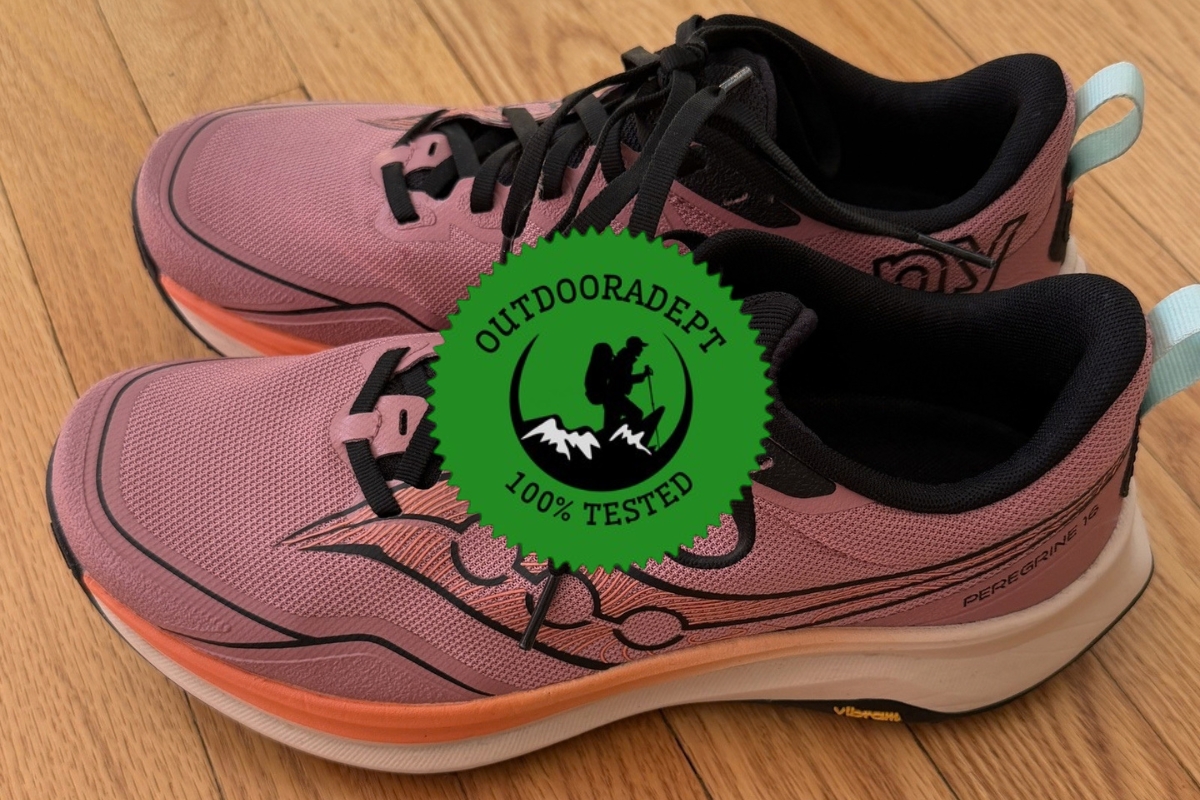
One of my hiking buddies bought the Saucony Peregrine 16 at the start of the summer and never got a day out of them. They were too big on her, and she was ready to write the money off until they turned out to be exactly my size.
That is how I ended up testing a pair I had not planned on, and they came with me on two of the best trips I had all year.
This Saucony Peregrine 16 review covers 50 miles80 km of running on a borrowed pair, split between wet forest trail and hard exposed limestone, plus short weekend hikes close to home.
Saucony moved to full Vibram Megagrip and gave up a millimeter of lug depth doing it. Was that a good trade? Here is how it played out.
Quick Verdict: 4.4/5
Saucony Peregrine 16
I did not expect to like these as much as I did. On paper the shallower lug reads as a step backwards, but a summer of wet roots and dry rock changed my mind about that.
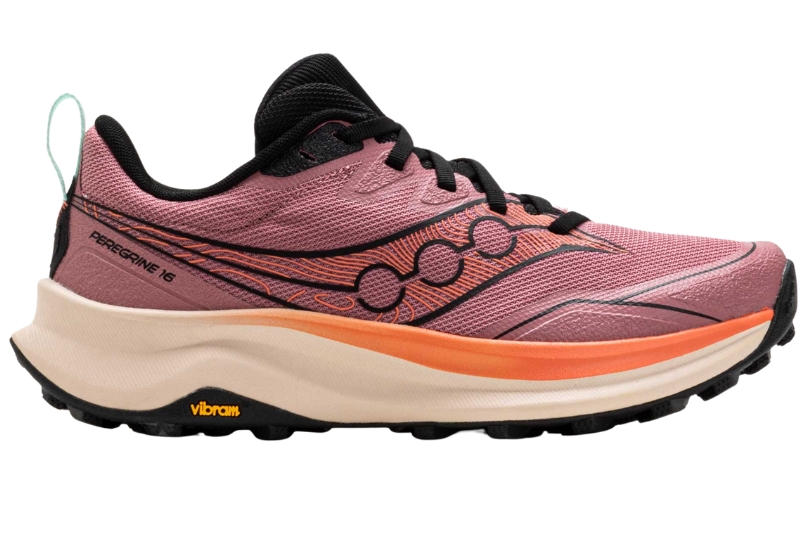
The Peregrine 16 trades lug depth for rubber quality and midsole protection. Because of that, grip on wet roots and dry rock came out as the strongest part of the test. The added foam also keeps your feet fresh across long rocky days, and the platform held steady on off-camber ground.
Skip it if your season is mostly deep mud, if you need real volume over the toes, or if you want a plush high-stack shoe for road-to-trail miles.
Highlights
| Feature | Saucony Peregrine 16 |
|---|---|
| Specs | |
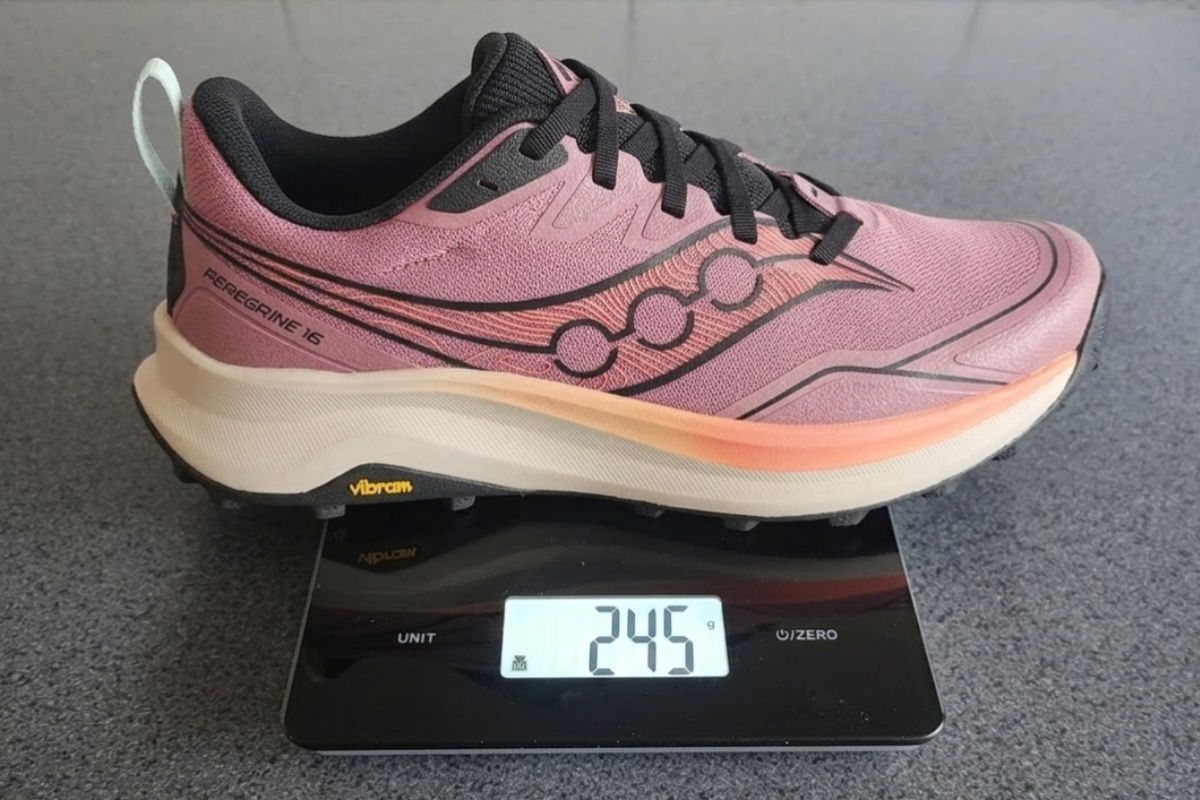
| Weight | 8.6 oz245 g per shoe, women's US 8.5 Wide, sockliner installed · OutdoorAdept 8.4 oz239 g per shoe, women's US 7 Regular · Saucony |
| Fit | True to size in the Wide; forefoot broad with limited vertical volume; heel secure · OutdoorAdept |
| Waterproofing | Minimal; mesh wets through immediately; drains and dries fast; GTX version available |
| Stack height | 32 mm heel · Saucony 28 mm forefoot · Saucony |
| Heel-to-toe drop | 4 mm heel-to-toe · Saucony |
| Lug depth | 4 mm full-coverage Vibram Megagrip outsole · Saucony |
| Adjustability | Standard lacing; extra eyelet available for heel-lock lacing |
| Upper | Reworked high-strength mesh; dense weave; abrasion-resistant |
| Midsole | PWRRUN foam; increased volume over the 15; medium-firm ride |
| Outsole | Full-coverage Vibram Megagrip; 4 mm lug depth |
| Widths | Regular and Wide at the same $150; tested in Wide |
| Toe Protection | Toe bumper plus forefoot rock guard |
| Figures credited to OutdoorAdept are our own measurements. The rest are the brand’s published specs. How we test | |
| How it performed | |
| Traction | 4.5/5 Excellent on wet roots and dry rock; limited in deep mud |
| Comfort | 4.5/5 Medium-firm; protective over rock; brief heel stiffness early on |
| Breathability | 4.5/5 Dense mesh; no heat build-up across three hot days |
| Durability | 4.5/5 Early read: lug edges intact after 50 miles80 km plus weekend hikes; scuffing cosmetic only |
| Arch Support | 4/5 Moderate and quiet; too subtle for pronounced-structure preferences |
Tap a star to vote. Tap the left half of a star for a half star.
Thanks, your rating counts
It is now part of this shoe’s community score. Changed your mind? Tap a different star.
See how it ranks on the full leaderboard →PROS
CONS
Trail tips, news and giveaways
One email a month: hiking tips, gear news, giveaways, fresh footwear verdicts and more. No spam, unsubscribe anytime.
How We Tested
I ran two locations chosen for contrast. In Bohinj, Slovenia, I covered roughly 30 miles48 km over a week of wet forest trail, on soft ground and roots with rock through it. Rain moved through most days, and the tree cover left little chance for anything to dry out.
In the Serra de Tramuntana in Mallorca, I ran about 20 miles32 km across three consecutive days on hard limestone in exposed August sun, with loose stone scattered over the harder surfaces.
Between the two trips, I also wore them on short weekend hikes close to home. I didn’t log those, so the mileage figures here come from the two trips only.
I wore thin merino socks throughout and kept the stock PWRRUN+ sockliner in for the whole test. The pair is my friend’s women’s US 8.5 Wide, which is also my usual size, and I weighed it on our own scale, per shoe, with the sockliner installed.
More on the process is in how we test and review our gear.
Things We Tested When We Reviewed the Saucony Peregrine 16
Traction
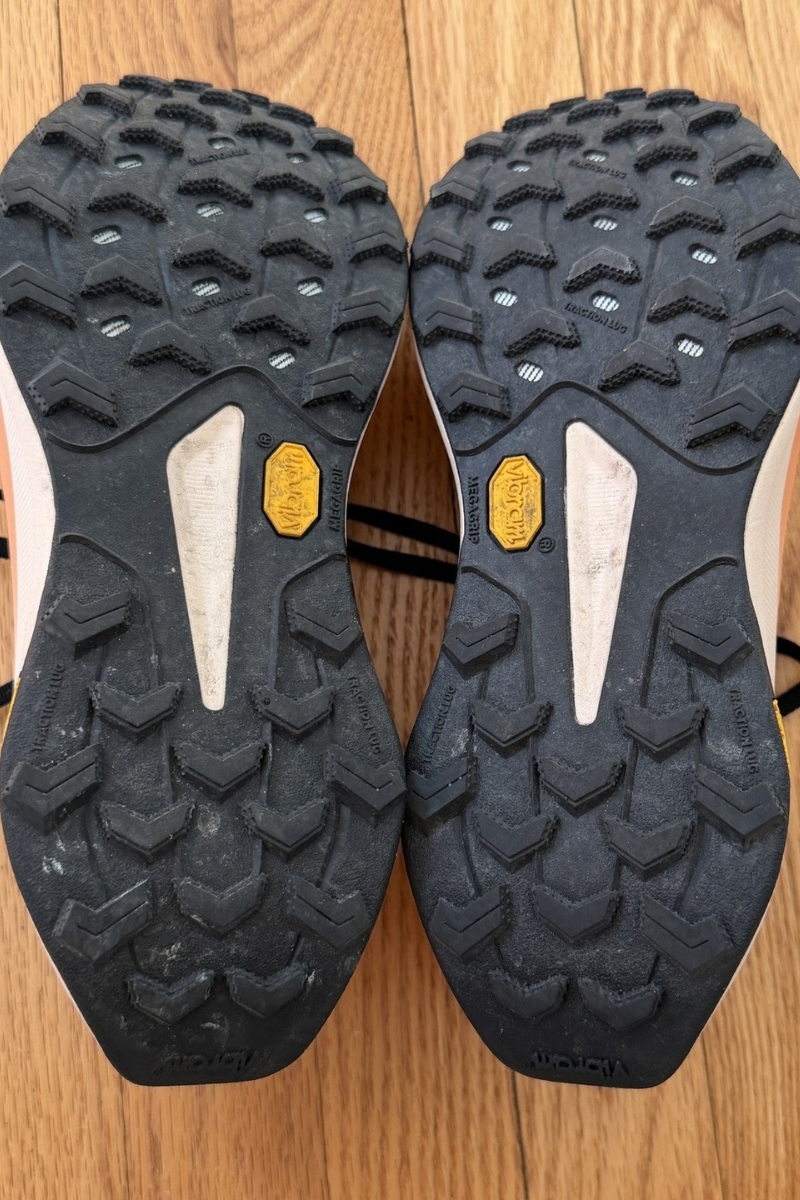
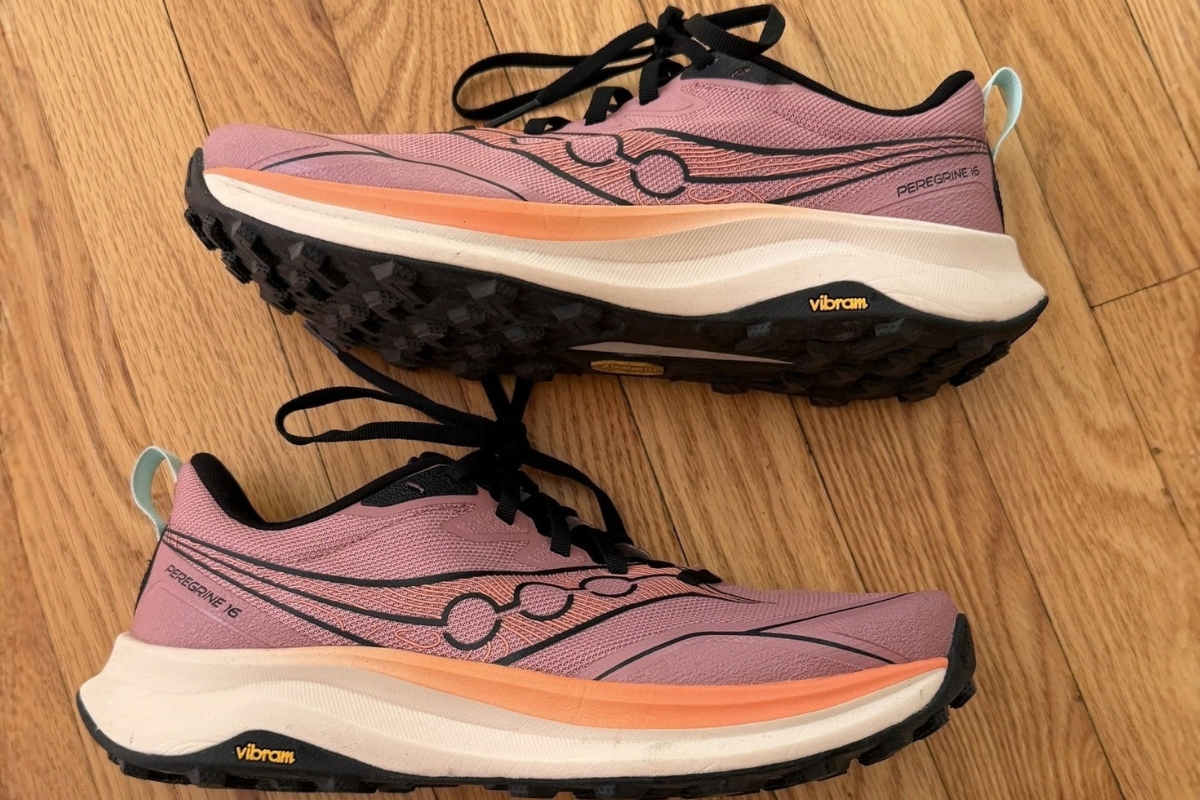
Wet roots gave the best grip of the whole test, which surprised me on a shoe with shallower lugs. During testing, I crossed soaked root systems at a pace I would normally keep for dry ground, and the credit for that goes to the Megagrip compound.
I got the same from hard dry rock. Smooth slabs felt secure, and small loose stones over hardpack did not send my foot skating. Descents were the strongest part, with the heel holding whenever I braked hard.
Saucony says the Vibram outsole brings powerful traction in every condition, although I found two conditions where it struggled.
Deep sticky mud was the first. On soft trail, the shoes shed most of what they picked up as I kept moving, so I never had to stop and knock the lugs clear by hand. Once the mud thickened, however, the lugs could not reach anything solid underneath and the grip stopped convincing me. One slip happened on a rooty patch, when the mud under it gave way.
The second showed up on steep ground with deep loose gravel, where my heel slid once, although I caught it in time. Both problems trace to one cause: mud and gravel of any real depth go further down than these lugs can reach.
Durability
After 50 miles80 km on the two trips and a summer of short weekend hikes, nothing is failing early. The lug edges are still well defined with no flattening, the abrasive limestone caused no premature damage, and the heel counter is still firm.
The upper picked up superficial scuffing at the toe and forefoot after the rockier days, with no tearing and no lifting at the overlays. My medial forefoot also took repeated rock contact and still looks intact, so I would call these cosmetic marks.
Saucony describes the high-strength mesh upper as abrasion-resistant, and so far that holds up.
Comfort
The Saucony Peregrine 16 is built around protection. During testing, I felt less sharp impact when landing on uneven rock, and the ride stayed medium-firm enough for me to read what I was stepping on. The result is a firm, ground-connected trail shoe with more protection underneath.
They were comfortable from the first outing, even before they felt fully broken in. Some stiffness sat around the heel for a couple of runs before settling, and no forefoot hotspots appeared at any stage.
I noticed the extra foam later on, mostly on rock. The cushioning held through the longer runs, and after three hard limestone days the midsole still felt supportive, with no sign of packing down. I felt it most on descents, where it took the edge off the rock impact.
Judge this shoe on one short run on smooth trail and you will wonder what the fuss is about. After a few hours on rock, however, it has plenty to show you. For real softness underfoot, the Hoka Challenger 8 is the better pick.
Weight
Our scale put the Peregrine 16 at 8.6 oz245 g per shoe in women’s US 8.5 Wide, with the sockliner installed. Saucony’s stated women’s weight is 8.4 oz239 g for a regular-width US 7. Because the bigger size and the Wide last both add material, the two figures are not directly comparable.
That weight also covers full-coverage Vibram, a forefoot rock guard, a toe bumper and more PWRRUN in the midsole than the 15 carried, and I could not feel any of it weighing me down.
On climbs, I had no sense of dragging anything uphill, and on steep descents I stopped noticing the mass altogether.
Waterproofing
Water comes through the mesh fast on this version. Puddles and crossings soaked my feet almost immediately, and saturated vegetation passed straight through, so assume anything rising above the outsole will get inside.
The drying is the interesting part. After a proper soaking, they stayed comfortable enough to keep running in, with no extra weight building up, and the upper had drained most of the free water by the end of that run. Then, left overnight with no newspaper and no radiator, they were dry enough for the next morning.
One detail is worth knowing: the sockliner holds on to moisture the longest. I only noticed because I checked it and my feet directly, as the outside of the shoe looked dry much earlier. For that reason, pull the sockliner out if you need them dry faster, since it is the part most people leave in.
There is a Gore-Tex version at $180, compared to $150 for this one. For the conditions I ran in, I would not pay the extra $30, because the standard 16 soaks through and then lets that water back out.
The Saucony Peregrine 16 GTX earns its price in cold persistent rain, in snow, or where wet feet turn into a safety problem. For everything else, this version drains fast once wet and never turned into a sponge.
Support
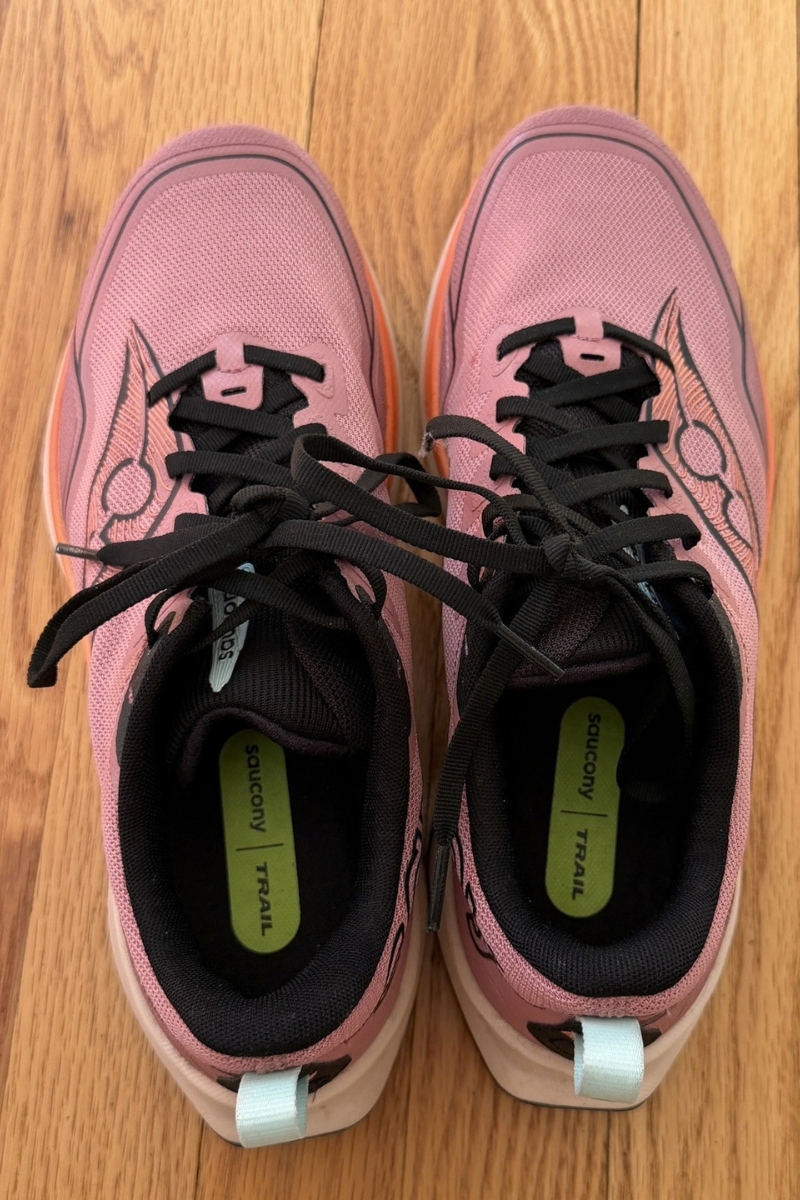
Support comes from a stable platform, a secure midfoot and a firm heel, all on a shoe that still flexes naturally. It felt controlled on uneven ground, and off-camber sections held steady even where one foot landed higher than the other. Loose limestone tested that harder because the surface shifted underneath me, and still the shoe never went tippy.
I had no ankle rolls across the test, and no near-rolls on the rooty sections either. I could feel the wider base doing its work, and the shoe still let my foot move naturally.
My foot stayed under the laces on climbs and descents, never sliding forward on the steeper ground, so I never had to retighten mid-run. The extra eyelet for heel-lock lacing is there if you want it.
Arch support is moderate and quiet. There is enough structure to feel supported over a long run without anything pushing upward, and it stayed that way as my feet tired. Anyone wanting pronounced structure will find it too subtle.
Breathability
I spent three consecutive days on exposed limestone in August in thin merino socks, and I never once thought about the upper. My feet did not run hot, my socks were not soaked afterwards, and no heat-related hotspots appeared. An upper you do not notice in those conditions is doing its job.
The wet week in Bohinj was cooler and far more enclosed, so heat never came into it, and the shoe never felt sealed or clammy once wet.
Saucony reworked the mesh for abrasion resistance, and after three hot days in Mallorca, I can say the added protection has kept the upper comfortable in the heat.
Fit and Sizing
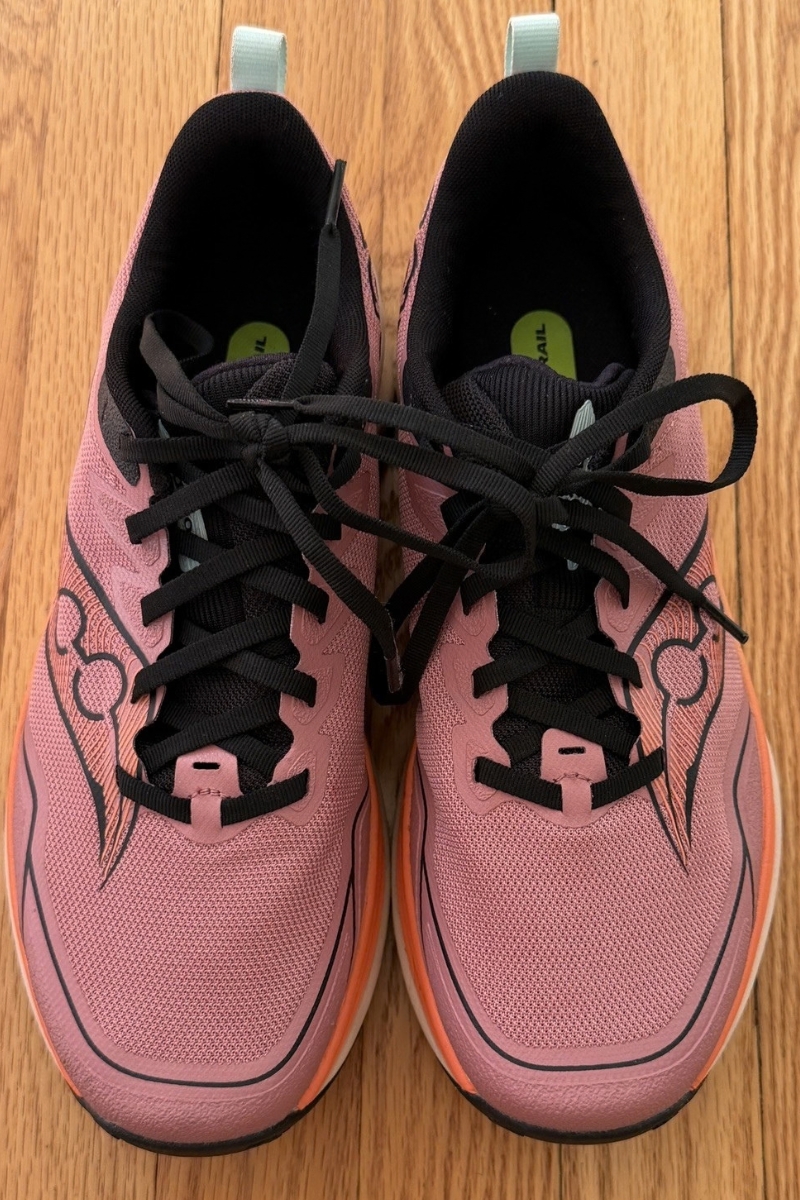
The forefoot offers width without much vertical volume, which may explain why reviewers disagree on how roomy it is. For reference, my feet are wide without being high volume, and the pair I tested is the Wide.
During testing, I had no toe pressure and no compression at the sides on longer runs. My toes had room to move naturally, and the fit never felt sloppy. I would still stop short of calling it anatomical, so anyone who wants a properly foot-shaped last should look at the Altra Lone Peak 9, which uses Altra’s roomiest last and comes in a wide.
Width and volume are separate measurements, and this shoe gives you plenty of the first and a limited amount of the second. A flatter foot will find room across the forefoot, and a higher-volume foot might meet the upper over the toes.
The regular and the Wide cost the same $150. I only wore the Saucony Peregrine 16 Wide, so I can’t say how much narrower the regular runs, and if your feet are anywhere near wide, I would start with the Wide. Keep in mind that its extra room goes across the forefoot, with little added height over the toes.
The midfoot felt structured without a pressure point, and my heel sat secure on steep terrain, with the counter holding it firmly and never bothering me.
They are true to size in the Wide, and my usual women’s US 8.5 gave enough length for descents, so I had no reason to go up.
How the Saucony Peregrine 16 Compares
Saucony Peregrine 16 vs Saucony Peregrine 15
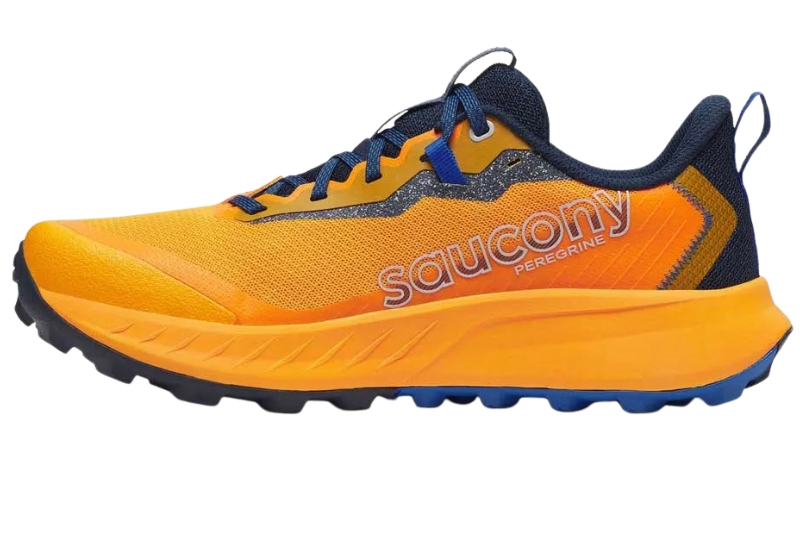
The 16 is the more versatile of the two. Its updates focus on wet grip and underfoot protection, and the lugs dropped a millimeter along the way. Our Peregrine 15 review also recorded the 15’s 5 mm PWRTRAC lugs clogging in mud.
The Saucony Peregrine 16’s shallower 4 mm Vibram lug shed mud well for me, although it cannot reach through deep material. Weighing a discounted 15 against a full-price 16 therefore comes down to your ground: deeper lugs for mud, with some clogging, or better wet grip with less depth.
That review also found the 15’s softer foam slightly less protective on very rocky ground, and the extra foam in the 16 addresses that. I felt it most on long rocky days. Our 15 review noted heel rubbing on the first day, and my heel never rubbed in the 16.
For moderate trail running I would take the 16’s outsole, though anyone whose season runs properly muddy has an argument for the discounted 15. We have also reviewed the Peregrine 13 if you want the longer arc of how this line has changed.
Saucony Peregrine 16 vs Nike ACG Pegasus Trail

Stability is the main difference between these two. In my Peg Trail review, the platform wobbled on rocky ground and I rolled my ankle a couple of times. The Saucony Peregrine 16 stayed planted on the same kind of terrain, so on off-camber limestone it is the shoe I would reach for.
The Nike answers a road-to-trail brief with a roomy standard forefoot and a softer landing, so it suits easier ground and wide feet that don’t want to hunt for a Wide.
The Saucony Peregrine 16, on the other hand, is the pick when the terrain turns technical and you want to trust the platform underneath you.
Saucony Peregrine 16 vs Hoka Speedgoat 6
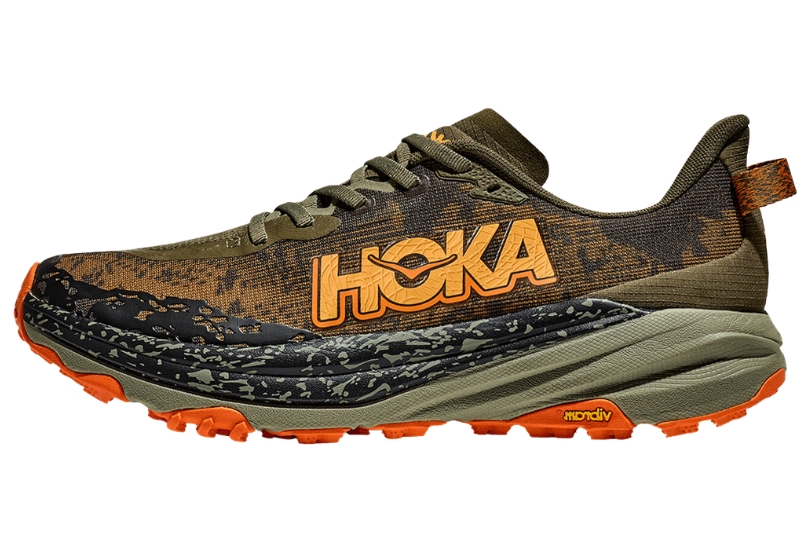
Both shoes now run on Vibram Megagrip with Traction Lugs, so on wet rock the choice comes down to height and ride feel. The Speedgoat 6 also runs deeper 5 mm lugs against 4 mm here, so if deep mud is your problem, the Hoka reaches further down.
In the Saucony Peregrine 16, I stayed closer to the rock and could read each landing, which on off-camber limestone let me correct my footing early. Our Speedgoat testing also recorded heel slippage until the lacing was dialed in. In the Peregrine, my heel sat secure from the first run, and I never needed the extra eyelet.
Where the Saucony Peregrine 16 Performs Best
Hard, rocky, technical trail suits this shoe best, especially on descents, where the outsole and the added foam work together. Wet roots and wet rock were the surprise, and the grip there gave me more confidence than I expected from 4 mm lugs.
It also handles consecutive days in mixed weather, because it drains quickly enough that a soaking does not carry into the next morning. Warm, exposed running suits it too, since the upper stayed comfortable across three hot days.
Where It Falls Short
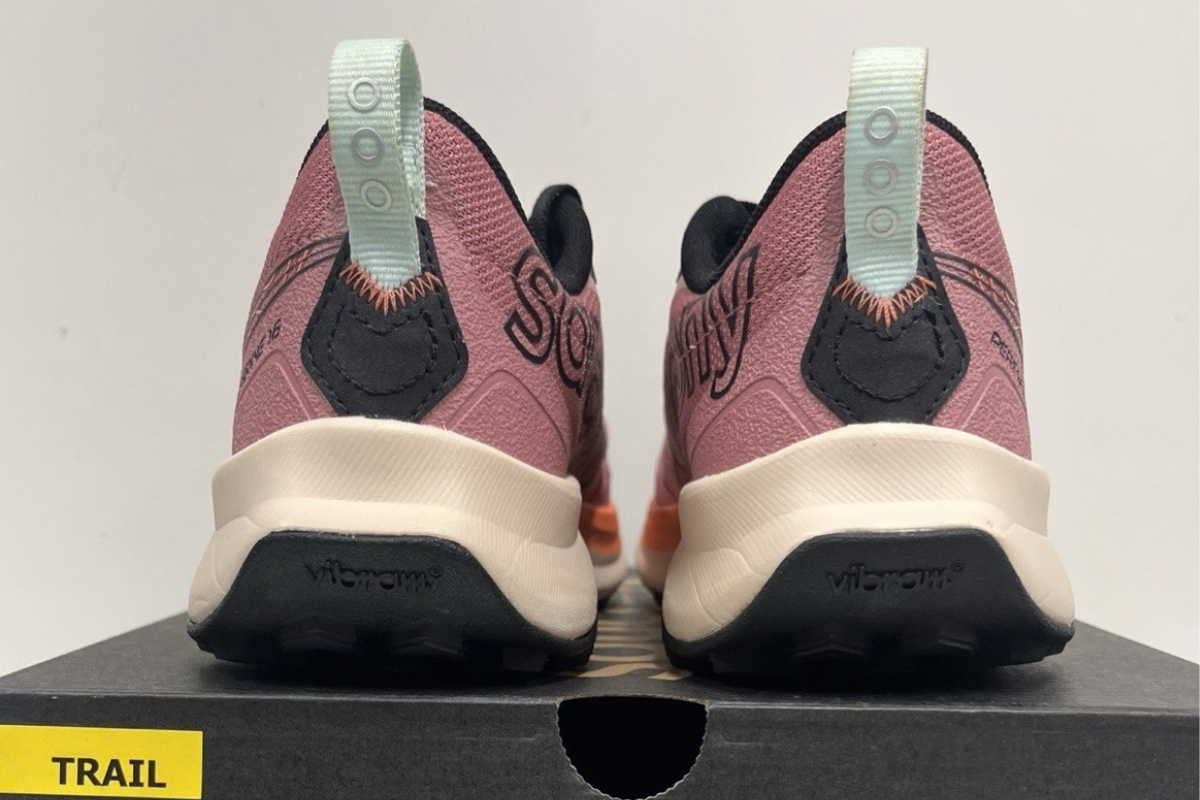
Deep mud is the clear limit. The lugs shed material well and then run out of depth once it thickens, so a properly muddy season calls for something more aggressive. Deep loose gravel on steep descents causes the same problem for the same reason, and my heel moved once on that surface.
Higher-volume feet will meet the upper over the toes, and the Wide does not change that. Also, nothing here is waterproof, so wet feet are the price of the drainage.
Anyone after a plusher road-to-trail ride should read our Hoka Challenger 8 review, or the Nike Wildhorse 10 review. Anyone wanting pronounced arch structure should also look elsewhere. Finally, 50 miles80 km of testing plus short weekend hikes are too few to tell you how long it lasts.
Do We Recommend It?
Saucony Peregrine 16
These came to me by accident, and I would now buy them on purpose. They spent the summer as my default pair for anything rocky, and whenever the ground turned technical, I never wished I had brought something else. At $150, I think they are fairly priced for what is built into them.
Buy them if you run rocky, technical or root-covered trail, want grip you can trust on wet rock, and prefer a low, connected ride with enough protection to survive a long day. They also fit true to size in the Wide and hold the foot without a fight with the lacing.
Deep mud is the one reason I would point you elsewhere. In that case, the outgoing 15 is worth a look, since it is discounted now and its deeper lugs suit that ground better, clogging caveat included. For a wider view, our footwear leaderboard ranks the 16 against everything else we have tested.
Where to Buy
| WHERE TO BUY? | MEN | WOMEN |
| Amazon | See Pricing» | See Pricing» |
| Backcountry | See Pricing» | See Pricing» |
| REI | See Pricing» | See Pricing» |
FAQs
The outsole switched from PWRTRAC to full-coverage Vibram Megagrip, with lug depth dropping from a stated 5 mm to 4 mm. Saucony added more PWRRUN foam underfoot, taking the stated stack to 32 mm at the heel and 28 mm at the forefoot, and reworked the upper for abrasion resistance. In my testing, wet rock was the highlight and deep mud the weak spot.
Yes. The Saucony Peregrine 16 is a neutral trail running shoe with moderate arch support and no motion-control features. Its stability comes from a wider base with no corrective structure, which suits runners who do not need pronation control.
Tap a star to vote. Tap the left half of a star for a half star.
Thanks, your rating counts
It is now part of this shoe’s community score. Changed your mind? Tap a different star.
See how it ranks on the full leaderboard →Prices in this article are approximate and updated annually. Check the retailer for current rates.