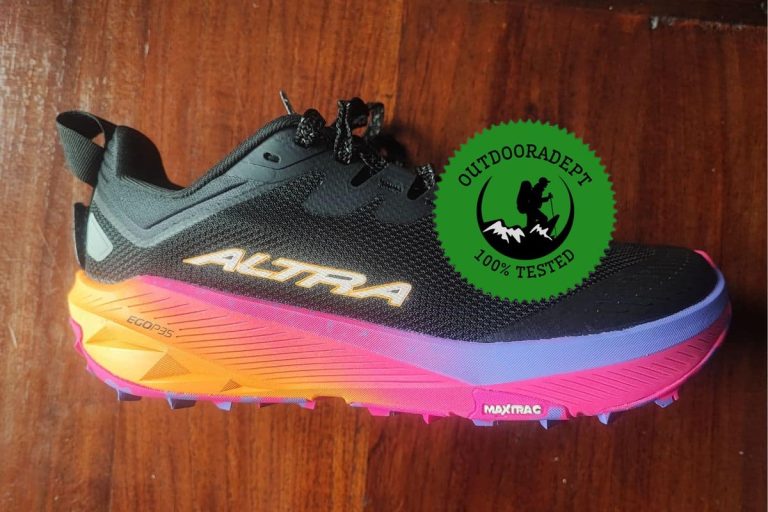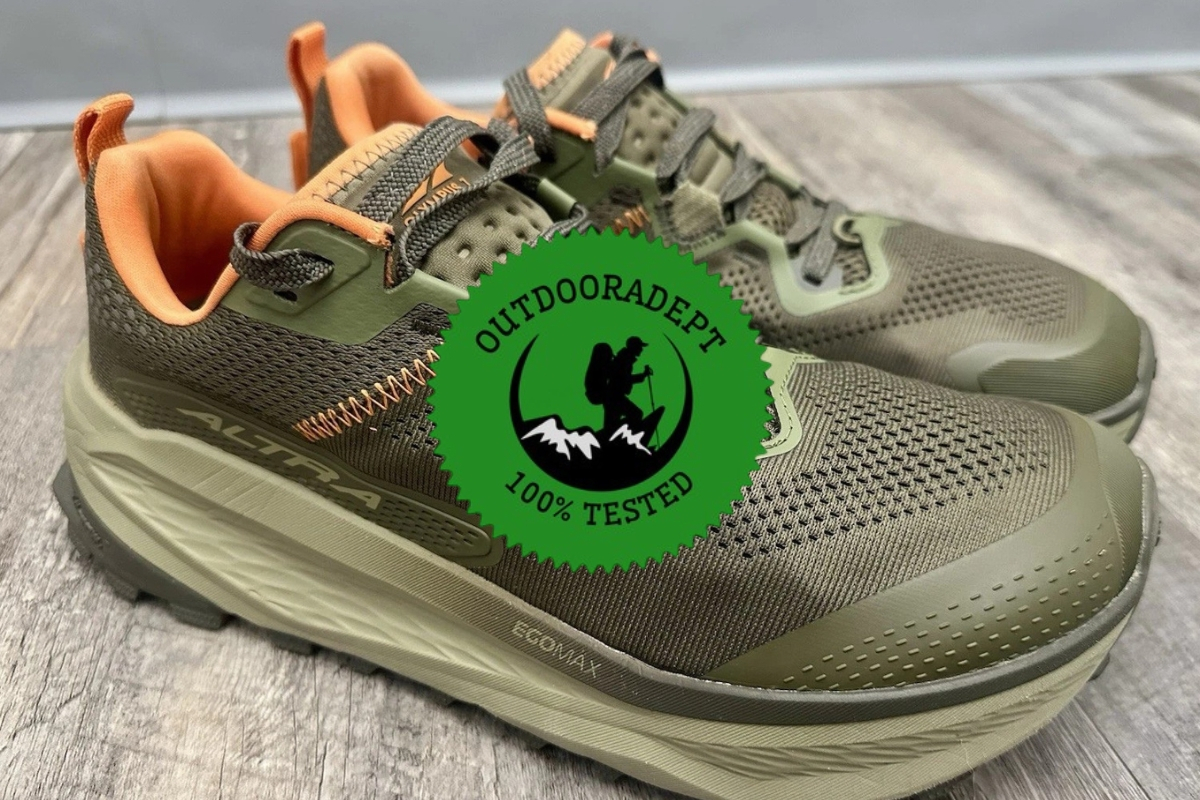
On my first climb up Mount Rinjani, I wore the Altra Timp 6 and brought a good chunk of the mountain back down with me, most of it inside my shoes. That was in early October, and I wrote up the whole trip day by day. Later that month I got the chance to go again with a group I liked a lot, so back up I went, this time in the Altra Olympus 7.
If you’ve ever reached the bottom of a long descent counting the minutes until you can take your shoes off, Altra’s pitch for the Olympus 7 will sound good, with a tall, zero-drop platform built for long distances and a roomy toe box.
I tried the shoe over four days of volcanic trail, including a summit push that started at 2 a.m., an hour I normally only know from inside a sleeping bag, and a long, sliding descent on loose ground.
By the end of that day, I had it down as a comfortable shoe for long hours on foot, but one I trusted less once the ground turned technical.
In this guide
Quick Verdict: 3.8/5
Altra Olympus 7
The Olympus 7 pairs a 33 mm EGO MAX midsole with Altra’s roomy Original FootShape fit, and I was comfortable in it from the start of a four-day trek. On roots and steep, sloping rock my footing felt less precise on that tall, soft platform, and it’s not a light shoe.

It suits hikers with wide forefeet who want cushioning for long descents and multi-day trips with a light pack. If you have narrow feet, the Timp 6 further down suits better, and if you spend your days on technical rock, the X Ultra 5 GTX does. For heavy loads you’ll want a proper boot.
Highlights
| Feature | Altra Olympus 7 |
|---|---|
| Specs | |
| Weight | 11.75 oz333 g per shoe, men's US 9.5 · OutdoorAdept 11.45 oz325 g per shoe, men's US 9 · Altra 9.65 oz274 g per shoe, women's size US 8 · Altra stated |
| Fit | Roomy forefoot, true length with little to spare; half a size up for a looser fit · OutdoorAdept |
| Waterproofing | Not waterproof; engineered mesh with no membrane; Mid GTX version available |
| Stack height | 33 mm heel and forefoot · Altra |
| Heel-to-toe drop | 0 mm zero drop · Altra |
| Lug depth | Not published by Altra; not measured |
| Adjustability | Traditional lacing; GaiterTrap heel tab |
| Widths | Regular width only; no wide version |
| Toe Protection | Molded TPU toe bumper; no rock plate |
| Figures credited to OutdoorAdept are our own measurements. The rest are the brand’s published specs. How we test | |
| How it performed | |
| Traction | 4/5 Vibram Megagrip with TractionLug; mostly dependable on compact dirt and gravel; less secure on shifting volcanic scree |
| Comfort | 4.5/5 Altra EGO MAX midsole; soft cushioning and zero drop; Original FootShape; no break-in needed |
| Breathability | 4/5 Engineered mesh stayed comfortable in the heat; a touch warmer than the lighter Timp 6 upper |
| Durability | 3.5/5 No tears in the mesh or damage to the rubber after a four-day volcanic trek; long-term wear unproven |
| Arch Support | 3/5 Neutral; support comes from the wide base and cushioning; the insole lifts out for custom orthotics |
Tap a star to vote. Tap the left half of a star for a half star.
Thanks, your rating counts
It is now part of this shoe’s community score. Changed your mind? Tap a different star.
See how it ranks on the full leaderboard →PROS
CONS
Trail tips, news and giveaways
One email a month: hiking tips, gear news, giveaways, fresh footwear verdicts and more. No spam, unsubscribe anytime.
How We Tested
I tested the men’s Altra Olympus 7 in my usual US 9.5, with the stock insole, on a four-day, porter-supported crossing of Mount Rinjani in October 2026. I bought this pair at retail with my own money.
The extra day spread the usual three-day route of about 20 miles32 km over four days, with a pre-dawn summit push to 12,224 feet3,726 meters and roughly 5,600 feet1,700 meters of descent to the crater lake.
Dusty savanna trail turned into rocky switchbacks on the climb, then into volcanic sand and scree near the summit, and the last day finished with roots and rock on a long forest descent. It stayed dry the whole way, from around 77°F25°C on the lower slopes to cold wind before sunrise on summit day.
Porters carried the camp gear, so my daypack weighed an estimated 11 to 13 lb5 to 6 kg, and I used trekking poles. I didn’t run in them, and apart from weighing one shoe with the insole in, I took no measurements.
Things We Tested When We Reviewed Altra Olympus 7

Traction
I had good grip on compact dirt and gravel for most of the trek, enough that I could usually walk without thinking about my footing. Some of that is down to the extra rubber under the midfoot. This version runs the rubber across the middle of the outsole, so more of this wide sole grips the ground and there’s less bare foam under the arch.
It’s Vibram Megagrip, shaped into TractionLug lugs with small ridges along their sides to give each lug more edges to grab with. Vibram claims up to 25% more traction than plain lugs, a figure I can’t check from the trail.
On descents I leaned on the extended heel rubber a lot, since it gives you a wider landing area when you come down heel first, and I felt more in control braking on the steep sections.
The loose sand and scree on summit day were harder going, as there isn’t much for any lug to hold when the ground itself moves. I had a few small slips on the softer patches, and now and then even on packed dirt, none of which I’d want on video.
With the soft EGO MAX midsole under me, I also couldn’t place my feet as precisely on that loose ground. Fine grit packed in between the lugs on dusty ground, and I didn’t notice it costing me any grip. I didn’t meet any wet rock or mud on this trek, so I have nothing to report there.
Durability
After 20 miles32 km of volcanic trail I can’t find a rip or tear anywhere in the mesh, and the outsole has no damage I could spot.
The toe bumper and the sides of the heel are covered in molded TPU, and those spots took the brunt whenever I kicked a rock or a root, with the bumper coming through undamaged.
One trek is too short to say how long the outsole will last, so check the lugs under the forefoot and heel now and then as you put miles on them.
Comfort
The Olympus 7 needed no breaking in, and I didn’t get a hot spot all trek.
Altra says the new EGO MAX foam is 15% lighter and 10% softer than the old Olympus midsole. To me it felt soft and forgiving without going dead, with a little spring when you push off, but I wouldn’t call it bouncy.
On the long descent after the summit, where every rocky step lands harder than you’d like, my feet didn’t take much of a beating with all that foam under them.
There’s 33 mm of it at both the heel and the forefoot and no rock plate, so the midsole does all the protecting. I could still feel the general shape of the trail, just not many of its sharp edges. If you’re new to zero drop, ease into it on shorter hikes before a trip like this one.

Weight
On foot the Olympus 7 feels lighter than my scale says, and I think the rocker has a lot to do with it, as each step rolls through the forefoot without any clunkiness.
One shoe from my US 9.5 pair weighed 11.75 oz333 g, and my Timp 6 in the same size weighs 10.1 oz287 g, so that’s an extra 1.6 oz46 g on each foot.
Altra’s product pages list both shoes at 11.45 oz325 g, so on paper the difference disappears. Lighter foam helps, but the Altra Olympus 7 is still on the heavy side for a trail runner.
With only a daypack on, I didn’t mind the extra weight, and I’d carry it again for that cushioning on a big descent.
Waterproofing
I was happy to have an open mesh upper on a dry trek like this one. There’s no waterproof membrane in the standard Olympus 7, so once the mesh soaks through, your feet will get wet.
I didn’t test them in water, so I can’t say how much gets in or how fast they dry. Altra also makes a Mid GTX version with a GORE-TEX membrane that I haven’t tried, and our rankings of waterproof trail runners cover other shoes with a membrane for wet hikes.
Support

Most of the stability comes from the wide base, and I felt steady on uneven, rocky paths at a normal hiking pace. The soft midsole gives under load without collapsing, and the TPU around the heel adds some structure without making the back of the shoe stiff.
Around exposed roots and jumbled rock I could feel how tall and wide the shoe is, and on steep, sloping or loose sections I slowed down and picked my steps one at a time.
The Olympus is a neutral shoe with no medial post or guide rails. I found the stock insole comfortable without anything pushing up into my arch, and it lifts out if you’d rather use orthotics.
Breathability
On the hot first day, at around 77°F25°C, I didn’t find the shoes too warm. The engineered mesh lets heat out, and the roomy toe box kept my toes from pressing together.
The Timp 6 breathes slightly better, as its upper is lighter with fewer overlays, while the Olympus has extra reinforcement at the toe and heel.
Summit morning was cold enough for gloves, and mesh this open won’t keep the cold out, so pack warmer socks if your trip has a pre-dawn start.
Fit and Sizing

I wore my usual men’s US 9.5 on my medium-width feet, the same size as my Timp 6, and the Altra Olympus 7 fits true to size. There isn’t much spare length, though unlike in the Timp, my toes stayed clear of the front, and most of the extra room goes into the width of the forefoot.
If you like a bit of looseness, go up half a size. If you have long toes or you’re between sizes, stand on a slope in them and check the space in front of your toes before you commit. There’s no wide version, and if you shop in EU or UK sizes, convert your usual size first.
The toe box
Original FootShape left my toes room to spread sideways, with enough height that nothing pressed on them from above. Feet tend to swell on long descents, and mine never hit the front of the shoe on the way down. Narrow feet may find all that space too much, and the Standard fit below is a better place to start.
How original FootShape compares with Standard
Compared with the Standard fit of my Timp 6, the Olympus 7 has a lot more room around the ball of the foot and the toes. Altra makes three fits, and Standard sits between this roomy Original shape and the snugger Slim fit. The Timp feels sleeker, and on narrow trails I can put it exactly where I want it.
Heel and midfoot

My heel stayed put on climbs and descents despite all the room up front, and once I’d laced up, the midfoot felt secure.
Altra calls the new tongue plusher. On loose ground I had no grit coming in around it, but it’s also short and fairly thin, so when I pulled the top laces tight I could feel them across my instep. I fixed it by leaving a little slack at the top.
The collar sits low, and on the loose scree fine volcanic grit still came in over the top. I skipped gaiters on purpose to see how the shoe handled grit on its own, and it did slightly better than the Timp 6 on my first climb, mainly at the tongue and lacing area, where fine grit and small stones stayed out. For long, dusty descents I’d still pack a pair.
I didn’t bother with a runner’s loop, and the laces are short enough that tying one would be awkward anyway. I’d have liked more padding at the heel, but nothing rubbed there or at the front of the ankle.
How the Altra Olympus 7 Compares with Other Products
Altra Olympus 7 vs. Altra Timp 6

I’ve hiked the same route in both, the Timp on my first trip and the Olympus on the second, so this is one comparison I can make without guessing.
The Timp 6 I tested first is lighter and quicker to move in, and with its closer Standard fit and airier upper it’s the one I’d take for runs and mixed days.
On rocky ground I had more protection underfoot in the Olympus, and by the bottom of the summit descent I was glad of the extra foam and the room up front. If you split your time between running and hiking, start with the Timp.
Altra Olympus 7 vs. Salomon X Ultra 5 GTX
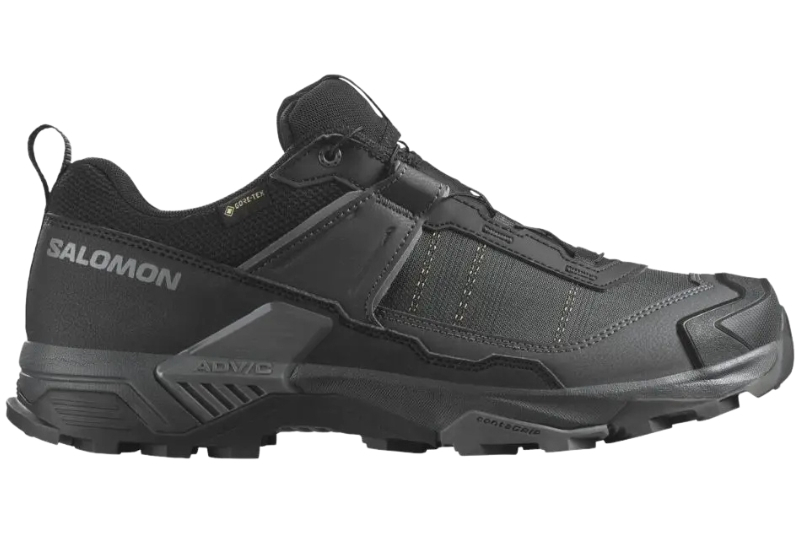
If you’re torn between a cushioned trail runner and a hiking shoe, the Salomon X Ultra 5 pair I tested over a full shoulder season is the one I’d put next to the Olympus.
The X Ultra 5 GTX feels firmer and more structured, and with its chassis and Contagrip outsole I found it easier to place precisely on stone steps and uneven rock. Its conventional heel-to-toe drop will also feel familiar if you’re coming from hiking boots.
Underfoot, the Olympus is far softer and gives the toes much more space, while its mesh breathes better in the heat, as GORE-TEX builds run warm. For technical day hikes on stone and rock, I’d take the Salomon.
Altra Olympus 7 vs. Altra Olympus 6
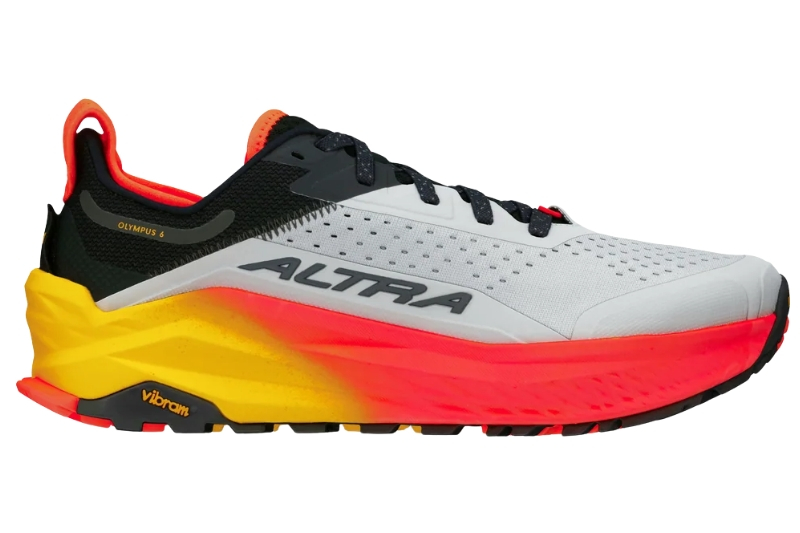
I haven’t worn the Olympus 6, so this comparison rests on what Altra changed and on our own testing of the older shoe. In the midsole, EGO MAX replaces the compression-molded EVA of the 6.
The 6’s thick Achilles pillow is gone, replaced by ordinary heel padding, and Altra lists the new shoe about 0.75 oz20 g lighter.
In our long-term test of the Olympus 6, Sarah Groves found that shoe’s foam firm and short on bounce. The 7 felt softer to me, though I only hiked in it and can’t speak for it at a run. She also found the 6 short in length, with most runners going up half a size. My usual size fit the 7, so start from your normal size. A discounted 6 still gives you the same zero drop and 33 mm stack, with a firmer feel underfoot.
Where the Altra Olympus 7 Performs Best
I’d choose the Olympus 7 for long hiking days and multi-day treks with a light daypack, especially when the route finishes with a long descent. The shoe suits a steady hiking pace on dirt and gravel paths through forest or open country, and it coped with moderately technical mountain trail as long as I slowed down on the steep, sloping sections.
It also makes sense if your forefoot is wide and Standard-fit Altras feel cramped, since the Original FootShape lets your toes spread out over a long day.
On Rinjani’s summit scree, I’d still follow the advice in my Rinjani trek report and pick a mid boot with gaiters, as fine gravel came in over the low collar of the Olympus 7 too.

Where the Altra Olympus 7 Falls Short in Performance
I wanted more precision on tight roots and steep, sloping rock, and you’ll get it from the firmer X Ultra 5 GTX. Loose scree is slow going in any shoe, so I wouldn’t hold that part against the Olympus.
With a heavy pack I’d want a stiffer, more structured shoe, and the Salomon Quest 5 GTX backpacking boot I tested under a loaded pack is built for that job. If you mainly run or have narrow feet, the lighter Timp 6 on its Standard fit will suit you better.
Do We Recommend It?
Altra Olympus 7
Yes, for hikers who want plenty of cushioning and toe room on long days and can live with the extra weight to get them.
After four days and two big descents I finished in good shape, with one lesson learned about the top laces. If your hikes lean technical or you need a waterproof shoe, go back to the comparisons above.
At $195, the Olympus 7 isn’t cheap, but if all-day comfort comes first for you, I’d point you to it.
Where to Buy
| WHERE TO BUY? | MEN | WOMEN |
| Amazon | See Pricing» | See Pricing» |
| Backcountry | See Pricing» | See Pricing» |
| REI | See Pricing» | See Pricing» |
Frequently Asked Questions
Altra launched the Olympus 7 on August 12, 2026, at $195 for both the men’s and women’s versions.
Yes, the Olympus 7 Mid GTX adds a GORE-TEX Invisible Fit membrane and a mid-height upper to the same EGO MAX and Vibram Megagrip platform, and it sells for $230.
Yes, the heel carries a hook-and-loop GaiterTrap tab for strapless trail gaiters, so the back of the gaiter fastens to the shoe without a strap running under the sole.
Tap a star to vote. Tap the left half of a star for a half star.
Thanks, your rating counts
It is now part of this shoe’s community score. Changed your mind? Tap a different star.
See how it ranks on the full leaderboard →Prices in this article are approximate and updated annually. Check the retailer for current rates.