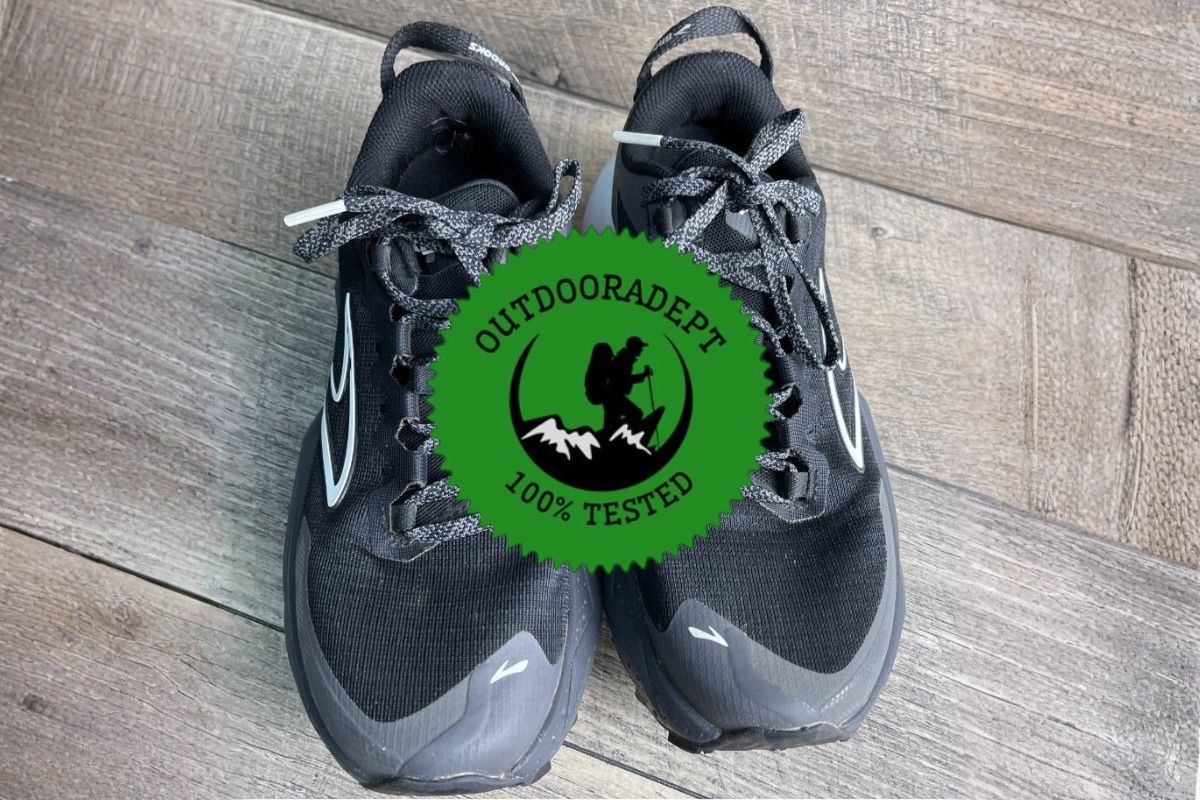
By the end of my second straight day of hiking on Italy’s Ligurian coast, my feet were feeling the uneven ground, and I was thankful for every millimeter of the 38.5 mm heel stack on the Brooks Caldera 8.
Brooks built the Caldera for ultra-distance trail running, and the Caldera 8, released in January 2025, is a light update. The nitrogen-infused DNA LOFT v3 midsole and TrailTack Green outsole carry over from the Caldera 7, so what’s new is the upper.
Its quick-dry mesh is meant to resist scratches and snags, while a heel pull loop takes the place of the old gaiter tab.
This Brooks Caldera 8 review is a hiker’s read on an ultra runner’s shoe. I wanted to know whether that much foam would keep my feet comfortable through several hikes in a row, and how stable a platform that broad would feel on steep, wet limestone.
Since the upper is the part Brooks changed, I also wanted to see how quickly the new mesh dries and how it holds up against sharp rock.
Quick Verdict: 4/5
Brooks Caldera 8
The Caldera 8 is a forgiving shoe for long hiking days on dirt and packed gravel, and its deep foam is the reason to buy it. I finished every hike without a blister, with cushioning that still felt fresh on the last one.
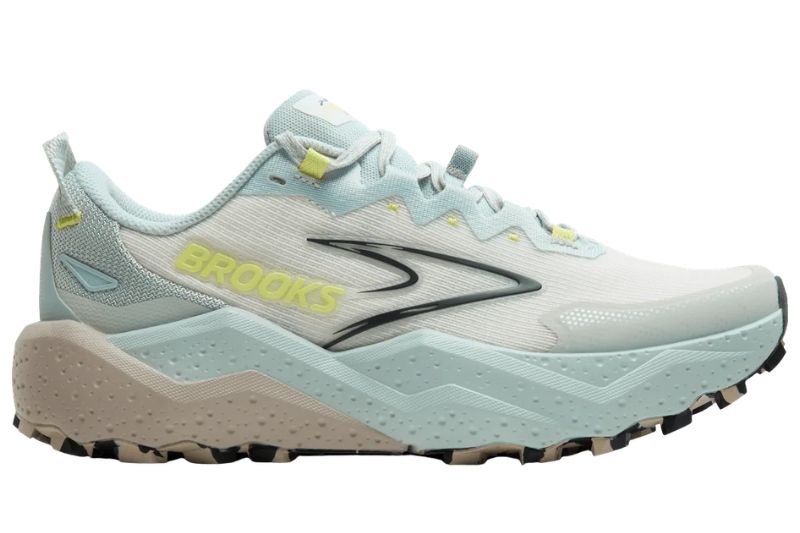
Under a day pack, the broad base kept me secure wherever my whole foot could land flat, though steep, wet limestone slowed me down.
It also ran true to size for me, with a roomy forefoot.
Skip it if you want something light for climbing fast or spend most of your hikes on steep, broken rock. I’d point you to the Altra Experience Wild 3+ for fast climbs and the La Sportiva Ultra Raptor 3 for technical ground.
Highlights
| Feature | Brooks Caldera 8 |
|---|---|
| Specs | |
| Weight | 9.6 oz271 g per shoe, women's US 8.5 · OutdoorAdept 9.3 oz264 g per shoe, women's US 8 · Brooks |
| Fit | True to size in the Medium (B); roomy forefoot; average midfoot volume · OutdoorAdept |
| Waterproofing | Not waterproof; quick-dry mesh upper with no membrane; no waterproof version |
| Stack height | 38.5 mm heel · Brooks 32.5 mm forefoot · Brooks |
| Heel-to-toe drop | 6 mm heel to forefoot · Brooks |
| Lug depth | 4 mm TrailTack Green outsole · Brooks |
| Adjustability | Slightly asymmetric lacing; elastic lace keeper; semi-gusseted tongue; heel pull loop |
| Upper | Quick-dry air mesh with TPEE fibers; resists scratches and snags |
| Midsole | Nitrogen-infused DNA LOFT v3 foam; light for its thickness |
| Outsole | TrailTack Green rubber; about a quarter recycled; flex grooves |
| Widths | One width only; women's Medium (B) and men's Medium (D) |
| Toe Protection | TPU toe cap; raised midsole sidewalls; no rock plate |
| Figures credited to OutdoorAdept are our own measurements. The rest are the brand’s published specs. How we test | |
| How it performed | |
| Traction | 3.5/5 Secure on dry limestone and packed dirt; shorter strides on wet polished limestone |
| Comfort | 4.5/5 Deep cushioning with little bounce; snug heel and midfoot; no break-in or blisters |
| Breathability | 4/5 Airy on exposed stretches; less airflow in humid woodland; no overheating |
| Durability | 4/5 Upper and exposed foam undamaged; light abrasion along heel and forefoot lugs |
| Arch Support | 4/5 Neutral; gently rising arch; stock insoles gave enough support |
Tap a star to vote. Tap the left half of a star for a half star.
Thanks, your rating counts
It is now part of this shoe’s community score. Changed your mind? Tap a different star.
See how it ranks on the full leaderboard →PROS
CONS
Trail tips, news and giveaways
One email a month: hiking tips, gear news, giveaways, fresh footwear verdicts and more. No spam, unsubscribe anytime.
How We Tested
I tested the Brooks Caldera 8 from October 5 to 9, 2026, around Finale Ligure, hiking on four of those days and covering roughly 27 miles43 km. The hikes ran 6 to 7 miles10 to 11 km each, with up to about 1,100 ft340 m of climbing. The first hike was in rain. I took a rest day midweek, and about 2.6 in66 mm of rain made that an easy decision. The woods were still wet when I went back out.
Most of my walking was on limestone and packed dirt, with roots and loose stones on the woodland paths. Some days took me over exposed, technical rock, while others stayed on easy forest track.
I wore merino wool socks and the original insoles throughout and carried 11 to 13 lb5 to 6 kg in my day pack. The Caldera 8 was my only pair on the trip. Every review we publish follows the process on our testing page.
Things We Tested When We Reviewed the Brooks Caldera 8
Traction
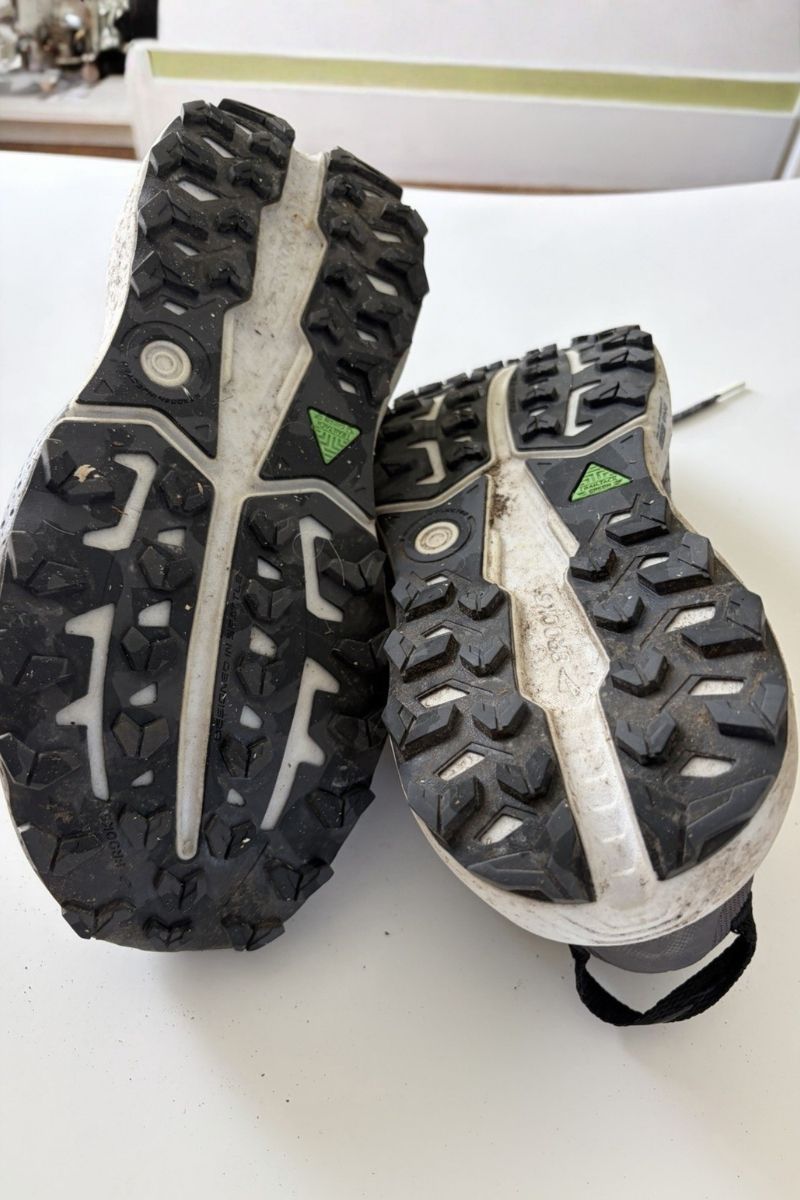
On dry limestone and packed dirt, which made up most of my hiking, the Caldera 8 grips well. Brooks uses its own TrailTack Green rubber, about a quarter of it recycled, with 4 mm lugs and flex grooves that let the sole bend with your foot over uneven ground. On wide slabs and stony steps I kept my normal pace, and on compact dirt I could stop thinking about grip.
Loose gravel was more of a mixed bag. Uphill, the lugs bit reasonably well, but on descents small stones kept shifting underfoot, so my footing was less predictable than I’d like. I didn’t slip, though, and braking on moderate slopes was easy. Mud only turned up in a few soft woodland patches, where the tread had no trouble.
I’d have scored the traction higher if the grip on wet, polished limestone matched the grip on dry rock. On steep descents during my rainy first hike, I shortened my stride a couple of times and took each step with extra care.
Worn limestone gets slick under most rubber when it’s wet, so I wouldn’t call this grip poor, though one rainy hike is a small sample to judge it on. On damp dirt and roots it held fine. If you do hit polished stone in the wet, short strides with your weight over your feet are the safer way down.
Durability
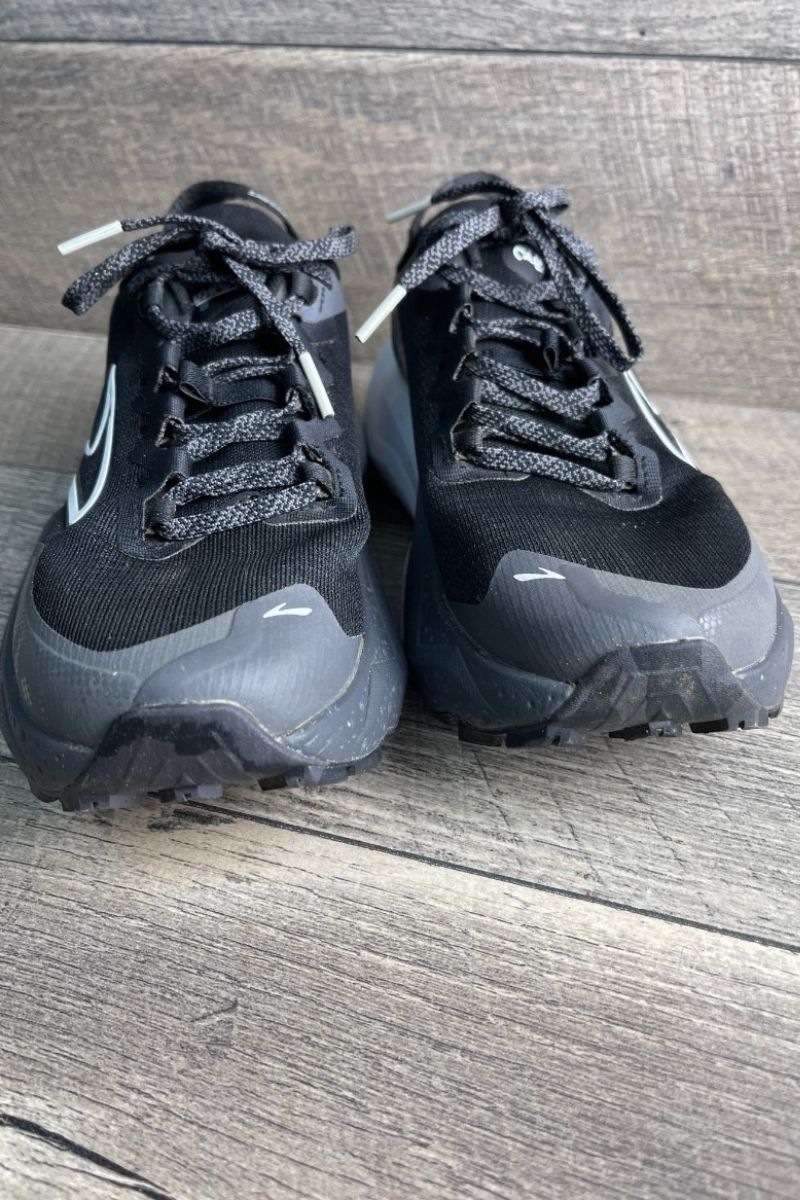
After 27 miles43 km of gravel and sharp-edged limestone, the mesh and the exposed midsole foam are undamaged, which is a good sign for the new upper. Brooks still runs TPEE fibers, a tough and flexible plastic, through the new quick-dry mesh to resist scratches and snags, while a TPU toe cap guards the front of the foot.
Limestone and loose gravel left nothing worse than a few light scuffs on the toe cap and lower overlays.
When I turned the shoes over after the last hike, I found light abrasion along the edges of the heel and forefoot lugs, but the tread pattern is still well defined.
The collar and heel lining show no significant wear either. For a $150 shoe and this mileage, that’s about what I’d expect.
At this mileage, it’s still too early to say how the upper and lugs will hold up over a full season.
Comfort
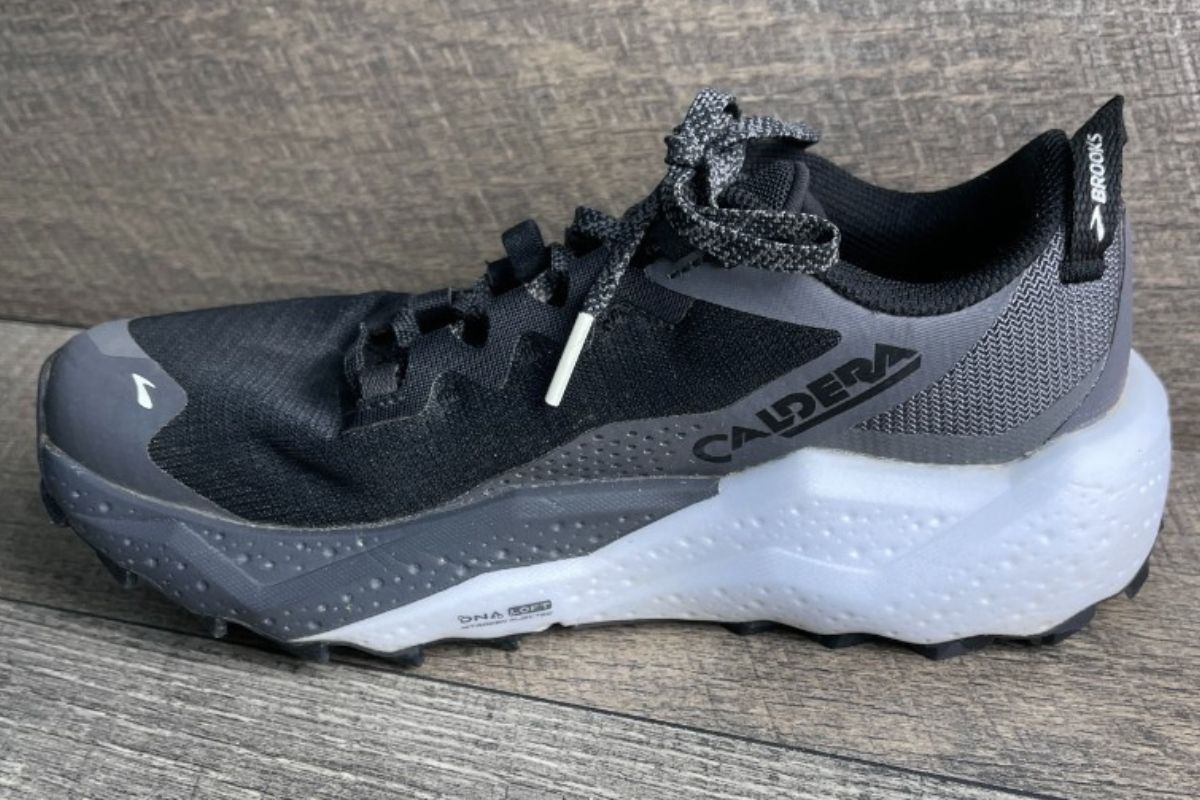
The Brooks Caldera 8 is a comfortable shoe to spend a long day in, mostly thanks to its deep foam. Its DNA LOFT v3 midsole, infused with nitrogen to keep it light for its thickness, gives even cushioning with little bounce. On long stretches of hardpack and gravel, I had enough protection underfoot, while on rocky trail I appreciated the extra depth even more.
The upper hugged my heel and midfoot from the first hike, with no breaking in needed. By the last two hikes, I was more aware of the miles in my legs, but I had no urge to take the shoes off.
As far as I could tell, the foam hadn’t changed since the start of the week. I came through without blisters or lasting pressure points. The laces didn’t dig in through the padded tongue, and the knots held all day (the elastic keeper stashes the loose ends, a small touch I liked).
Weight
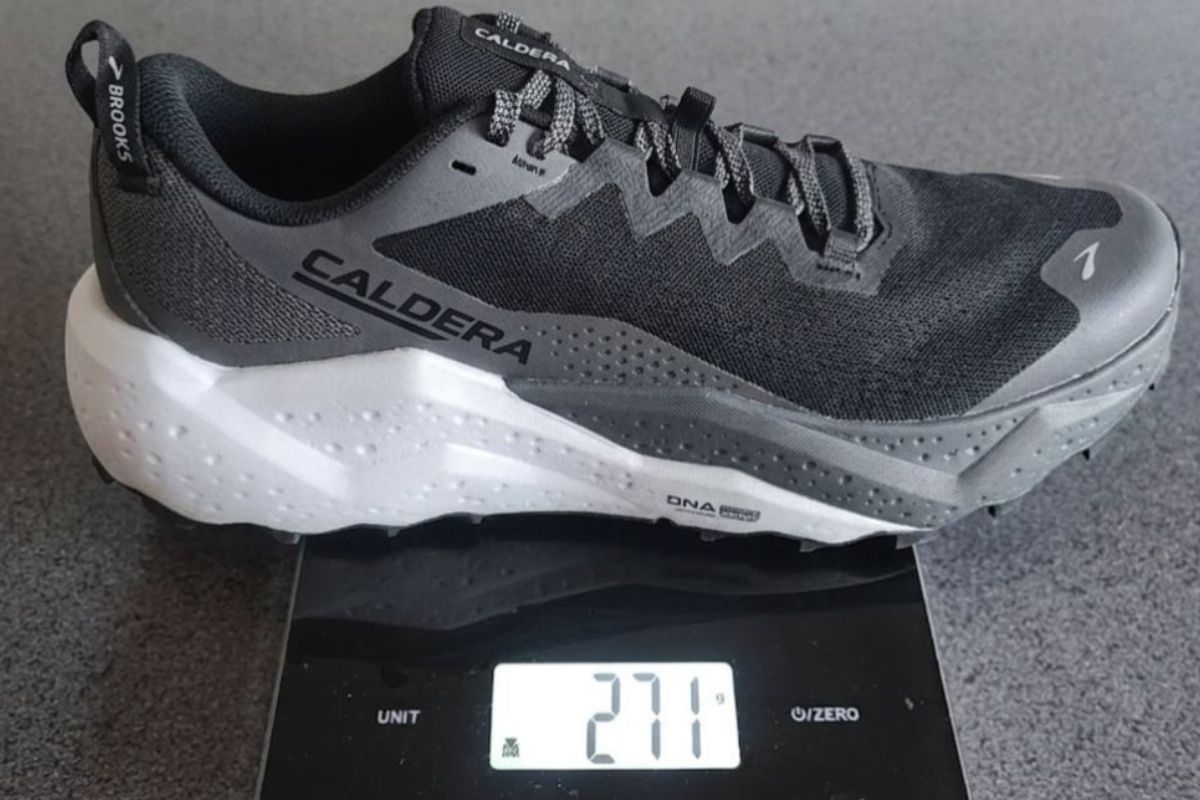
Brooks lists the Caldera 8 at 9.3 oz264 g per shoe in a women’s US 8, and my 8.5 weighed 9.6 oz271 g on our scale, close to that figure given the extra half size.
That’s a little heavy for fast hiking. I felt those ounces on the steeper sections of the two hikes with about 1,000 ft305 m or more of climbing, where I gave up some nimbleness. Loaded up for the day, I was still stable on compact dirt and gravel.
The Brooks Caldera 8 suits steady miles, so if you like to move fast uphill, go for something lighter.
Waterproofing
The mesh upper dries quickly, which matters on a shoe with no membrane. After my rainy first hike, I could wear the Caldera 8 again the next morning, as the upper had dried overnight in a well-aired room. If yours come back soaked through, give them longer. Brooks doesn’t make a GTX version.
My feet got damp on that first hike when rain came through the mesh, though I couldn’t blame any particular seam or opening. On the wet woodland paths later in the week I had less trouble, even with wet plants brushing the sides. The wet shoes added a little weight and not much else.
For a mild day of passing showers I’d still choose them, because an upper that drains suits me better than one that holds water for hours. On a day of cold, persistent rain my socks would end up soaked in these, so I’d switch to the waterproof Salomon X Ultra 5 GTX.
Support
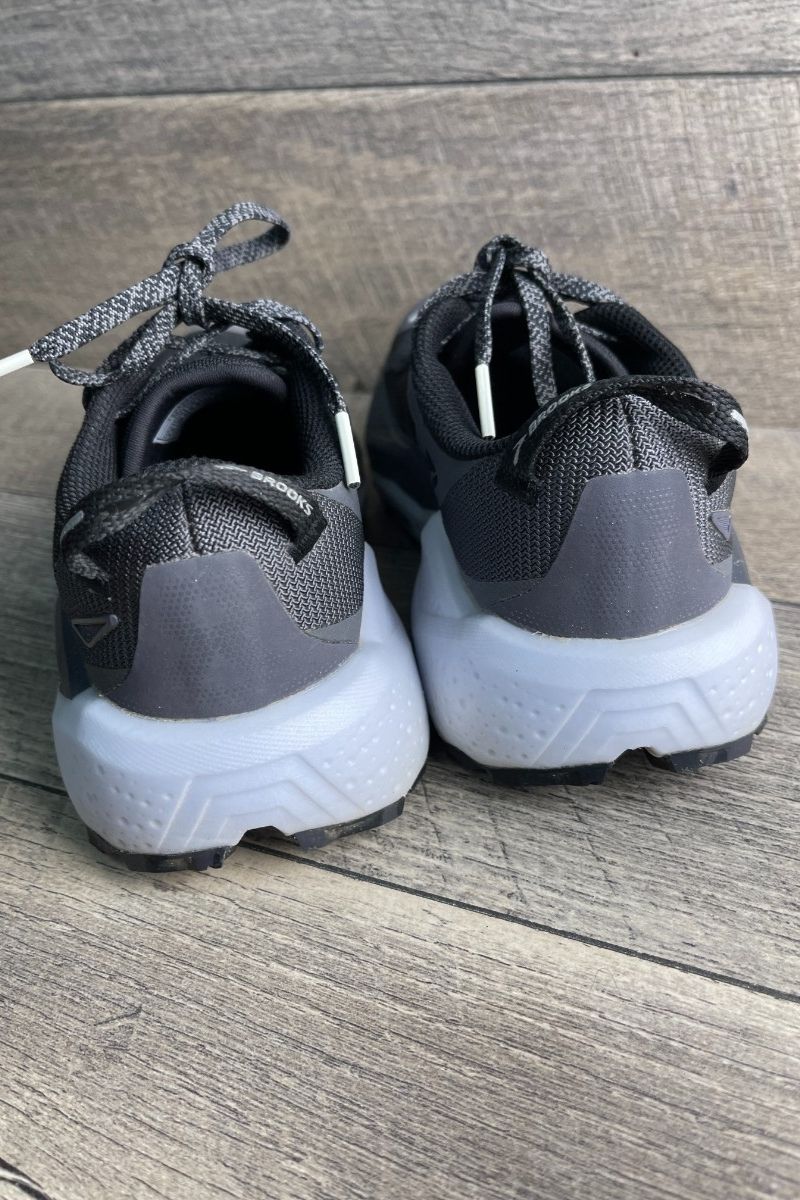
Support is neutral, with a gently rising arch built into the midsole, and the original insoles gave my arches all they needed. Raised midsole sidewalls cup the sides of the foot above a wide base.
That base does most of the stabilizing. On moderate side slopes and wider rock, where the whole sole could land, my footing was secure.
Yet, between rocks and on uneven steps the tall, broad platform made my footwork less precise, and quick corrections on bumpy limestone took more work. I had one or two awkward steps, though neither turned into a rolled ankle. On ground like that, it pays to look for a flat spot for your whole foot.
Brooks relies on the foam alone against sharp stones, with no rock plate. Through that much foam, I felt the rocky ground only faintly, without losing touch with it altogether.
Breathability
Thanks to its open mesh, the Caldera 8 breathes well. On exposed stretches, with temperatures up to 77 °F25 °C, a breeze reached my toes as the day heated up, which was welcome. The same openness lets rain in just as easily.
In humid woodland, the airflow dropped off, which is what holds the score back, though my feet didn’t overheat. If you sweat a lot, pair the shoes with merino socks; mine came out a little damp after the longer hikes and stayed comfortable.
Fit and Sizing
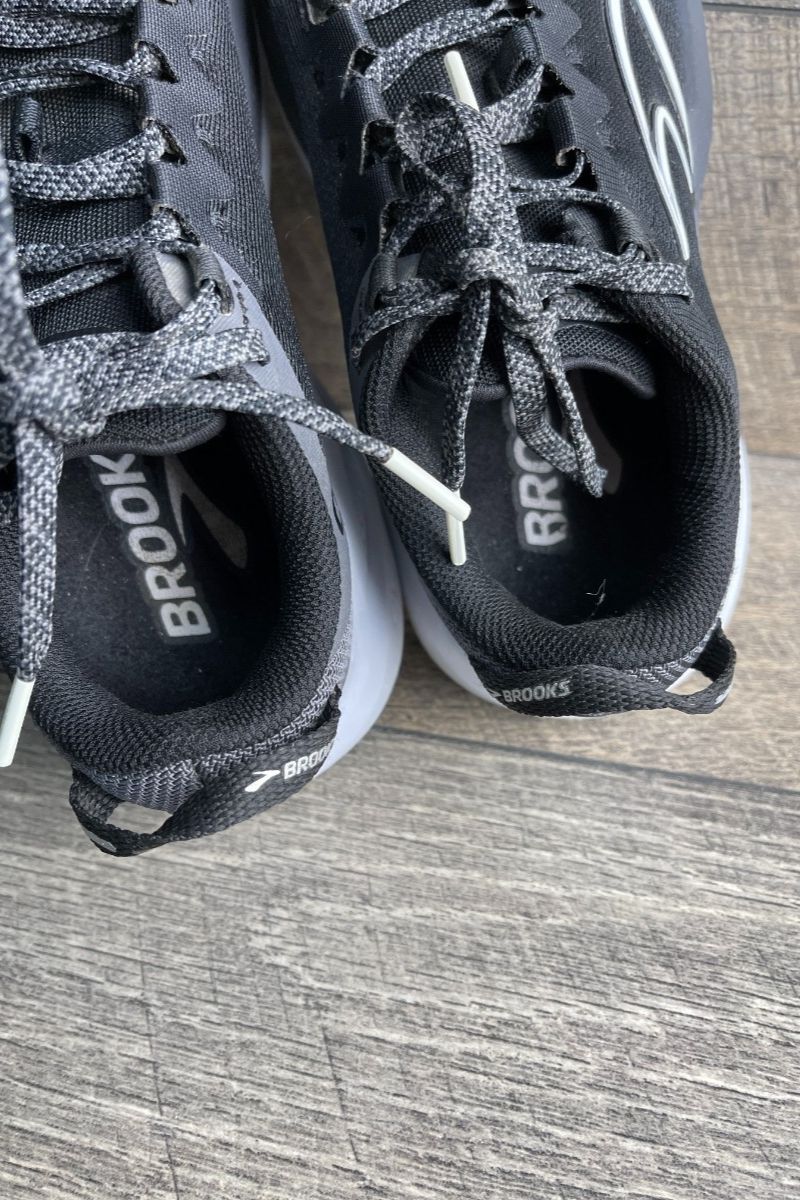
My feet are wide without being high volume, and I usually go for a Wide, as I did in the Cascadia 20. The Caldera 8 only comes in one width, and the Medium (B) still gave my forefoot enough room.
If your feet are narrow, try a pair on before you buy, since the forefoot runs roomy. If you wear the Saucony Peregrine 16, start from the same length; mine was an 8.5 Wide.
The lace line angles slightly toward the inner side, through integrated loops at the midfoot and external ones at the top and bottom. The tongue is semi-gusseted, stitched to the upper along both edges. Before steep descents, I pulled the laces tighter so my feet wouldn’t slide forward, and my instep didn’t mind the extra tension.
How the Brooks Caldera 8 Compares
Brooks Caldera 8 vs Brooks Cascadia 20
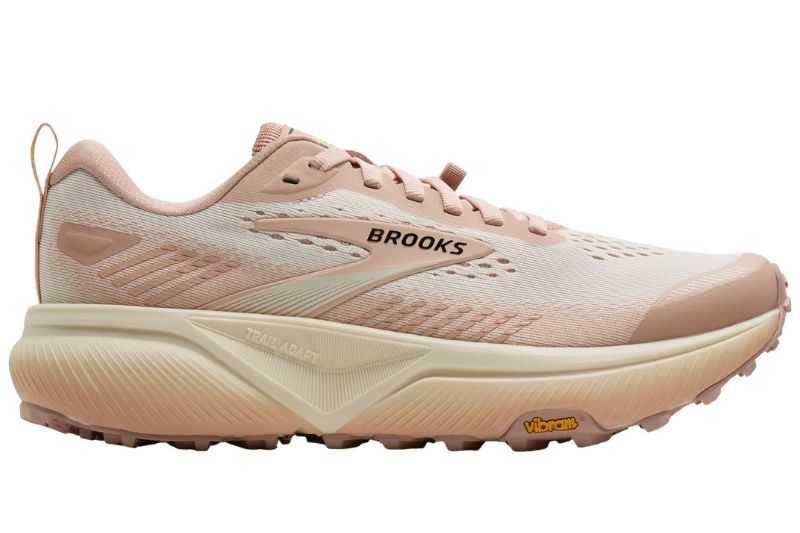
I wore the Cascadia 20 for a month right before this test, so I went from one Brooks shoe straight into the other. Where I need grip I can count on, mostly on rocky, uneven descents, I’d rather be in the Cascadia 20, with its Vibram Megagrip rubber and firmer DNA FLASH v2 foam.
On long, gentle days, when I’m after comfort over distance and don’t need much agility, I’m happier in the Caldera 8. In my women’s 8.5, the Caldera is also the lighter of the two by 0.3 oz8 g per shoe, though my Cascadia 20 pair was a Wide.
Spend the $160 on the Cascadia 20 if grip on rough ground comes first for you.
Brooks Caldera 8 vs HOKA Speedgoat 7
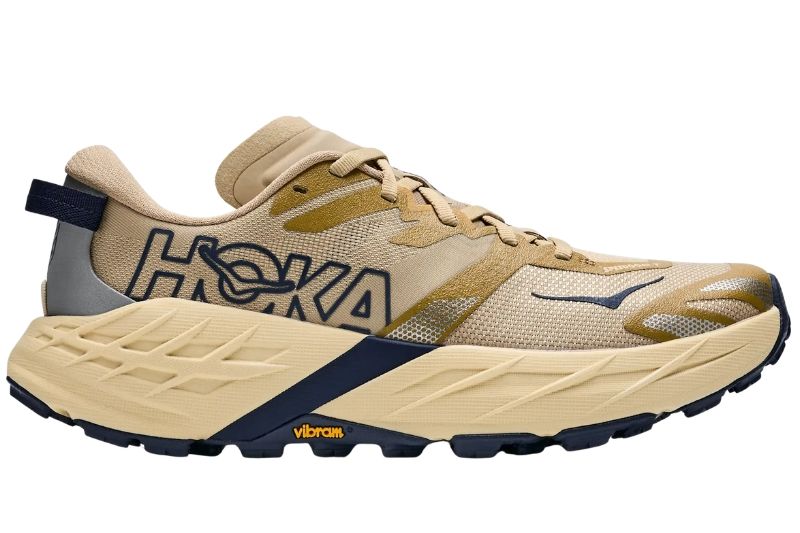
The HOKA Speedgoat 7 weighed about an ounce less per shoe than my Caldera, at 8.5 oz241 g in a 9 Wide, the half size up HOKA recommends. With 5 mm Megagrip lugs to the Caldera’s 4 mm, it’s the one I’d want on technical descents. Their heel stacks are close, at 38 mm on the Speedgoat and 38.5 mm on the Caldera.
I got more out of the Caldera’s broad platform and cushioning on long days over moderate trail, where most steps offered a flat landing. When your routes mostly turn steep and rocky, the Speedgoat is worth its $165. It also comes in a waterproof GTX version, which the Caldera doesn’t.
Brooks Caldera 8 vs HOKA Challenger 8
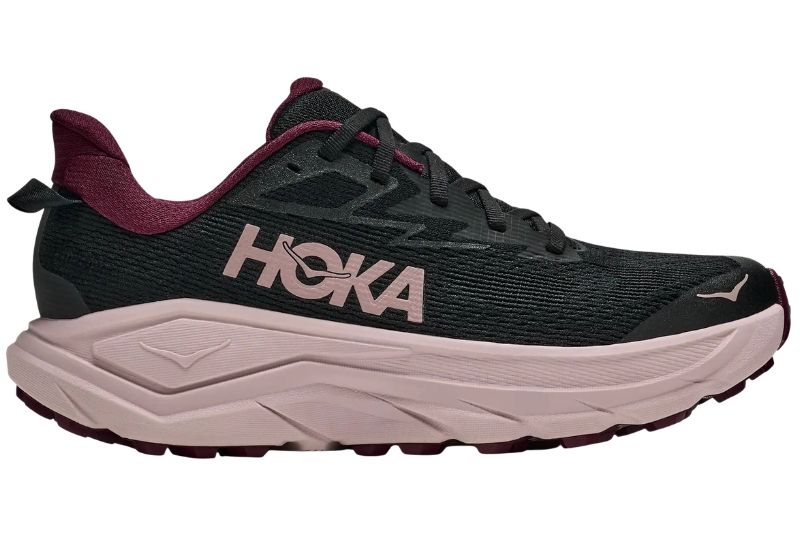
The Caldera and the HOKA Challenger 8 both go without a rock plate, and neither would be my first choice once the trail turns technical. Their lugs match at 4 mm, and on dry, packed dirt I trusted either pair.
On a long day of dirt paths and moderate rock, I want the Caldera’s more protective, cushioned feel underfoot. I’d save the HOKA for mixed routes that switch between road and hard-packed track.
HOKA lists it at $155 with an 8 mm drop, and its launch specs put the women’s version at 8.1 oz230 g per shoe in a US 8, 1.2 oz34 g under Brooks’ figure for the same size.
Where the Brooks Caldera 8 Performs Best
The Caldera 8 is most at home on back-to-back day hikes over forest paths, packed gravel and moderate rock, where most steps land flat. There, its broad base and deep foam kept my feet protected and stable, with sharp stones barely coming through.
It suits an even pace under a light day pack, and dry limestone slabs didn’t slow me down. On warm, exposed stretches, the mesh let a breeze in, and my toes had room to spread out.
Our trail runner guide looks at when a shoe like this can stand in for your hiking shoes, and when it can’t.
Where It Falls Short
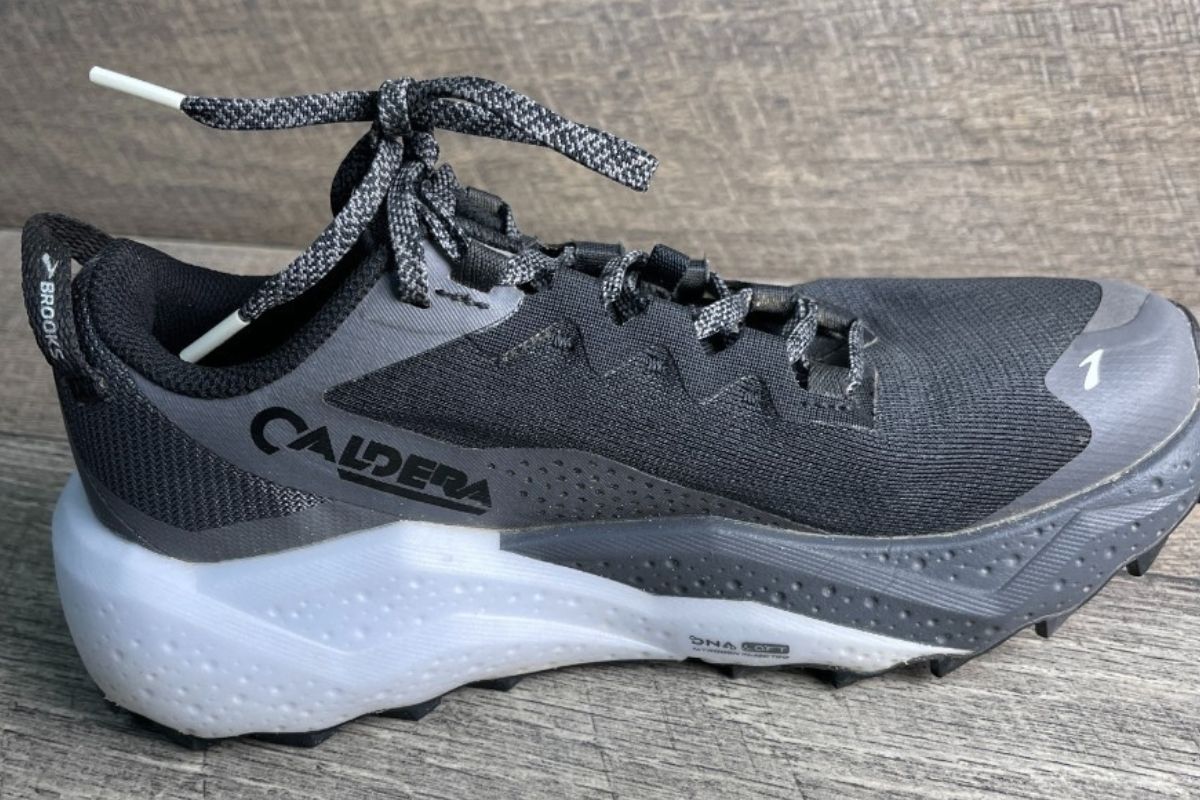
The Caldera 8 is less at ease on steep, slick limestone and broken rock. Between rocks and on uneven steps, a platform this broad is slow to adjust, so quick corrections there take more effort.
Loose gravel descents were less predictable too, with small stones shifting underfoot. On wet, polished limestone I kept my stride short. I also felt the extra weight on steep climbs, and since rain comes through the mesh, I wouldn’t pick it for cold, wet days.
If you need precise footwork on wet rock, the La Sportiva TX4 Evo is designed for that kind of ground.
Do We Recommend It?
Brooks Caldera 8
On long days of forest trail, the Caldera 8 is easy to like. It gave me deep cushioning that didn’t fade and a stable base under my day pack, without a blister or a break-in period.
Your usual size should work, since mine ran true in the Medium (B). The support is neutral, with a gently rising arch. On wet, steep rock and fast climbs, it can slow you down.
Buy them if you string together hiking days of 6 miles10 km or more on forest trail, at a steady pace and carrying a light load. It scores 4.0 on our footwear leaderboard.
Where to Buy
| WHERE TO BUY? | MEN | WOMEN |
| Amazon | See Pricing» | See Pricing» |
FAQs
No. As of October 2026 Brooks hasn’t announced a Caldera 9 or a release date, so the Caldera 8 is still the latest version.
Very little beyond the upper. The DNA LOFT v3 midsole and TrailTack Green rubber are the same as on the version our Caldera 7 review tested. The new upper uses a quick-dry mesh meant to resist scratches and snags, and a heel pull loop replaces the old gaiter tab.
Yes. Brooks puts no pronation control in the Caldera 8, so if you rely on a stability shoe or orthotics, check with a podiatrist before switching. I didn’t find myself wanting more support on my hikes.
Tap a star to vote. Tap the left half of a star for a half star.
Thanks, your rating counts
It is now part of this shoe’s community score. Changed your mind? Tap a different star.
See how it ranks on the full leaderboard →Prices in this article are approximate and updated annually. Check the retailer for current rates.