

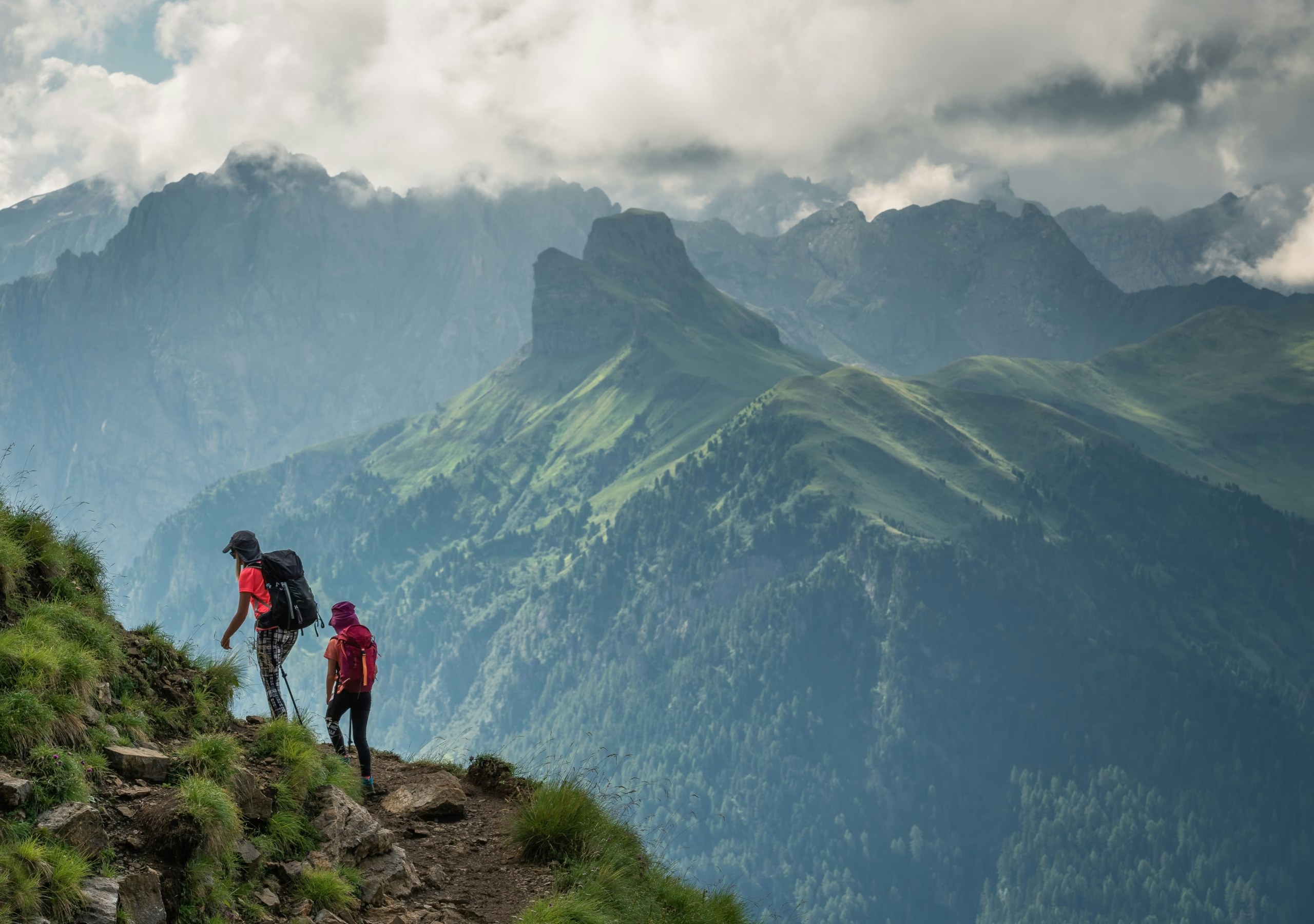
Hiking looks easy from the outside. You walk, mostly uphill, and then you walk back. Nothing complicated about it. But if that were actually true, search-and-rescue teams wouldn’t be pulling more people off mountains every year.
The mistakes that get beginners into trouble aren’t mysterious. Experienced hikers figured them out ages ago. The information just doesn’t always make it to the people who need it.
So we wrote the guide we needed back when we were starting out. Gear, skills, the physical reality that nobody bothered to mention, and how to behave in the backcountry without annoying everyone around you.
If you’re brand new, maybe start with our beginner tips first. Otherwise, let’s get into it.
What Kind of Hiking Are We Even Talking About?

Here’s a problem with the word “hiking.” People use it for an afternoon stroll on a paved path, and they also use it for a six-month expedition across mountain ranges. These are obviously not the same thing, but they get lumped together anyway. Gear is different, fitness demands are different, and what’s happening in your head is completely different.
Day Hikes and Trekking
If you’re back at your car before sunset, that’s day hiking. Water, food, rain jacket, some emergency basics, done. Your bed tonight has a mattress and maybe clean sheets. And look, this is where most hikers spend their entire lives, and there is absolutely nothing wrong with that. Decades of incredible experiences without ever sleeping on the ground.
Trekking means you’re out there for days. Moving hut-to-hut in the Alps, teahouse-to-teahouse if you’re in Nepal. Sometimes you carry a tent, sometimes you don’t. But the key difference is what consecutive days of walking do to your body.
Day one, you feel great. Day three, not so much. Fatigue accumulates in ways you won’t expect until you’re in the middle of it, and gear that worked perfectly fine for one day starts creating problems you didn’t anticipate.
Our hiking vs walking comparison covers more of the fundamentals.
Thru-Hiking Is Its Own World
Completing an entire long-distance trail – we’re talking the Pacific Crest Trail, the Appalachian Trail, the Continental Divide Trail – in one continuous effort. This means four to six months of walking.
There’s a term thru-hikers use: “the suck.” They treat it like a guaranteed phase of the experience, because apparently it is. Your legs can train before you leave home. Your head gets trained out there, whether you like it or not.
If this sounds appealing rather than terrifying, we’ve got a thru-hiking Europe guide.
Wild Camping and Bushcraft Basics

Anything beyond day hiking means sleeping outdoors. You’re carrying shelter, you’re carrying something to cook with, you’re waking up somewhere that isn’t your house.
What kind of camping? Depends. Could be a proper campground with toilets and maybe even showers. Could be a backcountry site you hiked hours to reach. Could be dispersed camping, which just means you found a legal spot and set up your tent there.
Our camping guide gets into specifics.
Bushcraft is something else. Making fire with no lighter. Building shelter from branches and whatever else you find. Navigating when your phone is dead and you forgot the paper map.
Old knowledge, the kind people needed before gear got so reliable. Will you ever use it? Probably not. But knowing even the basics changes how you feel out there.
Scrambling: The Line Between Hiking and Climbing

Put your hands on rock for balance or to pull yourself up, and you’ve crossed into scrambling territory. It’s not quite climbing, but it’s definitely not regular hiking either.
Class 2 scrambling is basically hiking with occasional rock contact. A hand here and there to steady yourself. Class 4 is getting serious. Real exposure, loose rock, the kind of terrain where a fall actually has consequences. Some people bring ropes for class 4. Not a bad idea.
We’ve all seen them. People in lightweight trail runners on ridges with massive drops on both sides, acting like it’s nothing special. Don’t do this. If there’s significant exposure on your route, or the rock is loose, or you look at a move and think “I’m not sure I could reverse that”, standard hiking skills aren’t enough anymore.
Read the scrambling guide before you learn this the hard way.
Essential Hiking Gear – The 2025 Standard

Search and rescue numbers in national parks have been climbing since 2018. Zion, Grand Canyon, Acadia, all of them hit record callouts recently. And here’s a stat that might surprise you: day hikers make up 42% of national park SAR cases. That’s four times more than any other group.
Park rangers have theories about why. More people are heading into the backcountry without preparation. Phones have replaced maps, except phones die and lose signal in canyons. And social media keeps pushing people toward photogenic spots that are way beyond their skill level.
Gear won’t turn you into a better hiker. But the right equipment (shoes, clothes, survival kits) gives you a margin when something goes wrong. That margin is the whole point.
Clothing and the Layering System
The weather on the trail is unpredictable. You start in morning shade, finish in afternoon sun, and somewhere in between the temperature swings 25 degrees. Layering exists because of this.

Base Layers
Your base layer sits against your skin and does most of the work. Material matters more here than anywhere else. Cotton soaks up sweat, stays wet, and becomes miserable in cool weather or outright dangerous when it’s cold. Merino wool and synthetic fabrics pull moisture away from your body, dry fast, and help regulate temperature even when conditions shift. If you’re only going to invest in one piece of clothing, this is where to put your money.
Mid Layers
Mid layers handle insulation. Fleece works. Down works. Synthetic puffy jackets work. Something you throw on when you stop for lunch or when the temperature drops unexpectedly. Even in summer, I carry a light insulating layer, because getting stuck somewhere without one while the temperature falls is how hypothermia sneaks up on people.
Outer Layers
Outer layers deal with wind and rain. A decent packable shell weighs almost nothing and compresses down to the size of your fist. Always bring one. When the weather turns bad, the difference between having rain protection and not having it can determine how the day ends.
Use our trail clothing layering tool to make sure you stay safe out there.
Pants versus shorts
This is a debate I’m not neutral on. Hiking pants protect against scratches, thorny brush, sunburn, and keep ticks from getting direct access to your skin. That last one matters more than people realize in large parts of the country. Modern hiking pants breathe well enough that you’re not going to overheat. The protection is worth the tradeoff.
Don’t skip a hat
Sun off your face, sweat out of your eyes, protection for your neck if you go wide-brim. In cold conditions, you lose a lot of heat through your head, and a beanie takes up almost no space in your pack.
Footwear: Boots, Shoes, Trail Runners, Sandals

What you put on your feet depends on where you’re hiking, how much weight you’re carrying, and, honestly, how strong your ankles are. No single answer works for everyone. But some outdoor footwear choices are clearly wrong: flip-flops on rocky terrain, for example.
Hiking Boots
Hiking boots are the classic option. Mid or high cut, stiff soles, built to support your ankles. They handle heavy packs well, protect your feet from rocks, and keep you stable on rough ground. The downside is weight. Boots are heavy, and that weight accumulates over miles, especially if you pick a waterproof option. They make the most sense for beginners, challenging terrain, heavy loads, or anyone whose ankles roll easily.
Not the same as mountaineering boots, though.
Hiking Shoes
These specialized shoes look like boots but they stop below the ankle. Solid construction, aggressive tread, all of that, but you shave off some weight and your feet breathe better. Hiking shoes like the Salomon X Ultra 4 GTX or Merrell Moab 3 Waterproof work well on most maintained trails. Yeah, you lose ankle support compared to boots. For me it’s a fair trade when I know the terrain isn’t too rough.
Trail Runners
Trail runners are built for dirt and rock. Thru-hikers are obsessed with them, and I get why. Light on your feet, dry out quickly after water crossings, and when you’re covering thousands of miles, those saved ounces turn into saved energy.
Here’s the thing, though. Trail runners don’t hold your ankle in place. At all. If your ankles are strong and you watch where you step, no problem. But if you’re new to this or carrying a loaded pack, a rolled ankle is waiting to happen. I learned this one firsthand on a rocky descent in Utah.
Hiking sandals
Chacos, Tevas, that category, have their place. Water crossings, mellow trails, hanging around camp. Some people do whole trips in hiking sandals. Your feet stay cool and dry quickly since everything is exposed, but you give up protection from rocks and roots. Not great for technical terrain or anywhere you’d regret having exposed feet.
Backpacks and How to Carry Weight

Ignore features for a minute. Ignore brands. The only thing that actually matters with a backpack is whether it fits your body properly.
A pack that fits right puts weight on your hips instead of your shoulders. The hip belt should sit on your iliac crest (those bony points at the top of your pelvis), and that’s where the load transfers. Shoulder straps keep the pack pulled against your back, but they shouldn’t be carrying weight downward. If your shoulders are hurting an hour into a hike, something about the fit is wrong.
Backpack Features
Packs designed for hiking come with features that justify the price. Mesh panels on the back create airflow, so you’re not completely soaked in sweat by mile two. Hydration bladder compartments hold your water reservoir in place and keep the drinking tube easy to reach. Load lifter straps let you adjust exactly how the pack sits against your upper body.
Capacity
Measured in liters. Most people buy bigger than they need, which causes its own problems.
A 20 (5.2 gallons) to 25-liter (6.6 gallons) pack handles pretty much any day hike. You don’t need 45 liters (11.8 gallons) unless you’re doing overnights or hauling specialized gear. I made this mistake early on, bought a massive pack thinking I’d “grow into it.” What happened instead: stuff shifted around with every step because half the pack was empty, and my balance suffered the whole day.
Use our backpack weight calculator to figure out what capacity you actually need.
Ultralight Options
The ultralight crowd gets mocked a lot. Cutting toothbrush handles, obsessing over grams, all that. But the core idea isn’t wrong.
A study on John Muir Trail hikers found pack weight correlated directly with injury rates. Heavier packs, more injuries, more evacuations. Makes sense when you think about it. Every ounce you carry hits your knees and ankles on every step. Do that 20,000 times a day for a week straight and your joints feel it.
I’m not saying weigh your socks. But before tossing something in your pack, ask if it’s worth carrying for six hours. You’ll move easier and your knees will still work in ten years.
More on this: how to pack a hiking backpack and what to bring on a day hike.
Navigation in the Digital Age

I need to be blunt here because people are getting hurt.
Phone apps are failing hikers. Park rangers keep reporting the same thing: inexperienced hikers get into trouble because they trusted a phone that lost signal, died in the cold, or showed them a blue dot with zero context about the terrain around them.
Apps like Gaia GPS, CalTopo, and AllTrails Pro can work offline if you download maps beforehand. Most people don’t. And the free versions show trails as simple lines without elevation or terrain difficulty, nothing that tells you what you’re actually getting into.
A paper topo map and a compass are not a backup. They’re primary. The phone is a backup. Learn to read contour lines, learn basic compass navigation. When things go wrong, the hiker who can read a map walks out. The one who trusted the blue dot waits for rescue.
Start here: reading topographic maps and compass basics.
Sun Protection

UV intensity climbs roughly 10% for every 1,000 meters (3,280 feet) of elevation. Mild afternoon sun at 10,000 feet is actually cooking you faster than a beach day at sea level. Sunscreen goes on every exposed surface, including tops of hands, ears, back of neck. Reapply after sweating. Sunglasses at altitude aren’t a style choice; they prevent real damage. A hat with a brim keeps the sun off your face and sweat out of your eyes.
Insulation
Bring layers beyond what the morning forecast says. Weather shifts faster than predictions, and your situation can change just as quickly: twist an ankle two miles out, and suddenly you’re sitting still while your core temperature drops.
I keep a lightweight fleece and rain shell even in July. Shoulder seasons, I add gloves and a beanie. The emergency layer you never actually use is still doing its job by being there.
Illumination

Headlamp with spare batteries, permanently in the pack. Small flashlight as backup. Don’t plan to use your phone as a light source. You may need that battery for navigation or an emergency call, and draining it to see your feet is a bad trade.
First Aid

Bandages, gauze, medical tape, antiseptic, pain relievers, personal medications. Outdoor retailers sell pre-built kits that work fine, or build your own. Keep it compact. You’re not doing surgery out there, just stabilizing problems until you can leave. Check once a year, swap anything expired.
Fire

There are two ways to start one. A basic Bic lighter works reliably for years. I see Zippo-style lighters offered as hiking gifts. They are cool, I’ll give you that, but they need refilling, and running dry at the wrong moment would be unfortunate. Waterproof matches as backup. Some kind of fire starter for when everything around you is soaked.
In an overnight emergency, fire does a lot at once: warmth, water purification, signaling rescuers, keeping your head together.
Repair Tools

Knife or multi-tool. Duct tape wrapped around a trekking pole. Length of cordage. Gear breaks. Pack straps tear, tent poles snap, and laces fray at the worst time. A Leatherman handles most of it. Everything together weighs a few ounces.
Nutrition

Good trail food is calorie-dense and shelf-stable: nuts, jerky, hard cheese, dried fruit, energy bars. Sandwiches travel fine for several hours. Stay away from anything that’s mostly sugar – spikes your energy, then drops you right back down.
I learned this one the hard way on a long ridge traverse when I’d packed mostly candy bars and completely bonked about two-thirds of the way through. Not fun. Now I think about actual sustained energy, not just quick hits.
Make sure to hit our hiking calorie calculator before packing your bag. And here are some delicious lunch ideas to take on a day hike.
Hydration

Standard advice is 0.13 gallons (half a liter) per hour, more in heat or at elevation. But the real problem isn’t bringing enough; it’s actually drinking it. I’ve come back from long hikes with bottles still mostly full, then felt terrible all evening. By the time you’re thirsty, you’re already behind. Sip regularly, whether you feel like it or not.
Hydration calculation waiting right here.
Carry water treatment too – filter, tablets, LifeStraw – in case you need to refill from a stream.
Emergency Shelter
An emergency bivy or space blanket weighs a few ounces and fits in your palm. If you end up stuck after dark, it’s the difference between a rough night and a dangerous one. One thing: actually practice with it at home. Figuring out how a space blanket works while cold, tired, and possibly panicking is not ideal.
Planning Your Hike

The hikers who have the best experiences aren’t winging it. A bit of planning prevents a lot of suffering, and it doesn’t take much, just knowing what you’re getting into before you leave the house.
Choosing a Trail
There are dangerous trails out there, and trail ratings are subjective. “Moderate” in Colorado means something completely different than “moderate” in the Appalachians, and nobody is standardizing these things anytime soon.
Distance alone is almost useless information, too. Four miles with 200 feet of elevation gain? That’s a stroll. Four miles with 3,000 feet of gain is a completely different day, even though both get described as “4-mile hikes.”

Always check distance AND elevation profile before committing to anything.
AllTrails and Gaia GPS have user reviews with recent conditions: mud, snow, downed trees, and closures. Worth checking before any hike, but especially in spring when trails that look fine on paper might be underwater or buried in snowmelt.
Park websites have this information too, though they tend to update more slowly than the crowdsourced apps.
When to Start
Local weather patterns matter more than whatever the forecast app says for “today.” This is something you learn by experience or by talking to people who know the area.
Rockies in summer: afternoon thunderstorms are basically scheduled. You want to summit by noon and be below the treeline before lightning arrives. Coastal trails often start foggy and clear up by afternoon, so a later start can actually work in your favor. Desert hiking is brutal midday. Early morning or late afternoon makes more sense there.
Then there’s parking, which sounds mundane until it ruins your day. Popular trailheads at national parks fill by 9 or 10 am on weekends. Zion got so bad that they built a whole shuttle system because parking became impossible. Show up at 10:30 on a Saturday at a popular trail, and you might not be hiking at all. Weekdays are dramatically better if you can swing them, and shoulder seasons even more so.
Know the Rules

National parks usually prohibit dogs on trails. Wilderness areas often require permits. Some trails allow bikes, others don’t. Fire restrictions change with the seasons and sometimes week to week depending on conditions.
These rules exist for reasons: ecological protection, safety, managing crowds. Ignorance won’t help you when a ranger asks for your permit.
Physical Preparation & Biomechanics

Your body is the one piece of gear you can’t upgrade by buying a better version. Understanding how it works on trail and getting in shape makes the difference between suffering through a hike and actually enjoying it.
Trekking Poles
Do you actually need them? Probably, yeah. Especially for anything longer or steeper than a casual walk.
A study from 2023 found that poles increase your heart rate a bit because you’re engaging more muscles, but they reduce perceived exertion and, more importantly, decrease stress on knees and ankles.
What’s happening is that poles shift the load from your legs to your upper body. Your cardiovascular system works slightly harder overall, but your joints take less punishment with every step. For anyone with knee issues, or carrying significant weight, or facing serious descents, the tradeoff is massively in your favor.
Interesting side note from a sex and age affecting hiking study: older backpackers had lower injury rates than younger ones. They also used poles and walking sticks more consistently. Researchers suspected that this might explain part of the difference.
Technique matters, though – there’s a right way to use them. Our guide covers it: how to use trekking poles correctly.
Foot Care & Blister Prevention
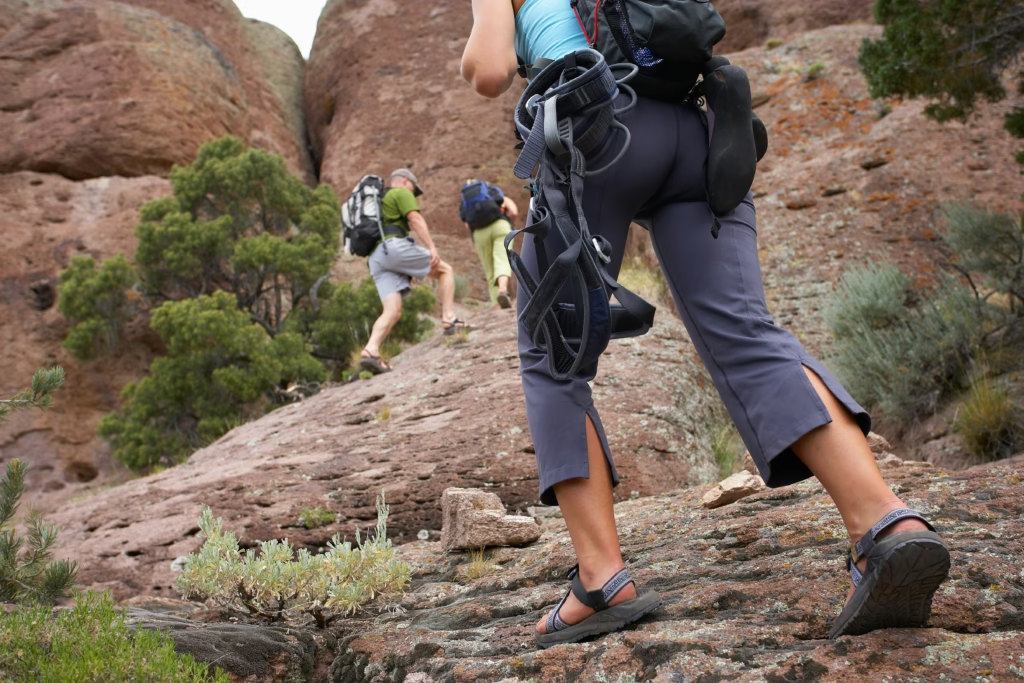
Blisters end more hikes than bears do.
I’ve watched someone hobble off a mountain three hours into what was supposed to be a week-long trip. All from friction and moisture. That’s all it takes. Wet skin rubbing against the sock, rubbing against the boot interior, and then the skin layers separate and fill with fluid.
Prevention is straightforward in theory: moisture-wicking socks (merino or synthetic – cotton is terrible for this), breathable boots, and changing socks on long days when they get soaked through.
But what matters more than any of that is the 10-Minute Rule. The instant you feel a hot spot (that burning “something isn’t right” sensation), you stop. Right then, not at the next rest break. Pull the boot off, dry your foot, tape or moleskin over the area BEFORE a blister forms. Ten minutes of prevention versus hours of limping.
Every experienced hiker has learned this lesson, usually the hard way. The smart ones learned it by watching someone else suffer.
Keep your feet healthy: see our sock picks and insole recommendations.
Trail Fitness & Knee Health

Most people train for uphills because uphills feel hard. This is backwards.
Downhill is what actually destroys you. When you descend, your quads work eccentrically, lengthening under load instead of shortening. This is the muscle action that causes soreness and joint strain. It’s why your knees scream coming down from Half Dome when the climb up felt manageable.
Train for this specifically. Slow squats with a 3-4 second lowering phase. Step-downs from a box. If you have access to an incline treadmill, walk up for a while, then crank the decline and walk down.
The goal is to build quads that can absorb forces that would otherwise go straight into your knee joint. Weak quads just pass everything through to cartilage and ligaments, and that’s how you end up with chronic problems.
I spent a whole summer dealing with a knee issue that better prep would have prevented entirely. Would rather you skip that part.
More on this: strengthening knees for hiking and dealing with downhill knee pain.
Pacing

New hikers start too fast. Every single time. They set off at a normal walking pace, blast past everyone in the first mile, and feel great about themselves. Then they’re gasping and stopping every few hundred yards while all the people they passed earlier cruise by without breaking rhythm.
Hiking pace is slower than walking pace, and this is on purpose. You should be able to hold a conversation without gasping. If you can’t talk, you’re pushing too hard, and you’ll pay for it later.
Trail Ethics & Stewardship

More people are hiking than ever before. More people are getting rescued than ever before. The wild places we love can handle increased traffic, but only if we treat them with actual intention instead of treating the backcountry like an outdoor gym with better views.
The 7 Principles of Leave No Trace

You’ve seen these on trailhead signs. Actually following them is different than nodding along while you read:
- Plan ahead and prepare. Know regulations. Check the weather. Don’t show up at a crowded trailhead and improvise.
- Travel and camp on durable surfaces. Stay on trail. Camp on rock, gravel, established sites, not fragile meadows.
- Dispose of waste properly. Pack out everything. Bury human waste 6-8 inches deep, 200 feet from water.
- Leave what you find. No picking flowers. No taking rocks. No carving initials.
- Minimize campfire impacts. Established fire rings only. Keep fires small. Better yet, just use a stove.
- Respect wildlife. Distance. Never feed. Store food properly.
- Be considerate of others. Noise down. Yield on trail. Let people have their solitude.
Waste Management

How to poop in the woods is not the most glamorous topic, but worth knowing about.
High-traffic alpine areas can’t process the volume of human waste anymore. The soil bacteria that break down waste in catholes get overwhelmed when hundreds of hikers use the same zones week after week.
WAG bags (pack-out human waste bags) are now required on popular routes like Whitney and Rainier, and they’re increasingly expected in backcountry areas everywhere.
Checking regulations before you go saves you from an awkward situation at the trailhead.
Wildlife

100 yards minimum from bears, wolves, and moose. 25 yards from elk, deer, and other large animals. If the animal notices you and changes behavior (stops feeding, moves away, turns to stare), you’re too close.
And please, never position yourself between a mother and offspring. I watched a guy at Yellowstone edge closer to an elk calf for a photo while the mother stood thirty feet away, clearly agitated. Several of us were yelling at him to move. He did, eventually. He got lucky. The stories where people don’t get lucky show up in the news a few times every year.
Afraid of snakes? We’ve got a guide on how to avoid them on the trail.
Also, read more about how to handle wildlife encounters to make sure you are ready for them.
Trail Etiquette
Most of this comes down to awareness of other people on the trail.
Uphill hikers have a rhythm going, and breaking it costs them momentum and energy. If you’re coming down and someone’s grinding their way up, stepping aside for a moment lets them keep their pace. Sometimes the person climbing looks grateful for any excuse to stop, though, so it’s worth reading the situation.
Passing works like driving. Quick “on your left” gives people a chance to make room.
The speaker thing is a pet peeve of mine, I’ll admit. Nobody hiked into the backcountry to hear someone’s podcast echoing off canyon walls. Headphones exist. Or even better, take them out and listen to where you are.
Also, scenic overlooks aren’t personal photo studios, even though some people treat them that way. A few pictures, a moment to soak it in, then make room for others who are waiting.
When Things Go Wrong

Most hikes go fine. You walk in, you walk out, nothing dramatic. But some don’t, and knowing what to do when things fall apart is worth thinking about before it happens.
When to Turn Back
Summits have this strange psychological pull. I’ve felt it myself, that voice saying “we’re so close, just push through,” even when everything else is saying stop. People ignore obvious warning signs because turning around feels like failure.
Turning back isn’t failure, though. It’s the decision that lets you try again.
Low on water with no source ahead? That’s a reason. Body sending clear signals like nausea, cramping, dizziness, tightness in your chest? Reason. Terrain getting more technical than you’re comfortable with? Reason. Weather rolling in while you’re exposed? Reason. Won’t make it back before dark without a headlamp? Reason.
If You Get Lost
The instinct when you realize you’re lost is to keep moving, to figure it out by pushing forward. This almost always makes things worse. More lost, more tired, more disoriented.
Better to stop. Sit down somewhere comfortable. Drink some water, eat something, let the panic settle. Then think.

Backtracking to your last known position often works. The last junction you recognized, the last landmark you clearly remember. A map helps if you have one. Your phone might show your location even without service, though counting on this isn’t wise. Any cell signal at all, 911 can sometimes triangulate your position.
If it’s getting dark and you can’t find your way, sheltering and waiting for daylight is often smarter than stumbling around making things worse. Most lost hikers are found within 24 hours, and staying in one place makes you much easier to locate.
If Someone Gets Hurt
Minor stuff is what first aid kits handle. Blisters, small cuts, mild sprains. Dress the wound, tape the blister, wrap the ankle, and figure out whether continuing makes sense or if turning back is the better call.
Serious injuries change the calculation entirely.
With cell service, 911 is the first call. Be ready to describe your exact location (GPS coordinates are useful here) and what happened. Without service, the options get harder. Sometimes that means leaving the injured person with supplies while someone hikes out for help, or splitting the group so someone stays behind.
Elevating Your Hike

Once basics become automatic, hiking turns into something else.
Nature Photography
Good trail photos come from noticing things you’d normally walk past. Lichen patterns on granite. Light through aspen leaves. I’ve spent twenty minutes photographing a single patch of wildflowers and walked away feeling like I understood that meadow in a way I wouldn’t have otherwise. Half the time, the photos don’t even turn out, but that’s not really why I do it.
Travel Journaling
I have a journal from fifteen years ago that I pull out sometimes. Half of it is mundane stuff I’d completely forgotten. A weird gas station interaction, a bird I couldn’t identify, and how my swollen feet felt on day three. Reading it now feels like time travel. Wish I’d started sooner.
Community
I do a lot of solo hiking and prefer it for certain trips. Solitude, your own pace, no negotiating.
But group hiking has its own thing going on. Someone to look at and say “are you seeing this?” when something incredible happens. Shared misery that becomes funny later. For unfamiliar terrain, partners just make sense.
Local clubs and trailhead conversations are easy ways to find hiking buddies.
Putting It All Together

From the outside, hiking looks simple. Walking, but in nature.
The people who do it well, year after year without incident, have built up layers over time. Navigation skills that don’t depend on a phone working. Gear instincts. Physical preparation. An ethic of care for the places they visit.
Those layers create space for the moments that stay with you. A ridge you didn’t expect. Wildlife at dawn when nobody else is awake. Nature therapy. Friendships built through shared miles and occasional shared misery.
Start where you are. Build gradually. Stay humble about what you don’t know yet.
When you’re ready to gear up, browse our footwear reviews & hiking gear reviews. Make good choices. Go outside.


