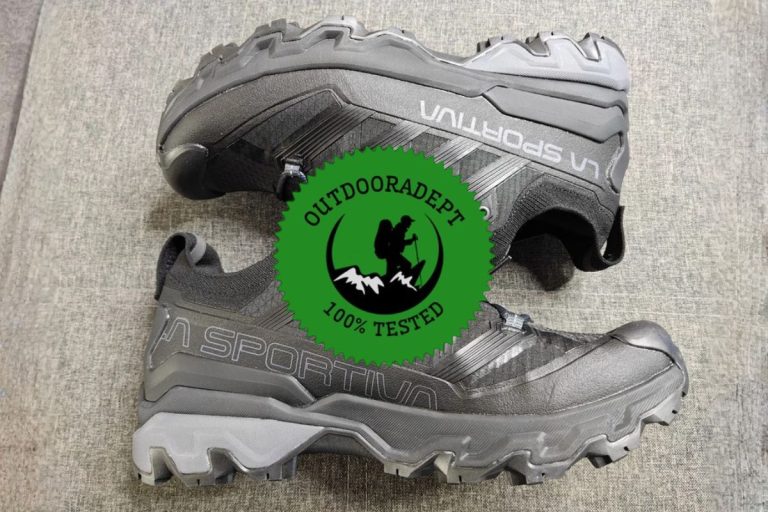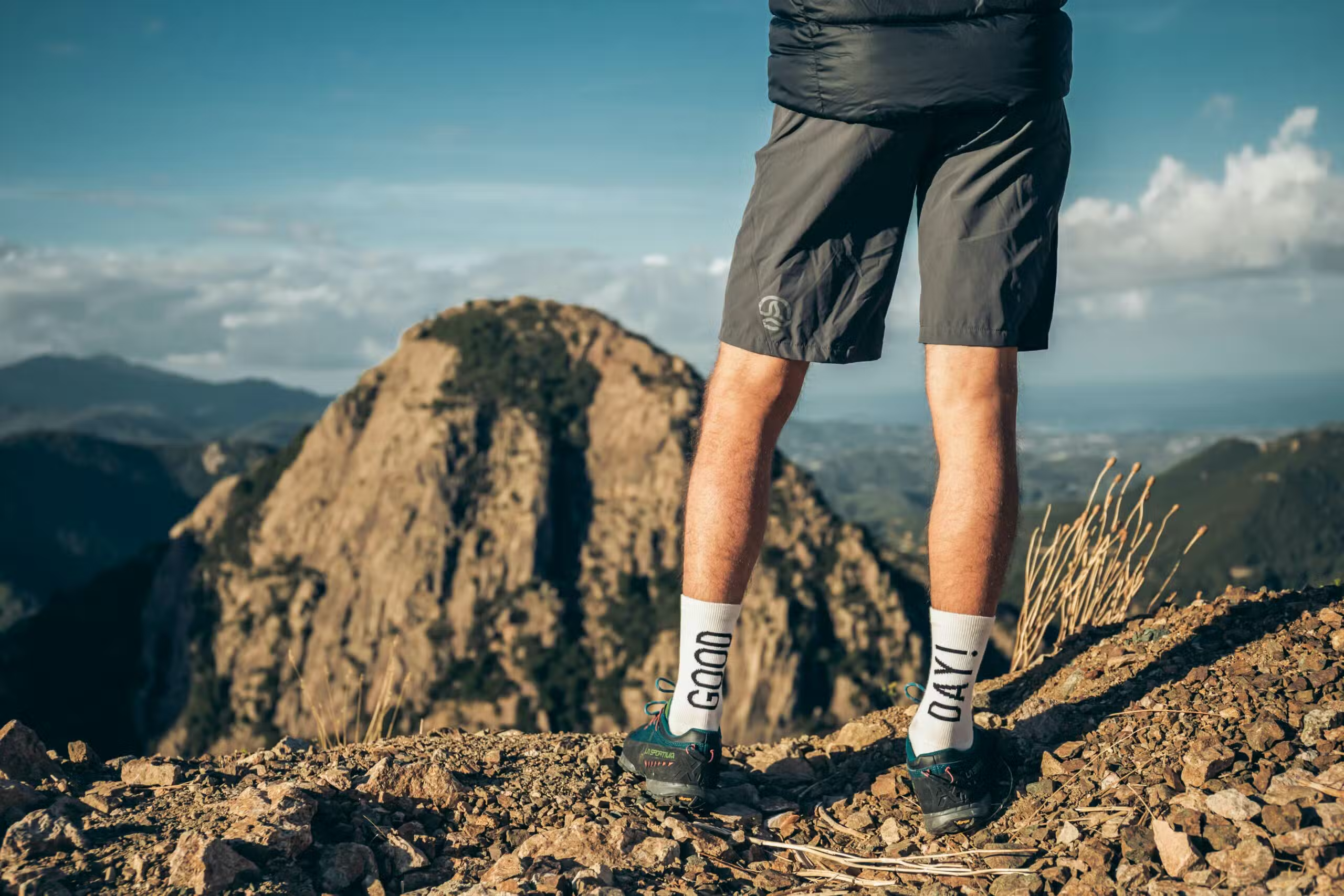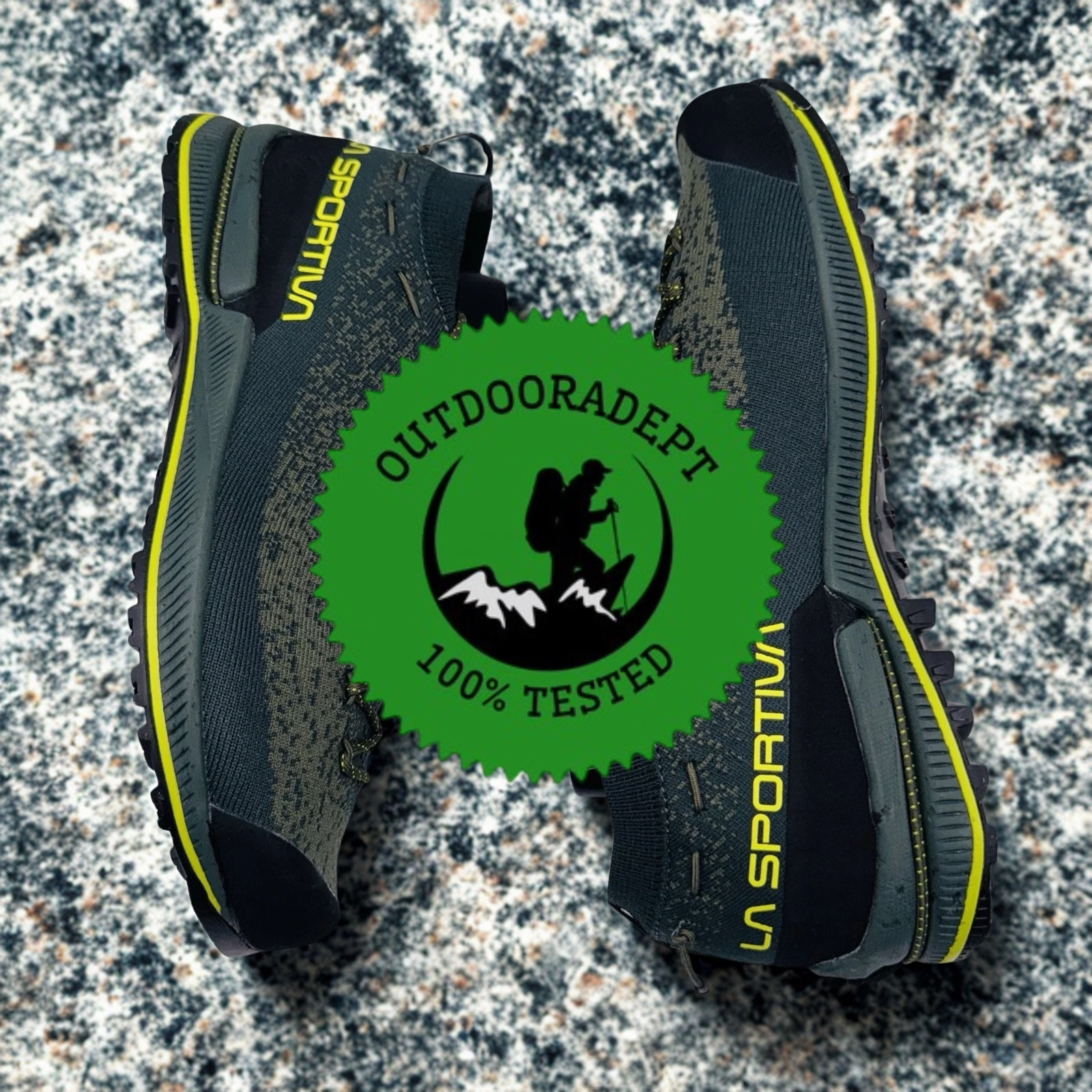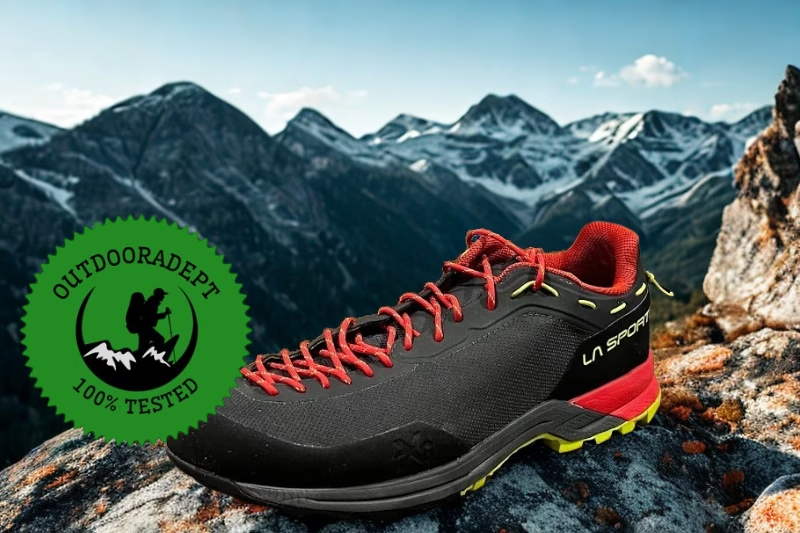
During our late 2025 test, I headed to Bulgaria’s Rila Mountains with the OutdoorAdept team to put the La Sportiva TX Guide through its paces. We spent four weeks testing both the women’s and men’s versions on the Seven Rila Lakes Trail, focusing on the gnarlier, more technical sections where approach shoes really earn their keep.
Between all of us, we racked up about 80 miles130 kilometer across different terrain types. Each person tested their own pair, which gave us a good read on how these perform across various foot shapes and sizes.
Our Verdict – 4.6/5
La Sportiva TX Guide
The TX Guide scored well for climbing ability – we felt solid on wet granite and confident when scrambling. That Vibram MegaGrip sole delivered reliable traction on technical rock.
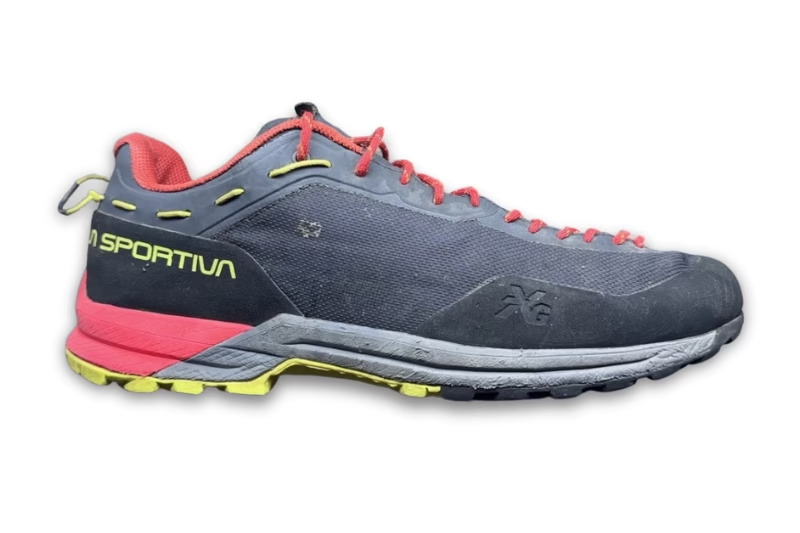
The narrow toe box did cause some issues, though. After four-plus hours on descents, pressure points started developing for most of us.
Here’s how they performed.
Highlights
| Feature | La Sportiva TX Guide |
|---|---|
| Weight | Women’s: 1 lb 7 oz650 g per pair, US 7 Men’s: 1 lb 9 oz710 g per pair, US 9 |
| Water Resistance | Mesh upper with no waterproof membrane; dries quickly but soaks through easily |
| Traction | Vibram® MegaGrip forefoot with IdroGrip heel and Impact Brake System; exceptional grip on technical rock |
| Comfort | Dual-density EVA midsole with Ortholite insole; firm cushioning for technical terrain |
| Adjustability | Asymmetrical lacing extends toward toe for precise, climbing-focused fit |
| Breathability | High; Jacquard mesh upper provides excellent airflow and quick drying in warm conditions |
| Durability | Mesh upper with TPU reinforcements and PU-Tech Lite rand; lighter construction prioritizes agility |
| Support | TPU torsion shank with dual-density midsole; excellent stability for technical scrambling |
| Toe Protection | Extended rubber toe rand with climbing zone; reliable protection for jamming and edging |
Tap a star to vote. Tap the left half of a star for a half star.
Thanks, your rating counts
It is now part of this shoe’s community score. Changed your mind? Tap a different star.
See how it ranks on the full leaderboard →Trail tips, news and giveaways
One email a month: hiking tips, gear news, giveaways, fresh footwear verdicts and more. No spam, unsubscribe anytime.
Pros & Cons
PROS
CONS
Things We Tested When We Reviewed La Sportiva TX Guide
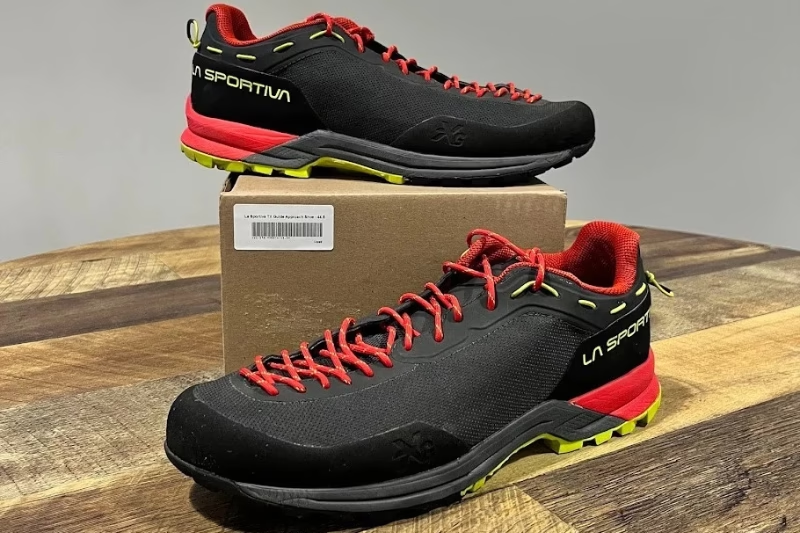
The TX Guide performed well across most metrics in our testing protocol, though fit considerations limit its appeal for users with wider feet.
Traction
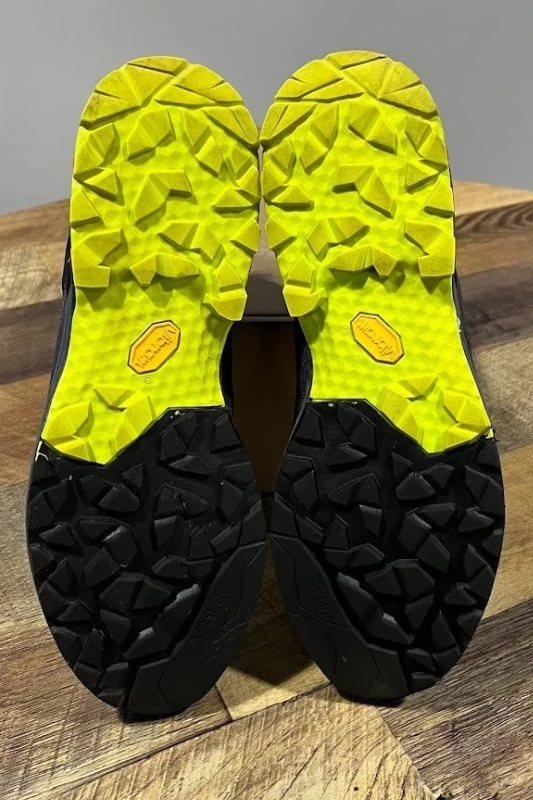
The dual-compound Vibram outsole delivered consistent performance across varied terrain. During our scrambles up Rila’s granite slabs, the MegaGrip forefoot provided secure purchase on holds I personally wouldn’t trust with standard trail runners.
La Sportiva pairs this with an IdroGrip heel featuring their Impact Braking System, which we noted provided superior control on loose scree descents. The lug pattern cleared mud efficiently, though the 3mm depth limits performance in deep, soft terrain.
The climbing zone under the toe stood out during testing. We could smear confidently on small edges and execute foot jams without slippage. On wet rock, the rubber maintained grip better than expected from a hybrid shoe.
The shallow lugs struggled in steep, grassy sections where deeper tread would perform better. But for mixed alpine terrain emphasizing rock work, this sole configuration balances climbing precision with hiking versatility.
Durability
After four weeks of testing, including crack climbing, jamming into rocky crevices, and repeated kicking steps, the TX Guide showed acceptable wear patterns. The mesh upper exhibited only minor scuffing on reinforced areas, consistent with this use intensity.
TPU reinforcements around the toe and heel protected effectively against abrasion. The rubber rand withstood considerable abuse without significant wear. Laces frayed faster than I’d prefer at this price point, though replacement is straightforward.
The Vibram sole maintained tread depth throughout our testing period, showing wear patterns consistent with covered terrain. For occasional to moderate use, these approach shoes should provide adequate service life.
I’d be interested in evaluating performance over a full season of heavy use, as the lighter construction prioritizes agility over maximum ruggedness. Regular inspection of high-wear areas is advisable for users putting in serious mileage.
Comfort
Comfort proved adequate after the initial break-in. The EVA midsole with Ortholite insole cushioned feet sufficiently for long approaches, though firmness exceeds plush trail runners.
I appreciated the stiffness when edging on small holds or standing on uneven talus. However, the narrow toe box became problematic during extended descents. My colleagues and I reported pinky toe compression after approximately four hours, with hot spots developing on longer outings.
The asymmetrical lacing system, extending closer to the toe, allowed fit customization and pressure relief, though it didn’t fully resolve width limitations. For climbers with naturally narrow feet, this precision fit would prove ideal.
The padded tongue prevented lace bite, and the heel cup secured feet without slippage. Break-in required roughly 15 miles,25 kilometer, reasonable for approach shoes offering this structure and support level.
Breathability
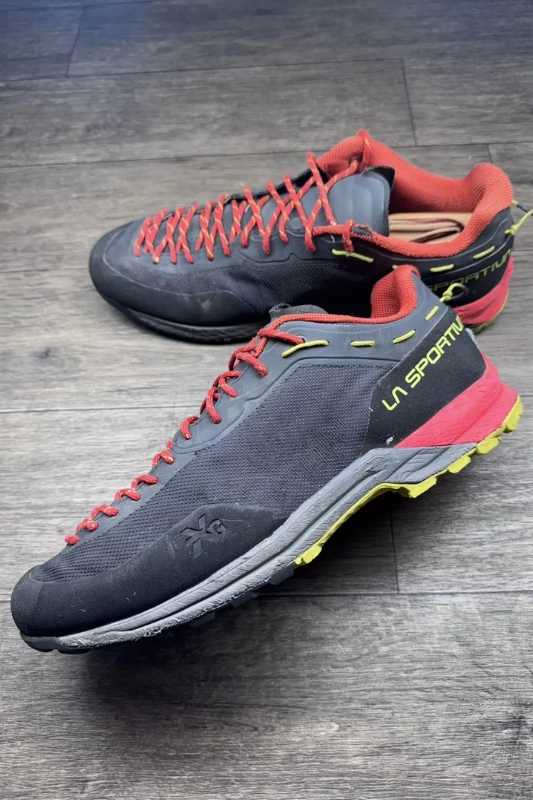
Breathability emerged as a genuine strength in the mesh variant. The Jacquard synthetic upper allowed excellent airflow during Bulgaria’s warm August conditions, maintaining reasonable foot temperature even on sun-exposed ridgelines.
After stream crossings, the mesh dried considerably faster than leather approach shoes we’ve tested – typically within 45 minutes of continued hiking. This breathability involves trade-offs. In morning dew or light rain, feet get wet quickly, given the absence of a waterproof membrane.
For alpine environments requiring rapid moisture shedding, the mesh performs well. We wouldn’t select these for consistently wet conditions, but for dry, warm climbing areas, they’re well-suited.
Weight
At 1 lb. 7 oz.650 gram for the women’s pair and 1 lb. 9 oz.710 gram for the men’s, these undercut the TX4 by approximately 2.8 oz.-3.5 oz.80-100 gram per pair. We noted this difference immediately when moving fast – reduced foot fatigue over long approaches, easier harness attachment between pitches.
Weight savings derive from the thinner EVA midsole and mesh upper. This represents a deliberate design choice: La Sportiva reduced material to enhance agility, accepting reduced impact protection.
For alpine objectives covering 10 miles16 kilometer with moderate scrambling, this weight proved optimal. For hauling heavy loads into remote base camps or multi-day hut trips with continuous talus fields, I’d select options with more material underfoot: the TX4 or lightweight boots.
The lighter platform transmits sharp edges more directly through the sole. Not problematic on most rock, but worth noting for users sensitive to underfoot feedback.
Waterproofing
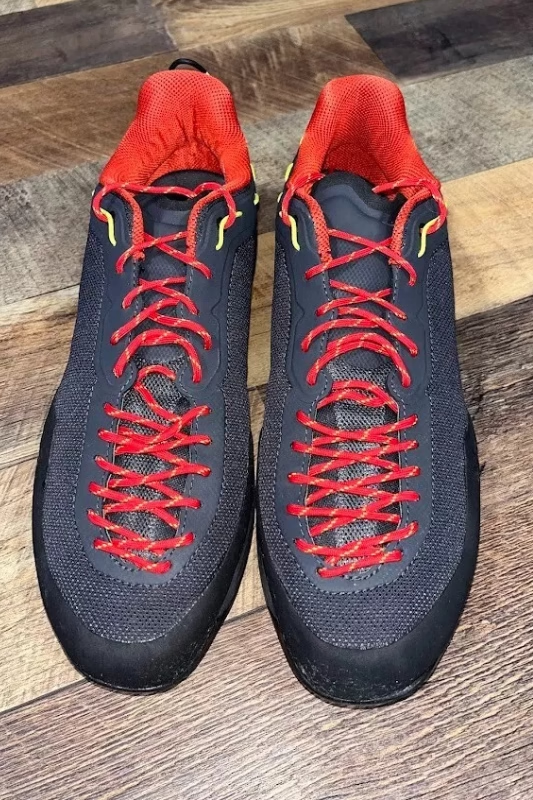
The mesh TX Guide lacks Gore-Tex membrane or waterproofing treatment, resulting in minimal water resistance.
During stream crossings on the Seven Rila Lakes trail, water penetrated within seconds, as expected. We valued the rapid drying more – the mesh expelled moisture efficiently, with comfortable feet returning within an hour.
In light rain, feet became damp but not saturated, and shoes never felt waterlogged or heavy. The leather variant handles moisture better when properly treated with wax, offering minor water resistance without waterproof performance.
For consistently wet conditions or boggy terrain, these aren’t appropriate – Gore-Tex boots would be necessary. For alpine approaches, encountering occasional water while prioritizing breathability and quick drying, the waterproofing limitation proved less significant than anticipated.
Support
Support in the TX Guide proved excellent relative to its lightweight profile. The dual-density midsole, combined with a TPU shank through the midfoot, provided solid torsional rigidity on uneven terrain.
During boulder hopping and off-camber traverses, my feet remained stable without excessive twisting or rolling. The stiff platform enabled precise edging – confident standing on dime-sized holds without shoe bending or collapse.
The heel cup and extended lacing system secured feet effectively, preventing slippage common in low-cut shoes on technical descents. When carrying moderate packs (around 25 pounds11.3 kilo) for day missions, the TX Guide handled loads well, though I wouldn’t recommend pushing significantly heavier for multi-day trips.
The structure more closely resembles lightweight mountaineering boots than trail runners, suiting the shoe’s technical focus. For scrambling, via ferratas, and fourth-class terrain, this support level performs well.
Fit and Sizing
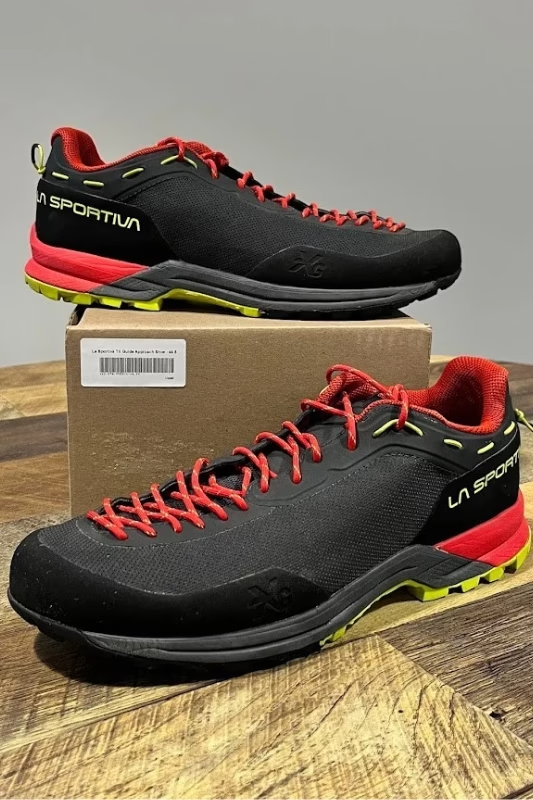
Sizing the TX Guide requires careful attention, given La Sportiva’s narrow, precise fit. I typically wear US women’s 8.5 in most brands but sized up to 9 in these shoes, achieving proper fit – snug in heel and midfoot with adequate toe box room.
Most available reviews recommend sizing up a half size, which our testing confirmed to be accurate for medium-width feet. Users with genuinely wide feet should consider alternatives entirely, as the TX Guide isn’t designed for broader profiles.
The toe box measures noticeably narrower than the TX4’s, creating rock climbing gear-like precision that some users prefer, while others find restrictive. The synthetic mesh variant features a pointier toe shape compared to the squarer leather version, affecting toe positioning. Women’s sizing follows the same narrow, low-volume pattern as men’s models.
How Does it Compare with Other Products?
La Sportiva TX4 Evo
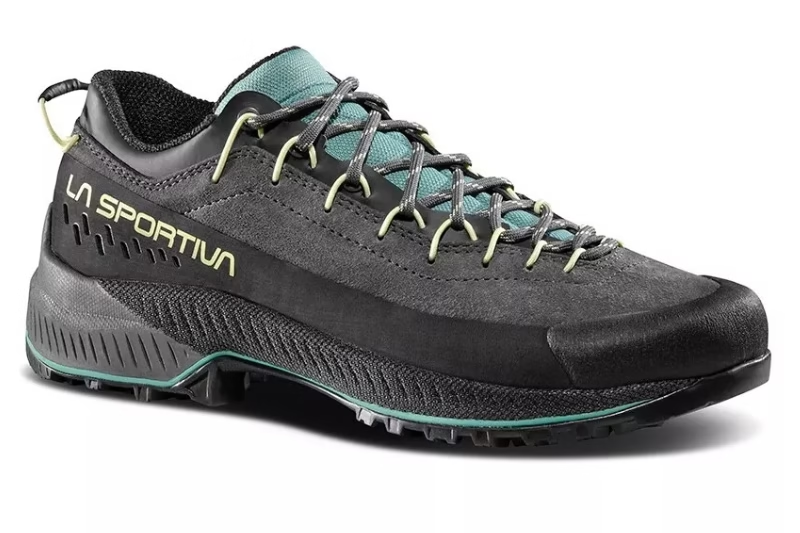
My colleagues and I tested the TX4 ($190) extensively before evaluating the TX Guide ($200). It’s built on a wider end, accommodating broader feet more comfortably, weighs approximately 2.8 oz.-3.5 oz.80-100 gram more per pair, and uses burlier construction with deeper lugs and a thicker upper.
For pure hiking and heavy load carrying, the TX4 outperforms the Guide – more forgiving, better protected, and superior mud/scree handling via aggressive tread.
The Guide excels for technical rock climbing. Its narrower, more precise fit and stickier MegaGrip climbing zone prove superior for scrambling, edging, and movements requiring foot precision.
For more details of this approach shoe, check out our review of the La Sportiva TX4.
La Sportiva Boulder X

The Boulder X bridges trail shoes and the TX Guide’s rock climbing focus. Both use Vibram Mega-Grip rubber, but the Boulder X employs hiking-oriented lug patterns gripping trails more effectively.
The upper combines suede and mesh, offering reasonable breathability without excessive durability sacrifice. Fit opens up compared to the TX Guide’s narrow last. Underfoot cushioning feels noticeably softer, approaching plush by approach shoe standards.
Price-wise, the Boulder X costs less, landing around $160. However, you sacrifice climbing-specific design: no extended toe rand, no asymmetrical lacing. During edging tests on quarter-inch holds, the difference proved obvious.
For more details of this approach shoe, check out our review of the La Sportiva Boulder X
Scarpa Crux

At $160, the Crux costs less than the TX Guide. The savings manifest in details.
The upper mixes leather and synthetics – acceptable durability, though I’d trust the TX Guide’s reinforced build more in abrasive terrain. Scarpa uses proprietary rubber on the Vibram platform. Traction proves adequate but won’t match MegaGrip when smearing on slabs.
Fit runs wider and more accommodating. For my colleagues and me, extra room meant reduced edging precision. The Crux carries slightly more weight, feeling less responsive during scrambles. Build quality suffices. The TX Guide will outlast it – relevance depends on usage intensity.
For more details of this approach shoe, check out our review of the Scarpa Crux
Where the La Sportiva TX Guide Performs Better
The TX Guide excels in technical alpine approaches, mixing hiking with genuine scrambling requiring precise footwork. It’s designed for granite slabs, exposed ridgelines, via ferratas, and fourth-class terrain where footwear must perform like climbing shoes.
Lightweight construction proves ideal for fast-and-light missions covering significant ground where harness attachment becomes necessary. Dry, warm climbing areas suit these approach shoes optimally.
For users with narrow feet who prioritize climbing performance over extended comfort, the precise fit becomes advantageous. Mountain guides and frequent scramblers valuing agility and sticky rock performance will appreciate the TX Guide’s capabilities on demanding technical terrain.
Where the La Sportiva TX Guide Falls Short in Performance
The narrow fit simply doesn’t accommodate wider feet. Our testing confirmed that no amount of sizing up resolved pinching during long descents.
For multi-day trips with heavy packs, the lighter construction won’t provide the support and protection of burlier approach shoes like the TX4.
Wet environments expose the mesh variant’s water resistance limitations, inappropriate for consistently soggy conditions or the spring snowmelt season. Shallow lugs struggle in deep mud or soft terrain, requiring aggressive tread.
The leather variant requires regular maintenance for optimal performance, adding hassle compared to synthetic alternatives.
Not sure if this is the right fit? The ‘perfect’ approach shoe depends on whether you prioritize hiking comfort or vertical grip. If the features of this model don’t align with your needs, check out our curated list of the 10 Best Approach Shoes For Hiking & Climbing.
Should You Buy the La Sportiva TX Guide?
Our four weeks of testing on Rila’s demanding terrain confirmed that these are excellent approach shoes for technical rock climbing and scrambling. Traction, support, and lightweight agility all performed well.
However, the narrow fit limits applicability. Users with wide feet should skip these entirely, considering the TX4 or Scarpa alternatives instead. Users primarily hiking trails rather than scrambling on rock don’t require this technical specialization level.
For climbers with narrow feet regularly tackling alpine approaches and valuing precise footwork over extended comfort, the TX Guide delivers rock climbing performance justifying the investment.
These shoes are purpose-built for a specific mountain user type, and users fitting that profile will find them exceptionally capable on technical terrain where precision matters most.
Where to Buy It?
| WHERE TO BUY? | MEN | WOMEN |
| Amazon | See Pricing» | See Pricing» |
| Backcountry | See Pricing» | See Pricing» |
| REI | See Pricing» | See Pricing» |
FAQs
Not particularly. The TX Guide’s narrow fit, stiff platform, and technical focus create challenges for beginners. New scramblers benefit more from forgiving, wider options like the TX4 or Boulder X that better accommodate learning curves while still handling mixed terrain capably.
Tap a star to vote. Tap the left half of a star for a half star.
Thanks, your rating counts
It is now part of this shoe’s community score. Changed your mind? Tap a different star.
See how it ranks on the full leaderboard →Prices in this article are approximate and updated annually. Check the retailer for current rates.