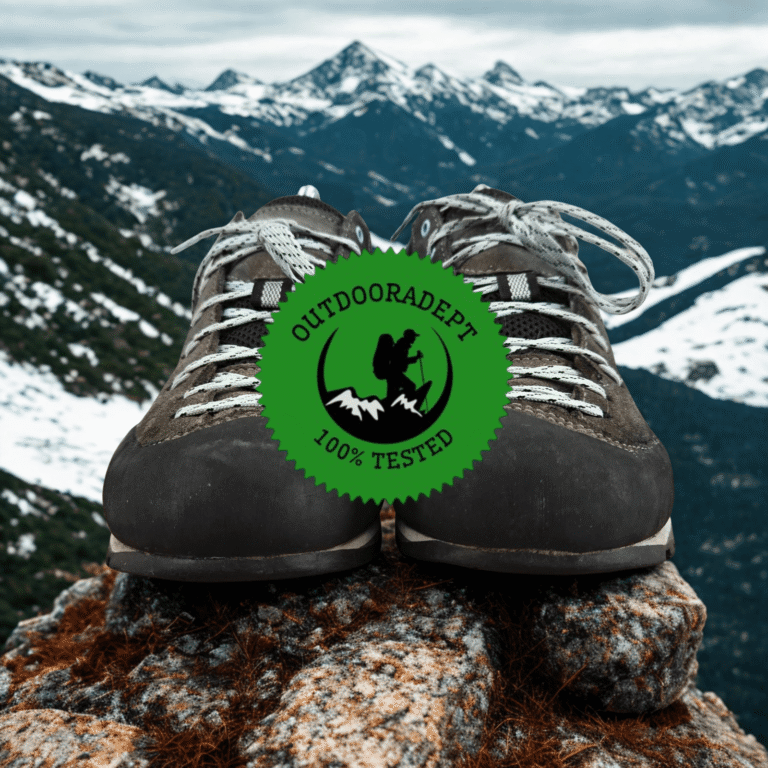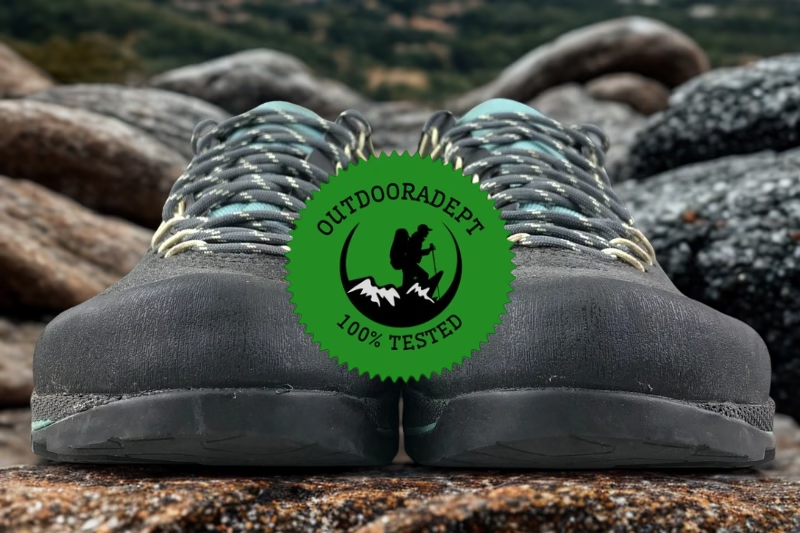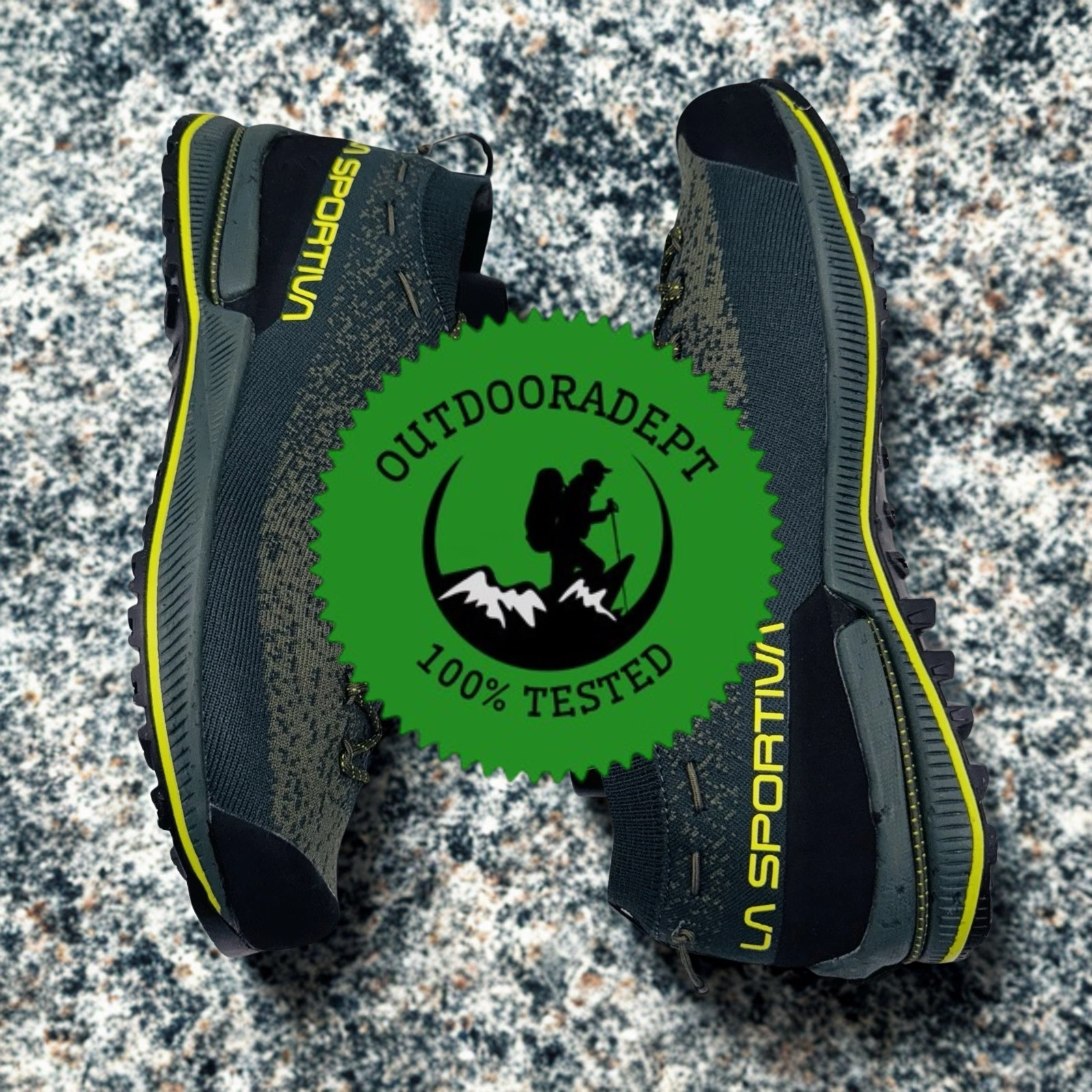
Updated for the 2026 Season To determine if the TX2 Evo is still the lightweight champion for 2026, we revisited our performance data from our Serbian expedition. We hauled these shoes to the limestone scrambles above Banjska Stena in Tara National Park and the airy Babin Zub ridgeline to see how they hold up against the latest competition.
Our Verdict – 4.4/5
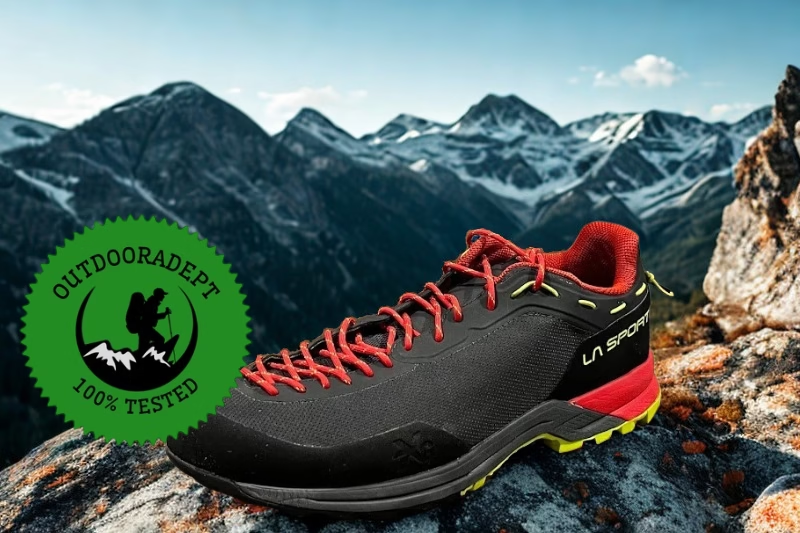
La Sportiva TX2 Evo
The shoe’s calling card is weight, but what stood out was how planted it felt on fourth-class moves – the sole stays supportive without killing sensitivity.
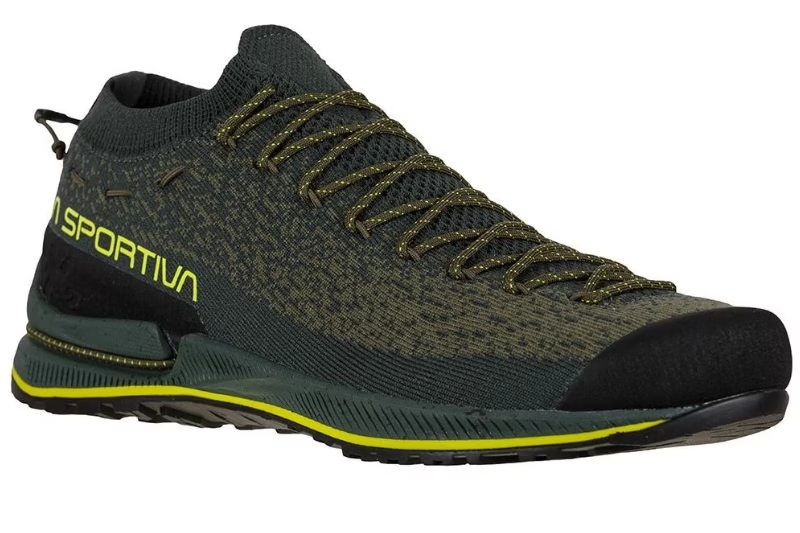
Downsides showed up too: no membrane means wet grass and showers go straight through, and dialing the right size took a couple of tries.
Once sorted, though, the performance was close to bulletproof: secure on slabs, quick on the walk-offs, and easy to stash on a harness.
Here’s what we learned.
Highlights
| Feature | La Sportiva TX2 Evo |
|---|---|
| Weight | Women’s: 1 lb 3 oz540 g per pair, US 7 Men’s: 1 lb 4 oz570 g per pair, US 9 |
| Water Resistance | Recycled knit upper with no waterproof protection; absorbs water readily but dries quickly |
| Traction | Vibram® Idrogrip outsole with diamond-shaped lugs and climbing zone; excellent grip on dry rock and mixed terrain |
| Comfort | MEMlex EVA midsole with integrated TPU shank; minimal cushioning optimized for climbing sensitivity |
| Adjustability | Mythos-style continuous lacing from toe to ankle for micro-adjustable, precise fit |
| Breathability | Excellent; recycled knit upper provides superior ventilation and ultra-fast drying |
| Durability | Knit or eco-leather upper with minimal rubber rand; fully resolable platform extends lifespan |
| Support | TPU shank with ESS resole insert; moderate support suitable for light to medium loads |
| Toe Protection | Minimal rubber toe cap with climbing zone; basic protection prioritizing weight savings and sensitivity |
Tap a star to vote. Tap the left half of a star for a half star.
Thanks, your rating counts
It is now part of this shoe’s community score. Changed your mind? Tap a different star.
See how it ranks on the full leaderboard →Trail tips, news and giveaways
One email a month: hiking tips, gear news, giveaways, fresh footwear verdicts and more. No spam, unsubscribe anytime.
Pros & Cons
PROS
CONS
Things We Tested When We Reviewed La Sportiva TX2 Evo
Traction
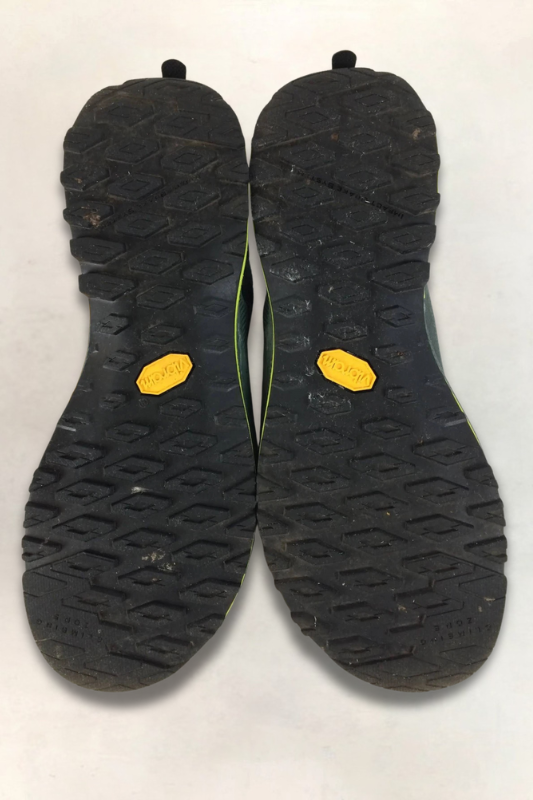
This is where the TX2 Evo shines. The Vibram IdroGrip outsole, with 3 mm diamond lugs and a climbing zone at the toe, felt glued to rock on our Serbian test routes: polished limestone slabs, damp steps, and marbly scree.
On fourth-/easy fifth-class moves, the toe edged and smeared with the precision of light rock-climbing gear, and the rubber stayed confidence-inspiring on wet holds and smooth smears.
The new diamond pattern outperformed the old TX2’s dot tread on loose dirt and small gravel, and it shed mud well; we never had a clogging issue on approaches or walk-offs.
Caveat: the shallow lugs aren’t a match for deep mud, but that’s the trade for maximum rock friction. Overall, top-tier grip for an approach shoe, equally capable on slabs and mixed trail.
Durability
We treated the TX2 Evo like a tool: limestone scrambles, talus hopping, a bit of crack jamming, plus a handful of urban miles between trailheads.
As a 10 oz283 gram minimalist, it isn’t a tank. The knit version showed light fraying on the outer forefoot after repeated rock contact, and the thin IdroGrip sole scuffed and wore faster than heavier approach models.
That said, the sticky compound is meant to be soft, and the fully resolable tread (ESS EVA platform) is a real win; you can swap rubber and keep the shoe alive.
Hardware was mixed. The cord eyelet/lace interface created “rope-on-rope” abrasion; two teammates snapped laces sooner than expected, though replacements were trivial and the loops themselves held.
The PU TechLite toe/heel rands shrugged off crack jams with no delam. The Leather model resisted scuffs better in our use, but we’ve seen credible reports of early separation at the leather–rubber junction.
Net: expect a solid season or two of hard use, then a resole – not boot-level longevity, but a fair trade for the weight and grip.
Comfort
Across two long approach days, my take matched the team’s: no break-in. The sock-like knit with integrated tongue wrapped our feet cleanly, no hotspots; thin hiking or running socks worked best, while thicker pairs felt cramped.
Underfoot, the ride sits low and firm, but the EVA cushions sharp edges noticeably better than the original TX2. A lightweight TPU shank adds just enough torsional support, and the lace-to-toe design lets you tune forefoot tension for scrambles, then relax it for walk-outs.
Heel padding plus the elastic cuff kept our heels locked with zero rub. The only caveat we noted: on very long days with heavier packs, a few of us felt mild foot fatigue.
Breathability
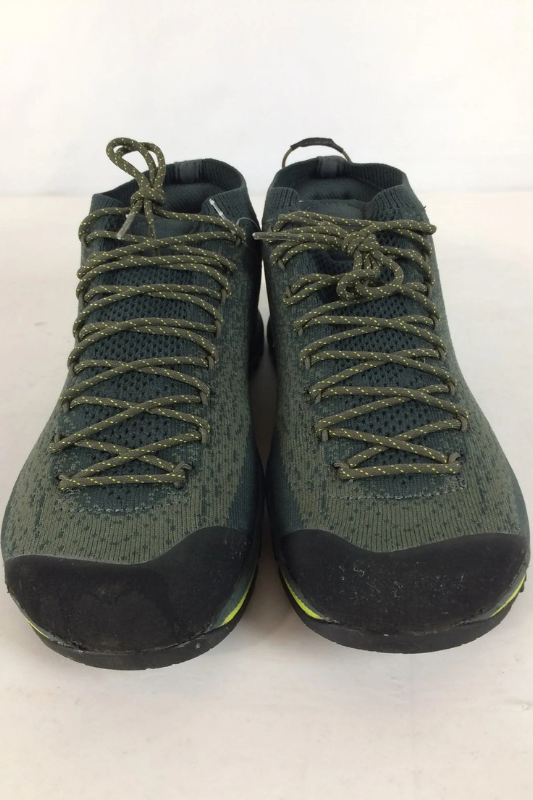
Hot days are this rock-climbing shoe’s home turf. On our Serbia trip, the knit TX2 Evo breathed so well that my feet stayed cool on steamy ridge scrambles and sun-baked limestone.
The sock-like mesh moves and vents constantly; splash through a stream, and you can feel water push out through the upper, with the shoe drying back to light and nimble surprisingly fast.The pliable mesh does trade a touch of forefoot hold when you’re heavily loaded, but for most approaches, the airflow is worth it.
The Leather version runs warmer and doesn’t dump moisture as quickly, though it’s nicer in cooler shoulder-season weather.
Note for winter: minimal insulation and a snug fit don’t play well with bulky socks. Choose something beefier for cold alpine days.
Weight
Featherweight is the headline. In my US 8.5, each shoe came in just under 9 oz255 gram on our scale, making the TX2 Evo the lightest in La Sportiva’s TX line and among the lightest approach shoes, period.
On long Serbian walk-ins, that lack of heft meant quicker footwork and noticeably less end-of-day fatigue. On multi-pitch days, they all but disappeared on the harness – highly packable and easy to clip thanks to the built-in C2 ComboCord that tethers the heels.
You do give up some padding versus burlier models, but comfort stayed appropriate for the objective. Compared with something like the Boulder X (roughly twice the weight), the agility difference is night and day.
Waterproofing
The TX2 Evo has no membrane and favors airflow over the water block. In the knit version, the stretchy cuff keeps grit and small splashes out, but the porous mesh lets rain and wet grass soak through quickly.
The leather model buys a little time – light drizzle or a quick creek hop can stay out for 10–15 minutes – yet a proper, prolonged shower will eventually saturate it. The wraparound rand and tongue do slow the first rush of water, which helped on dewy starts.
The upside is recovery. Once wet, the knit drains fast and dries in a breeze or overnight; we were back to a light, nimble feel after lunch in the sun.
If you need true waterproofing for frequent rain or slushy approaches, look for something like a GTX mid (and accept extra weight/heat).
Support
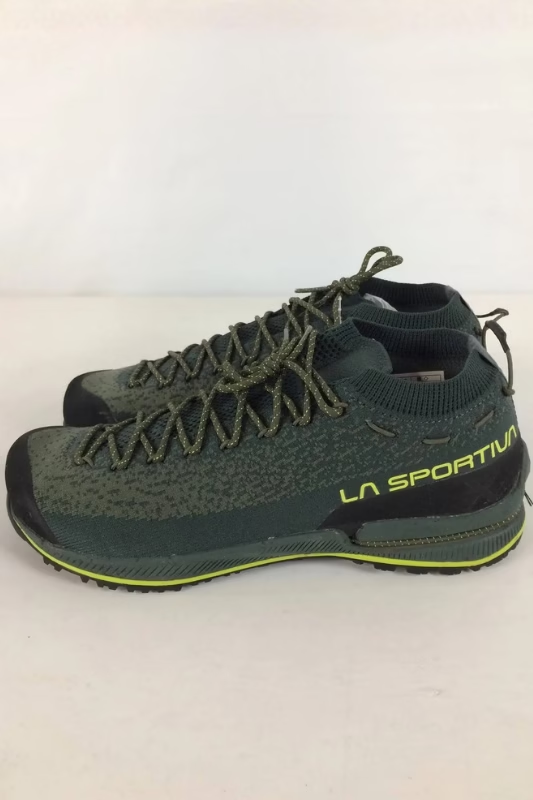
Despite the minimal construction, the TPU shank provides surprising torsional rigidity for such a light shoe. The ESS resole insert adds structure without weight, creating a platform that’s stable enough for moderate pack loads yet flexible enough for climbing moves.
Testing on Stara Planina’s technical ridge traverse with a 25 pounds11 kilo photography pack, the TX2 Evo held its own.
The low-cut design offers zero ankle support, but the stable platform prevented the foot rolling I sometimes experience in ultralight trail runners.
Edging on small holds felt confident and precise – these shoes don’t fold or collapse under lateral loads. The guys on our team carrying heavier camera gear (30+ pounds14+ kilo) did notice more fatigue than I did with my lighter load.
That said, these aren’t meant for heavy loads or unstable terrain. With anything over 30+ pounds,14+ kilo, I noticed my arches fatiguing faster than in proper boots.
The minimal structure that makes them excellent for climbing becomes a liability under serious weight. Know your limits and choose accordingly.
Fit and Sizing
On my feet, the TX2 Evo (knit) ran short and low-volume; most of us were happier a half size up from street/hiking size to avoid toe bump on descents. The sock-like sleeve and integrated tongue hug the instep with little give, so high-volume feet may feel squeezed in thick socks.
Forefoot width is moderate, wider than the TX Guide, narrower than the TX3/TX4, with a secure, slightly narrow heel and midfoot. The lace-to-toe system is excellent for micro-tuning: loosen for walk-ins, snug for edging.
Model matters. The leather version fits roomier out of the box (traditional padded tongue, more volume), and the suede will relax about a quarter to half a size with mileage.
The knit barely stretches, so buy comfort on day one and pair with thin socks to preserve breathability and space.
How Does it Compare with Other Products?
La Sportiva TX Guide
The TX Guide ($200) sits between the TX2 Evo ($170) and the burlier TX4, and after testing both extensively, I find them targeting different users. The TX Guide uses a narrower last with a tighter toe box, better for technical edging but less comfortable on long approaches.
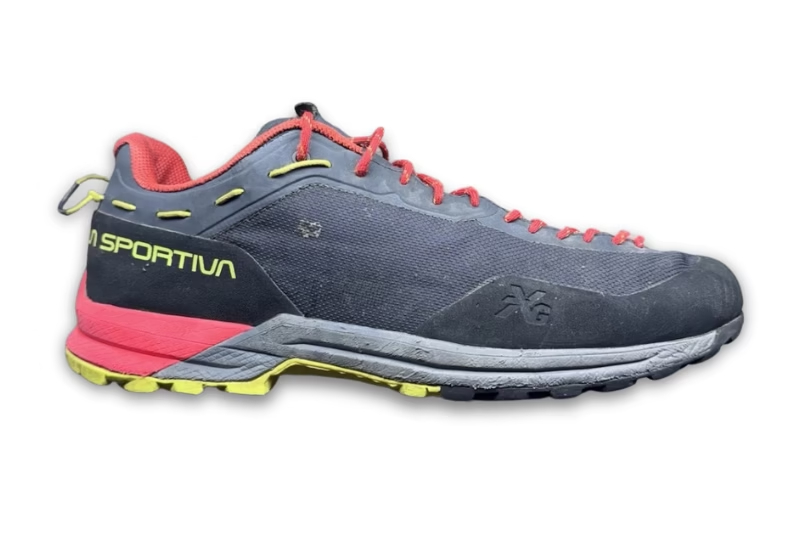
Where the TX Guide excels is in durability. Its hybrid leather/synthetic upper handles abuse better than the TX2 Evo’s knit, and our team’s experience confirms it lasts roughly twice as long. The TX Guide also offers superior protection with its beefier toe cap.
However, the TX2 Evo breathes noticeably better and packs down smaller. For pure climbing performance, they’re nearly identical – both use sticky Vibram compounds – but the TX2 Evo’s lighter weight makes dynamic moves feel easier.
Learn more about this product in our La Sportiva TX Guide Review.
Salewa Wildfire GORE-TEX
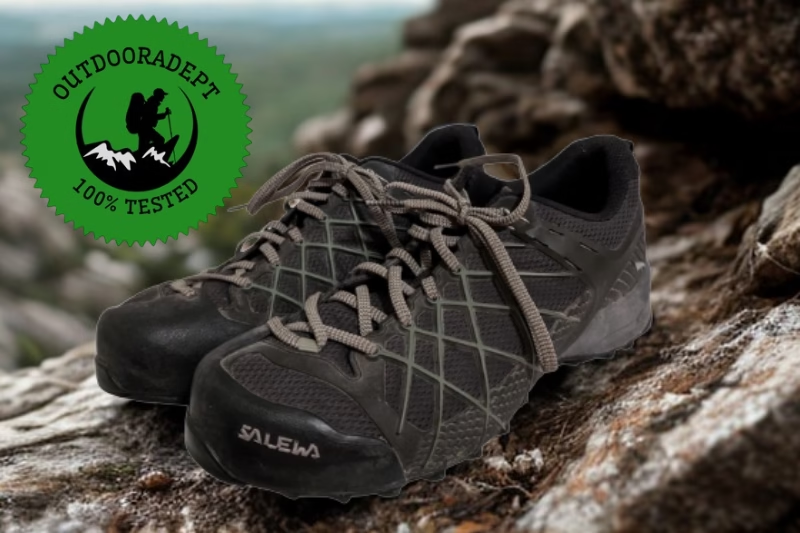
Comparing the Wildfire GTX ($180) to the TX2 Evo is almost unfair. They’re designed for completely different purposes. The Wildfire, which I tested last year in Bulgaria, weighs nearly 14 ounces397 gram per shoe (women’s) and offers full GORE-TEX protection. It’s a proper approach shoe for wet conditions and extended mountain use.
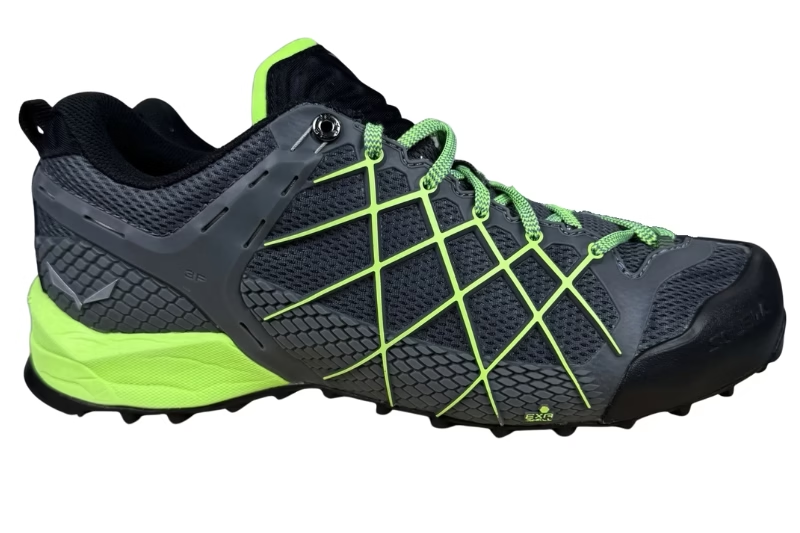
The Wildfire’s aggressive Pomoca sole provides better traction on mud and wet grass, where the TX2 Evo struggles. Its GORE-TEX membrane kept my feet dry through all-day rain, something the TX2 Evo can’t even attempt.
But on rock, there’s no comparison. The TX2 Evo’s Vibram rubber and precise fit climb circles around the Wildfire’s more hiking-oriented design. The Wildfire also runs hot; even in cool conditions, my feet were sweating within an hour.
For technical dry approaches, take the TX2 Evo every time. For Scottish mountains or wet alpine environments, the Wildfire makes more sense.
We covered this approach shoe in a review recently: Salewa Wildfire GTX Review
La Sportiva Boulder X

The Boulder X ($160) represents La Sportiva’s take on a crossover approach/hiking shoe, and it splits the difference between the TX2 Evo and traditional hikers.
Our team tested these on Romanian routes, and they excelled on the long approach marches where the TX2 Evo’s minimal cushioning became noticeable.
The Boulder X can handle heavier loads – I was comfortable with a 35-pound16-kilo pack, whereas the TX2 Evo maxes out around 25 pounds11 kilo for me. However, on technical scrambles, the TX2 Evo’s sensitivity and lighter weight win decisively.
For more details of this approach shoe, check out our review of the La Sportiva Boulder X
Where La Sportiva TX2 Evo Excels
Fast-and-light technical approaches where weight matters more than durability. Alpine rock routes requiring all-day approaches followed by technical climbing. Fair-weather scrambling in the mountains where you’re moving quickly over mixed terrain.
These shine when you’re covering big distances with lots of vertical gain, switching between hiking and climbing throughout the day. They’re perfect for peak-bagging missions where you need to move efficiently but still trust your feet on exposed terrain.
Where La Sportiva TX2 Evo Falls Short
Wet conditions, heavy loads, or anywhere you need real protection. These aren’t durable enough for daily guiding or constant use on sharp rock. The minimal cushioning becomes punishing on long talus descents or rocky trails.
Skip these if you have wide or high-volume feet – the fit just won’t work. Also, avoid if you prioritize longevity over weight savings; despite the resolable design, the upper construction issues undermine long-term durability.
Not sure if this is the right fit? The ‘perfect’ approach shoe depends on whether you prioritize hiking comfort or vertical grip. If the features of this model don’t align with your needs, check out our curated list of the 10 Best Approach Shoes For Hiking & Climbing.
Should You Buy the La Sportiva TX2 Evo?
After two weeks of hard testing, the La Sportiva TX2 Evo earns its place in my approach shoe rotation. For fast-and-light missions where weight trumps everything else, these are exceptional.
The sub-10-ouncesub-283-gram weight transforms how you move in the mountains, and the climbing performance rivals shoes costing twice as much.
They’re specialists rather than generalists, which is exactly what you want for technical approaches.You need to size up and may not get the right size from the first try, and there’s no water protection.
Still, I’ll keep reaching for my TX2 Evos when the forecast is clear and the approach involves significant technical terrain. For the right person on the right terrain, these are brilliant. Just make sure you understand their specialized nature and use them accordingly.
Where to Buy It?
| WHERE TO BUY? | MEN | WOMEN |
| Amazon | See Pricing» | See Pricing» |
| Backcountry | See Pricing» | See Pricing» |
| REI | See Pricing» | See Pricing» |
FAQs
The TX2 Evo is about 6-7 ounces lighter per pair with less protection and support. Choose TX2 Evo for technical climbing approaches where weight matters; choose TX4 for durability and all-around mountain use.
Yes, the sticky Vibram sole and precise fit work well on via ferrata terrain. Just remember, they offer minimal protection compared to proper approach boots.
Tap a star to vote. Tap the left half of a star for a half star.
Thanks, your rating counts
It is now part of this shoe’s community score. Changed your mind? Tap a different star.
See how it ranks on the full leaderboard →Prices in this article are approximate and updated annually. Check the retailer for current rates.