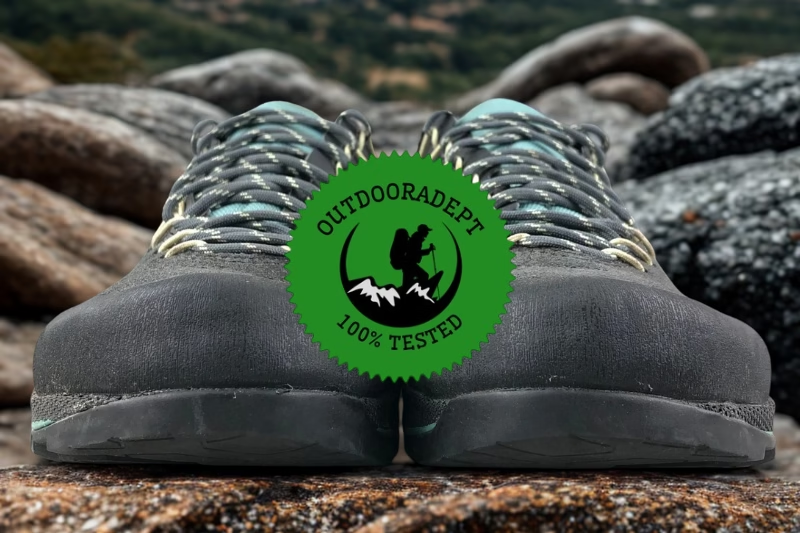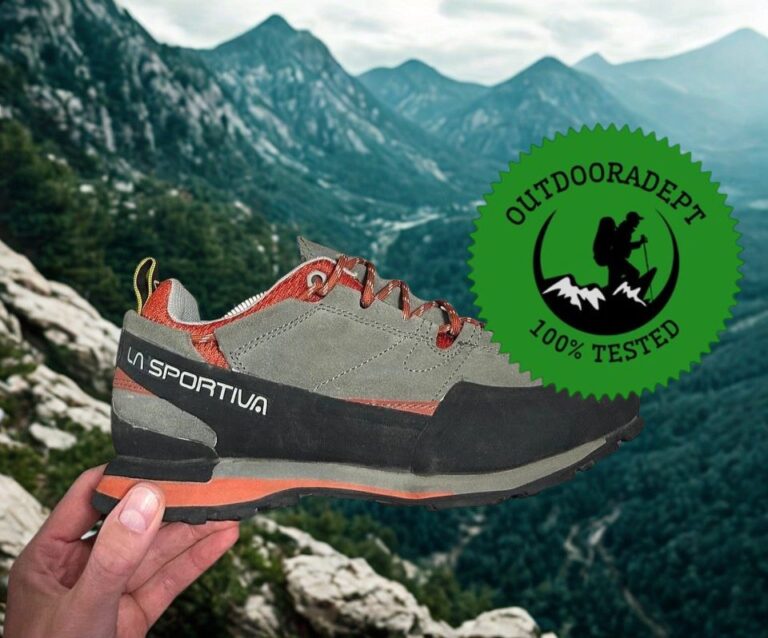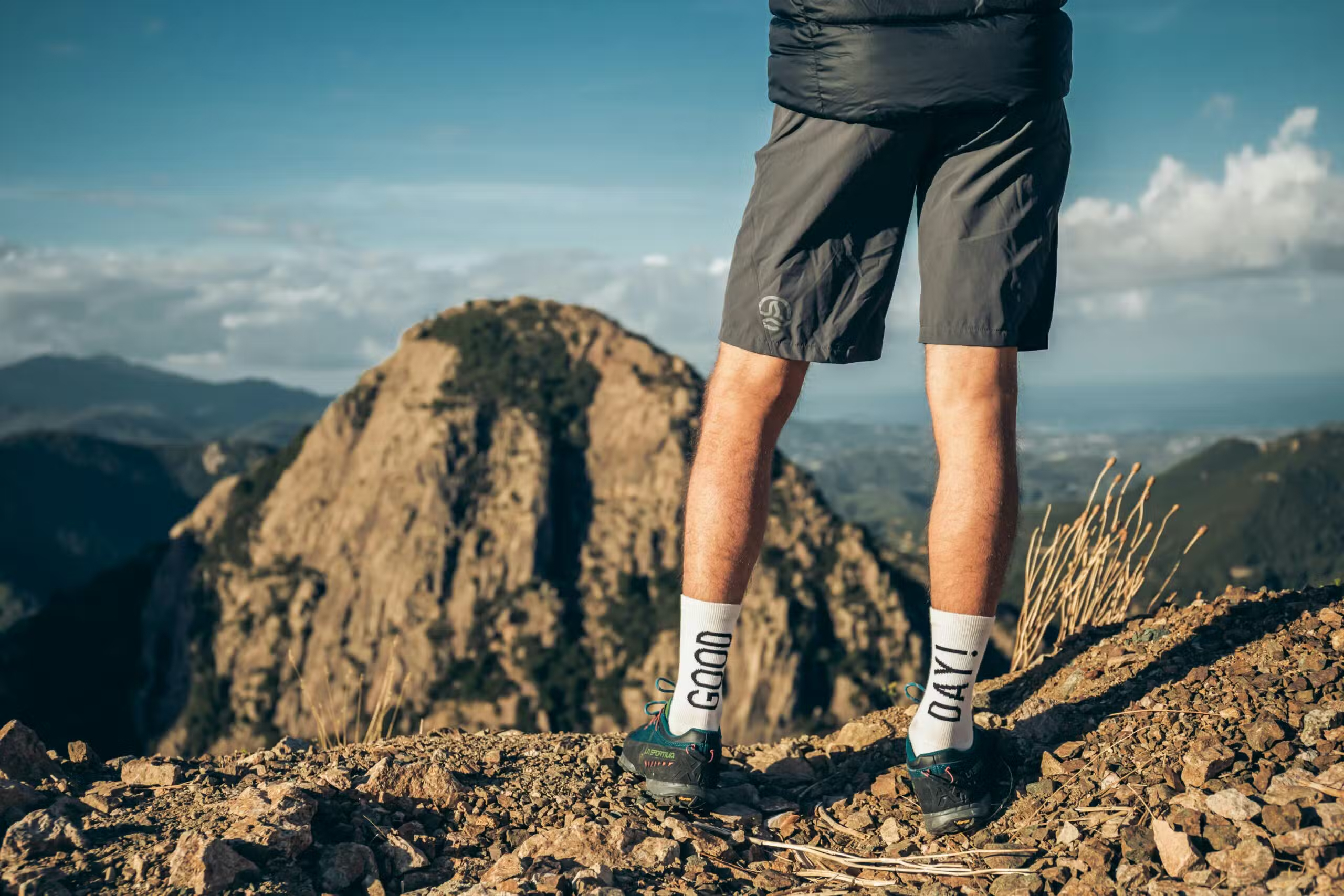
My trail runners fell apart on the granite slabs below Rysy four years ago. Still had four milessix kilometers of wet rock to descend, and I spent the whole time slipping and swearing my way down terrain I should have cruised through.
That’s when I started looking seriously for the best approach shoes. Hiking shoes felt too stiff for the technical scrambling I do. Trail runners didn’t have the grip or protection. I needed something in between, shoes that could handle a 10-mile16 km day with a pack and still feel confident on low 5th class rock.
I’ve tested 15+ models across Serbia’s Tara National Park, the Bulgarian Rila Mountains, and Romania’s Bucegi Mountains since then. Here’s what I got.
The Verdict – Our #1 Pick
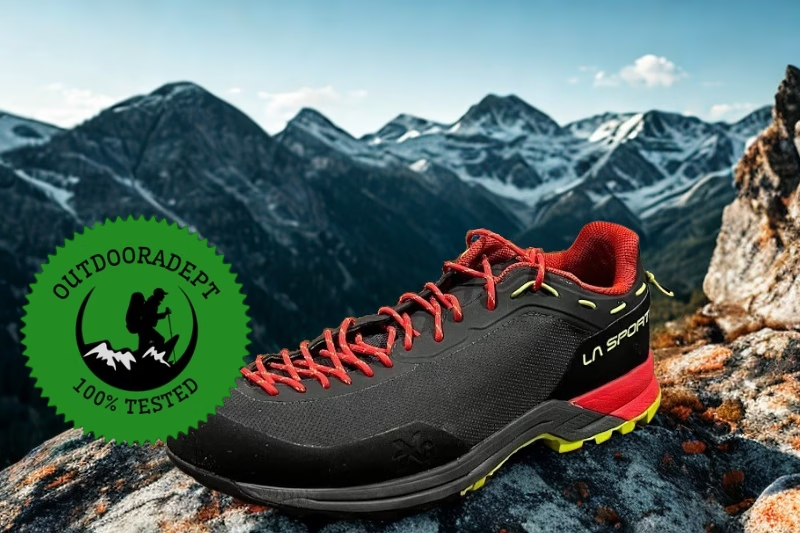
The TX4 nails the balance between technical scrambling and long-distance hiking better than any other approach shoe I’ve tested. It’s the one I grab when I don’t know exactly what the day will throw at me.
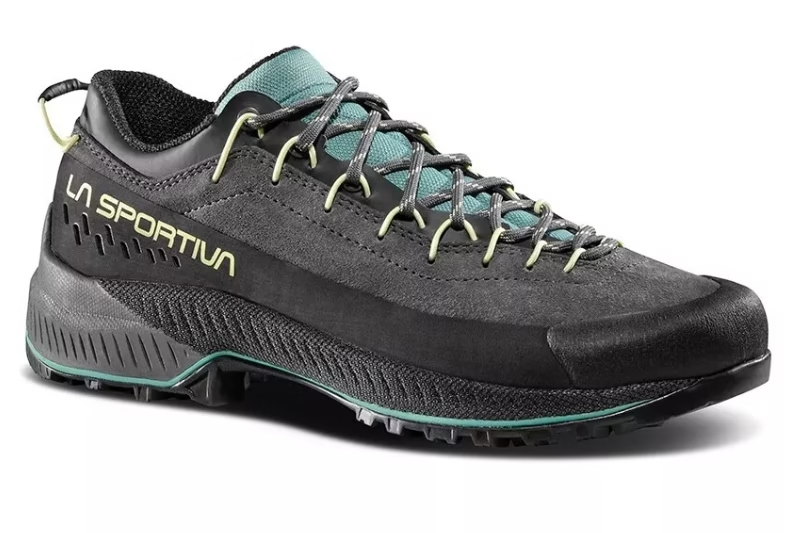
Most approach shoes and boots force a compromise. Go climbing-focused, and your feet pay for it on long approaches. Go hiking-focused, and you lose confidence on technical rock. The TX4 threads that needle. It edges capably on low 5th-class terrain while remaining comfortable enough for multi-day trips with a loaded pack.
The suede leather upper runs warm in summer heat, which is worth noting if you’re hiking in hot climates. But that same leather construction is why these boots outlast mesh alternatives by years. If you need one shoe that does everything reasonably well, start here.
For more details of this approach shoe, check out our review of the La Sportiva TX4 Evo.
Our Top Recommended Approach Shoes
1) La Sportiva TX4 Evo
I’ve put somewhere around 400 miles640 km on my TX4s at this point, and they still look like they could go another 400 miles640 km. That durability alone would earn them a spot on this list, but the real reason they’re sitting at number one is balance. These do everything well enough that I stopped bringing a second pair on trips.
The suede leather of La Sportiva TX4 upper runs warm. I’ll say that upfront because it is important if you’re in the desert Southwest in July. But that same leather, combined with the 1.5mm TechLite rand wrapping the shoe, means you can jam your foot into cracks, scrape across granite slabs, and generally abuse them in ways that would shred a mesh shoe in a season.
The Vibram Megagrip sole, with its smooth climbing zone under the toe, handles 4th class rock with the kind of confidence that lets you actually look at the view instead of your feet.
Fit runs slightly large with a wider toe box than typical La Sportiva (I went down a half size). And they weigh around 1 lb 8 oz680 g per pair, which you’ll notice if you’re used to trail runners.
But on approaches with a 30-pound14 kg pack, the injected EVA midsole provides enough cushion that my knees aren’t screaming by mile eight. That’s not something I can say about the TX Guide or most rock-climbing-focused options.
Key Specs
Outsole: Vibram Megagrip Traverse with climbing zone
Upper: Suede leather, PU TechLite rand
Weight: Men’s 1 lb 12 oz790 g per pair; Women’s 1 lb 8 oz680 g per pair
PROS
CONS
2) Scarpa Rapid XT Leather
The Rapid XT sits in that middle ground where a lot of shoes get mediocre at everything. Somehow Scarpa made it work. Three weeks across the Julian Alps put them through via ferrata one day, and a 15-mile24 km trail approach the next, and they handled both without complaint.
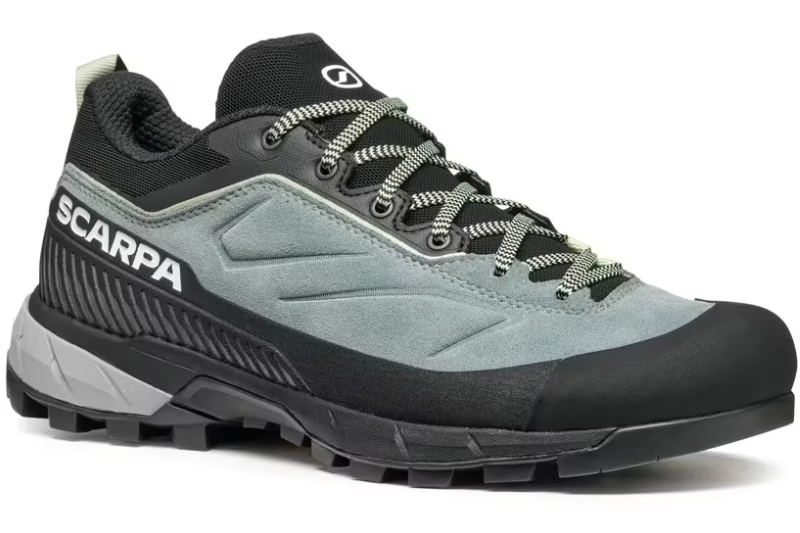
They lean hiking. The toe lacing stops short of where I’d want it for precise rock-climbing adjustments, and on technical Grade 2 scrambles, I found myself wishing for the TX4’s more sensitive toe.
But the trade-off is a platform that feels stable and confident on loose terrain. The Vibram Megagrip outsole with its brake section at the heel handles descents on scree and dirt better than most approach shoes I’ve tested.
The suede upper with TPU rand of the Scarpa Rapid XT Leather takes a beating. By week two, they looked like they’d been through a war (scratched, dusty, the leather starting to patina), but everything held together. No delamination, no blown seams. The interior isn’t plush. On days pushing past 12 miles,19 km, my feet felt it. But for typical approach distances, the EVA midsole provides enough cushion.
At around 14 oz400 g per shoe, they’re not ultralight. The single colorway option is annoying. And if you’re vegan, the leather is a dealbreaker. But at $180, you’re getting approach shoe performance without the premium price some competitors charge.
Key Specs
Outsole: Vibram Megagrip with climbing zone and heel brake
Upper: Suede leather with wraparound TPU rand
Weight: Men’s 1 lb 12 oz790 g per pair; Women’s 1 lb 7 oz650 g per pair
PROS
CONS
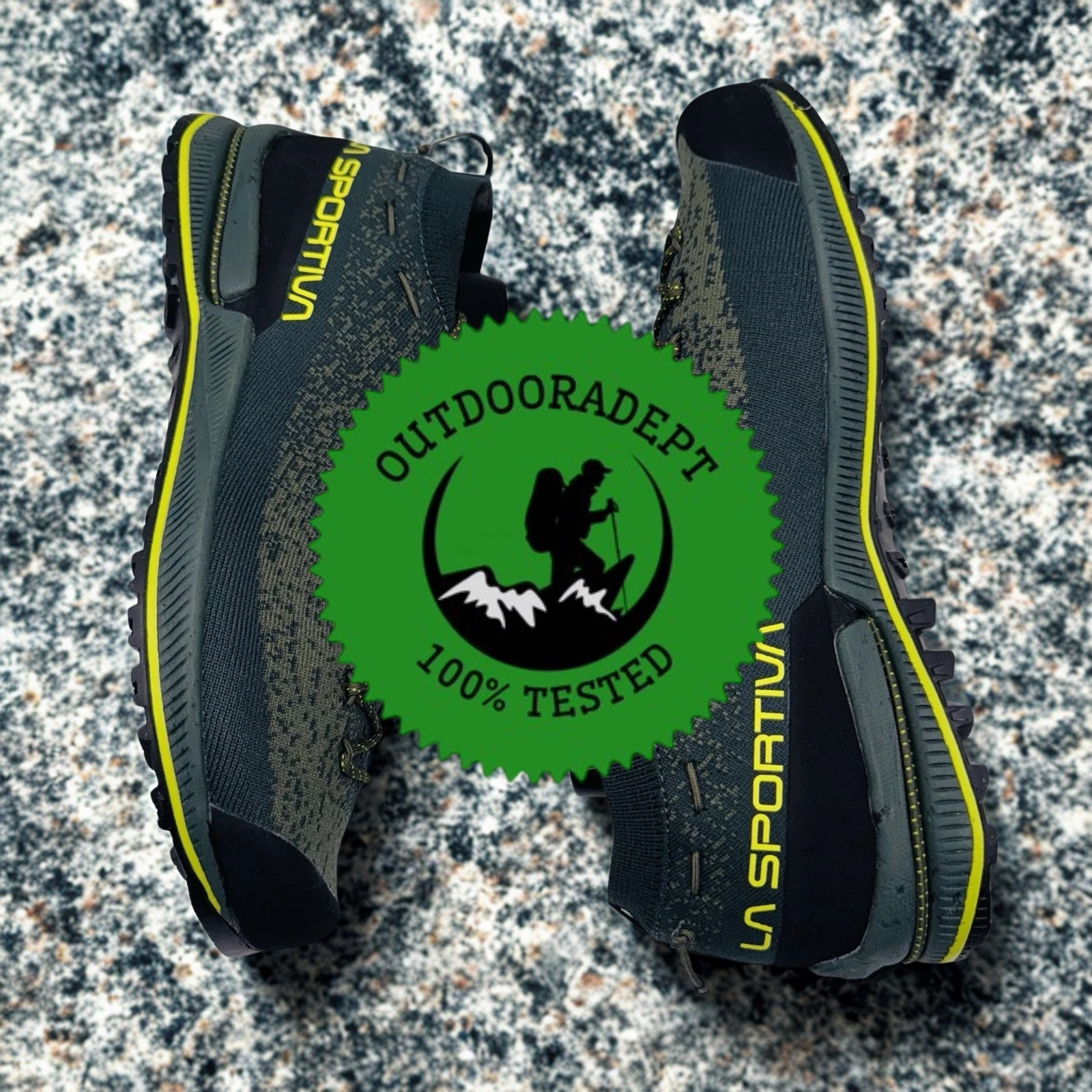
3) La Sportiva TX Guide
The TX Guide may be the best climbing performer in this entire list, but I can only recommend it to about half the people reading this. Maybe less.
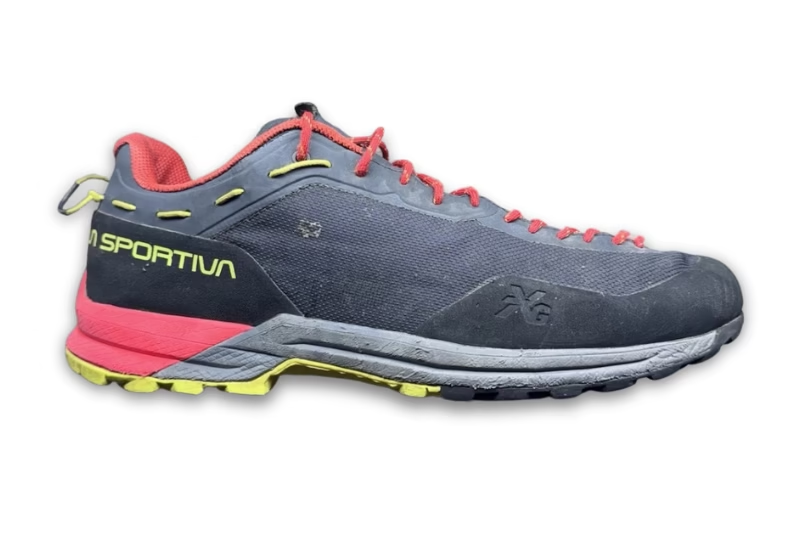
The fit is narrow. Really narrow. I have average-width feet and still felt the pinky toe pressure on long descents that so many people complain about. If your feet run wide, stop here and scroll down to the Mescalito Planet.
But if you’ve got low-volume, narrow feet? The La Sportiva TX Guide edges and smears like nothing else in this category. The stiff platform with dual-density Vibram (Megagrip at the forefoot, IdroGrip at the heel) handles slab climbing with a precision that made me forget I wasn’t wearing actual climbing shoes.
The mesh upper breathes well, but there’s zero water resistance. One creek crossing and you’re hiking in wet shoes for hours. There’s no GTX version.
At 1 lb 7 oz to 1 lb 11 oz650 to 770 g per pair, depending on size, they’re noticeably lighter than the TX4. The asymmetrical lacing to the toe lets you dial in the fit for technical sections. On approaches where the climbing is the point (alpine routes, multi-pitch days), this is what I grab.
On anything longer than 6 miles10 km with a pack, I grab the TX4 instead. The midsole just doesn’t have the cushion for big days.
Some users report lacing wear and occasional delamination. Mine have held up, but I’ve also been careful not to abuse them on talus the way I do the TX4.
Learn more about this product in our La Sportiva TX Guide Review.
Key Specs
Outsole: Vibram MegaGrip + IdroGrip with climbing zone
Upper: Jacquard mesh with TPU overlays, PU TechLite rand
Weight: Men’s 1 lb 9-11 oz710-770 g per pair; Women’s 1 lb 7 oz650 g per pair
PROS
CONS
4) Scarpa Mescalito Planet
Wide feet get neglected in the approach shoe market. Most technical options squeeze your toes into a narrow, climbing-oriented last that works great for edging and terribly for 10-mile16 km days. The Mescalito Planet breaks that pattern.

The Perspair recycled knit upper has more room in the forefoot than any Scarpa approach shoe I’ve worn. My feet didn’t feel cramped at hour eight the way they sometimes do in the TX4 or Boulder X. But Scarpa Mescalito Planet didn’t sacrifice climbing performance for that comfort.
The Vibram Litebase Megagrip sole (thinner rubber than standard, which saves around 4 oz110 g per shoe compared to the GTX version) still edges and smears reliably on granite up to low 5th class.
The single-piece knit construction with reinforced zones handles abrasion reasonably well. It’s not as bomber as full leather, but it breathes far better. In summer alpine conditions, you want that. The full rubber rand protects against rock strikes and works for jamming in cracks.
For narrow feet, the roomier last may feel a bit too loose. But if you’ve ever wished the technical approach shoes you loved would just fit your feet, the Mescalito Planet might be your answer.
Key Specs
Outsole: Vibram Litebase Megagrip with climbing zone
Upper: Perspair recycled knit, single-piece construction
Weight: Men’s 1 lb 10 oz740 g per pair; Women’s 1 lb 5 oz600 g per pair
PROS
CONS
5) La Sportiva TX2 Evo
The TX2 Evo exists for climbers who hate carrying shoes on their harness. It clips on with the C2 Combo Cord, weighs almost nothing, and climbs well enough that I’ve worn them on moderate multi-pitch routes where the approaches justified shoes, but the climbing didn’t quite demand my rock shoes.

On actual rock, they’re great. The Vibram Idrogrip sole with its climbing zone smears and edges with sensitivity that heavier approach shoes can’t match. In cracks, the minimal construction lets you feel the rock in ways the TX4 never will. The seamless knit mesh upper breathes and dries fast.
Everything costs something, though. The thin midsole that gives you that sensitivity also means your feet feel every sharp rock on talus fields. Anything over about 5 miles8 km with a pack, and you start wishing for more cushion. The outsole wears faster than the TX4. I got maybe 150 miles240 km before seeing significant degradation on mixed terrain. The laces and eyelet cord loops are vulnerable points.
For long rough approaches, heavy loads, or cold wet conditions, look elsewhere. The La Sportiva TX2 Evo doesn’t have the structure or protection for any of that. But for summer alpine routes where you’re moving fast, climbing 8-12 pitches, and hiking out, nothing in this list is as light or packable. The leather variant adds durability at the cost of some weight and breathability.
Learn more about this product in our La Sportiva TX2 Evo Review.
Key Specs
Outsole: Vibram Idrogrip with climbing zone
Upper: Seamless knit mesh (or nubuck leather variant)
Weight: Men’s 1 lb 4 oz570 g per pair; Women’s 1 lb 3-4 oz540-570 g per pair
PROS
CONS
6) Scarpa Crux
Sometimes you need a shoe that hikes first and climbs second. The Crux fills that role better than anything else on this list.

I wore these on a two-week trek where the “approaches” were actually full hiking days: 8 to 12 miles13 to 19 km of trail with 40 pounds18 kg on my back, scrambling mixed in where the terrain demanded it. The dual-density EVA midsole with ACTIV Impact technology provided support that felt closer to a hiking boot than a typical approach shoe. My feet weren’t destroyed at the end of the day.
The updated Vibram Megagrip outsole improves wet rock traction significantly over older versions. On 3rd and 4th class rock, the smooth climbing zone at the toe handled what I threw at it. Would I trust it on technical 5th class? No, get the TX4 or TX Guide for that. But for moderate scrambling mixed with serious mileage, the Scarpa Crux hits a sweet spot.
The suede upper with Kevlar webbing and full rand takes abuse. Mine show the miles but haven’t failed. Fit runs moderately narrow in the toe. I’m comfortable, but friends with wider feet have complained. They also run warm. In August, I wished for more airflow.
At around 1 lb 11 oz770 g per pair, these aren’t harness shoes. Plan to wear them all day, not clip them on for the climb. That’s how they’re designed to be used anyway.
For more information, check out our review of the Scarpa Crux
Key Specs
Outsole: Vibram Megagrip Vertical Approach with climbing zone
Upper: Suede with Kevlar webbing, full rand
Weight: Men’s 1 lb 11 oz770 g per pair; Women’s 1 lb 7 oz650 g per pair
PROS
CONS
7) La Sportiva Boulder X
The Boulder X is the tank of approach shoes. It’s heavy, stiff, runs hot, and requires a break-in period that’ll test your patience. But if you’re hauling 50 pounds23 kg over alpine talus fields, nothing else on this list protects and supports your feet quite like this.

The full suede leather upper with wraparound rubber rand laughs at the kind of rock abuse that would shred lighter shoes. I’ve seen the La Sportiva Boulder Xs with 500+ miles800+ km still holding together, looking rough but functional.
The Vibram Idro-Grip sole with its V-Smear profile and Impact Brake System handles steep descents on loose terrain with confidence. On rock, the narrow asymmetric toe edges precisely. This climbs more like a rock shoe than the hiking-oriented options.
The stiffness works for heavy loads but feels clunky on flat trails. Breathability is poor. In summer, my feet sweat. The narrow, climbing-oriented last doesn’t suit wide feet at all. Some users report heel lining wear if the sizing isn’t dialed.
At 1 lb 13 oz820 g per pair (women’s), these aren’t something you’d clip to a harness for a multi-pitch day. They’re wear-all-day shoes for approaches where the terrain is brutal, and the pack is heavy.
For lighter, faster missions, the TX4 makes more sense. But when I know I’m in for rough alpine conditions with weight on my back, the Boulder X earns its spot in my pack.
For more details of this approach shoe, check out our review of the La Sportiva Boulder X
Key Specs
Outsole: Vibram Idro-Grip V-Smear with Impact Brake System
Upper: Suede leather, full-wrap rubber rand
Weight: Men’s 2 lb 2 oz960 g per pair; Women’s 1 lb 13 oz820 g per pair
PROS
CONS
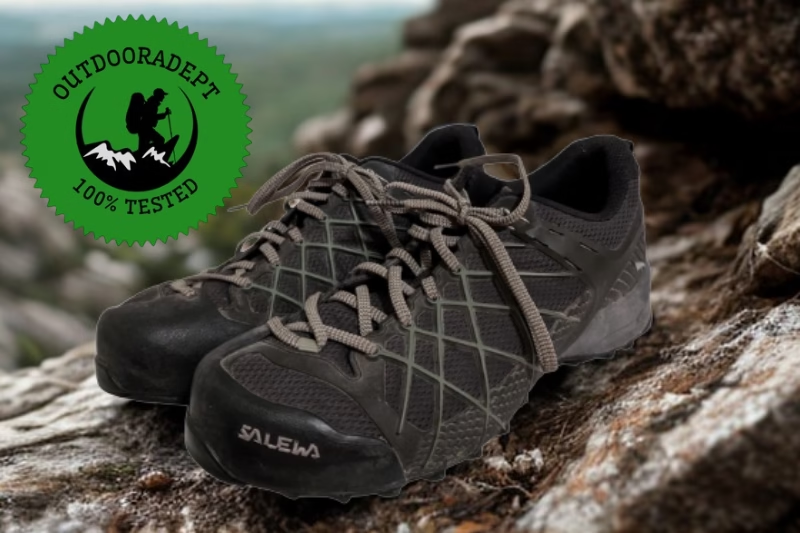
8) Salewa Wildfire GTX
The Wildfire GTX is built for people who want waterproofing without the bulk of a hiking boot. It’s light, climbs well, and keeps your feet dry in conditions that would soak through the TX4 or Mescalito Planet.
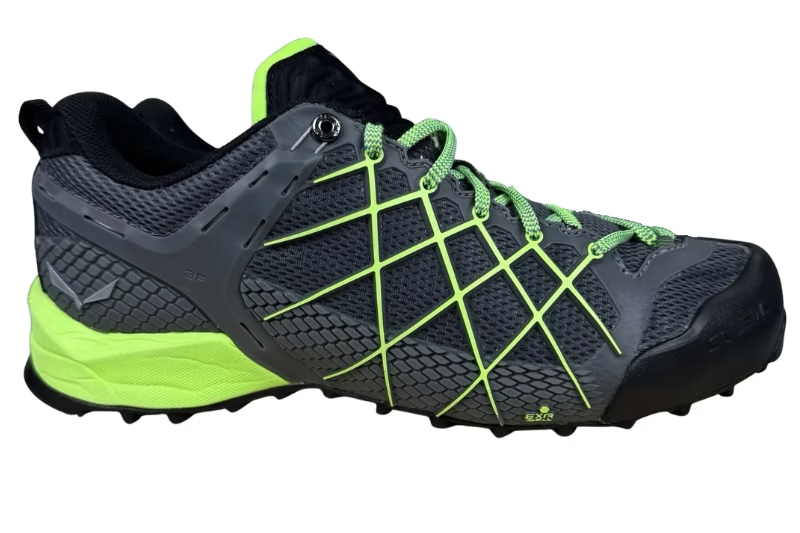
The Pomoca Speed MTN outsole provides a great grip on rock. Wet granite slabs that would have me sketched out in other shoes felt manageable in the Salewa Wildfire GTX. The climbing zone and aggressive lugs bite into dry rock confidently. The 3F Total System and Switchfit lacing lock the foot down in a way that feels secure on technical terrain.
That secure fit comes with trade-offs. The shoe runs narrow with a low volume. Friends with average-width feet found the ankle collar dug in uncomfortably. For me, it worked, but I’d strongly recommend trying these on before buying. Cushioning is minimal. On a 14-mile22 km day on Bulgaria’s Musala trail, my feet felt every mile by the end.
The rock-biased lugs fail in mud. After rain, on forest trails with soft ground, I was slipping where deeper treads would have held. The sole also wears faster on pavement than the Vibram Megagrip options. If your approaches include road walking, factor in reduced longevity.
For technical, rocky approaches in wet climates where you need GTX protection and light weight, the Wildfire delivers. For long mileage or soft terrain, look elsewhere.
We covered this approach shoe in a review recently: Salewa Wildfire GTX Review
Key Specs
Outsole: Pomoca Speed MTN with climbing zone
Upper: Recycled mesh with EXA-shell reinforcement, Gore-Tex lining
Weight: Men’s 1 lb 11 oz770 g per pair; Women’s 1 lb 7 oz650 g per pair
PROS
CONS
9) Black Diamond Mission Leather Mid WP
The Mission Leather Mid WP blurs the line between approach shoe and hiking boot. That mid-height cuff adds ankle support and scree protection that low-cut options can’t match, making it viable for mixed alpine approaches where you’re dealing with loose rock, snow patches, and foul weather.

The BD.dry membrane kept my feet dry through creek crossings and wet morning grass. The BlackLabel-Mountain rubber outsole of Black Diamond Mission Leather Mid WP is genuinely sticky. Not quite TX4 level, but confident on moderate rock. Deep lugs and a heel brake handle soft ground better than most approach-focused soles. On talus and scree, the ankle support made a noticeable difference in stability.
Climbing precision suffers for these gains. On technical rock, I wanted more sensitivity and a narrower toe. The Mission Mid is built for moving through terrain, not climbing it. For routes with serious scrambling sections, I’d reach for the TX4 or Rapid XT instead.
Weight and bulk are significant. These aren’t harness shoes. Some users report stress at the toe-rand junction with heavy use, though mine haven’t shown that issue yet. Breathability is adequate but not great. In hot conditions, feet get warm.
For three-season approaches where the weather is uncertain and the terrain is rough, the Mission Mid fills a gap that pure approach shoes leave open.
Key Specs
Outsole: BlackLabel-Mountain rubber with deep lugs and climbing zone
Upper: Nubuck leather with BD.dry waterproof membrane, full toe/heel rand
Weight: Men’s 2 lb 6 oz1.1 kg per pair; Women’s 2 lb 2 oz1 kg per pair
PROS
CONS
10) Arc’teryx Vertex Alpine
The Vertex Alpine confuses categories. It looks like a trail runner, cushions like a trail runner, but climbs better than any trail runner has a right to. For big days where the plan involves both running and scrambling, it’s carved out a niche that nothing else fills.

The Vibram XS Flash 2 outsole smears and edges reliably on moderate rock. Not TX4 territory, but better than I expected from something this cushioned. The thick EVA midsole with TPU shank absorbs the pounding of long technical descents. On rocky singletrack where I’d normally feel beat up, my feet felt protected.
Break-in is brutal. The tight sock-collar that keeps debris out also makes these hard to pull on and caused heel blisters for my first 30-40 miles50-65 km. Multiple people I know had the same experience. Plan for it. The Matryx woven upper held up well to granite scraping once broken in.
Arc’teryx Vertex Alpine fit runs narrow through the heel and arch with a somewhat roomier toe box. Many size down a half size. At around 12 oz340 g per shoe, they’re lighter than most approach shoes but heavier than pure trail runners.
For dedicated approach work, the TX4 or Rapid XT make more sense. But if your mountain days involve covering 20+ miles32+ km with scattered scrambling, the Vertex Alpine handles that hybrid mission better than traditional approach shoes can.
Key Specs
Outsole: Vibram XS Flash 2 with climbing zone
Upper: Matryx woven synthetic with sock-gaiter collar
Weight: Men’s 1 lb 8 oz680 g per pair; Women’s 1 lb 6 oz620 g per pair
PROS
CONS
Trail tips, news and giveaways
One email a month: hiking tips, gear news, giveaways, fresh footwear verdicts and more. No spam, unsubscribe anytime.
What Is An Approach Shoe?
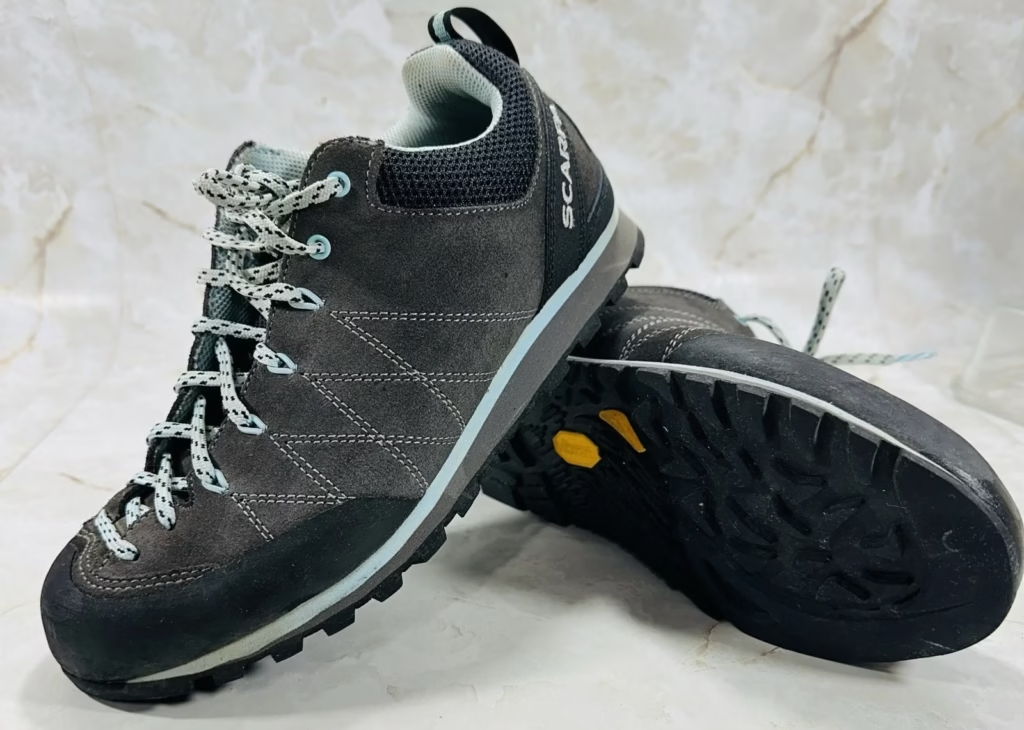
Approach shoes sit between hiking boots and climbing shoes. They’re built to get you from the trailhead to the base of a climb, across terrain that’s too technical for regular hiking footwear but doesn’t justify roping up.
The defining feature is a sticky rubber sole with a climbing zone under the toes. This lets you smear and edge on rock the way you would in climbing shoes, just with less precision. Most models add stiffer midsoles than trail runners, protective rands around the toe and sides, and durable uppers that survive granite abrasion.
Think of them as mountain utility footwear.
Approach Shoes Buyer’s Guide

Approach shoes vary more than most outdoor footwear categories. A climbing-focused model like the La Sportiva TX Guide feels nothing like a hiking-oriented option like the Scarpa Crux. Before spending $150 to $200, it helps to know what actually matters for the type of terrain you cover.
Material
Upper materials fall into three categories: leather, synthetic mesh, and knit fabrics. Each behaves differently on the mountain.
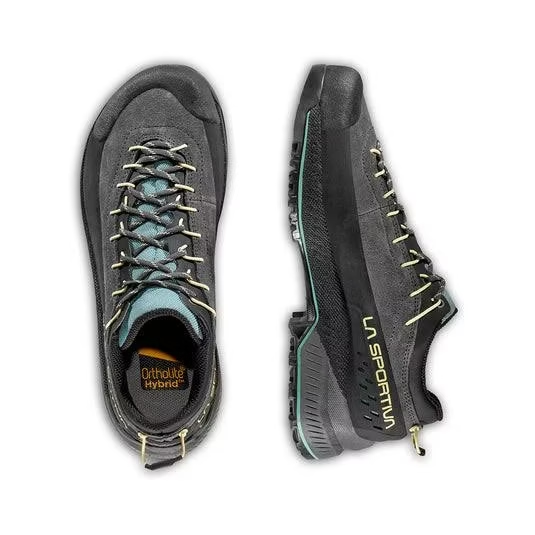
Leather uppers like those on the La Sportiva TX4 and Boulder X resist abrasion and hold their shape when wet. They also take longer to dry and run warmer in the summer heat. Leather works well for cooler conditions and routes involving crack jamming or constant rock contact.
Mesh and knit uppers breathe noticeably better. The TX Guide’s jacquard mesh keeps feet cooler than leather options on the same route in July. The trade-off shows up at stream crossings or hiking through wet grass at dawn. Without a waterproof membrane, mesh shoes stay wet for hours.
Synthetic reinforcements like TPU overlays and Kevlar webbing add durability without the weight of full leather. The Scarpa Crux uses Kevlar webbing over suede, a combination that holds up well through hundreds of miles.
For wet climates and shoulder seasons, the Salewa Wildfire GTX pairs mesh with Gore-Tex. For hot, dry alpine conditions, the Scarpa Mescalito Planet’s recycled knit handles heat well.
Performance
Performance means different things depending on your priorities. Climbing ability? Hiking comfort? Descending stability?
Climbing-focused models have stiffer midsoles, narrower toe boxes, and stickier rubber compounds. The TX Guide edges on small holds better than anything else in this category. That stiff platform transfers power to the rock instead of absorbing it in cushioning foam.
Hiking-focused models sacrifice precision for comfort over distance. The Scarpa Crux and Rapid XT have more forgiving midsoles that don’t punish feet on 12-mile19 km days. They still scramble capably on 3rd and 4th class terrain, but won’t match the TX Guide on technical slab.
The TX4 splits the difference. It edges well enough for low 5th-class rock while remaining comfortable under a 35-pound16 kg pack. That versatility is why it sits at the top of this list.
Routes involving more climbing than hiking favor the TX Guide or TX2 Evo. Big mileage with scattered scrambling suits the Crux or Rapid XT better.
Comfort
Cushioning and support determine how feet feel at mile eight versus mile two.
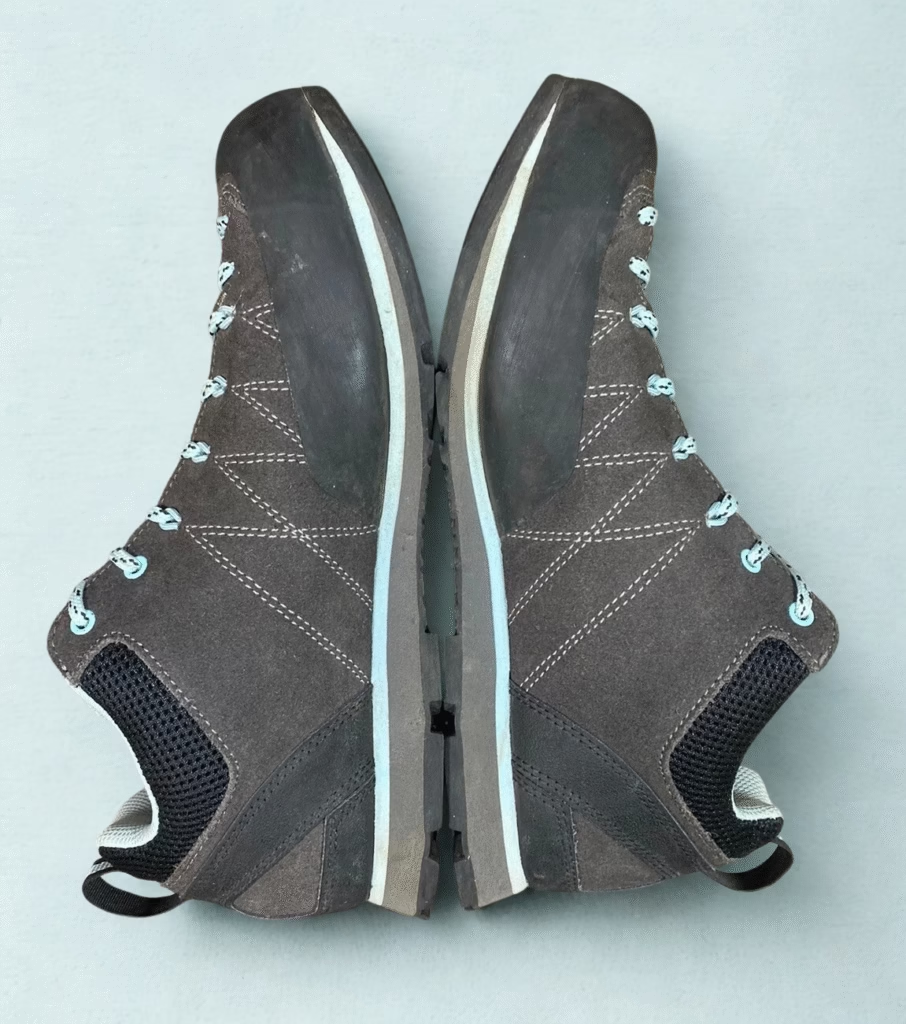
Hiking-oriented approach shoes build in more midsole foam and structured support. The Scarpa Crux uses dual-density EVA with ACTIV Impact technology, and the difference shows on long descents. Knees notice.
Climbing-oriented models like the TX2 Evo minimize cushioning for ground feel. That sensitivity helps on rock but turns into fatigue on rough trails. A 10-mile16 km day in the TX2 Evo gets uncomfortable by the end.
Midsole stiffness also affects comfort over time. Very stiff platforms like the Boulder X support heavy loads well but feel clunky on flat trails. More flexible options, like the Rapid XT, walk more naturally but provide less protection from sharp rocks underfoot.
For multi-day trips with 30+ pound14+ kg packs, the TX4 or Crux make sense. Light and fast day missions work fine in the TX2 Evo or Wildfire GTX.
Fit
Approach shoe lasts vary from narrow and climbing-oriented to wide and hiking-friendly. Getting this wrong leads to blisters, black toenails, and miserable descents.
The TX Guide and Boulder X run narrow with low volume. Climbers with slim feet love the precise feel. Everyone else gets pinky toe pain on long days. The TX Guide is workable for average feet, but it is tight.
The Mescalito Planet and Rapid XT fit wider feet comfortably. The Mescalito’s forefoot has noticeably more room than a typical Scarpa approach lasts.
If ordering online, check return policies and size recommendations carefully.
Weight
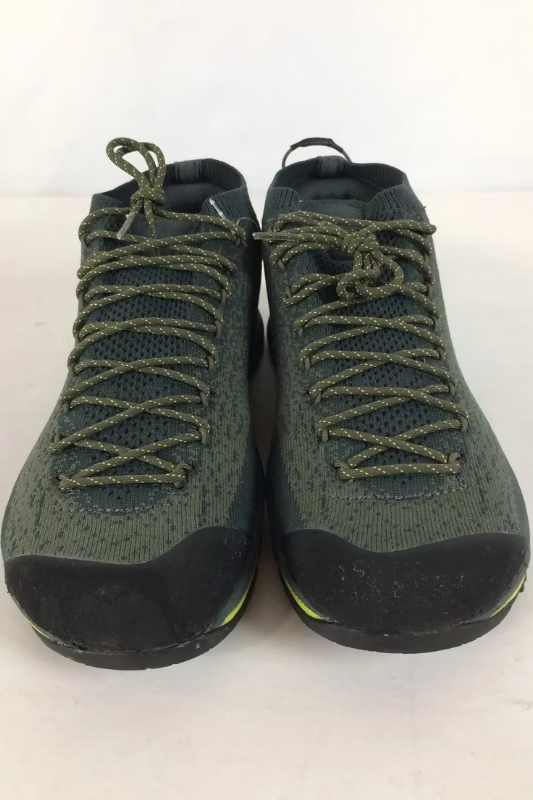
Weight ranges from around 1 lb 7 oz650 g per pair for the TX2 Evo to over 1 lb 11 oz770 g for the Scarpa Crux.
For routes involving harness carry and climbing in rock shoes, lighter is better. The TX2 Evo and TX Guide both work well here. They don’t drag on harnesses or throw off balance.
For all-day wear on long approaches, the weight penalty of burlier shoes pays off in support and durability. The extra ounces in the TX4 or Crux translate to comfort and protection that lighter shoes can’t match.
The Boulder X and Mission Leather Mid aren’t suited for harness carry. Both are too heavy and bulky. Plan to wear them the entire day.
Tread
Outsole design determines where shoes grip and where they slip.
Vibram Megagrip appears on the TX4, Rapid XT, Crux, and Mescalito Planet. It’s a sticky compound that performs well on both wet and dry rock. The shallow lugs on most approach shoes prioritize rock contact over soft ground traction.
Vibram Idrogrip on the TX2 Evo and Boulder X offers similar stickiness with slightly different durability characteristics. Megagrip wears a bit faster on mixed terrain, but grips wet rock marginally better.
The Salewa Wildfire GTX uses Pomoca Speed MTN rubber, which handles wet slabs surprisingly well but struggles in mud. Those rock-biased lugs clog and skate on soft ground.
Deeper lugs help on approaches with mud, wet grass, and loose dirt. The Black Diamond Mission Leather Mid has the deepest treads on this list and handles soft terrain better than climbing-focused options. The trade-off is less rock contact and reduced smearing ability.
For primarily rocky terrain, shallow-lugged options like the TX4 or Mescalito Planet work well. Mixed conditions with regular mud and grass suit the Crux or Mission Mid better.
Ventilation
Breathability depends on the upper material and membrane choice.
Unlined mesh uppers like the TX Guide and Mescalito Planet breathe freely. In summer alpine conditions, feet stay cooler than in any leather option. These shoes also dry fast after creek crossings, usually within two to three hours of hiking.
Leather uppers like the TX4 and Boulder X run warm. On 80°F27°C days, the difference is noticeable. The leather does provide better weather resistance when treated, but it’s not waterproof.
Gore-Tex-lined models like the Wildfire GTX and Mission Leather Mid WP keep water out but trap more heat and moisture inside. They work well in cooler, wetter conditions. In summer heat, they get clammy.
For hot and dry conditions, the Mescalito Planet or TX Guide breathe best. For wet and cool conditions, the Wildfire GTX or Mission Mid provide better protection.
Comparison Table
| Approach Shoe | Price Men | Price Women | Weight (Pair) | Waterproof | Best For |
|---|---|---|---|---|---|
| La Sportiva TX4 Evo | Check on Amazon» $190 on Backcountry» $190on REI» | Check on Amazon» $190 on Backcountry» $190 on REI» | Men: 1 lb 12 oz790 g Women: 1 lb 8 oz680 g | No | Technical scrambling and long-distance hiking; all-round use |
| Scarpa Rapid XT Leather | Check on Amazon» $180 on Backcountry» $180 on REI» | Check on Amazon» $180 on Backcountry» $180 on REI» | Men: 1 lb 12 oz790 g Women: 1 lb 7 oz650 g | No (GTX optional) | Loose terrain, scrambles, and trails; durability |
| La Sportiva TX Guide | Check on Amazon» $200 on Backcountry» $200 on REI» | Check on Amazon» $200 on Backcountry» $200 on REI» | Men: 1 lb 9-11 oz710-770 g Women: 1 lb 7 oz650 g | No | Technical climbing, alpine routes, and narrow feet |
| Scarpa Mescalito Planet | $155 on Scarpa» | $155 on Scarpa» | Men: 1 lb 10 oz740 g Women: 1 lb 5 oz600 g | No | Wide feet, summer heat, and climbing performance |
| La Sportiva TX2 Evo | Check on Amazon» $170 on Backcountry» $170 on REI» | Check on Amazon» $170 on Backcountry» $170 on REI» | Men: 1 lb 4 oz570 g Women: 1 lb 3-4 oz540-570 g | No | Carrying on harness, multi-pitch routes, moving fast |
| Scarpa Crux | Check on Amazon» $160 on Backcountry» $160 on REI» | Check on Amazon» $160 on Backcountry» $160 on REI» | Men: 1 lb 11 oz770 g Women: 1 lb 7 oz650 g | No (Water-resistant) | Hiking first and climbing second; mixed terrain with mileage |
| La Sportiva Boulder X | Check on Amazon» $160 on Backcountry» $160 on REI» | Check on Amazon» $160 on Backcountry» $160 on REI» | Men: 2 lb 2 oz960 g Women: 1 lb 13 oz820 g | No | Heavy loads, rough alpine conditions, talus fields |
| Salewa Wildfire GTX | Check on Amazon» $130 on Backcountry» $130 on REI» | Check on Amazon» $130 on Backcountry» $130 on REI» | Men: 1 lb 11 oz770 g Women: 1 lb 7 oz650 g | Yes (Gore-Tex) | Wet climates, technical rocky approaches, keeping feet dry |
| Black Diamond Mission Leather Mid WP | Check on Amazon» | Check on Amazon» | Men: 2 lb 6 oz1.1 kg Women: 2 lb 2 oz1 kg | Yes (BD.dry membrane) | Mixed alpine approaches, foul weather, ankle support |
| Arc’teryx Vertex Alpine | Check on Amazon» $250 on REI» | Check on Amazon» $250 on REI» | Men: 1 lb 8 oz680 g Women: 1 lb 6 oz620 g | Yes (Gore-Tex) | Running and scrambling hybrid days (big mountain days) |
How Do You Care For Approach Shoes?
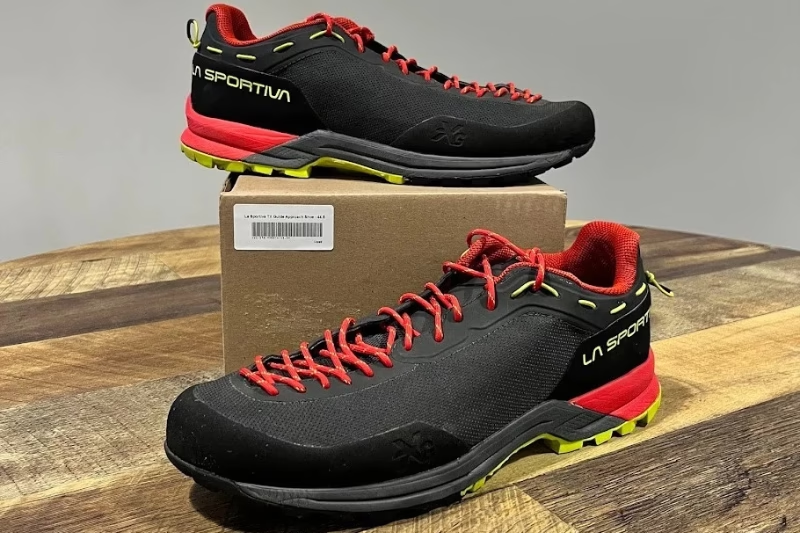
Approach shoes take abuse. Granite scraping, crack jamming, talus bashing, mud caking. Proper care extends their lifespan significantly. Three seasons out of a pair is realistic with maintenance. One season is common with neglect.
Clean Your Approach Boots After Each Trip
Dirt and grit work into the fabric and rubber over time, accelerating wear. Brush off loose dirt with a stiff brush after every trip. For caked mud, rinse the shoes under cool water and use a soft brush to scrub the uppers and outsoles.
Avoid hot water. It can break down adhesives and damage leather. The same goes for machine washing and tumble drying. Both stress the construction in ways that lead to premature delamination.
The climbing zone under the toe deserves extra attention. Small rocks and debris embed in the rubber and reduce grip. Pick these out with a fingernail or small stick before storage.
Dry Your Boots Properly
Wet shoes need to dry completely before storage. Stuff them loosely with newspaper or paper towels to absorb moisture from inside. Swap the paper every few hours until dry.
Keep them away from direct heat sources like radiators, campfires, and car dashboards. High heat warps EVA midsoles and cracks leather. A pair left in a hot car can deform permanently. The midsole warps and never feels right again.
Room temperature air circulation works best. Loosen the laces, pull out the insoles, and let them dry in a ventilated space. Most mesh shoes dry overnight. Leather and GTX-lined models take 24 to 48 hours.
Leather Care
Leather uppers need periodic conditioning to stay supple and water-resistant. A leather-specific conditioner like Nikwax or Grangers every three to four months keeps them in good shape, or more often, once the leather starts looking dry and faded.
Apply conditioner to clean, slightly damp leather. Work it in with a cloth, paying attention to seams and flex points. Let it absorb for 15 to 20 minutes, then wipe off excess. Allow the shoes to dry fully before wearing.
Avoid silicone-based waterproofing sprays on leather. They clog pores and reduce breathability. Wax-based products work better for heavy-use footwear.
Rubber and Rand Maintenance
The outsole and rand don’t need much maintenance, but they benefit from inspection. Check for separation between the rand and upper after hard use. Small gaps can be glued before they become major failures. Shoe Goo or Aquaseal work well for minor repairs.
Outsole wear happens fastest on pavement and mixed terrain. The climbing zone under the toe shows wear first on most models. Once the rubber thins noticeably or the tread pattern disappears, traction drops significantly.
The TX4, TX2 Evo, and Boulder X can be resoled, which extends their useful life. Factor this into the purchase decision if you tend to wear through outsoles faster than uppers.
Storage
Store approach shoes in a cool, dry place away from direct sunlight. UV exposure degrades rubber compounds and fades leather over time. A closet or gear bin works fine.
Don’t store them compressed or with weight on top. This can deform the midsole and affect fit. Stuffing them lightly with newspaper helps maintain shape during off-season storage.
Loosen or remove laces before long-term storage. Tension on the eyelets and tongue over months can create permanent creases in the leather or fabric.
Approach Shoes Sizing Guide & Fit Tips

Approach shoe sizing is notoriously inconsistent. A size 43 in La Sportiva fits differently from a size 43 in Scarpa, and both differ from Salewa. Brand loyalty doesn’t translate to predictable sizing.
Understanding Last Shapes
The last is the foot-shaped mold around which a shoe is built. It determines everything about fit: toe box width, heel cup shape, arch placement, and overall volume.
Climbing-oriented lasts run narrow and low-volume. The La Sportiva TX Guide and Boulder X use these. They wrap the foot tightly for precision on rock, but leave little room for swelling or thicker socks. People with narrow, low-volume feet often find these comfortable. Everyone else struggles with pressure points.
Hiking-oriented lasts provide more room. The Scarpa Crux and Rapid XT fit wider through the forefoot. The Mescalito Planet goes even further, accommodating feet that feel cramped in typical rock-climbing gear.
Hybrid lasts try to balance precision and comfort. The TX4 has a wider toe box than most La Sportiva models while keeping a relatively snug heel. This works for average feet, but still runs large overall.
Performance Fit vs. Comfort Fit
The right size depends on the intended use.
A performance fit means snug contact everywhere without painful pressure points. Toes should reach the front of the shoe without curling. This works for technical scrambling and climbing where precision matters more than all-day comfort.
A comfort fit leaves about a thumb’s width of space at the toe. This accommodates foot swelling on long days and allows for thicker socks in cold conditions. Hiking-oriented use favors this approach.
The same shoe in the same size can serve both purposes, depending on sock thickness. A thin liner sock creates a more performance-oriented fit. A medium hiking sock adds volume and shifts toward comfort.
Trying On Approach Shoes
Try shoes on in the afternoon when feet are slightly swollen. This simulates conditions at mile six better than morning shopping.
Bring the socks you’ll actually wear. The difference between a thin synthetic liner and a medium merino sock is significant in a fitted approach shoe.
Walk around on hard surfaces, not just carpet. Stomp, twist, and simulate descending. Heel lift indicates sizing or lacing issues. Toe contact with the front of the shoe on downhill walking leads to black toenails.
Stand on a sloped surface if the store has one. Weight shifts forward on descents, and this reveals pressure points that flat walking misses.
Lacing Techniques

Lacing adjustments can solve minor fit issues without resizing.
A heel lock lacing pattern prevents heel lift on steep terrain. Run the lace through the top eyelet, create a loop, then cross through the opposite loop before tying. This anchors the heel without overtightening the midfoot.
Skip an eyelet over a pressure point to relieve hotspots. This works well for high insteps or prominent bones.
The TX Guide and Wildfire GTX have asymmetrical lacing that extends toward the toe, allowing fine-tuning of forefoot fit. The Rapid XT and Crux stop lacing shorter, which limits adjustment options in the toe area.
When to Accept an Imperfect Fit
No shoe fits everyone. Compromises happen.
Narrow heels in wide toe boxes require creative lacing or aftermarket insoles with heel cups. Wide forefeet in narrow shoes don’t have good solutions. Move to a different model.
Hot spots that don’t become blisters often disappear after break-in. Hot spots that blister repeatedly indicate genuine fit problems.
Pressure on the pinky toe in narrow shoes like the TX Guide usually doesn’t improve with break-in. The leather or fabric might soften slightly, but the underlying last shape won’t change.
Break-In Expectations
Modern approach shoes require less break-in than hiking boots, but some adjustment period is normal.
Mesh and synthetic uppers typically feel comfortable immediately. The TX2 Evo and Mescalito Planet need minimal break-in.
Leather uppers take longer. The TX4 and Boulder X need 20 to 30 miles32 to 48 km before the leather molds fully to the foot. Initial stiffness and minor pressure points usually resolve.
Wear new approach shoes on shorter trips before committing to a big objective. A 3-mile5 km day hike reveals fit issues without the consequences of discovering them at mile eight of a long approach.
FAQ
It comes down to the rubber. Approach shoes use sticky climbing rubber, the same stuff you’ll find on rock shoes, with a smooth toe zone that lets you edge and smear on rock faces. Hiking shoes go the opposite direction with deeper, chunkier lugs built for trail grip rather than rock precision.
Absolutely, and plenty of people do exactly this. Hiking-oriented models like the Scarpa Crux and La Sportiva TX4 have enough cushioning underfoot to handle multi-day trips with a loaded pack. The trade-off? Those shallower lugs get clogged and slippery in muddy conditions where a traditional hiking boot would power through.
You can, but you’ll probably wish you hadn’t. Most approach shoes run heavier and stiffer than trail runners, which makes for a clunky ride over distance. If you need something that handles both, the Arc’teryx Vertex Alpine sits in that weird hybrid space between technical running and scrambling when the trail gets rocky.
They actually work surprisingly well as everyday kicks. That sticky rubber grips wet pavement better than most sneakers, and lower-profile options like the La Sportiva TX2 Evo don’t scream “I’m about to climb something.” Just know that concrete chews through outsoles way faster than rock does.
Depends entirely on what you’re buying. Climbing-focused models like the La Sportiva TX Guide or Boulder X have seriously stiff platforms because that rigidity helps you stand on tiny edges. Trail-oriented options like the Scarpa Rapid XT flex more underfoot, which feels better over long hiking days.
The name comes from the approach hike, that walk from the trailhead to where the actual climbing starts. Climbers needed something that could handle trail miles but also scramble up technical rock without swapping into climbing shoes. Approach shoes split the difference between hiking boots and rock shoes, and the name just stuck.
Prices in this article are approximate and updated annually. Check the retailer for current rates.