Through countless hikes, I’ve learned that good hiking shoes with strong ankle support are essential, especially on rough or tricky trails. With my weaker ankles, a single misstep can lead to a painful sprain or injury, which is something I definitely want to avoid.
In this update for 2026, I’ll dive into hiking boots specifically designed to deliver optimal ankle support for this years outdoor season. I’ll share a curated list of the finest options and explain why these boots earned their spot on the list.
I’ll also walk you through the key considerations when shopping for hiking boots, ensuring you make a well-informed choice for your outdoor adventures.
Additionally, I’ll break down the critical differences between standard footwear and those equipped with ankle support. This will help you fully understand the benefits of investing in the right pair of boots.
The Verdict – Our Number One Pick
I felt confident wearing these on various hikes and felt like my ankle area always remained fully supported, especially when it came to their excellent traction.
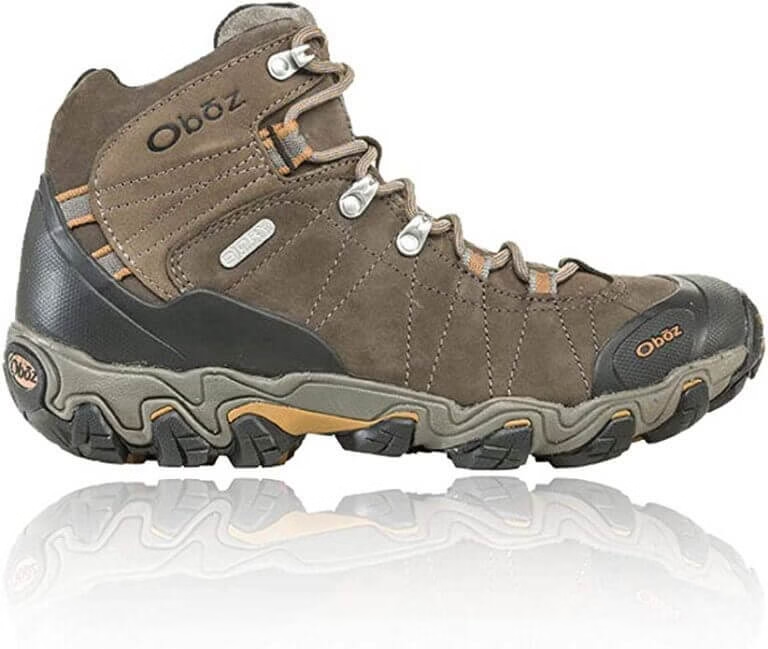
Although all the top hiking boots on our list performed well in the area of ankle support, the Oboz Bridger Mid B-Dry are my favorite hiking boots. They offered better ankle support, excelled with durability, and waterproof capabilities.
They also had some great extra features as well, like the self-cleaning lugs and rubber toe and heel caps.
We tested 23 hiking boots in various US and European locations to find the top 11 hiking boots with ankle support. Trials covered diverse terrains and assessed waterproofing, breathability, and insulation in different weather conditions. Our team, with expert input, determined the break-in period and rated boots on fit, cushioning, tread, and more. External feedback and warranties were considered for our recommendations. Learn More.
editor’s choice
Oboz Bridger Mid B-Dry

#2nd Best Choice
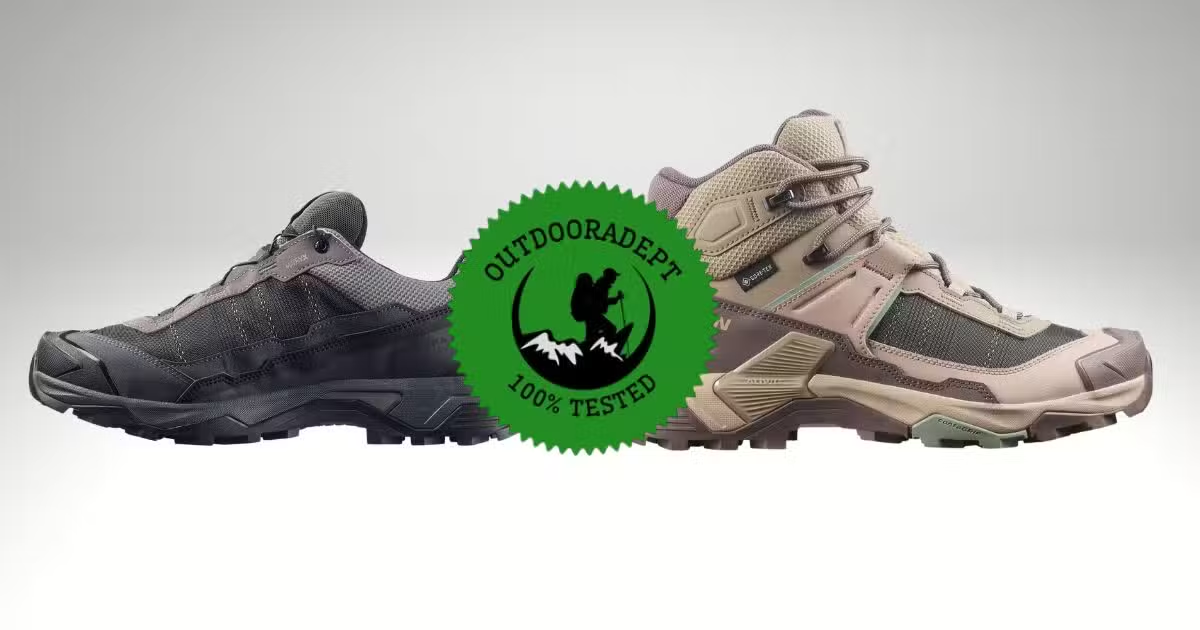
Salomon X Ultra 5 Mid GTX

#3Rd Best Choice
Vasque Breeze AT MID

Our Top Recommended Hiking Boots For Ankle Support
1) Oboz Bridger Mid B-Dry Hiking Boot
Additions like the molded rubber toe cap and rubber reinforced heel help protect both your foot and the boot from damage caused by sharp objects such as rocks.
These superbly crafted waterproof hiking boots provide outstanding ankle support. They effectively prevent foot fatigue and ensure stability on the trails.
If you’re a fan of nubuck leather, you’ll definitely appreciate how it covers the entire upper part of the boot.
In our review of the Oboz Bridger Mid B-DRY, I noticed it offers remarkable breathability thanks to perforations in the nubuck leather upper.
What really impressed me was the waterproof membrane hidden beneath the leather. It consistently kept my feet dry, even when crossing shallow streams.
Moreover, this membrane efficiently wicks away moisture and sweat. Along with excellent ankle support, the boot delivers exceptional grip due to its robust tread that extends around the sides.
With my weak ankles, having reliable traction makes me feel more secure on the trails. This boot certainly does not disappoint in that area.
PROS
CONS
2) Salomon X Ultra 5 Mid GTX
The uppers wrap around your ankle in a way that makes you feel locked in from the first step.
Salomon knows how to build boots for problem feet and rough terrain, and the X Ultra 5 Mid GTX is no exception. This version dropped in 2025. I’ve put some miles on them now, and they got this update right.
Comfort and protection balance well. You can move naturally without feeling like you’re hiking in ski boots, but there’s enough structure for rockier sections. Waterproofing works. GORE-TEX with the newer PFC-free membrane, fully waterproof, and lacing holds tension all day.
The collar and tongue padding got thicker on this version. My heels used to lift slightly in the X Ultra 4 on steep descents, and that’s gone now.
Traction is good, too. The Contagrip All Terrain outsole held on loose scree and muddy trails without any sketchy moments. On wet rock, it’s decent but not quite as confident. Something to keep in mind if you’re doing a lot of slab scrambling.
The midfoot is tight. Classic Salomon fit. But that snugness does help them feel planted, and the Matryx upper with Kevlar reinforcement is built to last. I rolled my ankle slightly on some loose stuff during one hike, and the boot kept everything in check. No tweaks, no soreness the next day.
We also reviewed the previous version: the Salomon X Ultra 4 Mid GTX.
PROS
CONS
3) Vasque Breeze AT MID Gore-Tex Hiking Boot
These hiking boots provide great protection against water and winter weather and also excel at ankle support.
It’s not the lightest option you can buy, but for a mid-weight boot, it’s not terribly heavy, either. They are also quite breathable.
However, the larger holes in the mesh panels at the top tended to allow small pieces of dirt and debris to enter into the boot and also didn’t seem like it would resist tearing if put to the test in very rocky terrain.
I could feel them hugging my foot in all the right places as soon as I tried them on, which gave me confidence that they’d perform well on the trail.
And, indeed, I was right. Vasque Breeze is one of the best hiking boots with ankle support on the market, and many other users reported the same thing.
PROS
CONS
4) Salomon Quest Element Gore-Tex Hiking Boots
The gore-tex lining gives them solid waterproof protection, and you can expect to keep your feet dry with them.

Salomon Quest Element provides great ankle support while still remaining lightweight.
They won’t be as stable as a stiffer and heavier boot, but they felt like a really good in-between option for me and one that would work well for day excursions or light backpacking trips. I also liked that they didn’t require a long break-in period to feel comfortable.
This boot consistently ranks as one of the best hiking boots available and provides excellent performance regardless of the trail conditions.
PROS
CONS
5) Asolo Falcon GV EVO
It’s lightweight for the amount of protection that it provides, which is great if you are hiking varied terrain or need to carry a heavy load.
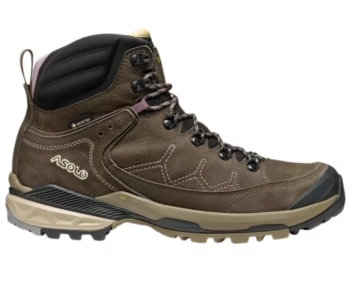
This pair of hiking boots works great whether you’re sticking to the path or looking for off-trail adventures. It handles almost every type of terrain and keeps your feet secure and protected while doing it.
One thing I found in the original Asolo Falcon GV Review was that it didn’t have as much cushioning as some of the other options, so I got my hopes up that Asolo solved this matter. Yet, the cushioning in the EVO version was just slightly better than its predecessor. Insoles are still recommended for these boots if you plan on hiking rocky trails.
PROS
CONS
6) KEEN Targhee IV Mid Hiking Boots
Solid ankle support and a construction upgrade that should keep these from falling apart after a season or two.

Good boot for off-trail stuff, works as a cooler weather hiker too. The look changed from the III: more rugged, and KEEN offers colors beyond brown and black.
KEEN focused on durability here. They’re using FUSION construction now, where the upper bonds directly to the sole without glue. They back it with a lifetime guarantee against delamination, so they’re confident in it. Cushioning comes from their LuftCell midsole, which is air-injected and resists compression better than traditional foam.
I’ll be straight with you, these boots have some weight to them. Close to 3 pounds1.3 kg for the pair. That’s the trade-off for the bomber construction. The toe box runs wide and roomy, which is great if you’ve got wider feet, but might feel sloppy if your feet are narrow.
Traction is where these show their priorities. The KEEN.RUGGED outsole is built to last, twice as abrasion-resistant as standard rubber according to KEEN, but grip on wet rock and slippery surfaces is just okay. On dry trails, they’re fine, but I found myself picking my steps more carefully on wet granite.
To find out more, check our full review of the KEEN Targhee IV Mid.
PROS
CONS
7) Lowa Renegade Evo GTX Mid Hiking Boot
Made the list because they stay comfortable under a heavy pack without feeling bulky.

These run stiffer than most boots I tested. On chunky terrain and off-camber trails, that rigidity translated directly into ankle support. Your foot doesn’t roll inside the boot.
The Evo updates are subtle but smart. Lowa reduced the seam count on the upper, so there are fewer spots where friction builds and blisters form. I was surprised how quickly these broke in for a leather boot, though I’d budget a few hikes before they really mold to your foot. The stiff PU midsole needs some time to soften up.
Check our Lowa Renegade GTX Mid Review to read up on the previous iteration of this hiking boot.
Lowa redesigned the underfoot, too. Dual-density midsole with DuraPU and DynaPU cushions without feeling squishy. The Vibram Rene Trac outsole grips well and sheds mud instead of collecting it.
You’re paying for Lowa quality, but these won’t need replacing next year or the year after.
One note: these run warm, so they’re better suited for cooler weather hiking than summer heat.
PROS
CONS
8) Columbia Newton Ridge Plus II Waterproof
Additions like the molded rubber toe cap and rubber reinforced heel help protect both your foot and the boot from damage caused by sharp objects such as rocks.

The Columbia Newton Ridge Plus is a popular pair of women’s hiking boots (the men’s version is the Plus II). Like most other Columbia hiking shoes, they are lightweight hiking boots but still durable enough to hold up to the elements.
Made of full-grain and suede leather, also work well in all types of weather, including rain (because of their waterproofing), and are affordable.
I really like just how versatile these boots are. The rubber outsole is substantial enough to provide a good grip, but they also look great, and I’ve worn them a few times casually.
The lace-up closure on these boots provides a very secure fit, especially where you need it the most, to prevent rolled ankles. They’re also very cushioned, which makes them comfortable for longer treks.
PROS
CONS
9) Vasque Talus AT UltraDry
Its well-defined arch, supportive leather upper, and stiff sole give it more support than your average hiking shoe.

Many other hikers who tried these shoes liked them because of their well-padded heel bed and tongue area.
I agree with this assessment and found them comfortable, especially in the tongue area, where I couldn’t feel the shoelaces.
For hikers who want decent support but prefer hiking shoes over hiking boots, the Vasque Talus is a good option.
PROS
CONS
10) Merrell Thermo Chill 2 Mid Waterproof
Feels like a hiking boot that happens to handle winter, not something you tolerate until spring.

Best option on this list for snow and cold. 200 grams of insulation keeps feet warm without the bulk, and the boot stays light enough for real mileage, just over a pound per foot.
Merrell redesigned the tread pattern here. Lugs are shallower, but more of them contact the ground, so grip on ice and packed snow improved over the original. The outsole uses Merrell’s sticky rubber compound.
Lacing got upgraded, too. The old version had nylon fabric eyelets that wore out. The new version uses thicker webbing loops that should hold up better.
There’s a trade-off, though. Shallower lugs don’t grab as well in deep, loose snow. For packed paths and icy surfaces, this tread works better. For breaking trail through powder, the original bit in better.
I wore these for an 8-hour day, and my feet felt fine at the end. Recycled fleece lining is soft without being slippery, and the high cut supported my ankles on frozen, uneven ground all day. Shaft height tops out around 7.5 in19 cm, so you’re not wading through deep drifts in these.
PROS
CONS
11) La Sportiva Ultra Raptor II Mid GTX
The fit of these hiking boots is also nice and snug all around, hugging your foot like a sock.

The closing option on our list of best hiking boots for ankle support is the La Sportiva Ultra Raptor II. These hiking boots allow you to move fast through rugged trails without sacrificing support and stability.
Two things I noticed right away when I tried on these boots are that they are a lightweight pair of boots and have great cushioning around the ankle collar, which I appreciate, as many other high-top hiking boots provide good support but aren’t super comfortable in that area.
I also noticed that these tended to run a bit small, and I had to order a half-size to get a comfortable fit.
They’re also waterproof, which is a feature that’s important for versatility. These make a great option for off-trail adventures and mountain climbs.
For more information check our La Sportiva Ultra Raptor II Mid GTX Review.
PROS
CONS
Trail tips, news and giveaways
One email a month: hiking tips, gear news, giveaways, fresh footwear verdicts and more. No spam, unsubscribe anytime.
Ankle Support Hiking Boots Buyer’s Guide

Hikers who tend to roll their ankles or have weak ones need to look for certain features when buying a new pair of hiking boots to ensure their feet and ankles remain secure throughout their hike.
Here are some things to consider as you search for the best pair of hiking boots. For the general basics, see our guide on how to choose hiking boots.
Boot Cut
For hiking boots to offer excellent ankle support, the height of the cut is crucial. You generally want a mid-cut or high-cut boot that covers the ankle bone completely.
This physical structure provides the leverage needed to prevent ankle rolling. While low-cut shoes strengthen ankles over time, high cuts provide immediate mechanical support on difficult terrain.
Heel
You want to ensure that your foot stays secure in the heel cup of the hiking boots. If your heel slips while you walk, it can also cause your ankle to slide and not remain supported, which can lead to ankle pain.
Sole
One of the most common causes of ankle injuries and rolled ankles is slipping while walking on mountain trails or other types of uneven ground. A thick rubber outsole with good treads and lugs will help prevent slips and reduce the chance of ankle injury.
Weight

Weight plays a significant role in fatigue. There is an old saying that “one pound on your feet equals five pounds on your back.”
- Heavy Boots: Often made of full leather and featuring stiff midsoles. These provide maximum stability but can weigh over 3 lbs (1.4 kg) per pair. They are best for heavy backpacks and rough terrain.
- Lightweight Boots: Often synthetic, weighing closer to 2 lbs (0.9 kg) or less. They are more agile, allowing for quicker corrections if you stumble, but offer less rigid bracing against rolls. You need to find the right balance between structural support (heavier) and agility (lighter) based on your fitness level.
Cushion
Just like a backpacking boot, you want a good hiking boot with good cushioning around the feet for the most comfort.
However, if you’re concerned about ankle injuries or sprains, also look for boots that have an ample amount of cushion around the ankles as well.
Not only does this provide comfort, but it provides additional ankle protection as well.
Comfort
Support should not come at the expense of pain. When trying on boots for ankle support, ensure the boot feels “locked in” at the midfoot and heel, but still allows your toes to wiggle.
- Width: If a boot is too narrow, your base of support is smaller, making you more unstable.
- Break-in: Be aware that the most supportive boots (often leather) usually require a break-in period of 10 to 20 miles (16 to 32 km) before they are truly comfortable. Don’t take them on a long trip right out of the box.
Material
Hiking boots require a sturdy, durable upper material such as full-grain leather, nubuck, suede, or textile.
Leather, in particular, excels at delivering superior ankle support, although hybrid designs that combine leather and textile, such as those with leather and mesh uppers, can also perform admirably.
Good Laces
The way you lace your boots makes a big impact on how much ankle support they provide. You want boots with a system that allows you to customize how tightly you can lace up the boots to get the right amount of support that your ankle needs.
Comparison Table
| BOOT | PRICE MEN | PRICE WOMEN | WATERPROOF | WEIGHT |
|---|---|---|---|---|
| Oboz Bridger Mid B-Dry | Check on Amazon» $200 on Backcountry» $200 on REI» | Check on Amazon» $200 on Backcountry» $200 on REI» | Yes, BDry | 2 lbs. 6 oz. |
| Salomon X Ultra 5 Mid GTX | Check on Amazon» $185 on Backcountry» $175 on REI» | Check on Amazon» $185 on Backcountry» $175 on REI» | Yes, Gore-Tex | 1 lb. 15 oz |
| Vasque Breeze AT Mid GTX | Check on Amazon» $160 on Backcountry» | Check on Amazon» $160 on Backcountry» | Yes, Gore-Tex | 2 lbs. 11 oz. |
| Salomon Quest Element | Check on eBay» | Check on Amazon» Check on eBay» | Yes, Gore-Tex | 2 lbs. 6.4 oz. |
| Asolo Falcon EVO GV | Check on Amazon» $260 on Backcountry» $275 on REI» | Check on Amazon» $260 on Backcountry» $275 on REI» | Yes, Gore-Tex | 2 lbs. 1 oz. |
| KEEN Targhee IV Mid | Check on Amazon» $180 on Backcountry» $180 on REI» | Check on Amazon» $180 on Backcountry» $180 on REI» | Yes, Keen.Dry | 2 lbs. 8.6 oz. |
| Lowa Renegade Evo GTX Mid | Check on Amazon» $265 on Backcountry» $280 on REI» | Check on Amazon» $265 on Backcountry» $280 on REI» | Yes, Gore-Tex | 2 lbs. 9.6 oz. |
| Columbia Newton Ridge Plus II | Check on Amazon» $100 on Backcountry» | Check on Amazon» | Yes | 1.75 lbs. |
| Vasque Talus at Ud Mid | Check on Amazon» $170 on Backcountry» | Check on Amazon» $170 on Backcountry» | Yes, Ultra-Dry | 2 lbs. 3 oz. |
| Merrell Thermo Chill 2 Mid | Check on Amazon» $150 on REI» | Check on Amazon» $150 on REI» | Yes, Gore-Tex | 2 lbs. 1.84 oz. |
| La Sportiva Ultra Raptor II Mid GTX | Check on Amazon» $219 on REI» | Check on Amazon» $219 on REI» | Yes, Gore-Tex | 1 lb. 7 oz. |
Do You Really Need Boots With Ankle Support?
When hiking in challenging environments like rocky terrain, steep slopes, mountains, or uneven surfaces, it’s crucial to wear boots that provide adequate ankle support. These conditions demand the stability and protection that such boots offer.
On the other hand, if your hiking plans involve day trips on flat, well-maintained trails, you may not require hiking boots with extensive ankle support, and alternatives like regular shoes, standard boots, or trail runners can be suitable choices.
In fact, opting for low-cut shoes during these hikes can contribute to the gradual strengthening of your ankles. However, if you have a history of ankle sprains or simply prefer the added security, boots with enhanced ankle support might be your preference.
Additionally, you can read our article where we debate if you need ankle support or not, and give tips on how to strengthen your ankles.
Does an Ankle Brace Offer Better Support Than High-Cut Hiking Boots?

An ankle brace can provide excellent ankle support if you want to wear low-cut hiking boots.
However, it doesn’t necessarily offer better support than high-cut boots.
A good ankle brace can also offer additional ankle support for people who are extremely susceptible to rolling their ankles while hiking.
So you may want to even pair an ankle brace with a mid-height or high-cut hiking boot for maximum support.
What Is the Difference Between a Regular Shoe and a Boot with Ankle Support?


A boot with ankle support considerably limits ankle movement, so you don’t have to use those muscles as much while you hike.
This stabilization of the ankle helps prevent any soreness during a long hike, which you’d likely experience if you wear regular shoes as your footwear instead.
A hiking shoe without ankle support, does not come up high or fit around the ankle. Instead, it allows the ankle to move freely. Ideally, these types of shoes help strengthen the ankle because they don’t limit its movement.
What Else We Considered When Ranking the Best Hiking Boots for Ankle Support?

In our quest to identify the best hiking boots catering to individuals seeking robust ankle support, we scrutinized several crucial aspects before finalizing our selection.
Customer Feedback
We consistently take into account the feedback of other customers when assessing products. This time, we delved into the experiences of those in need of enhanced ankle support, considering their opinions on how well the boots excelled in this regard.
Shipping
Our exploration encompassed hiking boots that offered swift shipping options at reasonable rates. Additionally, we took into account the ease of return shipping and the process of exchanging or returning ill-fitting boots.
Warranty
A reputable brand invariably stands firmly behind its products. We scrutinized the manufacturer’s standing, its level of popularity, and whether the boots were backed by any form of warranty. Even when boots exhibited durability, having recourse against potential defects proved to be a valuable consideration.
Prices in this article are approximate and updated annually. Check the retailer for current rates.