There’s a small round badge that turns up on shoe boxes and product pages, reading “Accepted, American Podiatric Medical Association.” That badge is the APMA Seal of Acceptance, and after enough years of testing footwear, I’d come across it on hundreds of boxes and spec sheets. It always caught my eye, partly because I could never find out much about what stood behind it.
As it turns out, the podiatrists who grant the Seal work behind a wall of confidentiality. Their identities are guarded so that no footwear brand can find out who is reviewing its product and then try to influence them.
So, I wanted to know how it works from the inside, and the APMA connected me with Dr. Priya Parthasarathy, a podiatrist who spent several years on the Seal Review Panel and is now free to talk about it.
I sent her a long list of questions built up over years of weighing and measuring shoes, and she took the time to work through them.
In this article, you’ll learn:
- What the Seal of Acceptance does and doesn’t mean
- How a confidential panel of ten podiatrists wear-tests shoes for weeks
- What happens when a good shoe ships with a bad marketing claim
- Whether brands can buy their way in, and what the fees pay for
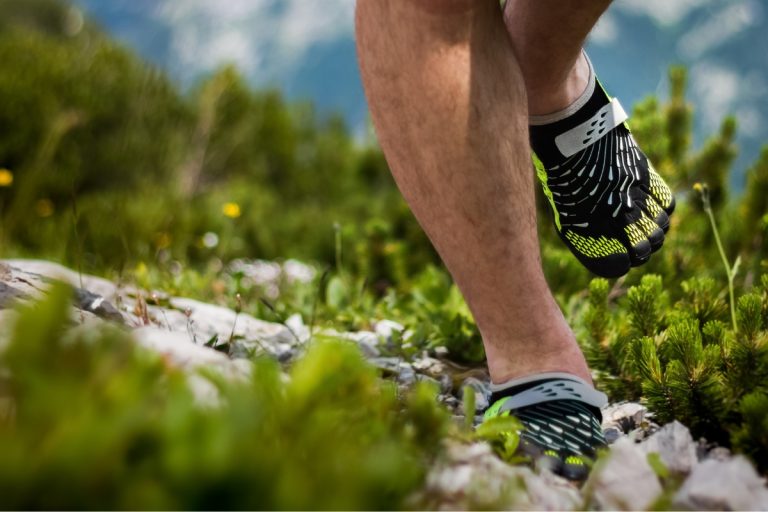
- Why adult barefoot shoes rarely get the Seal while kids’ shoes are pushed toward it
- How to check if your shoe has the Seal, and how to use it if your feet give you trouble

DR. PRIYA PARTHASARATHY
Partner, US Foot & Ankle Specialists, DPM
Priya Parthasarathy, DPM, is a podiatrist with Foot & Ankle Specialists of the Mid-Atlantic, President of the Maryland Podiatric Medical Association, and Chair of the APMA Development Committee. She served for several years on the APMA Seal Review Panel, the confidential group of podiatrists that evaluates products for the Seal of Acceptance.
What Is the APMA Seal of Acceptance?
The Seal of Acceptance signifies that a product has been rigorously reviewed by a group of APMA podiatrists and found to promote good foot health.
That’s Priya’s own definition, and the phrasing is careful on purpose, because found to promote is not the same as proven to perform.
It’s a recognition rather than a certification, and the APMA program page confirms that the association is not a testing laboratory and makes no claim to certify performance.
APMA Seal of Acceptance vs. Seal of Approval
There are two seals, and from what I’ve seen, people mix them up constantly.
The Seal of Acceptance covers footwear, insoles, socks, materials, and equipment, while the Seal of Approval covers therapeutic products like wound care treatments and regulated medical devices, some of them available only by prescription.
Here we are focusing on the footwear side.

Where the APMA Seal Came From
The program started on January 21, 1967, with foot deodorant. The Mennen Company and the APMA wanted a way to recognize foot care products that podiatrists had vetted, and they modeled the program on the one the American Dental Association was already running for dental products.
So the first three to carry it were Mennen products, namely a penetrating foam, a foot powder, and an aerosol foot deodorant.
The footwear side arrived later in the story. For its first fifteen years, the program used “Seal of Acceptance” and “Seal of Approval” more or less interchangeably, until a 1982 consensus pinned the Acceptance seal to non-drug products backed by laboratory or clinical evidence.
According to Priya, that change came about partly because footwear companies had started showing interest, and today shoes are the part of the program you and I are most likely to run into.

Trail tips, news and giveaways
One email a month: hiking tips, gear news, giveaways, fresh footwear verdicts and more. No spam, unsubscribe anytime.
How a Shoe Earns the APMA Seal
A shoe earns the Seal by passing a documentary review, several weeks of wear-testing, and a component-by-component evaluation, then winning a majority vote of the panel. The award is held for three years.
It starts with paperwork, since a company has to submit an application in which every claim it makes about the product is backed by documentary evidence, and without that evidence there is no review to begin with. Only then do the shoes go out to the panel.
For several weeks, the panelists wear them and fill out an evaluation form covering every component from the upper to the outsole, plus comfort and whether the shoe does what its maker says it’s for. Each product is judged against its own intended use, so a recovery slide never gets marked down for failing at a trail runner’s job.
Some rules sit outside anyone’s discretion. Prototypes are never reviewed, since the product has to be market-ready, and anything out of line with FDA, EPA, or other federal regulations is out before the evaluation even starts.
Among the products that do reach the panel and still fail, Priya lists the recurring causes as unsubstantiated claims, poor quality, lack of comfort, or a shoe that doesn’t fulfill its stated purpose.
What I most wanted to know was how panelists handle specialized outdoor footwear, meaning aggressive trail runners and heavy backpacking boots, and I expected a hedge about time constraints.
Instead, Priya confirmed that panel members wear and use the shoes in the environments they are intended for.
That sounds a lot like how we arrive at our own field-tested boot reviews, except that we’re asking slightly different questions, or better said, we pick up from where the panel leaves off.
Inside the Confidential APMA Seal Review Panel
Ten podiatrists sit on the Seal Review Panel, and their names are a closely guarded secret. The group used to be called the Podiatric Seals Committee, and the confidentiality helps protect the independence of the review process by keeping individual reviewers from being identified by brands.
The anonymity toward the outside comes paired with disclosure on the inside. Before their appointment, members must declare all financial relationships and potential conflicts of interest, and they volunteer from the APMA’s own membership, where they get picked for range as much as experience.
Priya describes colleagues specializing in biomechanics, sports medicine, and wound care sitting alongside podiatrists who personally run, hike, golf, and play pickleball. That way, whatever lands on the evaluation table, someone in the room has spent time in that world.
She served for several years herself before rotating into her current roles, and she credits the seat with giving her a firsthand appreciation for how demanding the review is.

How the APMA Seal Panel Handles Lab Data and Marketing Claims
As I have already stated, the APMA is not a testing laboratory, and Priya confirmed what I have read about this. What the panel requires instead is evidence.
According to her, the vast majority of footwear granted the Seal arrives with reports from independent third-party labs like Intertek, SGS, and SATRA, covering impact and drop testing, load tests of forefoot flexibility, and Brungraber Mark slip resistance results. No specific lab is mandated, only recommended.
Even so, if the panel doubts a company’s numbers, it can require additional outside testing before the Seal is considered at all.
That’s where those weeks on the panelists’ feet start to matter to a reader like you. At OutdoorAdept, we regularly find that a marketed spec drifts from what our scale and calipers report, so I asked Priya whether the panel relies on brand data alone, and she was clear that it doesn’t.
Every panelist wears the samples, so the evaluation form each one completes reflects their own weeks in the shoe rather than anything the company wrote.
Advertising gets reviewed alongside the product, and all claims must be substantiated, or they can’t be used in conjunction with the Seal. So when I asked whether the panel had ever faced a shoe that passed while its ad copy didn’t, Priya confirmed that the panel has had to address unsubstantiated claims on occasion.
Then there’s the rejection rate, where she gave me the most candid answer of the whole exchange. Roughly 5 percent of what the panel reviews gets turned down.
“Our rejection rate of ~5% is artificially low, because only the products that meet our thresholds make it to the panel review stage.”
– Dr. Priya Parthasarathy, DPM
APMA staff screen applications so thoroughly that products falling short of Seal standards rarely reach the ten podiatrists at all. Most of the filtering happens earlier, then, before anything ships out for wear-testing.
Do Brands Pay for the APMA Seal?
Brands pay an application processing fee and an annual maintenance fee. I put the pay-to-play question to Priya about as bluntly as the gear forums would phrase it, and she didn’t soften her answer.
“APMA understands skepticism of ‘pay-to-play’ scenarios, but that description could not be further from our program’s nature.”
– Dr. Priya Parthasarathy, DPM
Her breakdown of the money goes like this. To begin with, application fees cover the direct costs of a review, meaning staff time spent getting the documentation complete and shipping physical products out to ten podiatrists around the country. Annual maintenance fees then cover use of the Seal logo and the APMA’s promotion of accepted products through apma.org.
The evaluation itself is carried out by those volunteer podiatrists we met earlier, with their conflicts disclosed and their names confidential. As a result, a company can pay every fee on the schedule and still be declined if the shoe is uncomfortable, the claims don’t hold, or the product fails at its own stated purpose.

Does the APMA Approve Barefoot Shoes?
Historically, the panel has been hesitant to grant the Seal to barefoot shoes for adults. Children’s footwear runs on the opposite guidance, and Priya told me kids’ shoes are encouraged to follow barefoot technology.
I had assumed a medical body would apply one position to a design principle across the board, so hearing the same organization hold back on barefoot shoes for grown-ups while actively encouraging the design for children was not what I expected.
It does line up with what we kept running into while researching hiking shoes for kids, where the podiatric guidance pointed consistently toward flexible, foot-shaped designs.
With adult minimalist shoes, the obstacle is the marketing attached to them. Barefoot brands market their shoes as strengthening your feet, and the panel treats that like any other claim. So a brand either needs to substantiate the claim through an appropriately recognized laboratory or remove it from any marketing used alongside the Seal.
Outside the Seal process itself, the wider research on barefoot footwear is still developing. A 2025 systematic review I came across while preparing these questions found that most barefoot and minimalist training interventions improved intrinsic foot muscle volume, arch function, and toe flexor strength (although the authors noted substantial variation between studies).
Research in adults over 65 is also examining minimal footwear alongside targeted foot-strengthening interventions.
Even so, population-level findings still have to be demonstrated product by product in front of this panel.
That distinction is worth keeping in mind when looking at the relatively small number of adult barefoot models in the Seal database, even while the barefoot hiking boots we’ve tested keep gaining trail miles.
None of this rules out a category in advance, though. Priya describes the panel as nimble with new technologies precisely because each product is reviewed on its own merits.

What the APMA Seal Doesn’t Tell You
The panel only evaluates shoes fresh out of the box. I asked about midsole foams breaking down over hundreds of miles, and Priya was straightforward about the boundary, telling me the Seal does not review the life expectancy of footwear or its components.
So a shoe that felt supportive at mile zero carries the same Seal at mile 300, well after the foam has changed character.
Monitoring continues across the three-year term, though re-testing doesn’t. APMA staff check each company’s website and logo use annually, and renewal triggers a deeper review where the company must submit product return rates and the reasons behind them.
Version updates follow a workable rule, where cosmetic changes pass while substantive changes to materials or construction go back to the APMA, often through a new application.
I read these limits as the program knowing its own scope, which brings me back to the handoff I mentioned earlier. Weeks of wear-testing by podiatrists can tell you a shoe starts healthy, but how it holds up across a season of wet scrambles and loaded descents is where our outdoor footwear guide picks up.
One more thing to add: it also isn’t a ranking system; APMA says it does not compare competing products.
How to Check if a Shoe Has the APMA Seal of Acceptance
Search the official APMA Seal database rather than trusting a product page. When I went through it myself, I found the live record of currently accepted products, with separate category listings for men’s footwear, women’s footwear, and children’s footwear.
Trusting the box carries a real risk of being out of date, since seals expire after three years and model updates can require a fresh application. So a retailer page written for last year’s version may describe a shoe that no longer holds the award, even if the logo still shows in the photos.

How to Use the APMA Seal If You Have Foot Trouble
Treat the Seal as a trustworthy starting filter, then narrow by your specific foot. Everything above adds up to a shortlist more honest than any ad campaign, so if you’re managing shin splints, flat feet, or a history of ankle sprains, it can be a useful first filter for the footwear options you consider.
Separate from the APMA’s Seal criteria, recent footwear research also highlights why the badge can’t replace a proper fit. A 2025 analysis of more than 115,000 3D foot scans found that regular running-shoe toe boxes provided less space than the average male foot shape in parts of the forefoot, while wider, anatomically shaped toe boxes aligned more closely with the foot.
Worse still, a 2025 review in the Journal of Foot and Ankle Research concluded that researchers don’t yet agree on a standard for measuring whether a shoe is wide enough for an at-risk foot.
Hikers with wide feet can therefore still experience discomfort from a poorly matched last, regardless of any badge on the box.
So, what I took from this interview: the APMA Seal isn’t a substitute for testing a shoe yourself, but it does give you something useful that most marketing can’t: an independent review by podiatrists who have actually spent time in the product. Understanding what happens behind that small badge makes it a much more useful tool for hikers trying to make sense of competing claims.
FAQs
Acceptance is granted per product, so the reliable answer for any specific model lives in the official APMA Seal database, not on brand or retailer pages. Seals expire after three years and updated versions can require a fresh review, so the database reflects current status.
Three years. APMA staff monitor the company’s website and logo use annually during that period, and renewal requires a deeper review that includes product return rates.
There is no fixed checklist, since each product is judged against the intended use its maker describes. The panel reviews substantiating documentation, wear-tests the shoes, and assesses every component alongside comfort and whether the footwear does what it claims to do.
No. The Seal means the product has been reviewed and found to promote good foot health; it doesn’t mean the shoe is the right fit or best choice for every individual. APMA also does not compare competing products.
Thanks to Dr. Priya Parthasarathy for taking the time to answer my questions and for giving us a rare look inside a process most of us would otherwise never see.