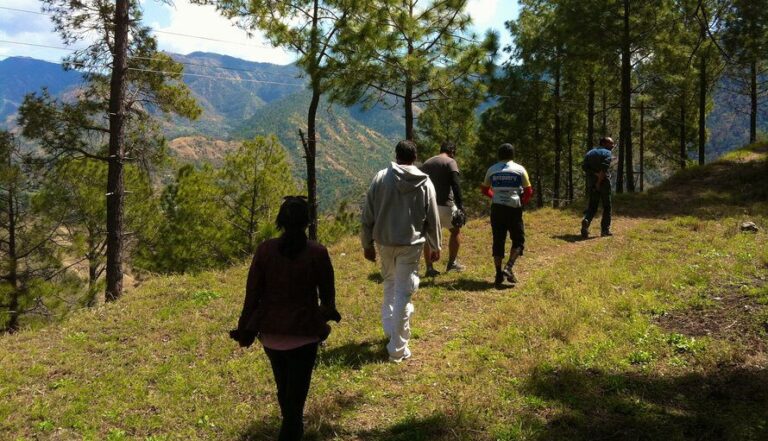
The first time I tried a five-day hut-to-hut traverse, I carried what everyone said I needed: energy gels, a pile of protein bars, and three dehydrated dinners. By the end of day one I was flying. By the middle of day three I would have paid real money never to taste another berry-flavored anything. By day five, my gut had filed a formal complaint. I finished the trek, but the last two days were a slow-motion nutritional failure.
If you’ve felt that too, you’re not failing at willpower — you’re running into two predictable problems almost nobody talks about in single-day hiking guides: palate fatigue (your mouth stops accepting the food you packed) and gut rot (your digestive system files its own complaint about what you’re putting in it).
To get a proper answer, we sat down with Nancy Clark, MS, RD, CSSD — the sports dietitian who literally wrote the book on this, Nancy Clark’s Sports Nutrition Guidebook.

Nancy Clark, MS, RD, CSSD
Writer of
Nancy Clark’s Sports Nutrition Guidebook
Nancy Clark, MS, RD, CSSD is an internationally respected sports nutritionist, weight coach, nutrition author, and workshop leader. She is a registered dietitian (RD) who specializes in nutrition for performance, health, and the nutritional management of eating disorders. She is board certified as a specialist in sports dietetics (CSSD) and a certified WellCoach.
She is a Fellow of the Academy of Nutrition and Dietetics (formerly the American Dietetic Association), the recipient of their Media Excellence Award, an active member of the Academy’s practice group of sports nutritionists (SCAN), and recipient of SCAN’s Honor Award for Excellence in Practice. Nancy is also a Fellow in the American College of Sports Medicine (ACSM) and recipient of the Honor Award from ACSM’s New England Chapter. She was awarded the American Society of Nutrition’s Media Award for her nutrition science writing.
If you’re heading out for a single day, our 19 hiking lunch ideas has you covered. This guide is for everything longer than that.
The Multi-Day Fueling Problem Nobody Warned You About
Single-day hiking nutrition is fairly simple: eat a carb-rich breakfast, snack every hour, drink before you’re thirsty, recover with a real meal at the trailhead. On one-day efforts, your body can tolerate a lot. You can muscle through questionable food choices and be fine by dinner.
Multi-day changes the math. On day one, any food works. On day three, your mouth is picky. On day five, your gut decides the whole menu is an enemy. The two culprits behind most multi-day trip nutrition blow-ups are simple:
- Palate fatigue: the more days you eat the same sugary gels, the same freeze-dried mush, the same peanut-butter-on-something, the less your brain wants to swallow it. Calorie targets quietly get missed. Energy craters.
- Gut rot: the catch-all term for gas, bloating, cramps, and bowel trouble that multi-day hikers and mountaineers develop, often caused by high-fiber bars, sugar alcohols, or an untrained gut suddenly pushed to process unfamiliar foods at altitude.
As Nancy puts it: “If they’re doing two or three days of goos and gels and protein shakes, you just get tired of it. So you have to take into account flavor fatigue and work a lot with real food.”
“You can only complete an event at your best if you train at your best. Every day of training, you’re actually training your intestinal tract and training your body to accept the amount of fuel that will be required of you.”
— Nancy Clark, MS, RD, CSSD
That framing — “training your intestinal tract” — is the through-line for everything that follows. Your gut is a trainable system. It rewards preparation and punishes surprises. Most multi-day nutrition disasters trace back to introducing a new food under a full pack at 10,000 feet3,000 meters instead of on a Saturday long walk at home.
Train Your Gut Before You Hit the Trail (A 4-Step Pre-Trip Routine)
Every experienced expedition climber and thru-hiker we spoke to for this piece agreed on one thing: almost every serious nutrition problem on a multi-day trip can be traced back to a food or a pattern that was first tried on the mountain, not in training. Here is the 4-step routine Nancy recommends to her clients before any extended trek.

1. Practice Eating During Every Long Training Session
Your digestive system is a muscle group. If you train with nothing but water on four-hour hikes, then on day one of a five-day trek you suddenly try to push 400 calories an hour through it, you will feel it — usually in the least convenient place imaginable.
How to do it: For every training hike over two hours, eat the way you plan to eat on the trip. Hourly snack. Planned lunch. Real bites of real food, with a watch timer if you need one.
Start with familiar, simple foods — a banana, a bagel with peanut butter, a handful of trail mix. Add complexity once your stomach is comfortable eating in motion.
Once you can hike and eat comfortably, add the exact trip foods — the freeze-dried dinner at a rest break, the protein bar you plan to pack, the electrolyte drink mix. See how each one lands at hour four.
2. Test Every Food You’ll Carry
The single most common beginner mistake on multi-day trips: ordering a stack of freeze-dried dinners, packing them unopened, and meeting them for the first time in the dark at 8,000 feet.2,400 meters. Nancy sees this constantly.
A lot of people don’t want to spend their money during training on eating a freeze-dried meal because it’s expensive. And then they get in the mountains and go, ‘Oh, that tastes pretty terrible.’ Or, ‘Oh, that’s really yummy — I wish I had more.’
— Nancy Clark, MS, RD, CSSD
How to do it: Eat every brand and flavor of freeze-dried meal at home, under real conditions — after a long training hike, not fresh and rested on your couch. Rate each one: taste, calorie match, how it settled, any GI aftermath.
Buy singles, not a case. Rotate through three or four brands before committing. Many outdoor shops sell individual pouches.
Spice it up: Pack a small “enhancement kit” — extra olive oil, hot sauce, lemon powder, or a piece of real cheese — to boost calories and flavor on any meal that turns out bland. Nancy notes that one of the easiest ways to rescue a mediocre dehydrated dinner is a drizzle of oil: it adds 120 calories per tablespoon without adding volume.
3. Build the Right Carb Habit
“Carb loading” has become a confused term. The Friday-night pasta party before a Saturday marathon is a myth that refuses to die. What actually works, Nancy says, is different — and simpler.
Athletes should be carb-loading every day, meaning eating a high-carb diet on a daily basis. And then the biggest change before a marathon is you taper off your exercise, you keep eating the same, and then you don’t have any intestinal problems.
— Nancy Clark, MS, RD, CSSD
How to do it: In the weeks before your trip, make carbohydrates the foundation of every meal — oatmeal, bread, pasta, rice, potatoes, fruit. Not the side dish, the base. Do this consistently, not in a single pre-trip binge.
Think “carb + color” — a carb base plus one or two vegetables or a piece of fruit. That’s a meal. Protein arrives naturally through yogurt, eggs, jerky, tuna, nuts, beans, milk.
In the final 3–4 days before departure, reduce training load while keeping food intake the same. That lets your muscles top up their glycogen stores without requiring you to overeat or disrupt your gut with an unusually large meal.
4. Find Your Fiber Line
Fiber is the double-edged sword of multi-day hiking. Too little, and constipation joins you for the trip. Too much (or the wrong kind), and you’ll be hiking with a grumbling gut.
How to do it: On your long training weekends, pay attention to digestion. If you’re backed up after day two of a big training push, add 2–3 daily servings of dried fruit to your plan — raisins, figs, fig bars, dates, prunes. If you’re already regular, keep it where it is and bring familiar amounts.
Nancy’s recommendation: “Dried fruits would be the best bet for fiber and laxation.” Raisins, figs, fig bars, dates, and prunes deliver gentle natural fiber along with concentrated energy — roughly 250–300 calories per 3.5 oz.100 grams.
What to avoid: The “high-fiber protein bar” trick that boosts label numbers with inulin or other isolated fibers. Those rarely sit well at altitude. Get your fiber from food, not from a fortified bar.
Trail tips, news and giveaways
One email a month: hiking tips, gear news, giveaways, fresh footwear verdicts and more. No spam, unsubscribe anytime.
How Many Calories You Actually Need per Day
Almost every first-time multi-day hiker underpacks calories. The mistake is using sedentary-day logic — “I normally eat 2,500, I’ll bring 2,500 per day.” A loaded pack, continuous movement, and cold weather rewrite the math completely.
Here are the numbers Nancy uses with expedition clients, mapped to the realities of different trip types:
| Trip type | Cal/hour hiking | Total cal/day |
|---|---|---|
| Moderate day hike, light pack | 200–300 | 2,500–3,000 |
| Multi-day backpacking, 30–40 lb14–18 kg pack | 300–400 | 3,500–5,000 |
| High-altitude trek (8,000–14,000 ft2,400–4,300 m) | 400–450 | 5,000–6,500 |
| Expedition mountaineering, winter, or cold | 400–500 | 6,000–8,000+ |
On the highest end, an expedition climber may need to push 8,000 calories a day. That’s why Nancy is explicit: “If you’re needing 6,000, 7,000, 8,000 calories a day, to try to fill up on protein is, one, incredibly expensive. And two, it won’t give you the same energy that you’re looking for.” You simply cannot hit those totals on jerky and protein powder. You need calorie-dense carbohydrates.
Want a number for your own trip? Put your route into our Hiking Calorie Calculator and tick the food-planning box: it works out your baseline and adds the hike for you, from your distance, climbing and pack weight. It adds nothing for altitude or cold, so for a high-altitude trek or a winter trip, plan from the upper rows of the table above instead. Round up. On a multi-day trip, it is much easier to pack out uneaten food than to recover from a two-day calorie deficit.
Build a Food Kit That Still Tastes Good on Day 5
You know your calorie target. Now the harder question: how do you actually eat that much, for that many days, without your appetite going on strike? This is where most pre-trip food planning falls apart — packing enough calories on paper, but not a menu your mouth will accept by day three.
1. Anchor Every Day With a 600-Calorie Balanced Meal Bag
This is a trick Nancy uses with her expedition clients: instead of rationing out food meal-by-meal each morning, pre-build balanced 600-calorie “meal bags” at home.
How to build one: Each bag contains a carb anchor (instant oatmeal, a bagel, a rice side, a tortilla), a protein hit (nut butter packet, jerky, cheese, tuna pouch), a fruit or sweet (dried fruit, a chocolate square), and optional salt (a packet of pretzels or nuts). Target 600 calories. Seal it in a freezer bag. Label the day and the meal. Done.
Why it works: It removes decisions on-trail. When you’re tired, cold, and above tree line, you don’t want to be auditing a shared food bag at 7pm. You want to pull out “Day 3 – Dinner” and eat.
2. Rotate Flavors Aggressively

The single best defense against palate fatigue is variety — not across all foods, but across flavor categories within each day.
Divide your daily snacks into four buckets and hit at least three of them every day:
- Sweet: dried fruit, chocolate, honey stick, granola bar
- Salty: nuts, pretzels, cheese, crackers
- Savory / umami: jerky, hummus, tuna pouch, miso cup
- Sour / sharp: pickles in a packet, lemon powder, dried mango, sour candy
Pack flavor rotation by day, not by meal. Day 2 is “savory lunch day,” day 3 is “sour reset day.” It sounds silly until you’re on day four and a single pickle makes you feel human again.
3. Pack Palate Resets
A palate reset is a small, sharply flavored item that resets your taste buds when everything starts tasting the same. Experienced thru-hikers swear by them.
Examples (pick 2–3): a hot sauce packet, a small bag of dried ginger, a tube of lemon powder, single-serve pickle pouches, wasabi peas, a pack of mints, a whole lime in a mountaineering bag. Weight is negligible; morale impact is enormous.
4. Use Liquid Calories When Solids Fail
At altitude or after five hard hours, your appetite can simply switch off. When that happens, forcing solid food makes it worse. This is where liquid calories earn their keep.
Nancy’s framing: “Liquid calories like sports drinks are often a good way to get in calories because you need the fluids as well as the calories.” A 17 oz500 ml bottle of properly mixed sports drink can deliver 150–200 calories plus electrolytes with almost no chewing effort. For the water side of the plan, our hiking water calculator gives you how much to drink per hour and when it is worth planning refills.
Options: powdered sports drink mix, chocolate milk powder, instant hot chocolate, miso soup packets, powdered electrolyte drinks, a nightly “recovery smoothie” made from powdered milk plus cocoa plus honey. Rotate them.
Nancy Clark’s Food Picks for Multi-Day Trips
Across the interview, Nancy kept coming back to the same list — real, recognizable foods that carry well, cook easily, and hit the right macro balance for multi-day efforts. This is the foundation list she uses with her own expedition clients.
Carb Foundations

“Oatmeal, bagels, banana bread, heavy-duty breads, grains, instant rice, pasta — things that are easy to cook are really what fuel the muscles.
If you’re doing many days, your muscles get depleted. So it’s important to have carbohydrates as a foundation.”
- Instant oatmeal packets — the default breakfast; add nuts, dried fruit, and a squeeze of honey
- Bagels and dense quick breads — banana bread is a Nancy favorite; calorie-dense and holds up in a pack
- Instant rice and instant brown rice — cooks in minutes, base for any freeze-dried protein add-on
- Pasta sides and couscous — fast, cheap, lightweight
- Crackers, biscuits, tortillas — high-density carb anchors for lunches
Real-Food Protein Sources
Nancy is direct about the protein-obsession in fitness marketing: “People really want to recognize that protein comes in the matrix of food, like milk, yogurt — it also comes with calcium and potassium and phosphorus and all these bioactive compounds that are health-protective. So just to take in protein may be missing the mark.”
Her real-food picks for trekkers:
- Turkey or beef jerky — high protein, no refrigeration, calorie-dense
- Hummus (single-serve packets) — protein plus a flavor change
- Peanut butter and nut butters — in packets or a squeeze tube; 190 calories per tablespoon
- Nuts and seeds — almonds, walnuts, cashews; fat-dense and shelf-stable
- Canned tuna pouches — no drainage, pairs with tortillas or crackers
- Beans — dehydrated refried beans are an underrated mountain meal
- Powdered milk — mix into oatmeal, chocolate drink, or overnight “dessert”
And on the plant-vs-animal debate — Nancy’s quick-fire take: “Environmental-wise, plant. Nutrition-wise, doesn’t really matter.” Both cover your needs if the overall diet is balanced.
Fruit and Natural Sugars

Dried fruits do triple duty — fast carbohydrates, natural fiber, and a flavor that rarely goes stale on the palate.
- Raisins, figs, fig bars, dates — Nancy’s go-to list
- Prunes — if constipation is your personal failure mode, pack a few daily with breakfast
- Dried mango, apricots, cranberries — rotate for flavor variety
Fats — and Yes, Chocolate
Chocolate on a multi-day trip is not a guilty pleasure. According to Nancy, it has earned its place in the pack. She cited a Dutch population study finding that men who ate chocolate daily lived longer than those who didn’t — and pointed out that chocolate is a plant-based food rich in phytochemicals. [2]
Choking down eight thousand calories of quinoa is not going to happen. Chocolate is very popular among hikers — there’s a reason why. It gives them good energy and it’s enjoyable.
— Nancy Clark, MS, RD, CSSD
Dense fats round out the picks: olive oil packets (boost any dinner), nut butter, cheese (harder varieties keep for days), and chocolate — dark for oxidation resistance, milk chocolate if morale is your priority.
What to Avoid — How to Prevent Gut Rot

Gut rot — the multi-day hiker’s term for gas, bloating, cramping, and GI distress that builds up over days on the trail — is almost always preventable. A few predictable culprits cause the majority of cases.
1. Sugar Alcohols (Sorbitol, Maltitol, Xylitol)
These show up in “sugar-free” bars, low-calorie sports chews, and diet candies. They are the single most common cause of mountain-side GI misery.
A lot of these sugar alcohols like sorbitol — they cause a lot of gas and bloat and discomfort. And why is someone who needs 8,000 calories a day even eating sugar-free foods? They need the sugar, they need the calories. It’s really a misfit.
— Nancy Clark, MS, RD, CSSD
How to spot them: Read the ingredient label. Anything ending in -itol (sorbitol, maltitol, xylitol, erythritol) is a sugar alcohol. “Sugar-free” on a protein bar usually means sugar alcohol replacement.
2. Over-Reliance on Gels, Goos, and Chews
These are designed for high-intensity, one-day racing — a marathon, a sprint triathlon, a hard bike event. They are not built for three days of lower-intensity trekking.
Nancy again: “If you’re trekking day after day, you’re working at lower intensity, so real food will do the job. There’s not necessarily a benefit to having those high-tech sports foods. There’s a time and a place for them.”
What to do instead: Use gels strategically — a hard climb, a cold push to camp, a moment when you need 100 quick calories in 10 seconds. Use real food for everything else.
3. The “Sugar-Free” Marketing Trap
Modern wellness culture treats sugar as a villain. For a multi-day hiker, that framing is actively harmful. Nancy frames it with a clean number: the dietary guideline is that 10% of daily calories can come from added sugar. On a 2,500-calorie sedentary day, that’s 250 calories. On an 8,000-calorie expedition day, that’s 1,600 calories — nearly four candy bars — and still within clinical guidelines. [3]
All this stuff about ‘sugar is evil’ — well, for athletic people it’s an excellent fuel. You have to look at the context. What you eat most of the time is more important than what you eat some of the time.
— Nancy Clark, MS, RD, CSSD
4. Skipping Meals to “Save Room”
Skipping breakfast is a common multi-day hiking mistake — people tell themselves they’ll eat on the trail. The result is predictable: a caloric hole they can’t climb out of by dinner.
Nancy’s rule of thumb: overeating on candy at 4pm is almost always a symptom of under-eating at breakfast and lunch. Fix the root, not the symptom.
Altitude-Specific Fueling (Above 10,000 Feet)

Altitude changes two things about nutrition: your appetite drops, and your body becomes less efficient at metabolizing fats and proteins because they require more oxygen to process than carbohydrates do.
If you’re heading into altitude, also read our altitude sickness guide — nutrition and acclimatization go hand in hand.
What Changes at Altitude
- Appetite decreases. You need more calories and want fewer. Programmed eating becomes mandatory, not optional.
- Carbs become the dominant fuel. Easier to digest, require less oxygen to metabolize.
- Liquid calories earn their weight. Hydration and calories delivered in the same sip.
Eat more carb-based at altitude, because they’re easier to digest and require less oxygen. You don’t want to be on a keto diet at altitude.
— Nancy Clark, MS, RD, CSSD
A Simple Altitude Fueling Template
- Before you start climbing: a carb-heavy breakfast — oatmeal with dried fruit and honey
- Every hour on the trail: 400–450 calories, 2/3 from carbs — split across a sports drink plus one solid item
- Every 45 minutes: 5–7 oz150–200 ml of sports drink, even if you don’t feel thirsty
- At camp: a warm, carbohydrate-dominant dinner — instant rice with a protein add-on, or pasta with olive oil and cheese
- Before bed: a warm drink with calories — hot chocolate with powdered milk, or miso soup with crackers
Recovery Between Hiking Days

On a single-day hike you recover in your own bed. On a multi-day, you recover between a 7pm dinner and a 6am start — roughly 11 hours to refill glycogen, rehydrate, and repair tissue before you do it all again.
The 30-Minute Window
Your muscles are most receptive to glycogen replenishment in the 30–60 minutes after exercise stops. On the trail, that means: as soon as the pack is off, eat something.
Nancy’s favorite recovery option is as simple as it gets: chocolate milk. When we asked “recovery shake or chocolate milk,” she answered without hesitation: “chocolate milk.” The reason — a 3:1 to 4:1 ratio of carbs to protein, plus fluids, plus electrolytes, plus a flavor almost nobody rejects.
On the trail: carry powdered chocolate milk mix, add water, shake. 200–300 calories in a mug.
Programmed Eating Beats Intuitive Eating on Multi-Day Trips
Single-day hikers can usually eat by feel. Multi-day hikers cannot. By day three, your hunger signals are unreliable — fatigue masquerades as hunger, dehydration masquerades as hunger, cold masquerades as hunger, and sometimes real hunger feels like nothing at all.
Those who have a plan, plan to succeed. Those without a plan, plan to fail.
— Nancy Clark, MS, RD, CSSD
You eat before you’re hungry,
you drink before you’re thirsty.
How to program eating on a multi-day trip:
- Set a recurring timer for every 45–60 minutes of hiking
- Hit a preset calorie and fluid target at every alarm
- Pre-portion snacks by day and meal so choices are removed
- Keep snacks in accessible pockets — hip belt, shoulder strap. If you have to take your pack off to eat, you won’t eat.
As Nancy put it bluntly: “Many times when people are tired, they don’t realize they’re hungry. They’re just tired, and they’re too tired to take off their backpack to get food. So they just plow through it and may not realize that they’re tired because they’ve run out of gas.”
A Sample 5-Day Multi-Day Fueling Plan
Here’s a working daily template — built around the principles above — for a 5-day backpacking trip at moderate altitude, targeting around 4,500 calories a day. Use it as a starting point and adjust calorie totals for your trip type.
| Meal / time | What | Calories |
|---|---|---|
| Breakfast (6:30am) | Instant oatmeal + powdered milk + 1 oz30 g nuts + dried fruit + coffee | ~650 |
| First hour snack | Bagel half with nut butter | ~350 |
| Hour 2–3 | Sports drink (17 oz500 ml) + 1.4 oz40 g dark chocolate | ~400 |
| Lunch (12:00) | Tortilla + tuna pouch + cheese + dried apricots | ~750 |
| Afternoon snacks | Jerky + trail mix + one palate-reset item | ~600 |
| Camp arrival (4:30) | Chocolate milk (powdered) + crackers | ~350 |
| Dinner (6:30pm) | Freeze-dried meal (tested beforehand) + olive oil drizzle + hot sauce | ~900 |
| Evening | Instant hot chocolate + a fig bar | ~300 |
| TOTAL | ~4,300–4,500 |
A few notes on this template:
- Breakfast is non-negotiable. When Nancy was asked “breakfast or no breakfast” — her answer was a flat “breakfast.”
- Liquid and solid together. Her answer to “liquid or solid food”: “both.” A single-modality plan fails by day three.
- Build palate variety into each day — sweet oatmeal, savory lunch, sour afternoon reset, chocolate evening.
- Rotate dinners across brands and flavors. Don’t pack five of the same dehydrated meal.
When to Consult a Sports Dietitian

For a standard multi-day trek, the template in this guide will get most hikers where they need to go. A registered sports dietitian (RD, CSSD) becomes genuinely worth the consult fee in four situations:
- Expedition-scale trips of a week or more at altitude, where calorie deficits compound and food weight is at a premium
- Medical conditions like diabetes, IBS, celiac, food allergies, blood pressure, or eating-disorder history
- Specialized diets like vegan, keto-adjacent, or highly restricted — especially going into altitude
- Persistent multi-day GI issues that haven’t resolved after a season of self-experimentation
Look for the CSSD credential (Board Certified Specialist in Sports Dietetics) — it’s the most relevant qualification for this kind of work. In the U.S., the Commission on Dietetic Registration maintains a verified directory.
The Bottom Line
Multi-day hiking nutrition isn’t about finding the one perfect bar or the optimal powder. It’s about three habits that compound across days:
- Train your gut before the trip: every food on the mountain should already have been tested at home.
- Build a real-food calorie plan: carbs as foundation, protein natural from food, fats and chocolate to hit density, dried fruit for fiber and morale.
- Program your eating: timer-driven, pre-portioned, accessible. Don’t trust intuition on day three.
Do those three, and the failure modes most hikers meet on day five — palate fatigue, calorie deficit, gut rot — mostly stop being part of your trip.
For a deeper dive, Nancy’s book Nancy Clark’s Sports Nutrition Guidebook (6th edition) is the long-form reference behind almost everything in this guide. If you plan on doing multi-day trips for more than one season, it pays for itself on the first trip.
Getting ready for your first big trek? Pair this guide with our how to get in shape for hiking plan and our complete guide to hiking or mountaineering for the bigger picture. And if you want a simple first trial run, our 19 day hiking lunch ideas is a good testing ground for the “train your gut” principle on a single-day trail.
FAQ
Gut rot is a catch-all term for the gas, bloating, cramps, and severe gastrointestinal distress that hikers often experience on multi-day trips.
You can prevent it by training your gut at home, testing all freeze-dried meals beforehand, avoiding snacks with sugar alcohols (like sorbitol and maltitol), and limiting your reliance on high-sugar energy gels during low-intensity trekking.
Palate fatigue happens when your brain and mouth reject the repetitive foods you packed, causing you to lose your appetite and miss crucial daily calorie targets.
To prevent this, aggressively rotate flavor categories (sweet, salty, savory, sour) each day and pack strong “palate resets” like hot sauce packets, dried ginger, or pickles.
Your daily calorie requirement depends heavily on your pack weight, terrain, and altitude. While a standard day hike might require 3,000 calories, multi-day backpacking with a 35 lb16 kg pack at elevations above 10,000 feet3,000 meters can demand 5,000 to 6,500 calories a day. Always calculate your baseline and add 300-450 calories per hour of hiking.
No. While protein is important for recovery, it is an inefficient and heavy way to hit the massive 5,000+ calorie targets required for multi-day trips.
Carbohydrates should be the foundation of your diet because they are easier to digest and require less oxygen to metabolize. Get your protein naturally through calorie-dense real foods like jerky, nuts, peanut butter, and cheese.
According to sports dietitians, one of the best recovery foods is simple chocolate milk. It provides an optimal 3:1 to 4:1 ratio of carbohydrates to protein, alongside essential hydration and electrolytes. A great trail hack is to pack powdered chocolate milk and mix it with water at camp to make a quick 16 oz.473 ml.
At higher altitudes, your appetite naturally decreases while your caloric needs increase. Your body also becomes less efficient at digesting fats and proteins. To adapt, you must switch to a programmed eating schedule (eating by the clock, not by hunger), rely more heavily on easy-to-digest carbohydrates, and utilize liquid calories like sports drinks to stay fueled and hydrated simultaneously.
References
- Clark N. Nancy Clark’s Sports Nutrition Guidebook. 6th ed. Human Kinetics; 2019.
https://nancyclarkrd.com/product/sports-nutrition-guidebook-fifth-edition/ (Yes, the link is correct and is leading to the 6th edition) - Buijsse B, Feskens EJM, Kok FJ, Kromhout D. Cocoa intake, blood pressure, and cardiovascular mortality: the Zutphen Elderly Study. Archives of Internal Medicine. 2006;166(4):411–417. (Dutch population study cited by Nancy Clark on chocolate’s health-protective role.)
- U.S. Department of Health and Human Services & U.S. Department of Agriculture. Dietary Guidelines for Americans, 2020–2025. Added-sugar recommendation: less than 10% of daily calories. https://www.dietaryguidelines.gov/sites/default/files/2020-12/Dietary_Guidelines_for_Americans_2020-2025.pdf
- Burke LM, Hawley JA, Wong SHS, Jeukendrup AE. Carbohydrates for training and competition. Journal of Sports Sciences. 2011;29(S1):S17–S27.
- Askew EW. Work at high altitude and oxidative stress: antioxidant nutrients. Toxicology. 2002;180(1):107–119. (Physiology of carbohydrate dominance at altitude.)
- Pritchett K, Pritchett R. Chocolate milk: a post-exercise recovery beverage for endurance sports. Medicine and Sport Science. 2012;59:127–134.
- de Oliveira EP, Burini RC, Jeukendrup A. Gastrointestinal complaints during exercise: prevalence, etiology, and nutritional recommendations. Sports Medicine. 2014;44(S1):79–85.