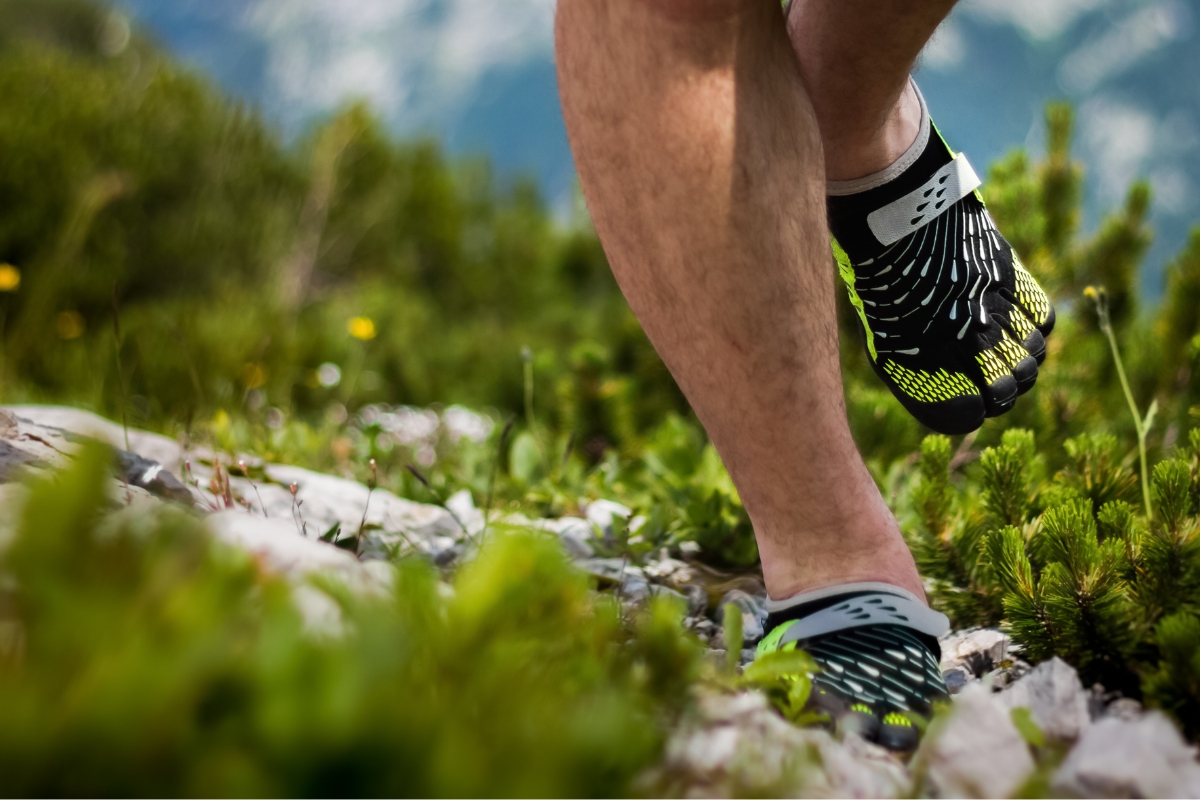
When I interviewed Dr. Ashley Katzenback about shin pain on the trail, I asked her if the right shoe could help. Most advice leans toward more cushioning, but she recommended minimal, zero-drop shoes, so your feet feel more of the ground and get stronger over time.
Are barefoot shoes good for you? Readers keep asking us, usually about flat feet or a loaded pack, so I went back to Dr. Katzenback with their questions and the claims brands make. Four more podiatrists and physical therapists answered our questions on the core claims, from stronger feet to fewer injuries.
In this guide, you’ll learn:
- Which shoes count as barefoot (and why many don’t qualify)
- How ten common claims hold up against the panel and the research
- Which people do well in thin soles, and which ones get hurt
- Who should skip them entirely
- How to transition safely, from your living room to the trail
- How to start hiking in them, from trail days to a loaded pack
- Where the research runs out, and which shoes to use at each stage
If you have a foot condition or an injury that hasn’t settled, check with a podiatrist or physical therapist before changing your footwear.
Meet the Podiatrists and Physical Therapists:
Dr. Ashley Katzenback, PT, DPT, CMTPT
Owner of Cape Concierge Physical Therapy, treating patients on Cape Cod since 2006. She also advised on our guides to shin splints and flat feet.
Dr. David A. Laurino, DPM
Double board-certified podiatrist and foot and ankle surgeon at Marvel Foot & Ankle Centers in Arizona, with 26 years in private practice.
Dr. Kelton Cullenberg, PT, DPT
Co-founder of Steady State Health, a running physical therapy clinic. He’s been a physical therapist for 10 years and a run coach for 20.
Dr. Christopher R.D. Menke, DPM, FACFAS
Double board-certified foot and ankle surgeon and founder of 26 Foot and Ankle in Georgia. He also founded 26 Apothecary, which sells orthotics and other foot-care products, and he disclosed this in his reply.
Dr. Bruce Pinker, DPM
Board certified by the American Board of Podiatric Medicine, with more than 25 years in practice. He works at Progressive Foot Care in New York. He also founded Dr. D-LuCS, a custom shoe company.
Dr. Laurino and Dr. Menke are the skeptics of the group. Dr. Katzenback and Dr. Pinker see a place for barefoot shoes, and Dr. Cullenberg is neutral on the shoe itself.
Pros and Cons of Barefoot Shoes at a Glance
Barefoot shoes can build strength in the small muscles of your feet and sharpen your balance, as long as you switch slowly and keep training. There’s no evidence they prevent injuries or reverse bunions, and if you have diabetes or nerve damage in your feet, or you’ve had a metatarsal stress fracture, it’s better to stay out of them.
The table below summarizes what the experts and research tell us about each claim.
| Claim | Verdict | Why |
|---|---|---|
| Stronger feet | Holds up, with conditions | Toe strength and foot muscle size go up in small studies |
| Better balance | Holds up for some people | Balance scores improved in two trials, with no proof yet of fewer falls |
| A more natural gait | Not as sold | Your landing stays the same unless you work on it |
| Fewer injuries | No | A 2026 trial of 140 runners found no drop in injuries over a year |
| Plantar fasciitis and shin splints | Mixed | Barefoot walking helped long-term heel pain, but a rushed switch can cause both |
| Less knee pain | Not shown | One arthritis trial found no edge, and a larger one favored supportive shoes |
| Fixing flat feet | No | Strength work does that job, with the shoe as a helper |
| Preventing bunions | No | Narrow shoes are linked to bunions, but no study shows wide ones prevent them |
| Arch support weakens feet | Mixed | A crutch for some feet, needed for feet with structural problems |
| Better posture | Unproven | Too little research, and Dr. Katzenback couldn’t confirm it |
What Counts as a Barefoot Shoe
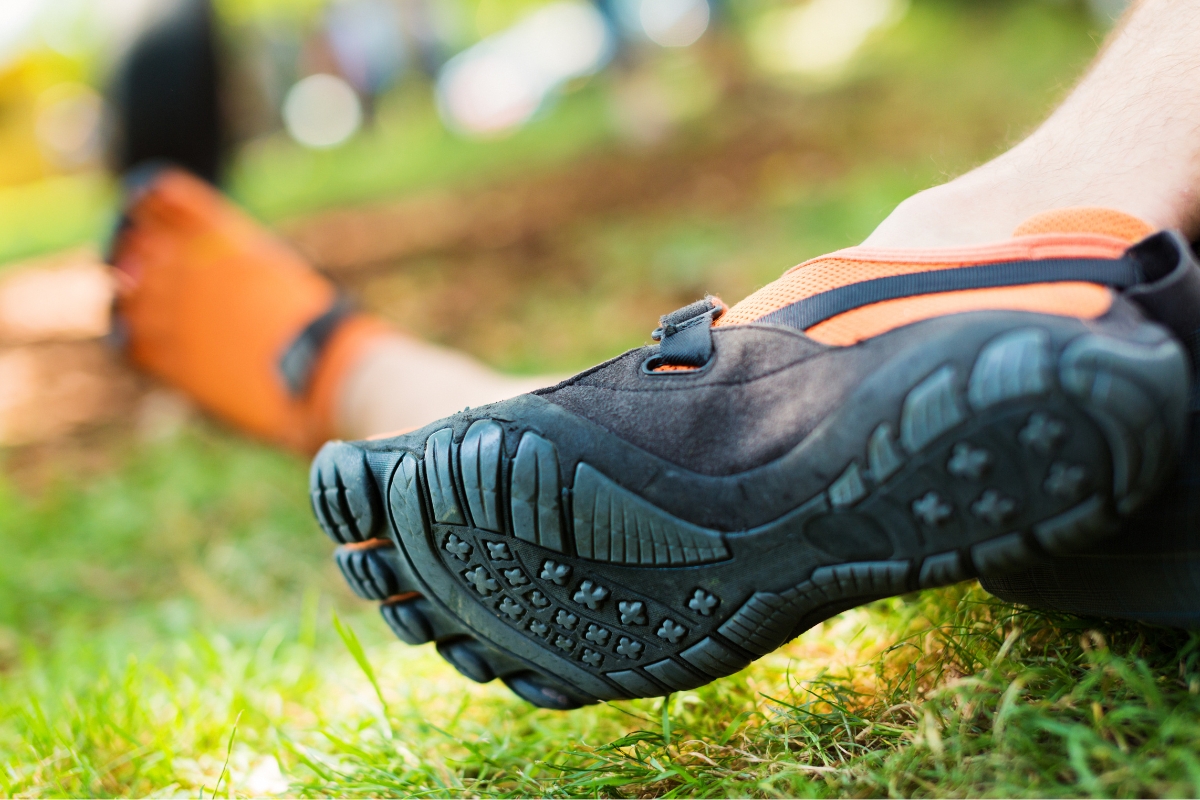
A barefoot shoe is designed to interfere with your foot as little as possible. At OutdoorAdept, a shoe has to pass four checks before we call it barefoot.
- Zero drop. Your heel and forefoot sit at the same height.
- A thin sole. We draw the line at about 0.6 in15 mm under your foot. Max-cushion shoes start around 1.2 in30 mm.
- Flexibility. You can bend and twist the sole in your hands, and there’s no stiff plate inside.
- A foot-shaped toe box. Your toes have room to spread, with no built-in arch support or motion control.
Zero drop and barefoot often get mixed up. Zero drop is only the first of the four checks, so a zero-drop shoe can still have plenty of foam underneath. A barefoot shoe meets all four.
The Olympus 6 we tested is zero drop, but you’re standing on 1.3 in33 mm of foam. The Lone Peak 9 is zero drop too, with a roomy toe box and about 1 in25 mm of cushioning (our Lone Peak test has the details). Both are zero-drop shoes, just not barefoot ones.
For a true barefoot design, look at Xero’s Z-Trail EV. Xero lists the sole at 0.4 in11 mm and the weight at 5.4 oz153 g per sandal in a men’s 9, and since it’s a sandal, there’s no toe box to worry about.
When this guide says barefoot, it means shoes like the Z-Trail EV. Dr. Katzenback’s pick is a zero-drop Altra. The shoe she recommends to most of her patients is the Escalante, with a wide toe box and 0.9 in24 mm of cushioning, or “low cushion,” as she puts it.
So even a physical therapist who sees a place for barefoot shoes puts most of her patients in something softer. She used the Escalante as her reference for every answer, and where that changes her advice, I’ll say so.
Trail tips, news and giveaways
One email a month: hiking tips, gear news, giveaways, fresh footwear verdicts and more. No spam, unsubscribe anytime.
How Barefoot Shoes Affect Your Feet and Legs
In a thin, flexible shoe, your feet do work that a supportive shoe used to do for them. Inside each of your feet sits a set of small muscles, the intrinsic foot muscles, that hold up your arch and steady your toes. With arch support and a stiff sole, part of that job is done for you. Take those away and your own muscles have to do it.
Your sole is also full of sensors. Dr. Katzenback describes the foot as “a richly innervated sensory organ critical for postural control and locomotion.” The better your brain can feel the ground, she explained, the more efficiently it can organize movement, and in overly cushioned shoes that signal gets dulled.
Dr. Laurino helped me understand that the load doesn’t disappear. “These shoes don’t reduce load, they relocate it,” he wrote, with less impact at the knee and “considerably more through the ankle, Achilles, and metatarsals.” Think of moving a heavy bag from one shoulder to the other. The weight stays the same, and the shoulder that used to rest now carries it.
I noticed that shift during my Timp 6 test. The Timp 6 is a cushioned zero-drop trail shoe, and early on I could feel the difference in my calves and Achilles. In a barefoot shoe, those same tissues have even more to do.
Are Barefoot Shoes Good for You?
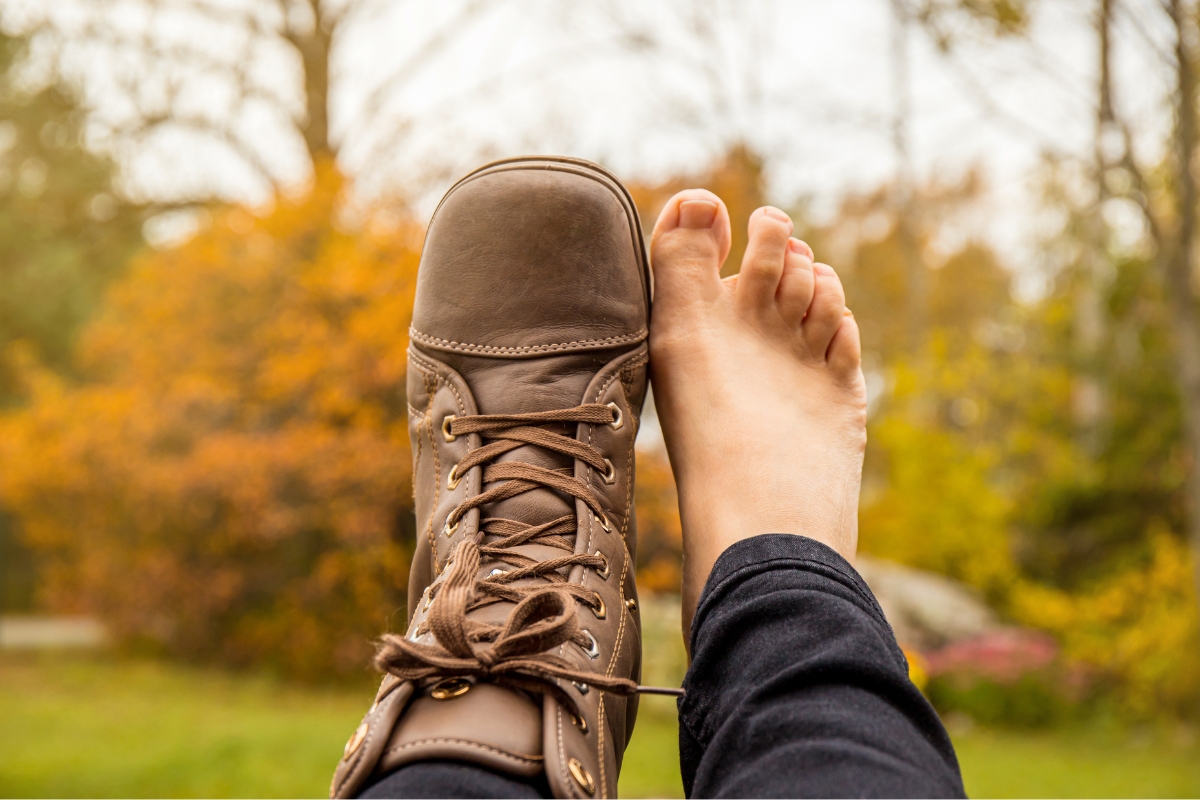
They can be, with limits: the strength and balance claims hold up best, and the injury claims don’t. I went through all ten claims below with Dr. Katzenback. The other four clinicians shared their perspectives mostly on the first four claims, and I’ve drawn on their insights alongside Dr. Katzenback’s and the relevant research throughout the article.
Do Barefoot Shoes Strengthen Your Feet?
Mostly yes, as long as your feet have to work in them, though most of the studies behind it are small. A 2025 meta-analysis in Clinical Biomechanics pooled 28 randomized trials. People in minimalist shoes gained strength in their second to fifth toes and showed signs of bigger foot muscles. The authors rated all of it low to very low certainty, partly due to a high risk of bias in the studies.
Dr. Katzenback called the claim “100% true,” with a condition. “If you are able to move your toes inside your shoes AND you can feel your foot touching the ground then your feet will get stronger,” she said. She sees it in her own feet and in her patients’.
Dr. Pinker agrees, based on his patients and on wearing minimalist shoes himself. Minimalist footwear can help people “utilize intrinsic foot muscles more than found in wearing conventional footwear,” he wrote.
Dr. Laurino accepts that the muscles get stronger. “Stronger foot muscles were never the goal patients came into my practice with,” he wrote. “They wanted fewer injuries, and the strengthening doesn’t appear to deliver that.”
Dr. Cullenberg disagrees with the claim itself.
“Barefoot shoes don’t make your feet stronger. Your feet get stronger when they’re forced to work hard.”
– Dr. Kelton Cullenberg
In his example, a runner doing 100 miles161 km a week in cushioned shoes has far stronger feet than someone who goes barefoot all day and barely moves.
If stronger feet are your only reason to switch, he’d point you toward building them through your training instead, without committing to one type of shoe.
Can Barefoot Shoes Improve Your Balance?
Balance improved in both trials I found that measured it. In a 2024 trial published in PLOS One, half of 28 young adults walked in minimalist shoes for four weeks, building up to 5,000 steps a day, while the rest stayed in their usual shoes. By the end, the minimalist group stood steadier on one leg.
A year-long 2026 trial in Gerontology followed 65 adults over 65 who were already at risk of falling. One group followed a progressive walking schedule in minimal footwear, while the control group did seated range-of-motion exercises. Balance scores rose only in the minimal footwear group. The trial found no clear drop in falls, and the authors say it was too small to tell.
Dr. Katzenback’s answer is the one I quoted earlier: the better your brain can feel the ground, the more efficiently it can organize movement. Dr. Pinker has found that minimalist shoes “improve proprioception,” your sense of where your feet are.
If you’re thinking of a pair for an older parent, Dr. Laurino’s caution applies. Older adults are now a big marketing target for these shoes, he pointed out, and a fall does more damage at that age. He does call the mechanism behind better balance “plausible.”
Dr. Cullenberg’s view is that “you don’t need the shoes for that either.” Balance comes from what you ask of your feet over the whole day, whatever you wear. If balance is your reason for trying them, give it a few weeks of regular walking before you judge.
Will Barefoot Shoes Change How You Walk?
Not on their own. Dr. Katzenback disagreed with the natural-gait claim outright. “The shoes won’t automatically make you change your pattern of gait, only you can do that,” she said. “If you are walking, a natural gait pattern still initiates with heel strike.”
So if your heel lands first on a hike, that’s normal in any shoe. Running is different, she added, since a midfoot or forefoot landing comes naturally there, “but that is less about the shoe and more about technique.”
Dr. Laurino called the natural-gait framing “genuinely misleading,” and it’s one of the claims where Dr. Cullenberg would “push back hardest.” Dr. Pinker is the exception on the panel, saying minimalist shoes can “help to develop a more natural gait.”
In a 2026 study, 25 runners with shin splints switched to minimalist shoes for a single treadmill session. Their steps got slightly shorter and quicker, while their foot kept landing the same way. A 2025 systematic review found the landing does move forward when runners pair minimalist shoes with deliberate gait retraining.
Do Barefoot Shoes Prevent Injuries?
I couldn’t find a trial where barefoot shoes cut injuries.
“The shoe will not decrease injuries,” Dr. Katzenback wrote. “Training will decrease injuries.” In some cases, she added, the shoe can increase them.
A 2026 randomized trial in the American Journal of Sports Medicine followed 140 recreational runners for a year. One group moved into minimalist shoes and another learned a softer running technique, while a control group only stretched.
Injury rates came out about the same in all three, though the group that changed technique had more foot injuries, and the authors concluded that “neither minimalist footwear nor a softer running technique reduced the overall incidence rate” of running injuries.
Dr. Laurino pointed to two earlier studies. In a 2014 randomized trial, runners who moved into a partly minimalist shoe had significantly more injuries than those who were given traditional running shoes, and the fully minimalist group reported more shin and calf pain.
A 2013 MRI study followed runners moving into Vibram FiveFingers over ten weeks on the brand’s own transition plan. About half showed early bone stress (swelling inside the bone that can come before a stress fracture), and two developed stress fractures. “If the manufacturer’s schedule was too aggressive for half its users,” he wrote, “your own instincts about pacing are not a reliable guide.”
Dr. Menke sees injuries in barefoot and minimalist runners in his clinic regularly, most often stress fractures, bruised midfeet, blisters and objects stuck in the foot. He also has patients who are committed barefoot runners and “do fine.” Still, his “honest read is that it’s often a matter of time before they see some kind of injury, minor or otherwise.”
Dr. Pinker, one of the panel’s two supporters, agrees the shoes “can lead to more injuries,” mostly in people who don’t prepare for the switch.
Barefoot Shoes for Plantar Fasciitis and Shin Splints
A 2024 trial tested barefoot walking in people whose heel pain had lasted over three months. The 52 adults walked on a treadmill twice a week for four weeks, some barefoot and some in shoes, working up from 10 minutes to at least 30. The barefoot group improved more in pain and physical function.
Most of them were inactive, averaging about nine minutes of walking a day. Everyone also had ultrasound therapy, and the trial had no group that skipped treatment, so some of the improvement probably came from walking more.
Dr. Laurino sees plantar fasciitis in people who take up minimalist shoes, and Dr. Katzenback links shin splints to how you switch.
“Wearing barefoot shoes without strengthening your intrinsic/extrinsic muscles will likely lead to shin splints. Wearing barefoot shoes GRADUALLY while ALSO strengthening your muscles will help shin splints.”
– Dr. Ashley Katzenback
If you’re dealing with either condition right now, have a physical therapist or podiatrist assess it, and change shoes once it has settled. For heel pain, you can follow our plantar fasciitis recovery plan for hikers.
Are Barefoot Shoes Good for Your Knees?
Thin shoes haven’t been shown to help your knees, and they shift load toward your ankle and Achilles, as Dr. Laurino described. “Whether that’s an upgrade depends entirely on which structure was already your weak point,” he warned, “and most people have no idea which one that is.”
A 2025 lab study confirmed part of this. When 22 male runners tried minimalist and conventional shoes, the load on the kneecap joint barely differed between the two. In the minimalist pair, their Achilles tendon was loaded faster when they landed on their heel. In the 2026 shin splints study, runners’ knees also bent less in minimalist shoes, which the authors say might reduce the knee’s shock absorption.
Dr. Katzenback answered knee pain along with the other injuries. “The shoe will let you use your foot’s full capacity to train, but it will not decrease the likelihood of injuries,” she said.
If you already have knee arthritis, the shoe type made no difference in a 2024 study in Rheumatology Advances in Practice. Ninety-seven people did the same exercise program for nine months, about half in Vivobarefoot shoes and half in supportive Merrells, and knee pain improved in both groups by about the same amount.
An earlier and larger trial pointed the other way. In 164 people with knee arthritis, walking pain eased more in stable supportive shoes than in flat flexible ones over six months.
For healthy knees, a 2026 review found too little evidence to recommend minimalist shoes for or against preventing arthritis. If your knees are the worry, start with the knee strengthening work we put together for hikers. If they already hurt, see a physical therapist before you start.
Can Barefoot Shoes Fix Flat Feet?
Not by themselves. “Strength is the only thing that can fix flat feet,” Dr. Katzenback said. The muscles inside your foot form your natural arch, she explained, and you change the arch by building them up.
The four-week walking trial from the balance section found that people’s foot posture scores improved, while arch stiffness didn’t change. That’s an early change in how the foot sits, and four weeks is too short to say more.
Your foot structure changes the advice. Dr. Menke advises people with an unstable flatfoot deformity against barefoot shoes, since in his experience that combination “tends to produce moderate to severe injuries not long after they start.”
With flat feet, start with the strength work and treat a barefoot shoe as an extra once your feet are stronger. If your flat feet hurt, or you’re not sure whether yours are the unstable kind, have a podiatrist check them first. For the exercises, see our flat feet guide with Dr. Katzenback.
Do Wide Toe Boxes Prevent Bunions?
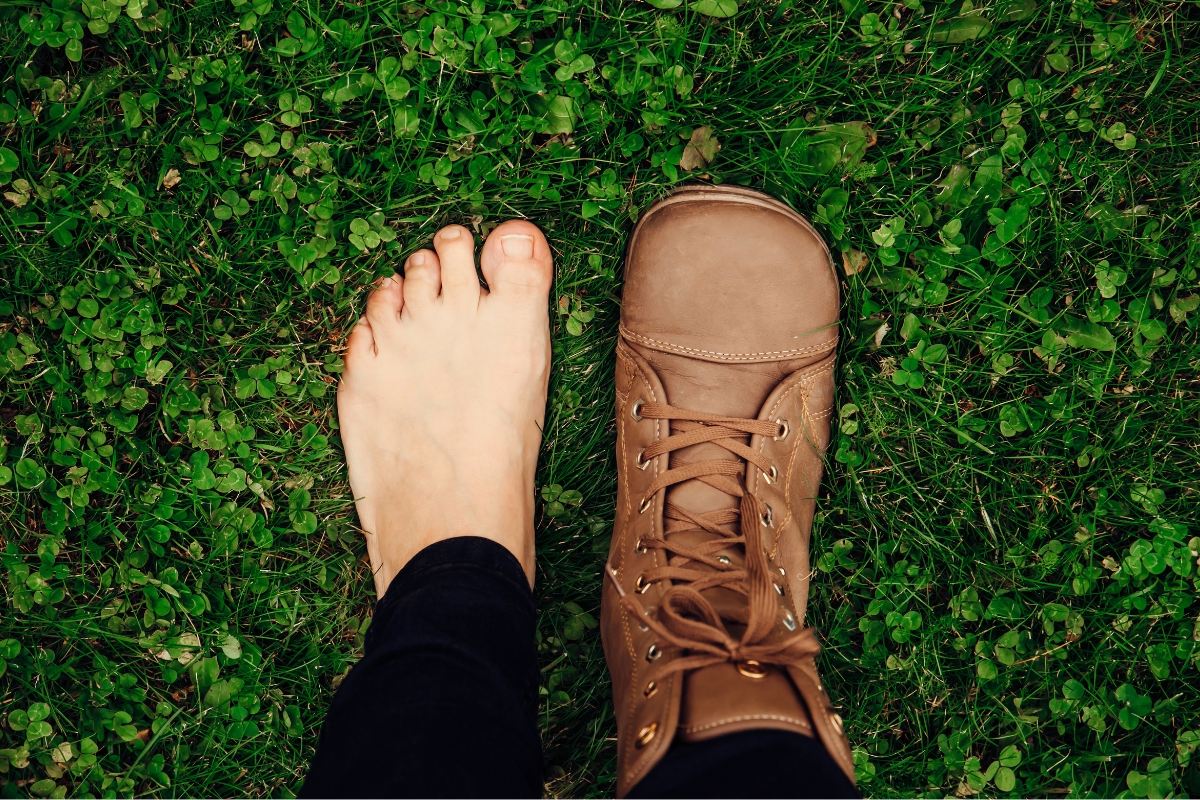
There’s no evidence they do, although narrow shoes are linked to bunions. Brands often sell wide toe boxes as a way to prevent or reverse bunions. Some bunions come from an unstable first ray (the long bone that leads to your big toe), along with a genetic misalignment or loose ligaments.
In those cases, Dr. Katzenback explained, “wider toe splay cannot prevent or reverse the bunions. However, it can decrease the severity of the symptoms.”
I liked how open she was about the gap between what she sees and what’s proven. “Sadly, there is ZERO evidence that bunions or hammertoes can be prevented, so marketing falls flat there, even though anecdotally I believe they can be prevented.”
She does see bunions and hammertoes “accelerated by ill-fitting shoes,” mainly narrow ones and high heels. A 2026 meta-analysis of 23 studies points the same way, with narrow toe boxes tied to more than double the odds of bunions. That link was stronger than the one for high heels, so roomier shoes are a sensible choice for your toes.
If a bunion or hammertoe already hurts, have a podiatrist look at it before you change shoes.
Does Arch Support Weaken Your Feet?
It can, if you lean on it in place of building strength. “Arch supports can become a crutch that you rely upon instead of a tool you utilize temporarily while you gain strength,” Dr. Katzenback said. She doesn’t rule support out, and she adds a condition. “If for some reason you have a structural or bony reason why you must rely on an orthotic, you must also strengthen your feet.”
Dr. Menke sees it differently:
“For most patients, especially anyone just starting an exercise program, I recommend a supportive shoe, paired with a strong orthotic.”
– Dr. Christopher R.D. Menke
Remember that his company sells orthotics.
If you wear orthotics now, keep wearing them until you’ve asked your podiatrist whether your feet need them long term. Foot exercises built strength in the 2025 meta-analysis too, so orthotics and strength work can go together.
Barefoot Shoes and Posture
Dr. Katzenback was cautious about endorsing the claim about posture. “Better alignment than a rigid or padded shoe, possibly,” she wrote, and then, “I think this one I can’t answer confidently.”
The balance trial in young adults also tested flexibility and strength along the back of the legs, and nothing changed in four weeks. “No chronic remote effects should be expected,” the authors concluded. If back pain is why you’re looking at barefoot shoes, see a physical therapist first.
Who Benefits From Barefoot Shoes and Who Gets Injured
Dr. Laurino has seen people adapt well to barefoot shoes. They’re “typically younger, lighter, and have noticeably better baseline balance and body awareness,” he wrote. That group is “a minority of the people who want to try these shoes,” he added, and “nearly the opposite profile of the average patient asking me about them.” Dr. Pinker sees the same pattern.
“Typically, it is younger individuals that succeed in wearing this type of footwear as their feet are tougher and more durable.”
– Dr. Bruce Pinker
For Dr. Cullenberg, switching too fast “is the whole story in my clinic.” He added that “anyone can switch and get hurt by doing it too quickly, and anyone can switch and be fine if they do it in a smart way and listen to their body.”
Dr. Menke hasn’t found a foot type that predicts success either. He sees preference instead, with patients who like zero-drop shoes telling him they’re more comfortable.
Dr. Katzenback’s patients who succeed ease into the new shoe on a schedule and cut back their mileage, while also changing their running or walking technique. The ones who end up with Achilles or posterior tibialis tendonitis “went out too hard and too fast and were unable to change their stride or gait pattern.”
Dr. Laurino sees metatarsal stress fractures and stress reactions most, followed by plantar fasciitis, Achilles tendonitis and ankle sprains. And in nearly twenty years, Dr. Menke has not seen “a patient with existing foot problems transitioning into barefoot or minimalist shoes and improving.”
“This is much less of a fad now than it was a decade ago, and the injury volume I see has fallen accordingly.”
– Dr. David A. Laurino
Why Many Podiatrists Don’t Recommend Barefoot Shoes
Podiatrists mostly see the people barefoot shoes didn’t work for, and that shapes how they talk about the shoes. “Over 26 years, I’ve generally recommended against barefoot and minimalist running shoes,” Dr. Laurino wrote, “and it’s because of what walks into my exam rooms.”
They’re open about the limits of that view. “I don’t have a count of how many people run barefoot successfully and never walk through my door,” Dr. Menke wrote.
Dr. Laurino is just as frank about his own view. “My clinical impression is negative, but I can’t point to long-term trials proving it any more than the barefoot advocates can point to trials proving their case.”
Who Should Not Wear Barefoot Shoes
The panel named seven groups who should stay out of barefoot shoes or wait for a clinician’s approval. Dr. Laurino is firm about his part of the list, “because the failure mode isn’t just pain, it’s tissue loss.”
- Diabetes or peripheral neuropathy. “If you can’t feel your feet, you get none of the benefit and all of the exposure,” Dr. Laurino wrote. A small puncture or pressure point can turn into an ulcer or an infection. Dr. Pinker also tells diabetics to avoid them “due to the increased risk of complications.” The current international guideline on diabetic foot care tells people at risk of foot ulcers not to walk barefoot, in socks without shoes or in thin-soled slippers.
- Poor circulation or peripheral arterial disease. Dr. Laurino gives these the same caution.
- A previous metatarsal stress fracture. It’s on Dr. Laurino’s no-list.
- Rigid high arches or an unstable flat foot. Dr. Laurino flags rigid or high-arched feet “that can’t adapt,” and Dr. Menke says a very high, rigid arch “typically can’t compensate for direct, repetitive impact.” He gives people with unstable flat feet the same advice.
- Significant fat pad atrophy. In Dr. Laurino’s words, “there’s nothing left underneath to absorb the load you’re now transmitting directly to bone.”
- An injury you’re still managing, or an unstable ankle. Dr. Cullenberg would tell anyone “already managing a foot, calf, or Achilles issue” not to bother, since “a big load change is the last thing that area needs.” Dr. Pinker adds foot or ankle instability and foot wounds.
- Anyone who won’t take it slowly. Dr. Cullenberg would say the same to anyone who “won’t slow down enough to do it safely.”
How to Transition to Barefoot Shoes Safely
Every clinician on the panel described a slow switch, and five stages come out of their advice.
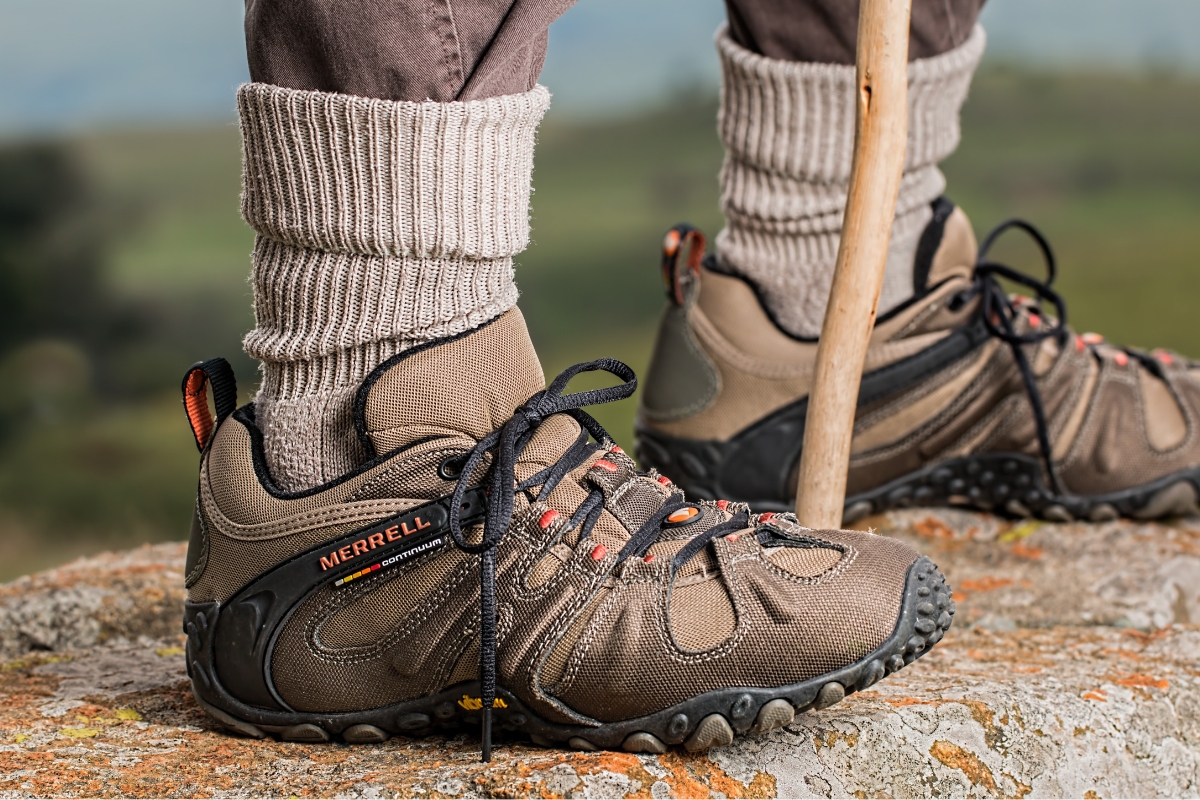
If you’re coming from shoes with a raised heel, a cushioned zero-drop shoe like the Lone Peak 9 lets your calves get used to the flat platform first. Ease into that too, since the drop change alone loaded my calves and Achilles in the Timp 6.
- Wear them around the house. Dr. Laurino starts here, with no exercise in them at all.
- Take short walks on flat, even ground. “Then walking only,” Dr. Laurino wrote. Dr. Menke uses the same staged return he gives patients after surgery. He starts with something as simple as walking down the street and back, then sees how the foot responds. Dr. Pinker wants those early walks on “a safe, stable surface.”
- Swap the shoes on one easy outing a week. Dr. Cullenberg wrote this step for runners, and I’d use it the same way for hikes. “Pick your shortest, easiest run of the week and change only the shoes on that run.” He also recommends leaving everything else about that week alone and staying at this stage for about two weeks.
- Add a second weekly outing. He suggests at least two or three days in other shoes between sessions in the new pair.
- Build distance or terrain, and only then add a pack. Change one of those at a time.
None of them would put a number on the whole switch. Dr. Laurino’s answer was that a safe transition “is far slower than anyone wants.”
Strength work goes alongside every stage. “Eccentric strengthening MUST accompany this training, otherwise you risk injury, especially if you have a history of flat feet or shin splints,” Dr. Katzenback told me. Eccentric work trains the braking part of a movement, like the slow lowering at the end of a heel raise. For a full routine, use the eccentric exercises she showed me for shin splints.
Look after your recovery while your feet adapt. Dr. Cullenberg’s advice is to “keep your sleep to what is recently typical, manage stress about how you usually do, and fuel enough for the amount of activity that you’re doing.” If any of those are off, he says the extra load is “more likely to go badly.”
How Quickly to Add Distance in Barefoot Shoes
You’ve probably heard the rule of keeping weekly increases to 10%, and Dr. Katzenback gives it to her patients. Newer research looks at single outings instead. A 2025 study followed over 5,200 runners for 18 months. Injury risk went up when one run was more than 10% longer than any run in the previous 30 days. Week-to-week increases showed no clear link to injury.
That study covered runners, so this hiking version is my own adaptation. Keep each outing in your barefoot shoes to roughly a tenth over anything you’ve done in them in the past month, however steady your weekly total looks.
Signs You’re Transitioning Too Fast
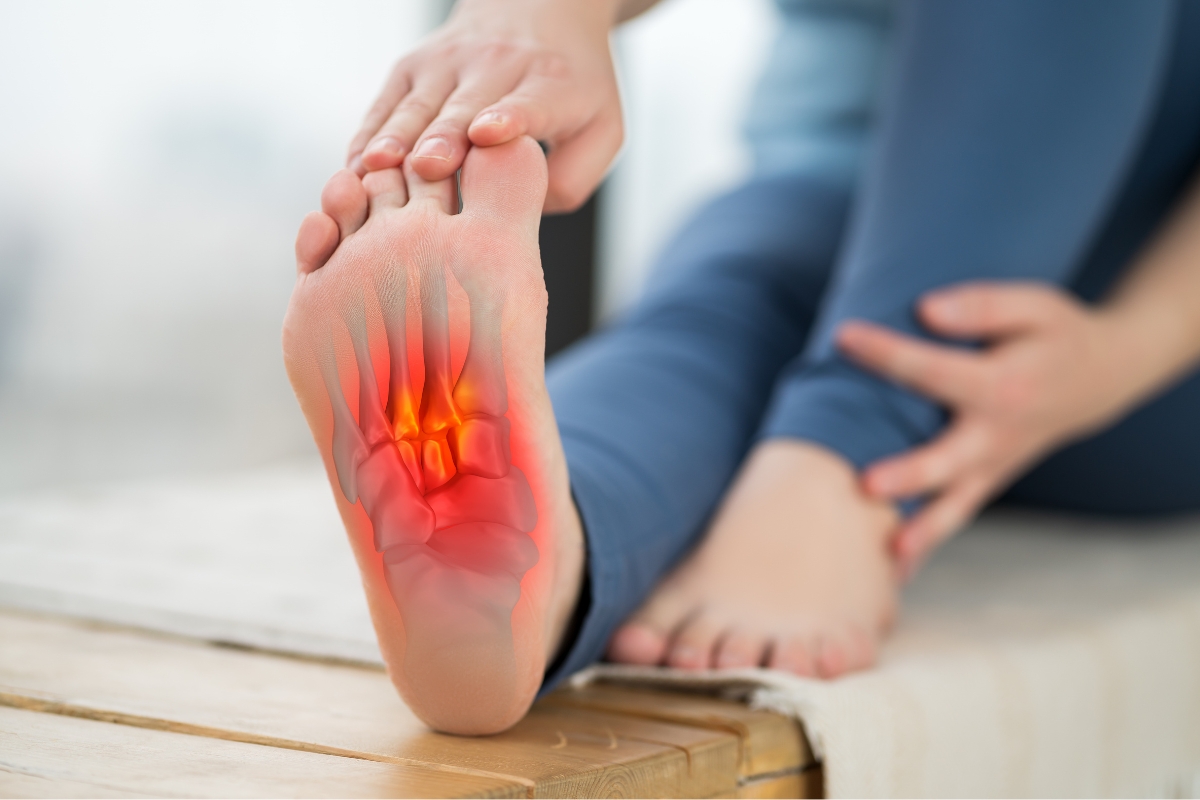
Some soreness is normal when making the switch, but Dr. Laurino draws a distinction between discomfort that comes with adaptation and pain that signals a problem. “Diffuse calf and Achilles soreness is adaptation, and it’s expected. Sharp, pinpoint forefoot pain is not, and pushing through it is how a stress reaction becomes a fracture.”
In Dr. Laurino’s patients, a stress reaction usually shows up between the fourth and eighth week, as a deep ache or a bruised feeling in the forefoot. “Their X-ray looks normal, which reassures them and often delays them seeking care,” he wrote.
Dr. Katzenback has a second check you can do a day later, at the spot where a tendon attaches to the bone. “Tenderness at the insertion site that does not go away within 24 hours is a warning sign to back off.”
If you get sharp, pinpoint pain in your forefoot, stop wearing the shoes and see a podiatrist or physical therapist. Tell them you’ve changed footwear, since an early stress reaction often doesn’t show on a first X-ray.
How to Start Hiking in Barefoot Shoes
Dr. Katzenback’s approach is to train in minimal shoes at home and wear your hiking boots on trail days. I’d follow it until you reach stage 3, and longer on days with a heavy pack. For those days, take a supportive boot such as the Targhee IV Mid we tested, which stayed stable with about 35 lb16 kg, or the Mid version from our X Ultra 5 test.
When I asked her about packs, she said they “are safe with a loaded pack, but you want to start with 10% of your body weight and gradually build from there.” She had the Escalante in mind, so in anything thinner, I’d build up more slowly.
She also suggests wearing your hiking socks in your minimal shoes now and then while you train. Your skin toughens up in different places depending on what’s on your feet, and switching back and forth without that practice can cause blisters.
“Up-hill sprints or runs are great training,” Dr. Katzenback said of hills. “Walk downhill carefully and slowly.”
The sole you’re giving up also protected you from sharp rock. Dr. Laurino occasionally treats puncture wounds, “which people forget are a real consequence of taking away the sole.” On broken rock or roots, watch your footing more closely and expect a slower pace for a while.
Gaps in the Research on Barefoot Shoes
Study volunteers are usually young recreational runners, while most people buying barefoot shoes today wear them to work and around town, as Dr. Laurino pointed out. If that’s you, the studies have barely looked at your situation.
“The largest hole is duration,” he wrote. “Nearly every study runs 8 to 16 weeks. What a foot looks like after five or ten years in minimalist shoes has essentially no data behind it, in either direction.” The trials in this guide that ran nine months or longer are exceptions.
Dr. Menke would like to see a study that follows barefoot runners for at least six months alongside a group switching in, tracking injury type and rate from day one.
The patients who ask Dr. Laurino about these shoes in his exam room are usually runners or light hikers hoping for better foot health in general. He tells them “the general foot health benefit is the claim with the least evidence behind it.”
Dr. Cullenberg’s advice for reading any of this is to “be skeptical of any shoe marketed as the answer.” In his words, “The shoe is one variable.”
Barefoot Transition Shoes for Each Stage
I’ve matched the main stages of the switch with footwear from our own testing.
| Stage | Our pick | Why it works |
|---|---|---|
| First shoe for the switch | Altra Lone Peak 9 | Your calves adjust to zero drop while you still have cushioning underfoot |
| Walking in a thin sole | Xero Z-Trail EV | Easy to slip on for the short walks in stage 2 |
| Trail footwear once you’ve adapted | Our barefoot hiking boots roundup | Zero-drop options tested on trail. Run each one through the four checks above |
FAQs
You can once your feet have adapted. Dr. Cullenberg still favors variety over one shoe for everything, warning that “the stricter you are with one shoe and one type of movement, the more likely you are to overload one area and get hurt.”
No, though it calls for a slower switch. Dr. Katzenback says “it is never too late to gain strength,” and in her view the switch is about strengthening your feet so your own muscles can support your body. Dr. Laurino and Dr. Pinker see younger people adapt best, so give each stage more time, and if your balance isn’t what it was, check with a physical therapist before you start.
For bunions and hammertoes, Dr. Katzenback calls toe spacers “the most common item that I send home with my patients.” They can ease symptoms, and they work best alongside a podiatrist’s or physical therapist’s advice.
In 2014 Vibram agreed to pay $3.75 million to settle a class action over health claims for its FiveFingers shoes. A federal court approved the deal in January 2015, and under it Vibram needs competent and reliable scientific evidence before advertising health benefits.