As any experienced hiker can confirm, the experience of hiking in various conditions makes you realize the importance of applying the right equipment. I frequently get asked questions about how to attach crampons to hiking boots. So hereby a full walkthrough.
First, it is important to note that not all boots are crampon compatible. Luckily, it is fairly easy to check whether or not the boot and the crampon are a match.
Additionally, it’s important to understand the distinction between microspikes and crampons. For lighter hikes on snow-covered trails, high-quality hiking microspikes are often a better choice than crampons.
In this article, I will offer a detailed guide on how to properly fit crampons on your boots. Finally, this guide will assist you in choosing the right type of crampon for your upcoming adventure, ensuring you’re well-prepared and informed.

What Are Crampons?
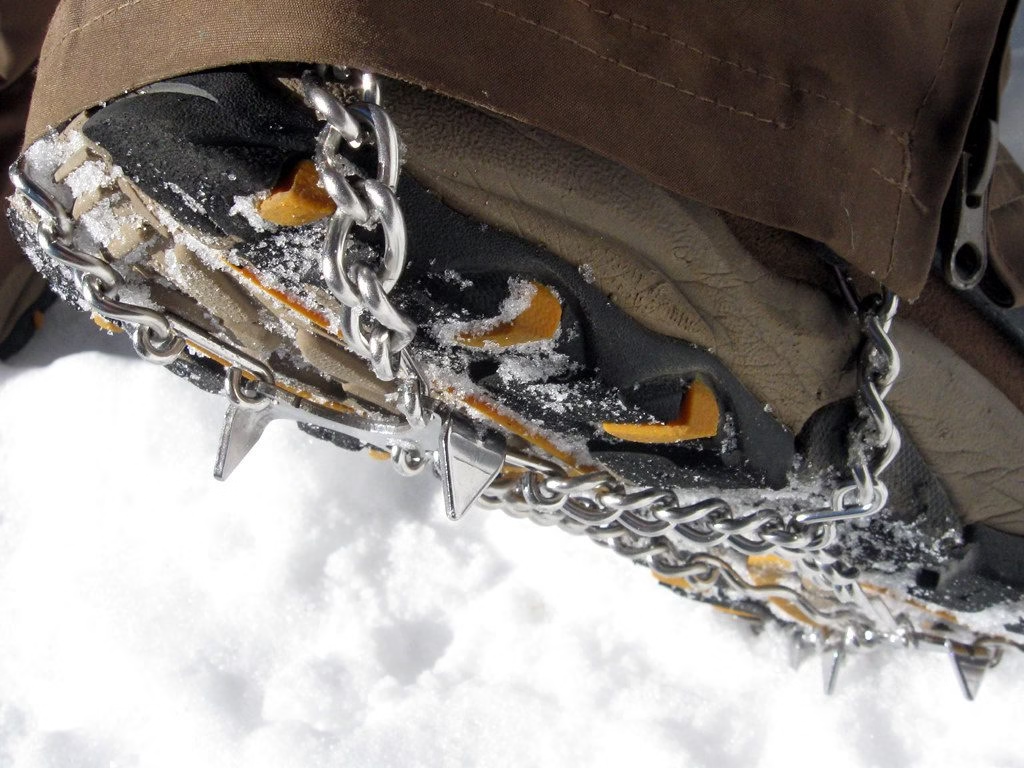
Crampons are metal spikes that attach to the soles of hiking boots, providing extra traction by piercing the surface you stand on.
These spikes are designed to keep you stable and firmly rooted on slippery surfaces so that climbing ice becomes safe and feels secure.
They are typically crafted from strong, lasting materials like steel or aluminum. Of course this is not that suprising since they need to withstand extreme conditions and forces.
Crampons are an absolute necessity for anyon interested in climbing steep frozen surfaces without risking fatal injuries.
For more tips on safe mountain climbing, check our Mountaineering Beginners Guide.
Trail tips, news and giveaways
One email a month: hiking tips, gear news, giveaways, fresh footwear verdicts and more. No spam, unsubscribe anytime.
Hiking Boots Grading System

It is important to note that not al hiking boots are suitable for crampons. Therefore, we must first classify hiking boots on the forces they can handle.
Boots come in a variety of grades, each designed for a specific type of surface and activity. Here’s a quick overview:
- B0: Easy, well-maintained trails. Good for day hikes.
- B1: Longer hikes on uneven ground.
- B2: Challenging hikes and rocky mountains.
- B3: Serious mountaineering and ice climbing.
In brief, the higher the boot grade is the stiffer the boot.
Personally, I use a pair of rigid B2 mountaineering boots.
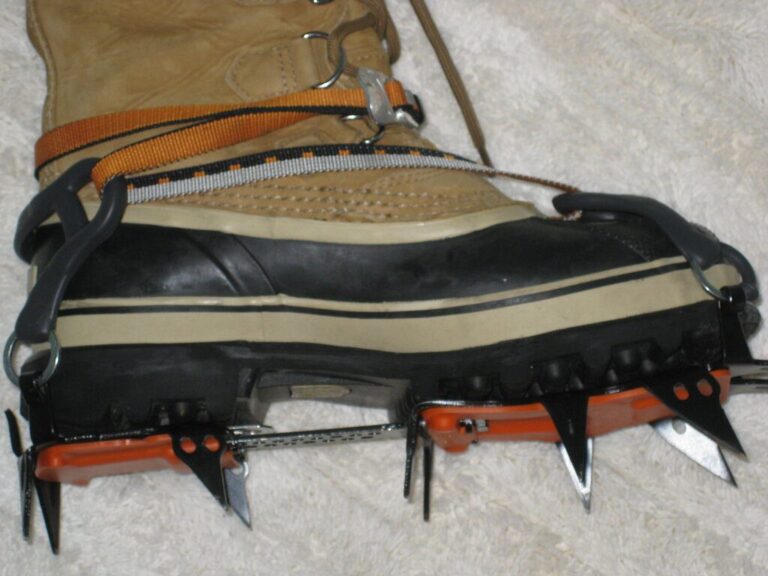
They’re plastic boots that provide good support and protection for my technical routes, while still allowing for a comfortable fit. Both strap-on crampons and step-in crampons work with these boots.
When choosing a boot, it’s important to select the right grade based on your specific needs to ensure a safe and enjoyable experience on the trail. You won’t always need the highest grade, but we will get to that in a minute.
Crampons Grading System

Crampons, like mountaineering boots, are also graded based on their intended use.
The most common grading system is the C1-C3 system [1].
Here’s a quick rundown:
- C1: A light and simple crampon for easy terrain and low-angle snow.
- C2: An intermediate crampon for more challenging terrain, including steeper snow and ice.
- C3: An advanced crampon for technical mountaineering and ice climbing.
When selecting the right crampon, it’s important to choose the right grade based on your intended use and the conditions you’ll be facing on the trail. Additionally, it is important to choose crampons that are compatible with your hiking boots.
I personally use C2 strap-on crampons on my winter hiking boots.
These are some of the more technical crampons that provide enough support and grip for the types of ground I encounter, without being overly heavy or cumbersome.
Boots & Crampons Compatibility Table
| Boot Grade | Compatible Crampon Grades | Suitable Activities |
|---|---|---|
| B0 | Not compatible. Microspikes only. | Regular hiking or light mountaineering |
| B1 | C1 | Easy glacier travel, non-technical snow climbs, approach hikes. |
| B2 | C1, C2 | Steeper frozen terrain, moderate alpine climbs, technical glacier travel. |
| B3 | C1, C2, C3 | Technical ice climbing, steep frozen terrain, expedition mountaineering. |
How to Attach Crampons to Hiking Boots?
Attaching crampons to boots can seem intimidating, but it’s actually a fairly straightforward process. Here are the steps to follow for each of the common crampon bindings:
Eyelet Binding Crampons:
- Make sure your boots have eyelets for crampon attachment.
- Open the binding mechanism on the crampons.
- Slide the front of the boot into the front bale, then the heel.
- Close the binding mechanism, making sure it’s snug but not too tight.
Heel Welt Binding Crampons:
- Check that your boots have heel welts for crampon attachment.
- Open the binding mechanism on the crampons.
- Slide the front of the boot into the front bale, then the heel into the heel welt.
- Close the binding mechanism, ensuring it’s secure but not too tight.
Step-in Crampons:
- Ensure that your boots are compatible with the step-in crampons system.
- Open the binding mechanism on the crampons.
- Step into the crampon, making sure that the boot’s toe and heel are securely in place.
- Close the binding mechanism, making sure it’s snug but not too tight.
Pros & Cons of Wearing Crampons With Hiking Boots
Yes, winter hiking boots with a stiff sole and adequate ankle support can serve as footwear for securing crampons. The added traction and stability provided can make your experience safer. They are also compatible with most forms of mountaineering boots.
Advantages
- Improved traction: The metal spikes dig into snow and ice, providing better grip and stability. This makes it easier to navigate slippery ground, reducing the risk of falls or injury. At the very least they will make you faster as less energy is lost on poor grip.
- Enhanced safety: Travelling in snowy conditions or more technical climbs can be hazardous, but crampons can help mitigate some of these risks. The improved traction and stability provided can make you feel more confident and secure on the trail.
Disadvantages
- Increased weight: Crampons add extra weight to your boots, which can be a disadvantage, especially on longer hikes. However, the benefits of improved traction and stability save you a ton of energy provided you wear them in the right conditions.
- Reduced versatility: Hiking boots with crampons attached are not ideal for all types of surfaces. They may be too aggressive for milder conditions. Microspikes are what you need here.
Types of Crampons
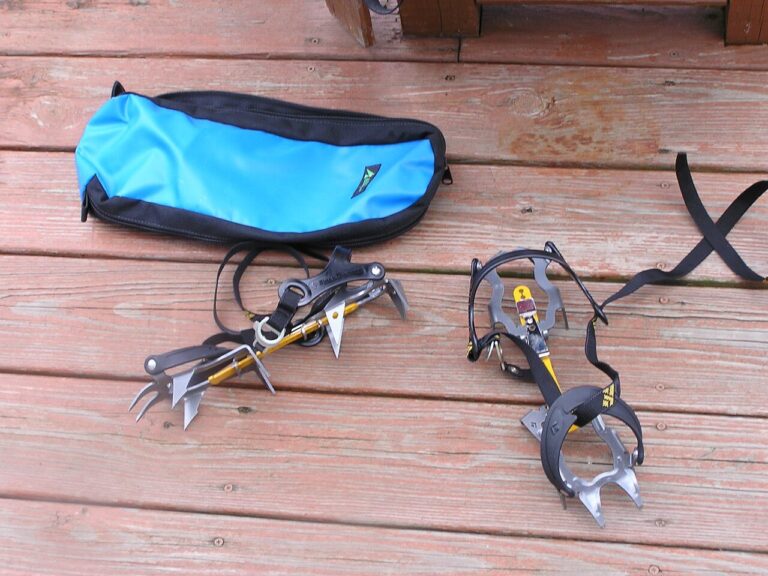
Crampons come in various materials and designs. The two main types of crampons are steel and aluminum [2].
- Steel crampons are durable and offer maximum grip and stability, making them ideal for technical ice climbing and mountaineering.
- Aluminum crampons are lighter and more versatile, making them a popular choice for general mountaineering and winter exploration.
- Carbon crampons are the lightest and most expensive option.
Let’s examine additional features: point count, binding types, and the frame’s dimensions and form. Some crampons feature 10 or more spikes for optimal traction, while others with fewer spikes are more adaptable.
For bindings, you’ve got choices too, like strap-on or step-in styles. Remember, the frame’s size and shape are important for crampon performance on different surfaces.
We help you find the best pair for your ascend: Best Crampons for Mountain Climbing
FAQs
Crampons are ideal if you want to cross glaciers, as well as some forms of mixed climbing, as they provide extra traction and stability, making your experience safer. For hiking instead, microspikes will do a better job.
Yes, crampons can provide extra traction and stability on black ice, making the hiking or mixed climbing experience safer.
No, crampons are designed to be used with most boots and are not compatible with sneakers. Nor any other flexible footwear.
No, it depends on the specifications of both the crampons and the boots. You should always check compatibility before purchasing or using crampons.
You should check the specifications of your boot and compare them with the type of crampon you want to purchase. The boots should have a stiff sole and ankle support for the crampons to work effectively.
Yes, you typically need special modifications or attachments on your hiking boots to use strap-on or steel crampons. These attachments, such as toe bails or heel welts, provide a secure connection between the crampons and boots, ensuring safe usage on steep icy slopes.
References:
- https://www.muchbetteradventures.com/magazine/crampons/
- https://www.advnture.com/feature/types-of-crampon