
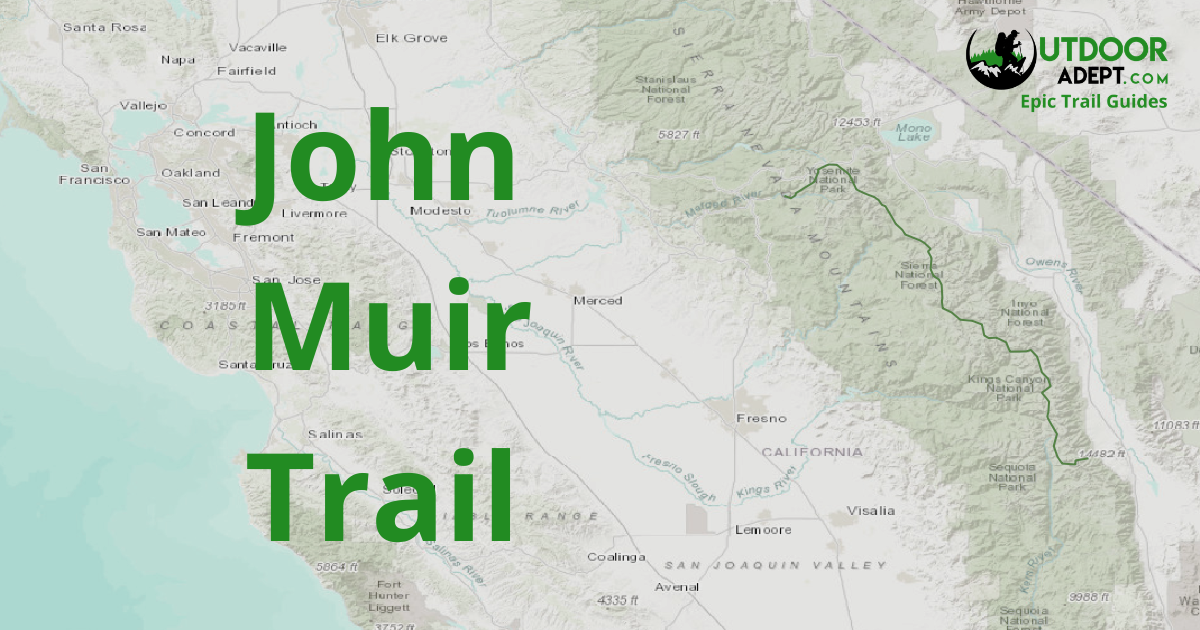
If you’re considering tackling the 211-mile340 kilometer John Muir Trail through the Sierra Nevada, you’ve likely done some research. You also likely still have countless questions: Will I be truly alone? Do trail angels expect payment? What even is a trail angel? Where do I resupply food?
We’re here to tell you in this hiking guide that, yes, it’s a daunting, physically demanding, emotionally taxing endeavor, but also one that, with proper training and preparation, you can absolutely take on (and it will be one of the best hikes of your life).
Even if you decide to do it in segments, or just trek one particular section of it, it’s a feat to be proud of, and a worthy ode to John Muir, the legendary naturalist who famously championed the preservation of these mountains.
John Muir Trail in Brief (Especially Compared to the Pacific Crest Trail)
First, the details. Completed in 1938, the John Muir Trail runs from Yosemite Valley to the summit of Mount Whitney, the highest peak in the contiguous United States at 14,505 feet.4421.12 meter.
The hiking trail was designed to showcase the breathtaking alpine scenery of the Sierra Nevada, from valley meadows carpeted in wildflowers to stark tundra above the tree line. For much of its length, the JMT aligns with the Pacific Crest Trail, which spans from the US-Mexico border to the US-Canada border. (But that’s a trail for another article.)
If you’re planning to do a full traverse of the John Muir Trail, plan for two to three weeks, averaging 10-15 miles16-24 kilometer per day. In that time, you’ll gain approximately 47,000 feet14325.6 meter of elevation cumulatively.
When Is the Best Time to Hike the John Muir Trail?
You’re on board. You’re ready to train, already shopping for gear, and reading about past hiker experiences every chance you get. So, now, when should you go?
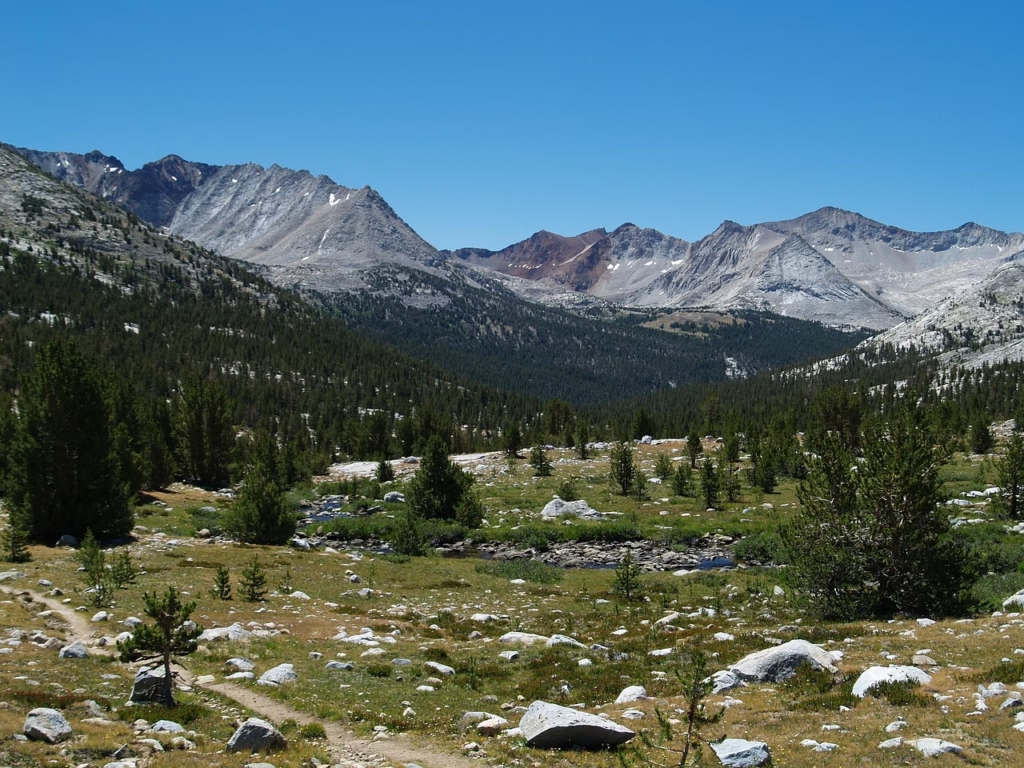
The optimal hiking window for the JMT is relatively narrow, typically running from mid-July through September. If you start hiking too early in the season, you may run into snowpack that can make passes dangerous or impassable. Alternatively, if you start too late in the season, you’ll risk early winter storms.
The sweet spot is between July and September: July means abundant wildflowers and fuller streams (but also more mosquitoes and lingering snow on the higher passes), August provides the most reliable weather and clearest (of snow) trails, and September brings cooler temperatures, golden aspens, fewer hikers, and generally bug-free conditions.
If you plan to head out in September, just keep in mind that water sources may be scarcer.
Tip: Make friends with the park rangers! They know their stuff and are happy to answer any questions you may have about the trail and snow conditions.
Do I Need a Permit to Hike the John Muir Trail?
Those who have hiked the JMT will tell you that one of the hardest parts isn’t the walking; it’s securing a permit. The trail falls under a quota system, and permits are highly competitive.
Permits are issued by lottery, which typically opens in February for the upcoming summer season.
The most popular starting point, and official southbound (SOBO) trailhead, is the Happy Isles in the Yosemite Valley near the Happy Isles Nature Center ;from here, you’ll ascend steeply toward Vernal and Nevada falls and eventually meet up with the Half Dome trail.
Some say that you can increase your chances of winning a permit by using a northbound (NOBO) trailhead, like Cottonwood Pass or Horseshoe Meadow.
What’s the Best Way to Resupply on the Trail?
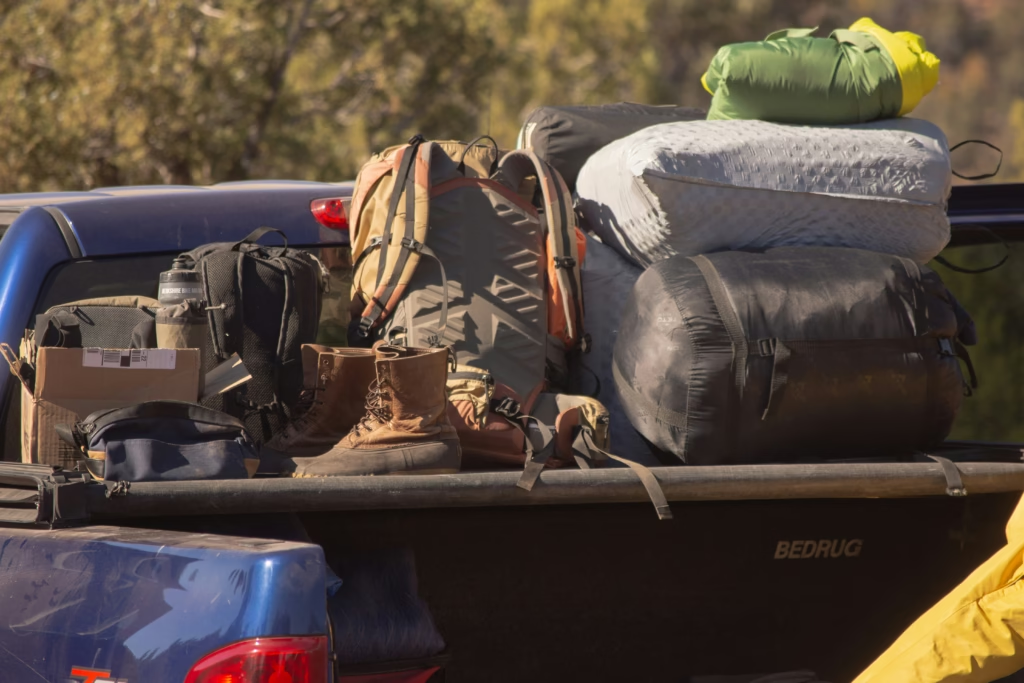
No matter how incredible a packer you are, and how lightweight your hiking gear, you’ll need one or two resupplies along the trail.
Most hikers choose to restock at Tuolumne Meadows mile 25kilometer 40, Vermilion Valley Resort or Muir Trail Ranch mile 105kilometer 169, and Independence via Kearsarge Pass (around mile 180).kilometer 290).
Each site has its own rules and nuances: Muir Trail Ranch, for example, requires advance bucket reservations, and you must pack your resupply, and pre-ship it to the ranch, in a specifically sized bucket (you’ll actually mail it to and pick it up at Florence Lake Store).
If you choose Vermilion Valley Resort, you’ll have more flexibility in your packing, but will need to ride the ferry across Lake Edison to get there (which can be a nice break from hiking!).
Kearsarge Pass involves a side trip and a hitchhike from the Onion Valley trailhead to the town of Independence for fresh food and supplies.
Or, make it easier on yourself and consider a resupply package, lodging, and meals at the Mt. Williamson Motel and Basecamp.
Notable Landmarks and Sections of the JMT
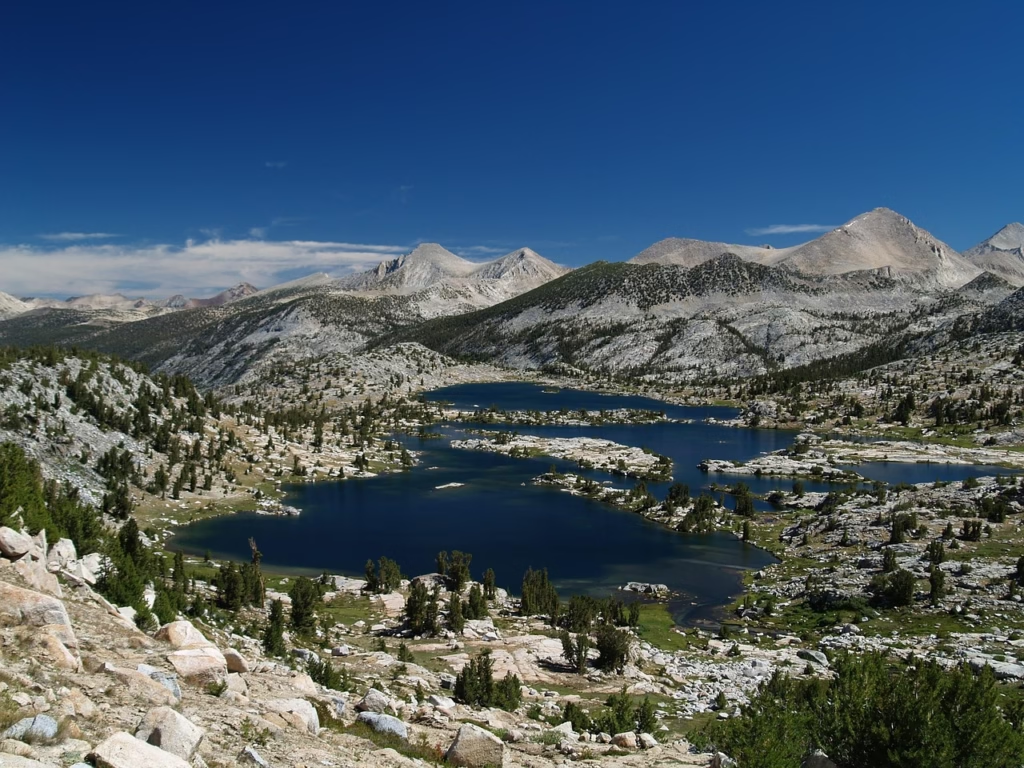
The John Muir Trail passes through extraordinary landscapes, to be sure, so the anticipation of the next incredible view helps your motivation and energy levels stay high.
From Yosemite Valley on the SOBO route, climb past Vernal and Nevada Falls, some of the area’s most picturesque waterfalls. If it’s early season, they literally thunder with snowmelt. As you pass through the high country of Yosemite National Park, you’ll gawk at the Cathedral Range and Tuolumne Meadows; granite domes punctuate expansive meadows filled with colorful wildflowers.
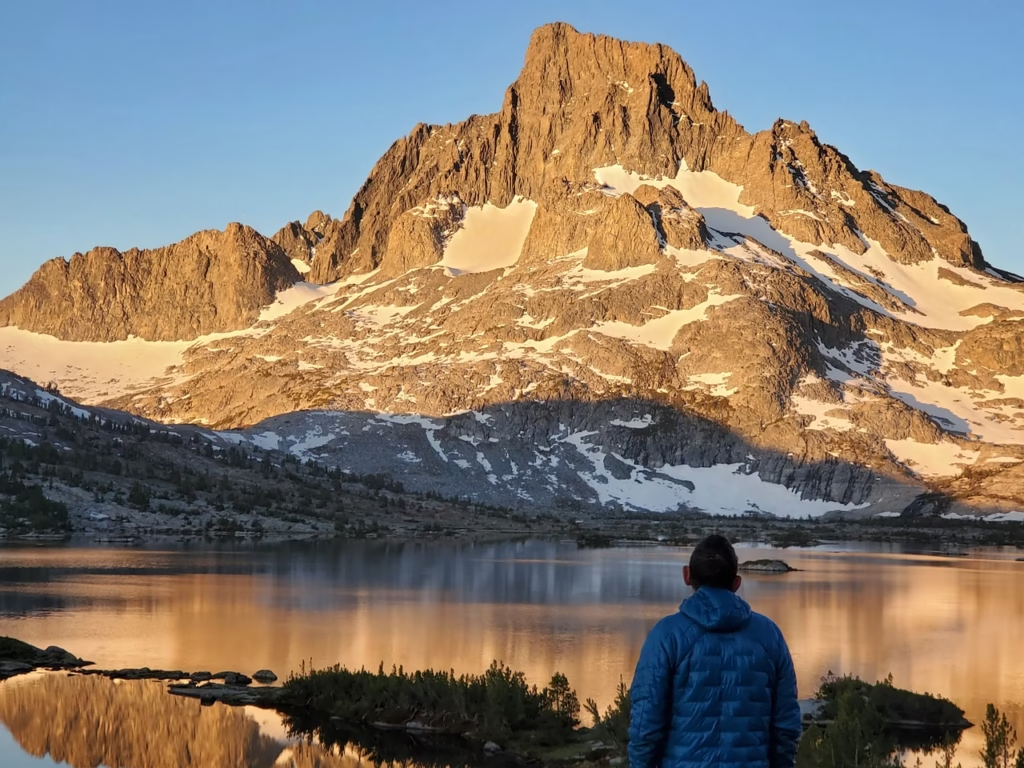
As you pass into the Ansel Adams Wilderness, get ready to see in real life some of the famous natural vistas that Adams so perfectly captured in his photography. The trail skirts Thousand Island Lake, where Banner Peak’s reflection creates one of the Sierra’s most photographed scenes. Then it’s on to the formidable Silver Pass and Selden Pass sections before reaching the midpoint of the trail at Muir Trail Ranch (and you eagerly awaited resupply).
Continue on through the southern section, featuring Evolution Valley and Basin, named by Theodore Solomons. Evolution Creek meanders through pristine meadows backed by peaks named for Darwin, Lamarck, and other evolutionary theorists. Muir Pass, marked by a distinctive stone shelter hut, crosses at 11,955 feet.3643.88 meter.
And then it’s the home stretch, which is no small feat: Mather, Pinchot, Glen, and Forester passes rise one after another, culminating at Forester’s 13,153-foot4009.03 meter summit—the highest pass on the entire John Muir Trail (and on the Pacific Crest Trail, for that matter).
Staying Safe on the John Muir Trail
You know you’re wondering about bears. Who wouldn’t? But the old adage is true: they’re more afraid of you than you are of them. The Sierra Nevada is home to abundant wildlife, and yes, most notably black bears.
One of the best ways to keep a safe distance between you and them is to pay attention to food safety rules. Most areas require approved bear canisters, and you can be sure the rangers are actively enforcing this requirement.
It’s as much about safety for the bears as it is for humans, preventing the animals from becoming habituated to human food. Even if canisters aren’t required in a particular area, proper food storage is mandatory throughout the trail.
Keep an eye out for marmots, too; you’ll likely hear their distinctive whistle. These eager creatures are known to gnaw on packs and trekking poles for the salt left by sweat.
Never leave packs, boots, or trekking poles on the ground while taking breaks, even a quick one—you might come back to a hole in your pack and fewer trail mix than you had before!
Mountain lions inhabit the area but encounters are extremely rare. Smaller creatures like deer, pikas, and a variety of bird species provide daily wildlife viewing opportunities.
Related article: The Most Dangerous Hiking Trails in the U.S.
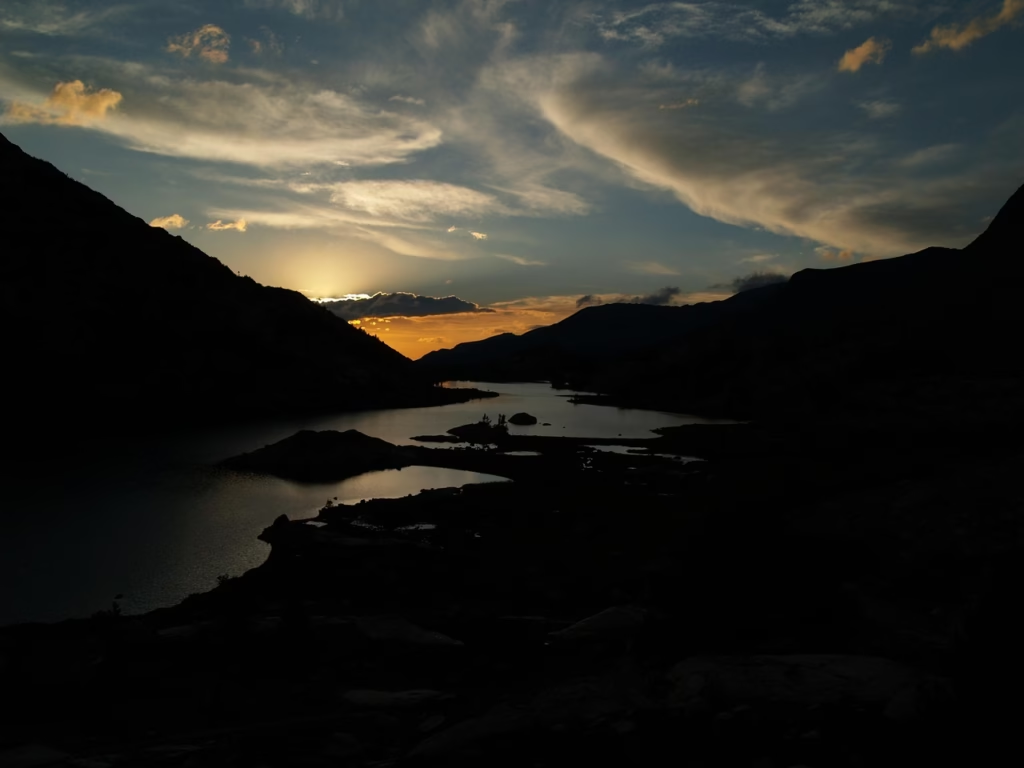
As for staying safe in the weather, if you’re hiking the JMT during July and August, you can expect passing afternoon thunderstorms.
Plan to cross passes in the morning when possible and avoid being caught on exposed ridgelines during electrical storms. If you’re hiking in early season, exercise extreme caution when crossing streams swollen from snowmelt.
Of course, any wilderness adventure is full of unpredictable moments, whether it’s the weather or a twisted ankle. For big trips like this, where anything can happen and my situation may turn on a dime, I feel safer when I’m protected by travel medical insurance.
SafetyWing offers flexible travel medical insurance for your next hiking trip. It has become a part of my must-have list when I’m embarking an any big adventure. If you decide to make a purchase, it supports our website at no extra cost to you.
How Can I Prepare for Hiking the John Muir Trail?
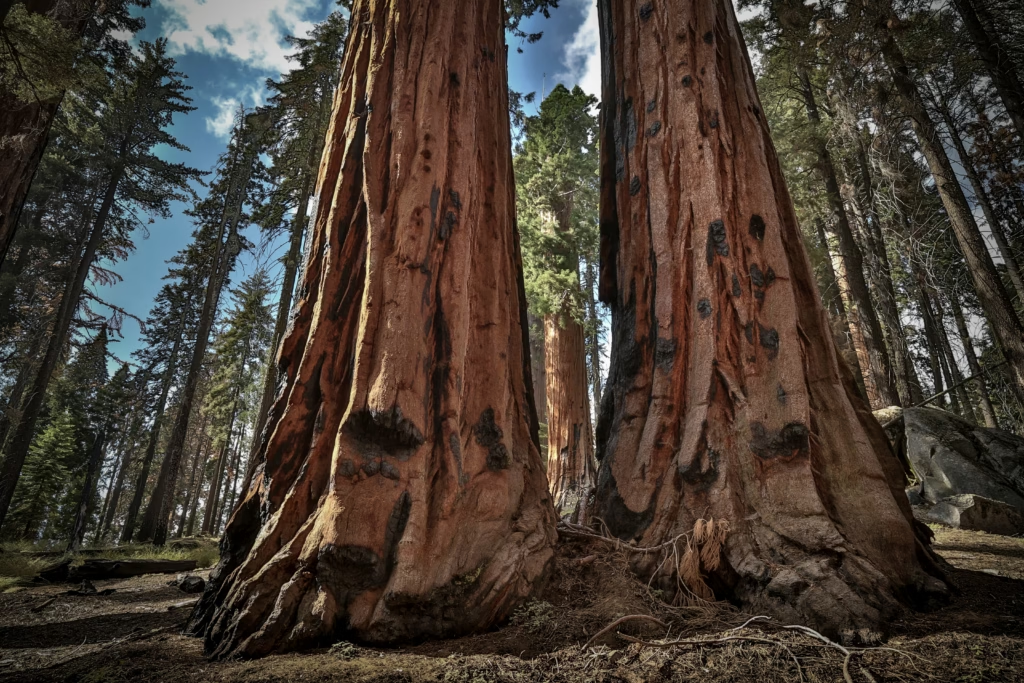
As you likely know by now, the JMT isn’t your standard multi-day backpacking trip.
It demands solid physical conditioning and long-term training (three to six months before your departure date) that includes regular hiking with a loaded pack, ideally on terrain with significant elevation gain.
Cardiovascular fitness, leg strength, and core stability will all contribute to how successful you are on the trail.
If you don’t live in a high-elevation region, consider the affect the High Sierra’s thin air may have on you. If you’re flying in from sea level, consider spending a day or two at elevation—say, in Mammoth Lakes or Tuolumne Meadows—before beginning your trek.
An Indescribable Accomplishment

When you tackle something as challenging as the John Muir Trail, and commit to stepping outside modern life and immersing yourself in wilderness for weeks on end, you’re met with an accomplishment that is so much larger than the mileage you racked up.
For every chafing backpack strap or blister, there’s a sunrise painting granite peaks in alpenglow. For every repetitive oatmeal packet breakfast, or yet another beefy jerky, there are impossibly clear starfields at night, unmarred by light pollution.
You’ll form trail families, share stories at campsites, and share the trail with like-minded adventurers who also crave the physically and spiritually rewarding experience of an epic thru-hike.
It’s a pilgrimage through some of the most beautiful terrain in the world, following in the footsteps of Muir himself, who fought to preserve for future generations the beauty you’ll see all around you.
Not exactly the hike you are looking for? Check out our other trail guides: