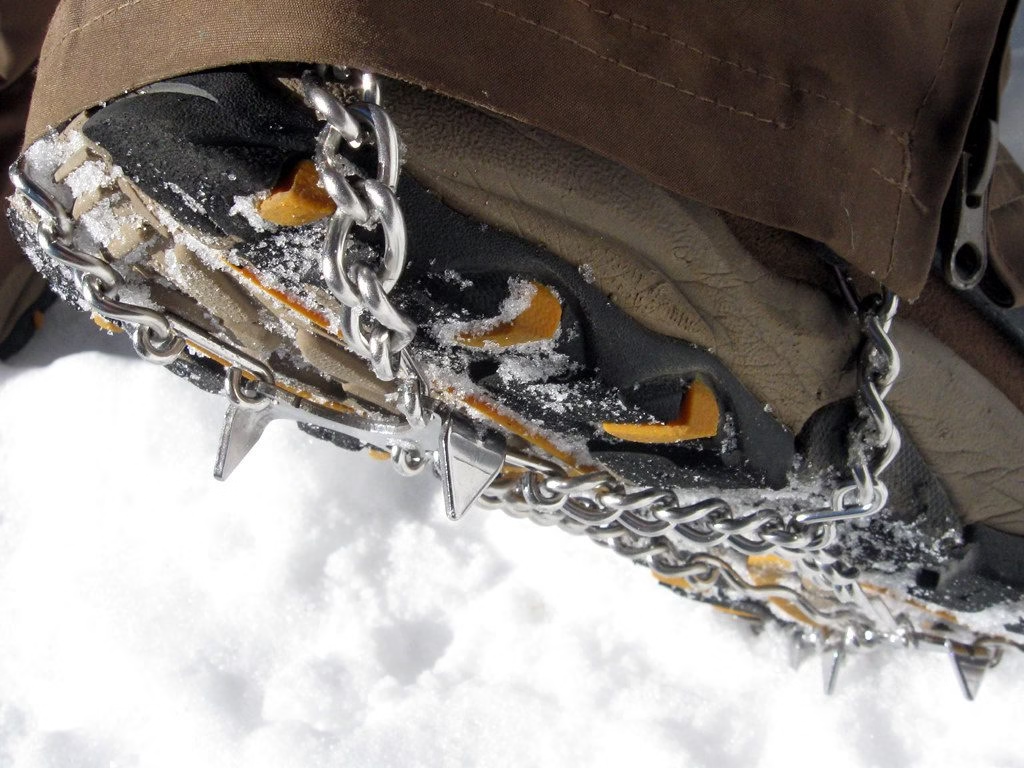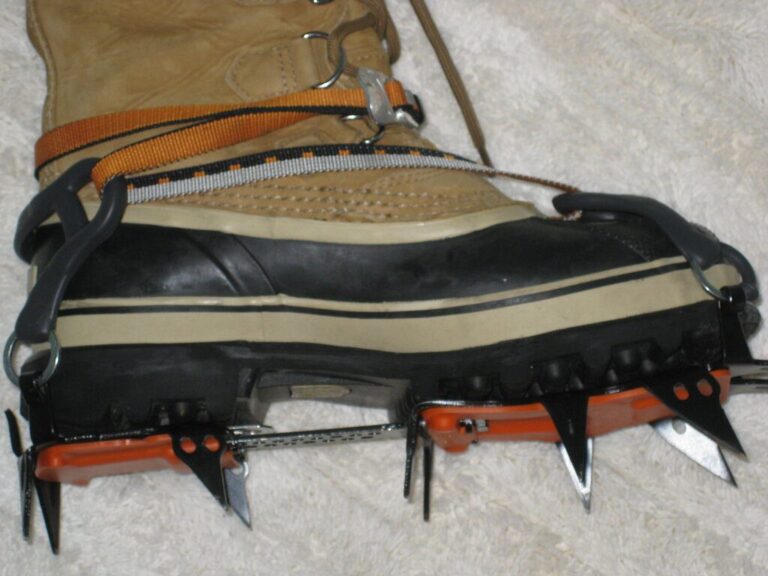

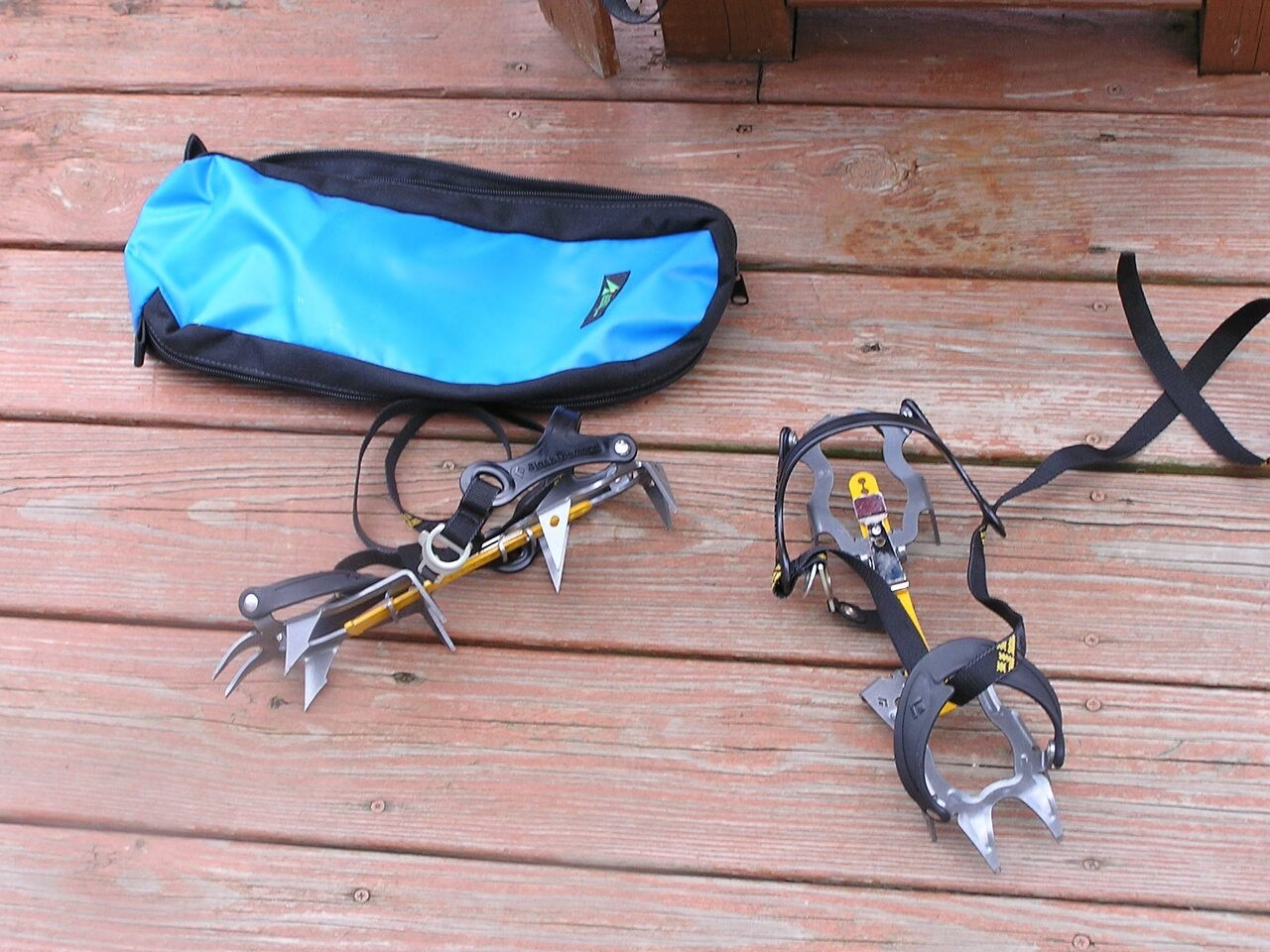
Microspikes are typically permitted in checked luggage but may pose issues in carry-on bags. While not explicitly banned by the TSA, some agents may view the spikes as a potential security risk. To avoid complications at security, it’s best to pack microspikes in checked luggage.
However, the first time I wanted to bring my microspikes with me when flying on a plane for a winter excursion, I realized that I didn’t know whether they were allowed by the airline or considered a prohibited item.
Here I’ll tell you everything I learned from my research regarding the TSA rules about bringing microspikes on a plane, so you’ll feel well prepared for your next hiking adventure.
Can You Take Microspikes On a Plane?
You can pack microspikes in your checked luggage when flying, but some airlines prohibit them in carry-on bags.
The TSA considers sporting equipment that can be used as a bludgeon a prohibited item in your carry-on.
Passengers could potentially use the sharp spikes on these items as weapons in the aircraft’s cabin.
Since you cannot get through airport security with this type of gear due to the sharp edges, you should opt to secure them inside your checked bag instead. This rule applies not only to hiking microspikes but also to snow crampons.
It is essential that you keep these rules in mind when packing your hiking gear for a trip. Many hikers wish to take a single bag only when traveling (such as a backpack) to reduce the amount of baggage they have to deal with at their destination.
Assuming that you could take these items through the check you will lead to issues when you try to board the plane, as they are prohibited.
If your hiking adventure requires you to bring microspikes or crampons, plan accordingly and make sure that you place these items in baggage that you will check instead.
Can You Pack Microspikes In a Carry-On Bag?
Microspikes are typically allowed in carry-on luggage, though the final decision rests with the TSA officer. Although there is no formal restriction, some passengers have experienced confiscations. To minimize potential complications during security screening, it’s advisable to store them in checked baggage.
If TSA agents discover microspikes or crampons in your carry-on, you’ll be at the mercy of the agent and their judgement of the danger of the microspikes. If they decide they aren’t allowed in the cabin you are required to transfer them to your checked luggage before proceeding through the security checkpoint (1, 2).
Some passengers have managed to board with coiled traction devices in their carry-on, but it’s still likely they’ll be rejected during security checks.
It’s the TSA, not the airline, that makes the final call on what’s allowed in your bags.
To avoid issues, it’s best to pack all snow and ice traction gear in your checked luggage, treating them as restricted items.
Can You Carry Microspikes In A Checked Bag?
According to TSA rules, microspikes and crampons are generally permitted in your checked bags without any restrictions, and all airlines should allow them.
When you place these items among your suitcase’s contents, ensure that you keep them protected so that the spikes do not get damaged or potentially injure someone who has to search your belongings.
You definitely wouldn’t want those spikes to get damaged while your bag is being tossed around by the handlers. Here’s a helpful tip: make sure to tuck them into a protective sleeve and snugly nestle them between your clothing items to provide a nice cushioning.
That way, your microspikes should stay safe and sound throughout the journey.
Can You Take Crampons On A Plane?

Crampons are generally allowed in checked baggage, but it’s a good idea to check with TSA to avoid any issues. While they may be permitted in carry-on bags, TSA officers can refuse items they consider a security risk. Shoe spikes or snow spikes must be placed in checked luggage.
You will not be allowed to continue to the gate with crampons on your person.
If you’re all set to bring your trusty crampons along on your flight, it’s a good idea to consider bringing an extra bag that you can check in and collect at your destination. This way, you’ll have a dedicated space to safely store your crampons throughout the journey.
The Transportation Security Administration sets the restrictions around flying with crampons, and they will not vary according to the airline.
Related Article: How to Attach Crampons on Hiking Boots
Tips And Recommendations
Here are a few other tips I have regarding microspikes on airplanes and for winter excursions.
- If I’m going to backpack in a remote area, I often check ahead to see if there’s a nearby place where I can rent crampons, microspikes, or other winter gear so I can pack fewer personal belongings with me while traveling.
- The right microspikes can help make your excursion a success. If you’re in the market for a new pair, or new to purchasing this equipment, check out our guide on the best microspikes for hiking that we personally tried and tested.
References:
- https://www.tsa.gov/travel/security-screening/whatcanibring/items/shoesnow-spikes
- https://www.tsa.gov/travel/security-screening/whatcanibring/items/crampons