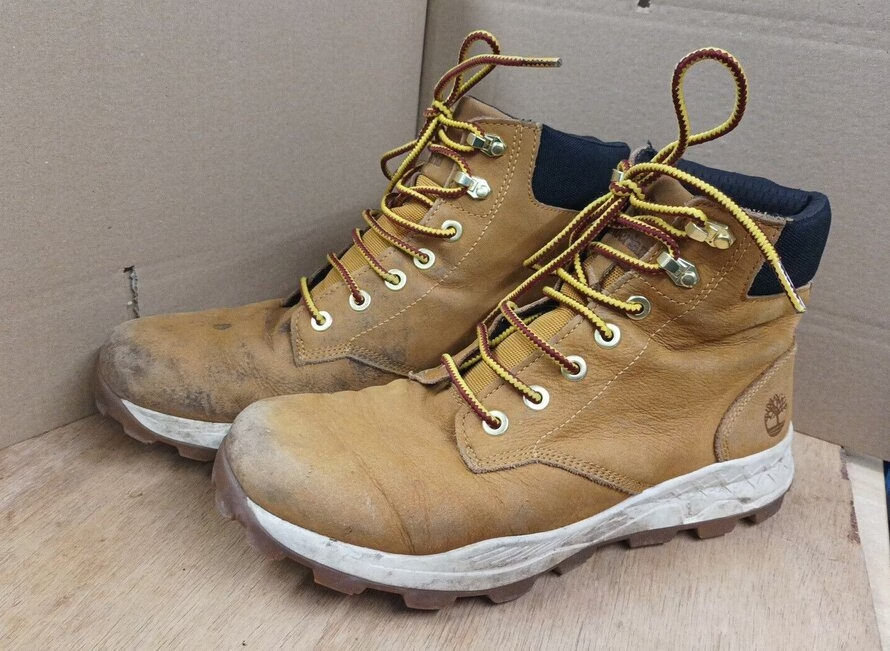
Timberlands for hiking? That’s a question I’ve heard often. As a hiker with plenty of trails under my belt, my team and I put together a detailed guide on it.
Timberlands are well-known for their tough and rugged construction and are commonly used for a variety of tasks from camping to construction work.
Timberland boots offer insulation suitable for severe weather conditions, have ample padding to safeguard feet against debris on trails, and are waterproof. They also enable navigation across terrains that may be challenging for regular hiking shoes, sandals, or trail runners.
To determine if Timberland boots are effective for hiking, we will delve into their capabilities, discuss popular models among consumers, and assess their strengths and limitations.
Can you Hike in Timberlands?

Yes, Timberland boots can work for hiking, especially on shorter trails that aren’t too tough. They are not be the best pick for really hard hikes or long backpacking trips, but many styles give good support, last a long time, and keep your feet dry on easier hiking trips.
However, we noticed that Timberlands are heavy and stiff, making them less ideal for serious hiking compared to specialized hiking boots.
Their uppers, typically made of durable suede or full-grain leather, provide waterproofing but may not be suitable for hot weather due to limited ventilation.
While Timberlands can be used for casual hiking, there are other hiking footwear options that might offer more comfort, utility, and breathability with less weight.
The choice depends on the specific needs of the hiking trail and personal preference. Despite their capabilities, Timberlands may not have all the features and build quality of traditional hiking boots.
Check our Ultimate Footwear Guide to explore all available footwear options.
Trail tips, news and giveaways
One email a month: hiking tips, gear news, giveaways, fresh footwear verdicts and more. No spam, unsubscribe anytime.
What Are the Most Popular Timberlands for Hiking?
1. Timberland Mt. Maddsen

The Mt. Maddsen boots from Timberland are crafted with full-grain leather uppers, offering a durable leather hiking boot option.
At a weight of 3lbs for each pair, these boots lean towards the heavier side, placing them in the heavyweight category of hiking footwear.
These boots feature anti-fatigue technology, which encompasses a compression-molded EVA midsole and internal TPU shanks for enhanced comfort and support.
Differing from the iconic yellow Timberland boots, the Mt. Maddsen boots are suitable for off-trail use, equipped with a Green Rubber outsole that provides strong traction thanks to its well-spaced lugs.
The interior of the Mt. Maddsen boots is lined with Timberland’s proprietary TimberDry waterproof membrane, which is highly durable and primarily made from recycled materials, effectively resisting common trail hazards.
2. Timberland White Ledge

The Timberland White Ledge hiking boots are designed as lightweight footwear, primarily intended for urban environments, trade work, and general outdoor use.
Although the White Ledge boots do not feature a waterproof membrane like many hiking boots, they are constructed with a waterproof leather upper, and their seams are fully sealed to prevent moisture penetration.
Their rubber outsoles are designed to be multi-directional and provide a strong grip, making them effective on various terrains and potentially comparable to Vibram or Contagrip outsoles. Additionally, these boots are lighter than the Mt. Maddsen model, with a weight of only 2lbs. 4 oz. per pair.
However, as they are not specifically tailored for hiking, the White Ledge boots may lack the support and comfort features needed for longer hiking excursions.
3. Timberland Chocorua Trail

The boots feature leather uppers with side mesh panels, enhancing ventilation and reducing heat retention caused by the TimberDry waterproof membranes.
The midsole offers comfort to the feet, and the boots are lined with ReBOTL material, a soft fabric made from recycled plastic and polyester.
Despite their sturdiness, these boots retain sufficient flexibility, allowing for movement with minimal need for breaking in.
In summary, these hiking boots are of high quality and provide excellent value for outdoor activities.
Advantages of Using Timberland Boots for Hiking
Durability
The full-grain and suede leather used in Timberland boots is durable, capable of withstanding rough conditions. As Timberland boots are often not subjected to extreme environments, their lifespan is extended, especially when used for moderately intense long-distance hikes.
Additionally, the robust nature of these boots offers enhanced foot protection, which may surpass that of some standard hiking shoes and boots.
Ankle Support

While you don’t necessarily need ankle support when hiking, one of the signature design features of a Timberland boot is the padded collar around the ankle.
The collar of the boot serves multiple purposes: it tightly encases the ankle to block debris from entering, while also offering cushioning and support.
It can also act as a stabilizer when climbing over uneven surfaces.
Waterproofing
Timberlands are made with an in-house TimberDry waterproof membrane, which prevents the inside of the boot from getting wet in rain, mud, and stream crossings.
The shoe uppers are also sometimes coated with a water-resistant layer to prevent the leather from becoming soaked. This keeps your feet dry all throughout your hiking trip.
Versatility
Timberlands are functional in both urban and outdoor settings. While these types of boots are best suited for camping, they’re also made with a style that makes them appropriate for casual everyday use.
As all-purpose or work boots, they can minimize the need for different footwear, especially for those who hike casually.”
Disadvantages of Using Timberland Boots for Hiking
Weight
Based on my experience, Timberland hiking boots tend to be on the heavier side, which might slow you down on trails and potentially lead to extra strain.
Although heavier boots like Timberlands offer more protection and some level of comfort, they are not specifically engineered for hiking, lacking certain advantages found in brands like Merrell or Keen.
Breathability

The TimberDry waterproof lining keeps water out but can make the boots less breathable, which might lead to sweaty and hot feet during long hikes in hot conditions, even though there are mesh panels in some Timberland boots.
Break-In Period
In terms of the break-in period, while certain Timberland models achieve a good balance between firmness and flexibility, especially in the midsole, others require a period of wear for your feet to become accustomed.
The leather’s rigidity and protective qualities mean it needs more time to mold to the shape of your foot.
Price
Since the classic Timberlands were primarily designed as fashion-centric footwear, they tend to be just as expensive as regular hiking boots, but without the benefits.
It would probably be better to look into a boot specifically made for hiking, at least that way you’d be able to get maximum utility out of your footwear for a reasonable price.
FAQs
You can wear Timberlands on a hike if the trail you’re visiting doesn’t have high difficulty. Otherwise, it may be better to wear traditional hiking boots for anything more involved than a casual day hike.
Timberlands are good for camping, construction work, gardening, day hiking, and other urban or light outdoor activities. These boots are versatile for many activities due to the blend between ruggedness and fashion.
Timberland Classics are not good for hiking. The classic boots are designed more so for style and lack the appropriate features to manage most hikes. Timberland Classics would be best worn for ultralight activities such as camping.
What makes Timberlands so special is that they’re a familiar brand and frequently worn by many people for their applications in various activities. They’re all-purpose footwear that blends in well for most occasions due to their many colors and design styles.
Timberland boots are strong. The full-grain leather that lines most Timberland products is a premium material that doesn’t damage easily, even when exposed to moisture.
Timberland boots last for up to 5+ years with proper care. The fully sealed seams limit the points of failure where the uppers could detach or the metal lace hooks could start to wear down. This construction gives the boots a long shelf life.
Timberland boots are comfortable enough to be worn for most activities without causing discomfort. While not as padded as regular hiking boots, Timberlands support the arches and heels of the feet just enough to prevent discomfort.
Timberlands are good for your feet. They provide enough support and comfort for a casual outdoorsman, and even accommodate varying foot volumes to ensure a proper fit.