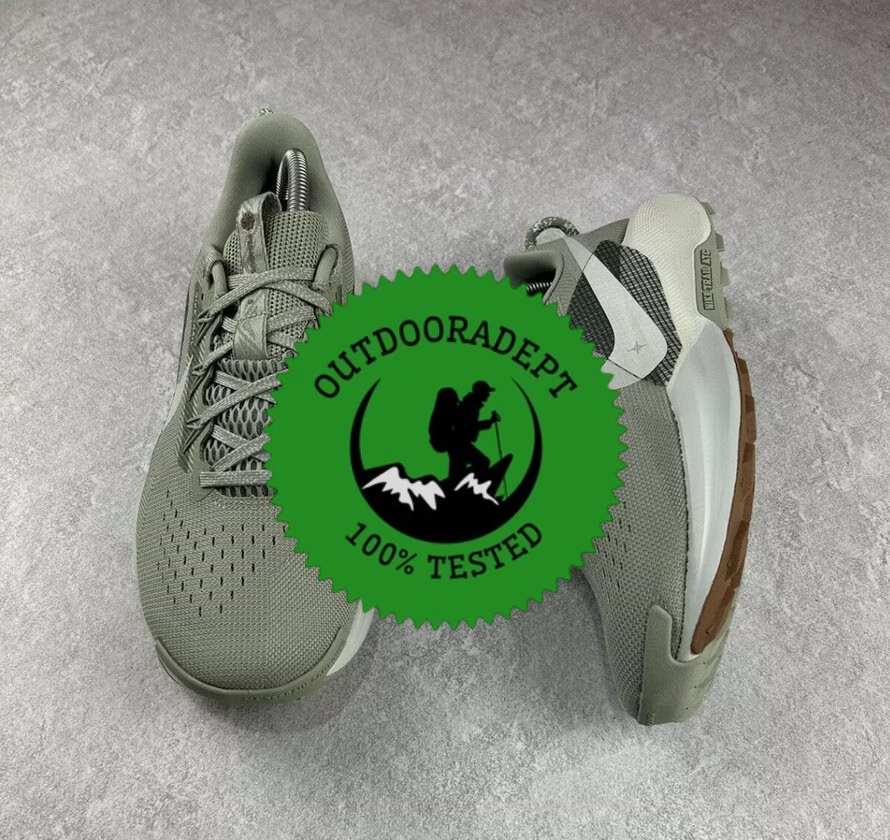
When I headed to northern Thailand for two weeks of trail running, I selected the Nike Pegasus Trail 5 as my primary companion. My focus was on exploring lesser-known routes, including a remote section of the Pai River loop and a rustic, winding path near Doi Phu Kha National Park.
Over 50 miles of testing, I faced steep inclines, technical trails, damp grass patches, and jagged gravel sections—ideal challenges for any Pegasus Trail model.
Considered a versatile trail running shoe, the Nike Pegasus Trail 5 offers an upgrade on the old React foam outsole, an updated engineered Flyknit upper, and a reformulated midsole.
These changes aim to boost durability, traction, and energy return without sacrificing comfort. On the flipside, it remains a slightly heavier build with modest underfoot protection on extremely rocky terrain.
Let’s dive into the details.
Our Verdict
After thorough testing, the Nike Pegasus Trail 5 shines as a well-rounded option for runners transitioning from roads to moderately technical trails.
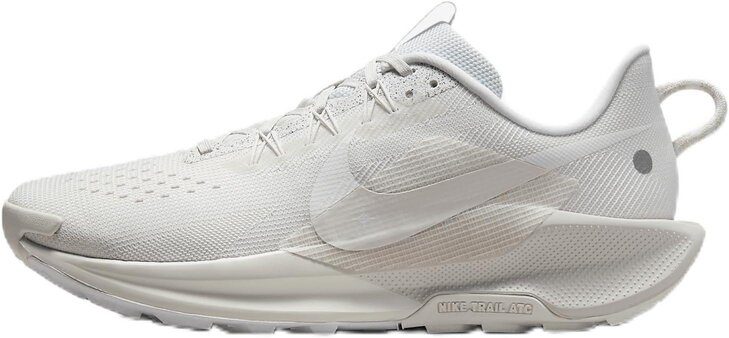
Weighing about 9.7 oz (men’s 9), this Peg Trail delivered a responsive yet slightly firm ride, courtesy of the Nike React foam midsole.
The deep lugs maintained a reliable grip on moderate trails, wet surfaces, dust, and loose dirt, and they are one of the most comfortable trail shoes I have worn.
It’s indeed a bit heavier than some rivals, and rugged terrain can occasionally reveal its minimal extra shielding, but in regular conditions, this Nike Pegasus Trail shines.
To provide a comprehensive review of the Nike Pegasus Trail 5, we conducted extensive testing across diverse terrains, including flat trails, rocky paths, muddy sections, and gravel roads. We evaluated its water resistance in wet conditions and its performance in high temperatures. Our team, along with external experts, carefully assessed the shoe’s break-in period and overall comfort. Key factors such as fit, cushioning, tread grip, and breathability were thoroughly examined. Additionally, we incorporated user feedback and analyzed the manufacturer’s warranty to deliver a well-rounded evaluation of the Pegasus Trail 5.
Highlights
| Feature | Nike Pegasus Trail 5 |
|---|---|
| Weight | ~10.6 oz (approx. 300 g) per shoe (Men’s US 10) |
| Water Resistance | Available in both standard and Gore-Tex versions; Gore-Tex offers waterproofing |
| Traction | Nike All Terrain Compound (ATC) outsole with 3.6 mm lugs; suitable for light to moderate trails |
| Comfort | ReactX foam midsole; provides a soft, responsive ride |
| Adjustability | Traditional lacing system with Flywire cables for a secure fit |
| Breathability | Single-layer mesh upper with perforations; dries quickly and offers good airflow |
| Durability | Reinforced areas in high-wear zones; suitable for daily training |
| Arch Support | Neutral arch support; accommodates a variety of foot shapes |
| Toe Protection | Moderate protection; suitable for light trail conditions |
Pros & Cons
PROS
CONS
Things We Tested When We Reviewed Nike Pegasus Trail 5
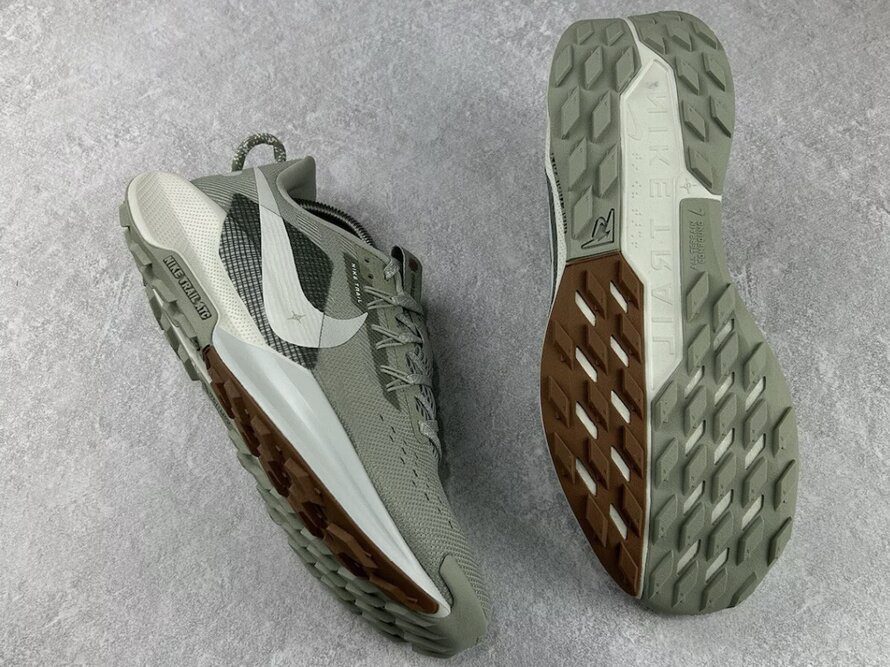
1) Durability
After extensive trail exploration across muddy areas, rocky trails, and easy trails, I found the Nike Pegasus Trail 5 with its engineered Flyknit upper impressively resistant to scuffs and tears.
The reinforced overlays around high-contact zones helped preserve the shoe’s integrity, showing only minimal signs of wear near the forefoot.
Meanwhile, the Pegasus Trail 5 ReactX foam—a slightly revised form of the traditional React in the Pegasus Trail 4—maintained its energy return well beyond the initial run.
On the new outsole, the 3.2mm outsole lugs (crafted from a proprietary terrain compound atc) remained robust, though harsh gnarly terrain or extended runs on jagged rocks could accelerate degradation.
Overall, durability meets expectations for a Nike Pegasus Trail 5 designed to handle running and hiking on moderate trails and more technical routes in stride.
2) Traction
The Nike Pegasus Trail series improved traction significantly over past versions, and the Nike Pegasus Trail 5 solidifies that trend.
Thanks to the terrain compound outsole rubber with multi-directional lugs, the Peg Trail holds its ground across dusty dirt roads, damp surfaces, and gravel descents.
On tricky inclines, the outsole material grips well, preventing major slippage. I tested them on slick morning dew sections, and they clung reliably, even on wet rock—although caution remains prudent.
In deeper mud, traction dips a bit, but that’s typical for comfortable trail shoes without massive lug depth.
Compared to prior Pegasus Trail releases, the new Pegasus Trail 5 design fosters a more confident stride, more capable of bridging the gap between road-to-trail shoe ease and full-blown technical trail readiness.
3) Weight

Weighing in at roughly 9.7 oz (men’s size 9), the Nike Pegasus Trail 5 sits in that middle range for trail running shoes.
It’s heavier than certain featherweight niche models like the Salomon S/Lab Pulsar 2 yet lighter than bulky high-cushion trainers like the Hoka Stinson 7.
On moderate or longer distances, this trail running shoe never felt excessively cumbersome.
The Pegasus Trail 5 midsole helps maintain a balanced feel, even though it’s not as minimalist as some specialized designs. If your running style emphasizes quick turnover on extremely steep climbs, you might notice a slight heft.
For the majority of trail runner use—think moderate trails or mixed challenging terrain—the weight remains reasonable and manageable.
In short, while it’s not the lightest Nike trail offering, the Nike Pegasus Trail 5 is still nimble enough to handle daily runs and hikes, training sessions, and the occasional half marathon race day.
4) Comfort
Overall comfort in the Nike Pegasus line generally ranks high, and the Nike Pegasus Trail 5 is no exception. Inside, the new midsole offers a consistent dose of energy return, while the carefully designed shape avoids crowding the big toe or pinching the forefoot.
I found the Pegasus Trail 5 fit supportive yet not overly snug, striking a good middle ground for regular feet. The slight firmness of Nike Reactx foam keeps your foot stable without feeling deadened.
A gusseted tongue prevents debris from creeping in, and the well-structured heel collar helps reduce slip or friction. However, if you often wander off the beaten track, a more protective shoe with a built-in gaiter like the Nike Pegasus Trail 5 GORE-TEX may be more suitable.
During my initial 10 miles, I experienced minimal rubbing along the heel area, which subsided quickly. Overall, the Nike Pegasus Trail 5 stands out as a comfortable shoe for both daily trail running and regular wear around town.
5) Breathability
The engineered Flyknit upper on the Nike Pegasus Trail 5 features a single-layer weave that’s airy enough for tropical climates. On my first run through humidity in Thailand, I was pleasantly surprised that my feet didn’t overheat.
The flexible knit sections around the midfoot allow ample room for airflow, promoting dryness on extended efforts. Even after splashing through shallow puddles, the Nike Pegasus Trail 5 upper dried relatively fast, especially under direct sun.
Although Nike claims the design is optimized to keep feet cool, I’d say it performs on par with comparable Nike trail running shoes in well-ventilated conditions.
For those in constant pursuit of maximum breathability, this standard model nails the sweet spot of supportive structure without stifling the foot.
6) Waterproofing
As a non-waterproof sibling to any GTX version, the Nike Pegasus Trail 5 focuses on quick-drying performance over all-out water protection.
Crossing shallow streams in these Nike Peg trail shoes allowed water to seep in, but the drainage proved decent, enabling the interior to dry within 30 minutes under typical Thai heat.
If your local environment leans toward steady rainfall or cold weather, you might consider the Pegasus Trail 5 trail running shoe with Gore-Tex upper, but keep in mind the trade-off in breathability and weight reduction.
For me, the standard Nike Pegasus Trail 5 harmonized dryness and ventilation well enough for normal wet conditions.
In truly muddy conditions, water infiltration is inevitable, but the shoe feels comfortable once it drains. Ultimately, the design suits moderate trails and light moisture, but it’s not intended for submersion or constant wet scenarios.
7) Support

Nike claims the Pegasus Trail 5 shoe offers improved stability through a slightly wider base, a supportive heel counter, and refined foam.
On standard moderate trails, the lateral hold felt reliable, particularly when zigzagging around roots or loose rocks.
However, there’s no traditional rock plate embedded in the Nike Pegasus Trail 5 shoe, so extremely sharp terrain can transmit more impact to your foot than a heavily fortified model might.
I did appreciate the mild arch support with a heel 37 mm stack height, which accommodates a range of strides without feeling intrusive. For runners craving maximum security on ultra-rocky terrain, the lack of a protective plate may be a consideration.
Still, as a road-to-trail shoe, the Nike Pegasus Trail 5 is stable enough and has good bounce for everyday forays into technical terrain that’s not excessively gnarly or mountainous.
8) Fit and Sizing
The Nike Pegasus Trail 5 shoes run true to size, with a comfortable midfoot wrap and a generously sized toe box. If you have wide feet, you may need to test half a size up, but those with average-width feet should feel right at home.
The flywire technology that dominated the previous version is minimized here, replaced by a more subtle flywire lacing system integrated with supportive overlays. This ensures the upper can adapt to different foot shapes. Meanwhile, the heel region is snug, courtesy of a moderately padded heel counter.
The net result is a reliable lockdown across your gait cycle and more protection against injuries. Anyone seeking a well-rounded shoe for daily training should find this sizing approach consistent.
How This Trail Shoe Evolved
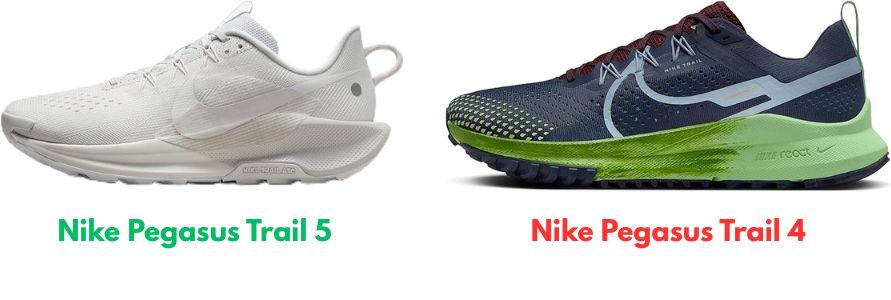
Compared to its previous iteration, the Pegasus Trail 4, this new foam in the Nike Pegasus Trail 5 has been subtly reformulated for a marginally better rebound, as Nike keeps up with the latest advancements.
The ReactX midsole retains the trademark responsiveness but feels smoother through transitions, offering a slight bump in energy return compared to the original version.
The Pegasus Trail 5 outsole design—featuring a good rubber compound—improves traction on slippery conditions and elevates confidence over more technical terrain.
The shift to a predominantly engineered Flyknit upper also addresses prior durability concerns, while providing a more secure midfoot embrace.
Overall, these updates confirm the Pegasus Trail 5 is a refined step forward for runners seeking supportive trail running shoes that remain steady across varied surfaces.
How Does it Compare with Other Products?
Nike Juniper Trail 3
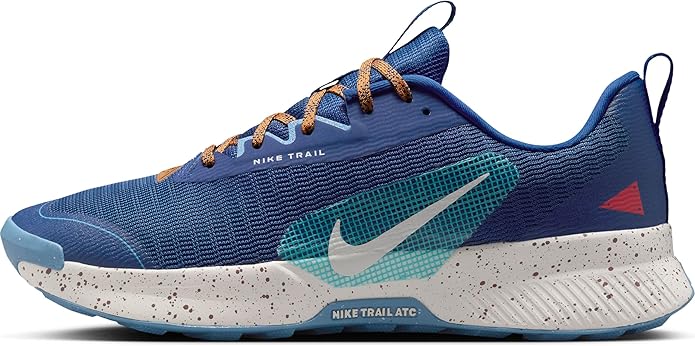
Within the Nike Trail ecosystem, the Juniper Trail 3 trail running shoe is a more pared-down design aimed at consistent off-road reliability.
Both incorporate multi-directional lug patterns, but the 3.2mm depth on the Nike Pegasus Trail 5 surpasses the Juniper’s slightly shallower approach.
In practice, that yields superior outsole grip on slippery surfaces, though the Juniper 3 still fares decently on light trails.
The Nike Pegasus Trail 5’s midsole is ideal for heel strikers, offering better energy response and cushioning.
Fit-wise, the Juniper line is narrower through the forefoot, and the Nike Pegasus Trail 5 stands out with its roomier toe box, a major plus for distance runners.
So, if you prefer a more streamlined, maybe lighter shoe for short distances, the Juniper is a reliable choice; if you want a comfortable, more responsive ride for varied technical terrain, the Nike Pegasus Trail 5 is the winner.
Hoka Challenger 7
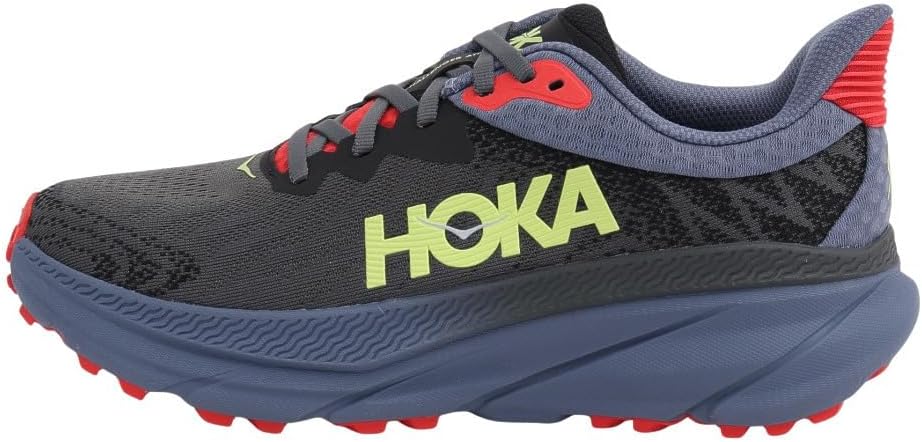
The Hoka Challenger 7 boasts a plush max-cushion design, targeting smooth transitions from pavement to easy trails.
While both shoes fall under the “road to trail shoe” category, the Nike Pegasus Trail 5 keeps a lower profile and a somewhat firmer foam midsole.
This results in better ground feedback on moderate trails, though the Challenger 7’s softer midsole could feel gentler on extended runs.
Weight is comparable, but the Challenger’s broader platform can feel more steady underfoot for novices. Still, the newly refined Nike Pegasus Trail 5 offers more direct responsiveness, thanks to that ReactX midsole synergy. Traction, too, might tip in the Pegasus Trail 5’s favor if you’re tackling muddy surfaces or wet rock.
Choose the Challenger 7 trail running shoe if you crave an ultra-cushioned vibe; opt for the Nike Peg Trail 5 if you want a balanced ride that’s lively over technical trails.
Nike Wildhorse 8
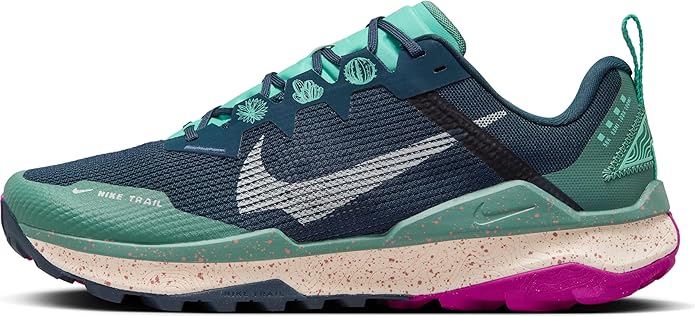
The Wildhorse 8 trail running shoe is known for robust stability, featuring a more rigid platform and a bit more built-in support around the ankle and heel area.
While both share a lineage as Nike running shoes for off-road pursuits, the Nike Pegasus Trail 5 leans more toward speed and agility, especially in the forefoot.
The Wildhorse invests in a thicker midsole stack and a chunkier outsole to handle gnarly terrain. If you frequently roam extremely rocky trails, the Wildhorse’s added girth might be comforting, especially if you’re longing for a partial rock plate.
On the other hand, the Pegasus Trail 5’s improved ReactX foam design fosters a lighter, zippier stride, perfect for daily training or longer runs that dip onto dirt roads or mild singletrack.
For all-around versatility, the Nike Pegasus Trail running shoe line stands out as a lightweight, more “do-it-all” solution, whereas its road sibling hones in on heel stability and tough coverage.
Where Does the Nike Pegasus Trail 5 Perform Better?

The Nike Pegasus Trail 5 truly excels on moderate trails, dirt roads, and technical terrain that isn’t excessively rugged.
Thanks to its newly reformulated Nike ReactX foam, the shoe maintains a smooth, slightly firm but energetic ride, letting you pick up pace comfortably.
The updated engineered mesh works wonders in hot climates, ensuring your feet remain cool. The Pegasus Trail 5 outsole delivers dependable traction on gravel or root-strewn singletrack, while the broad toe box accommodates a big toe splay for a stable stance.
Combined with the supportive heel counter and midfoot wrap, the Nike Pegasus Trail 5 stands out for runners or hikers who crave a comfortable shoe that transitions seamlessly between roads and off-road tracks.
Whether you’re pushing a half marathon or heading out for casual weekend adventures, the Nike Pegasus Trail 5 stands ready to keep you moving confidently.
Where Does the Nike Pegasus Trail 5 Fall Short in Performance?
Despite its many strengths, the Pegasus Trail 5 does have limitations. On extremely rocky terrain, the lack of a dedicated rock plate becomes evident, allowing sharper edges to transfer force more directly underfoot.
Additionally, the overall build remains a bit heavier than some specialized trail runner favorites, so if you prioritize minimalism or super-fast climbing, you might find these Nike Pegasus Trail trail running shoes sluggish.
While the multi-directional lugs provide robust grip, muddy surfaces can quickly clog them, resulting in compromised traction.
Lastly, though Nike claims better arch support and improved structure in the Peg Trail 5 compared to the standard version, foot shapes that demand highly sculpted support might need extra insoles.
In short, the Nike Pegasus Trail 5 nails everyday trail duties but isn’t the ultimate footwear solution for ultra-endurance forays over unrelenting, jagged climbs.
| WHERE TO BUY? | MEN | WOMEN |
| Amazon | See Pricing» | See Pricing» |
| Backcountry | See Pricing» | See Pricing» |
| REI | See Pricing» | See Pricing» |
FAQs
Yes, the Nike Pegasus Trail 5 offers enough cushion and a comfortable platform that makes it a good walking partner for everyday life, errands, or casual wear.
Yes, the Nike Pegasus Trail line is specifically designed for trail running, bridging the gap between road comfort and off-road traction. It excels at moderate to technical terrain—especially for runners who favor a “do-it-all” approach in a single pair of Nike shoes.