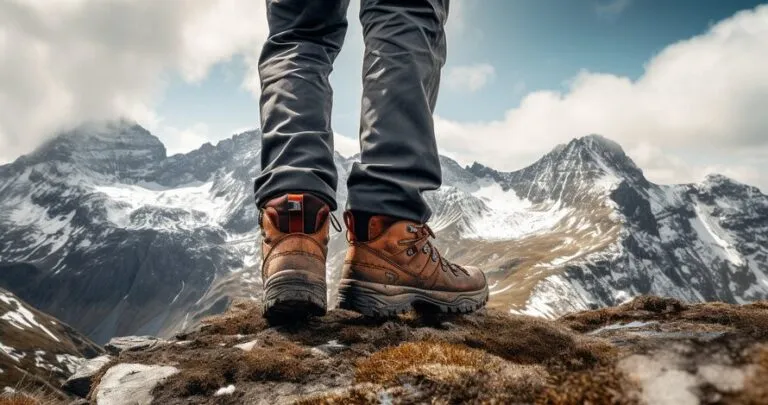


Hiking sandals are a lightweight and airy choice for outdoor adventures, especially when it’s hot and dry. Folks love them for their minimal design, which sets them apart from bulky hiking boots.
Moreover, they double as water shoes and versatile fashion accessories for everyday wear. Their true test, however, lies in trail hiking.
With over a decade of hiking experience, we’ll delve into the optimal environments for hiking sandals, highlight consumer-favored products, and assess their suitability for summer adventures.
What Are Hiking Sandals?

Hiking sandals are ultra-light footwear designed for summer adventures and beach camping trips.
Despite their lightweight nature compared to hiking boots, shoes, and trail runners, sandals offer substantial arch support, grippy outsoles, and durability.
Closed-toe models even provide excellent toe protection.
Hiking sandals have minimalist designs that promote quick drying when exposed to water, essentially making them waterproof.
Additionally, their design allows debris, such as pebbles, to easily dislodge without becoming trapped.
It’s important to note that hiking sandals differ from flip-flops. While they share some similarities, flip-flops are minimalistic sandals with a single strap between the big toe and the second toe.
In contrast, hiking sandals typically feature firm rubber outsoles and adjustable heel or ankle straps, offering additional support and versatility.
If you love the minimalist style please see our selection of the best minimalist hiking shoes where we review and compare the top models in 2025.
Check our Ultimate Footwear Guide to explore all available footwear options.
Are Sandals Good for Hiking?
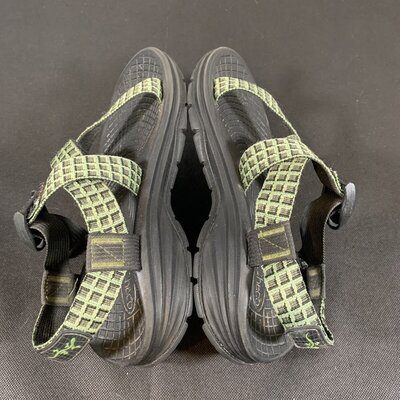
Keen sandals, especially the closed-toe Newport H2, work well for hiking in hot weather or when you need to cross water. They give you protection, let your feet breathe, and have good grip, which makes them a popular pick for non-technical trails.
The effectiveness of hiking sandals depends on the terrain and weather conditions of your journey.
In cold weather or on trails with sharp debris and fallen branches, hiking sandals may provide inadequate foot protection.
However, despite their appearance, these sandals typically feature a sturdy polyester upper and a thick rubber outsole, enhancing durability and providing secure traction on slippery surfaces.
We highly recommend sandals for hiking in the summer. The waterproof and breathable style of a sandal makes it perfect for sandy beach-like terrains and camping adventures.
High-quality sandals have straps that are strong enough to stand up to most tasks, and the ultralight design makes them convenient to slip on and off at a moment’s notice.
Though they lack adequate protection or ankle support, sandals hardly require those features when used in the appropriate settings. This sets them apart from hiking boots and trail runners, which can become extremely uncomfortable after exposure to water.
| Pros of Hiking Sandals | Cons of Hiking Sandals |
|---|---|
| Versatility: Suitable for a range of outdoor activities, especially in warm weather. Can be paired with socks for cooler conditions. | Protection: Offer less coverage than other hiking footwear, leaving feet more exposed to trail hazards. |
| Weight: Lighter than hiking boots, reducing energy expenditure and making them easy to carry and store. | Traction: Some designs may lack the firm grip of traditional hiking boots, especially on steep or wet surfaces. |
| Durability: Made with durable materials like polyester uppers, designed for longevity in non-technical trails. | Ankle Support: Lack ankle collars, offering no ankle stability or support, which limits carrying capacity and hiking duration. |
| Comfort: Typically incorporate EVA foam footbeds and PU midsoles for cushioning, offering comfort for extended wear. |
Continue reading to discover a more in-depth analysis of their advantages and disadvantages.
Are Hiking Sandals Comfortable?
Hiking sandals are really comfortable. They often have soft EVA foam, PU cushioning in the middle, and heel supports to keep your feet feeling like they’re resting on a soft cushion, so you can wear them for a long time.
Even if you put on socks, these sandals stay airy and keep your feet from getting too warm. Socks become handier when it’s cooler in the fall or mildly cold in the winter, and you can still wear thick hiking socks without feeling squished.
The way hiking sandals fasten, with either a strap around the heel or an elastic cord, ensures a tight fit without chafing or sliding, so you don’t have to worry about blisters or sore spots.
What Are the Best Hiking Sandals?
Teva Terra Fi 5 Universal
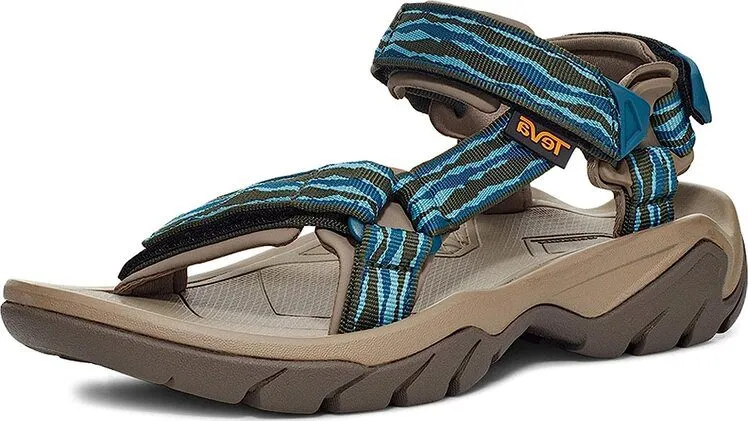
The Teva Terra Fi 5 Universals are a pair of lightweight hiking sandals with an open-toe design.
The uppers are made with durable polyester webbing, which features a hook and loop closure system for an adjustable fit.
The molded PU midsole provides good arch support, and the nylon shank gives great stability to the foot. When paired with the rubber outsole, which has a surefooted grip on slippery surfaces, these sandals are comfortable and reliable for up to several miles.
With a weight of 1lb. 10oz. per pair, the Fi 5 is great for casual outdoor activities and watersports.
Read More: Are Tevas Good for Hiking
KEEN Newport H2
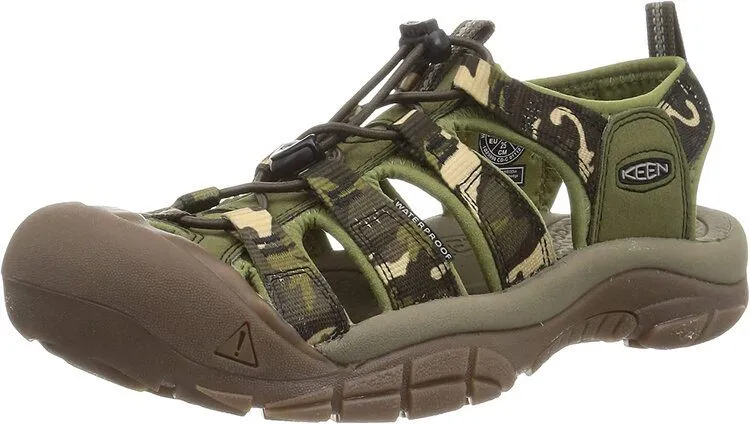
The KEEN Newport H2s are closed toe sandals with more of a rugged build. Since the design of the uppers provides more coverage than some other sandals, your feet have more protection.
However, the enclosed design also makes it more likely that debris will become lodged.
Despite that, the Newport H2 is made with more of a focus on comfort and protection, so it has features like the KEEN toe bumper, EVA insoles, and quick-drying capabilities.
Overall, its performance is excellent both on land and water. The lace-lock bungee system, which uses elastic straps, has three adjustment points, making it customizable for people with larger or narrower feet.
Learn more about this product by checking the Keen Newport H2 review.
Chaco Z/Cloud Sandal
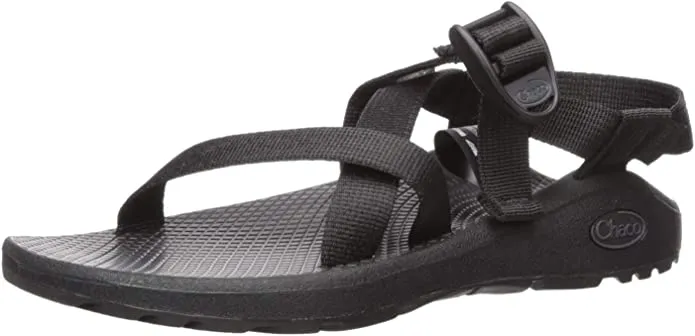
The Chaco Z/Clouds are lightweight sandals and probably one of the outdoor community’s favorite hiking sandals.
The Z/Cloud has a customizable strap system, a LUVSEAT PU midsole with deep heel cups and support for high arches, and a non-marking ChacoGrip rubber outsole.
These sandals are tear-resistant and versatile for many outdoor activities, such as camping, kayaking, and light trail walks. While not as protective as hiking boots, the Z/Cloud sandals have comfort comparable to some hiking shoes and trail runners.
Even though they’re open-toe sandals, if you use these on well-maintained trails and for beach activities, they’re probably the softest and most accommodating set of sandals on the market.
Read More: Are Chacos Good for Hiking
Advantages of Using Hiking Sandals
Versatility

Sandals find applications in a range of outdoor activities, with a notable presence during the warmer spring and summer months.
Notably, hikers often pair socks with their hiking sandals, especially in the fall and winter.
This combination, although sandals are typically associated with warm weather, offers a thin layer of insulation, making them suitable for year-round use.
Weight
In contrast to a hiking boot, which incorporates substantial padding and dense materials, a sandal prioritizes reduced weight, convenience, and comfort.
This reduced weight translates to less energy expended when carrying hiking gear. Moreover, akin to an efficient water shoe for hiking, the lightweight nature of sandals simplifies storage alongside other essential hiking items.
Durability
Sandals feature durable polyester uppers that resist tearing, while their footbeds and outsoles are designed for longevity, provided they are not subjected to technical hiking trails.
As an illustration, with routine use for everyday activities, Z/Cloud sandals can endure for over 5 years before displaying substantial wear. While sandals crafted from premium materials may have a higher initial cost, their extended lifespan justifies the investment.
Disadvantages of Using Hiking Sandals
Protection
Sandals offer less coverage compared to other hiking footwear, leaving your feet more exposed to the trail environment.
This increased exposure makes your toes, which are prone to encountering rocks and other trail obstacles, particularly vulnerable, especially in sandals lacking toe guards.
Even when worn with socks, sandals may not provide sufficient protection against blunt objects for your feet.
Traction

Even though some sandals have great traction, many outsole designs lack the firm grip of a traditional hiking boot or shoe.
This can be problematic on steep surfaces and wet rocks, where you’d need the extra adhesion to increase your stability and limit the risk of falling.
Unfortunately, even the best sandals don’t have the same surefootedness as heavy-duty hiking boots.
Ankle Support
Sandals lack ankle collars, offering no ankle stability or support. Consequently, even for camping or light trail walks, there are limitations to the amount of gear you can carry and the duration you can comfortably hike in this footwear.
Furthermore, the absence of ankle support increases the risk of injury in case of a misstep.